Showing posts with label Gose. Show all posts

Monday, 31 August 2026

What is Gose?

I explain the history of a rare survivor of Germany's pre-Lager beer culture.


Tuesday, 2 June 2020

Top-fermenting relics of the 1930s

We're back with good old Schönfeld again.  In this particularly handy section, he runs through which beers had or hadn't made it past WW I.

It includes a couple of surprises.

"In the meantime (from 1900 onwards) a new type of beer in the form of sugar-sweetened and pasteurized Malzbier (Karamelbier) had appeared, giving top fermentation a considerable boost, which has also recently involved the top-fermented, light bitter Lagerbier which was already brewed in the Rhineland.

Otherwise, the old local beers are mostly forgotten. Even famous beers. Such as Danziger Jopenbier, Einbecker beer. The widely spread Porter. Münsterländer Altbier, of which only remnants of inferior quality remain.

A few have managed to survive into the present day, such as Broihan (Hannover)*, which is brewed using wheat malt and has a sweet taste; the dark and weakly sweet brown beer brewed in the Kretschmerei in Breslau, Hamburger "Beer", Lichtenhainer beer and Gose, the wheat malt beer of Bavaria, especially the Berliner Weissbier, and to a lesser extent the non-sour Weissbier of northern Germany. Grätzer beer has saved itself - as a miserable leftover. Rhenish top fermentation, however, has survived the times in improved condition.

* Brown beer with a schnapps (caraway) has been a well-known popular drink in Hamburg as in Hanover under the name "Lüttge Lage"."
"Obergärige Biere und ihre Herstellung" by Dr. Franz Schönfeld, 2nd edition, Verlag von Paul Parey, Berlin, 1938, page 132.

I'd assumed that Broyhan dies out a decade or two earlier. But, no, it was still limping on in the 1930s.

It's weird that he lists Porter in the lost beers. As there were still plenty of breweries making it in the 1930s. At least one in Berlin, where Schönfeld was based. Not sure which beers he means by non-sour wheat beers. Possibly things like Bremer Weissbier. About which I know bugger all, other than having seen the odd label.

Lüttge Lage is a weird survivor. It's a type of low ABV Altbier which is still produced in Hanover.

Schönfeld finishes this section with a quick look at top-fermentation elsewhere in Europe:

"In other countries too, top fermentation was pushed away more and more. However, there are still a number of breweries in Holland and France which produce light LAgerbier in a top-fermenting manner to a not inconsiderable extent. In Belgium, top fermentation still remains in the production of old sour beers.

A very special exception is England. Only top fermentation is known here. Hundreds of years ago, English beers had a well-founded reputation. They were all strong beers with great durability and characteristic taste and fragrance. They have  remained so to this day. Bottom fermentation was unable to gain a foothold. National characteristics and habits have allowed the old method of preparation to hold on."
"Obergärige Biere und ihre Herstellung" by Dr. Franz Schönfeld, 2nd edition, Verlag von Paul Parey, Berlin, 1938, pages 132 - 133.
 Of course, there was far more than sour brown beers being top-fermented in Belgium before WW II. And there was bottom-fermenting beer produced in the UK. Just not very much of it.

Monday, 18 September 2017

How sour is Gose?

My elder son, Andrew, recently moved out. Great news for me and Dolores.

No, it’s not that we don’t have to buy him beer any more or wash his clothes. He brings his washing around and raids Alexei’s beer stash. Much more practical than that. It’s freed up his room.

I’m in the process of turning it into my office. I bought some massive bookshelves from a local bookshop that was closing down and moved some of the ones from the living room up there. Finally my books will all be easily accessible and in one place.

I’m only part way through the process, but I’ve already recovered a couple of book I hadn’t been able to find. It’s a miracle I could ever find any book, given there was no logic to how they were stored. I desperately need to find a couple of books for an article I’m writing.

One of those books is “Gose-Häppchen”, undoubtedly the best book written about Gose. It was so long since I’d seen it that I’d forgotten much of its contents. Including a reproduction of a very important document. And one that should settle an argument about how sour Gose was.

The document in question is an evaluation of the first test batch brewed for Lothar Goldhahn at Schultheiss in Berlin in 1986. This is the beer that was based on descriptions of Gose drinkers and which got their nod as matching the original. That seems pretty conclusive proof that this beer was authentic.

And do you know what’s great? The document lists the acidity: 3.1 pH. To put that into context, vinegar is 2.9 pH. Only the very sourest Lambics have a pH value that low.

It’s just like I’ve been telling everyone: Gose shouldn’t be “slightly tart”, it should be mouth-puckeringly sour.

Here’s the document, in case you don’t believe me:


Friday, 26 May 2017

Döllnitzer (Leipziger) Gose

Now we’re done with Grenell’s description of Berliner Weisse brewing methods, it’s time to continue with some other old top-fermenters. Starting with a style you might have heard of: Gose.

“Döllnitzer (Leipziger) Gose.
Original wort: 7-8% B. Infusion procedure.

One uses air-dried malt and 2 parts air-dried malt with well-modified kilned malt, but lower quality will also do, as it works just as well.

The Gose is a cloudy, slightly acidic beer and was already mentioned as an export beer in 1755, but originally came from Goslar and was later produced in Döllnitz. Nowadays it is produced in the Leipzig area by a number of breweries, but the yeast is taken from the distillery Libertwolkwitz.

Hopping rate: 125 g per Zentner [50 kg.] malt.

The yeast is pitched immediately. Degree of saccharification 45%. Secondary fermentation in bottle. Before filling, add 1/3 of water and 1 gram of salt (dissolved in water) per litre; if foam is forced out of the bottle, insufficient salt has been added.

Cardamom-liquorice is also added.- "Genuine" Gose should taste full-bodied and oily. Gose is not filled into barrels, not even stoppered, but it has a plug of yeast.

The yeast is repeatedly skimmed off and only the last covering left.

For Gose do not take red, yellow, brown, etc. bottles, otherwise the light splits the fine proteins, creating ammonia and muddying the beer.

This also applies to other beers!”
"Die Fabrikation obergäriger Biere in Praxis und Theorie" by Braumeister Grenell, 1907, page 74. (My translation.)

Interesting that the grist is a combination of air-dried and kilned malt. Most beer were either one or the other. This would imply that Gose, containing a third kilned malt, would have been darker in colour than a beer like Berliner Weisse.

I’m intrigued to learn that Gose was cloudy. Not sure I’ve heard that before. And most other sources, if they mention acidity, say Gose was very sour, not slightly sour.

Interesting to see that it’s another beer than was watered before bottling. This practice seems to have been pretty widespread for old German top-fermenting styles. If they mean real attenuation by “Degree of saccharification”, then the ABV would be just 2.3%. And that’s before watering it down.

Cardamom-liquorice is my translation of Kardamon-Süssholz. Does it mean coriander? Or a type of cardamom? And was there really any liquorice element? I really don’t know.

125g of hops per 50 kg. of malt is a very low level of hopping. An English Mild Ale of this period contained 1 – 1.5 kg. of hops per 50 kg. of malt. Not really surprising that a beer than was soured by lactobacillus during primary fermentation didn’t contain many hops. Too many would have killed all the lactobacillus.

If you weren’t supposed to use red, yellow or  brown bottles, what colour were you supposed to use? Or is the implication that you should use earthenware bottles? I’m confused. I also wonder why they got the yeast from a distillery rather than a brewery.

Thursday, 25 April 2013

Grodziskie - I wish they just wouldn't bother

Over at RateBeer they've added a new style category. Or rather a combined one to include Grodziskie, Gose and Lichtenhainer.

Hang on, I hear you say, how can they lump together Grodziskie with Gose and Lichtenhainer? The latter two are extremely sour while Grodziskie is smoky and bitter.

Well, according to RateBeer Grodziskie is sour:

"Grodziskie/Gose/Lichtenhainer

Sour wheat beers were common in many parts of medieval and early Industrial Europe. Two styles – lambic and Berliner weisse – survived, but many others did not. Gose, Grodziskie and Lichtenhainer are historic styles of sour wheat beer, each a unique style of its own. Gose is seasoned with salt, Grodziskie and Lichtenhainer contain smoked malt. Historical sources are mixed about Lichtenhainer containing wheat, so modern interpretations may vary. Grätzer is an alternative name for Grodziskie. All three will be relatively low alcohol, tart, with a strong wheat character, but will be distinct from classic examples of Berliner Weisse or lambic. As all we have are historical recreations, substantial differences may exist between interpretations."

Here we go again. Didn't I have to argue against a dodgy Grodziskie/Grätzer definition just a few weeks ago? Now here's someone else defining the style incorrectly. What's that emotion I'm feeling? Frustration? Despair? Irritation? A bit of all three.

I'm not sure where they got the stuff about Grodziskie being sour from. The man I trust most when it comes to German top-fermenting styles, Schönfeld, says something very different:

"Under the influence of the supposedly excellent well water, to whose qualities until recently the excellent quality of the beer was erroneously attributed, it was possible to brew a beer of far-reaching fame from pure wheat, which has maintained its reputation through the centuries, as a highly sophisticated beverage which because of its smoke and hop bitter taste was not only earlier highly appreciated, but even now is counted among the best top-fermented beers."
"Die Obergärige Biere und ihre Herstellung" by Schönfeld, 1938, page 162.

Smoky and bitter. No mention of sourness and Schönfeld was an expert in sour beers, having studied and written extensively about Berliner Weisse.

Here's another usually reliable source, confirming an intense hop and smoke flavour as being the defining characteristics of Grodziskie:

"3. Grätzer Bier, a rough, bitter beer, brewed from 100% wheat malt with an intense smoke and hop flavour. The green malt undergoes smoking during virtually the whole drying process, is highly dried and has a strong aroma in addition to the smoked flavour. An infusion mash is employed. Hopping rate: for 1 Zentner (100 kg) of malt, 3 kg hops. Gravity just 7º [Balling]. Fermentation is carried out in tuns at a temperature of 15 to 20º C. Since the beer in the tun, as a result of the expulsion of great quantities protein and resin, doesn't break, it is mixed with isinglass and pumped into barrels. After two or three days it is completely clear and ready to be filled into delivery casks or bottles with the addition of 2 to 5% Krausen."
“Bierbrauerei" by M. Krandauer, 1914, page 301.

Here's a classification of German top-fermenting beers where Grodziskie is placed in a different group to Lichtenhainer and Gose:

"1. Low alcohol content, so easy to digest, an Ausstossbier or filled with krausen into bottles, as free as possible from bacteria, carbon dioxide-rich (Lübbener, Werder'sches, Cölner, Bremen, Hamburg, Grätzer, Munich Weissbier, etc.);

2. the same properties, with a higher lactic acid content (Berliner Weissbier, Broyhan, Calenburger Weissbier, Lichtenhainer, Gose beer);

3. more or less rich in alcohol, poorly carbonated, beers with large amounts of lactic acid (Dortmunder Altbier, called Malzweine);

4. low-alcohol, extra-rich, sweet beers (Braunschweiger Mumme, Danziger Jopenbier, Frauenburger Mumme, etc.)."
"Jahresbericht über die Fortschritte in der Lehre von den Gährungs-Organismen" by Professor Dr. Alfred Koch, 1896, pages 160-161. 
Grodziske is put in the same group as Munich Weissbier and is supposedly as free of bacteria as possible. Doesn't sound like a sour beer to me.

Another smoky and heavily hopped confirmation:

"Sour-tasting beers are Berliner Weißbier and Lichtenhainer, brewed from smoked barley malt, even more so Gose, which is also seasoned with cooking salt. Grätzer Bier, brewed from smoked wheat malt, heavily hopped but of a low gravity, also tastes smoky."
"Encyklopädisches Handbuch der technischen Chemie, Volume 4, Part 1", 1915, page 210.
I'll admit this last one is open to different interpretations. I think it says that Grätzer is another smoky beer.

I can't find any description of Grodziskie in an old text that unambiguously describes it as sour. What everyone agrees on is that it was smoky and hoppy.

In addition, there's a practical consideration. How is a heavily-hopped beer soured? Hops will kill lactic acid bacteria. That's why beers soured with it, like Berliner Weisse, usually contain minimal amounts. There were heavily-hopped German beers that were sour. Dortmunder Altbier, or Adambier is a good example. As is Münster Alt. But they were brewed a different way.

Schönfeld classified sour German styles in two groups:

1. Beers that were lightly-hopped and soured during primary fermentation. Berliner Weisse, Gose and Lichtenhainer were in this group.

2. Heavily hopped beers that only soured during a long secondary fermentation Adambier and Münster Alt were about the only beers in this category.

I don't see how a heavily-hopped beer which was sold relatively young like Grodziskie could have been soured. There were too many hops for it to sour during primary fermentation and there was no long secondary fermentation.

I find the evidence overwhelming that Grodziskie was not sour.

I'm not just doing this because I'm scared the Grodziskie and Grätzer I was involved with will be considered "not true to style". I actually find it amusing when cretins erroneously write that in beer reviews.

The real reason is I don't want history to be perverted and Grodziskie to be lost forever. Because if everyone starts thinking it has to be sour and making versions that way, the authentic style will disappear. And that's something I'd hate to see.


I did bring this up on RateBeer itself first. The admins engaged in a dialogue, but haven't changed the dodgy definition.

Friday, 30 July 2010

Gose recipe

These old German recipes are so much fun, I'm posting another today. For one of my old favourites: Gose.

OK, I realise it isn't technically an extinct style. But it fits in nicely with the Kotbusser and Broyhan, so here it is.


"Brewing Gose according to Hermbstädt

This is what they call a Weißbier similar to Broyhahn, which is particularly well-brewed in Goslar and which gets its name from a river of the same name, from whose water Gose is brewed in Goslar.

For a brew of 2000 Berlin quarts [2,290 litres] is required:

1) 12 Berlin bushels (960 pounds) [480 kg] pale wheat malt.

2) 10 Berlin bushels (600 pounds) [300 kg] pale barley malt.

3) 5 pounds [2.5 kg] of the best hops.

The grist is doughed in with 2400 Berlin quarts [2,748 litres] of water at 36° R. [45º C], well worked out and then left to rest for an hour in a covered vessel. The second infusion takes place with the same amount of boiling hot water, being well mashed for 1 hour before the mash is to rest for one hour in a covered vessel. The wort is gently boiled until it has reduced to 2000 Quarts [2,290 litres], strained through straw, mixed with the hop extract and cooled in the coolship down to 14° R. [17.5º C].

The cooled, hopped wort is put into the fermentation vessel with 10 quarts [11.5 litres] of yeast, and when finally the resulting head of yeast has collapsed, the yeast on the top is removed, the fermented wort drawn into the storage barrels in the cellar, and like Broyhahn allowed to ferment out, during which the barrels must be well bunged. The hops are infused twice, the first time with 50 quarts [57 litres], the second time with 40 quarts [46 litres] of water, and finally squeezed. To use the spent grains for Kovent, they are immersed 1000 quarts of boiling hot water, the wort so obtained is boiled for half an hour with the pressed hops and finally pitched with 4 quarts of yeast.
"Grundsaetze der Bierbrauerei nach den neuesten technisch-chemischen
Entdeckungen" by Christian Heinrich Schmidt, 1853, pages 447-448.

I make that about a third of a pound of hops per imperial barrel. So pretty lightly hopped. No surprise there. Though they do seem to have forgotten about the salt and coriander. Bit odd, that.

Saturday, 5 September 2009

German top-fermenting styles in 1915 (part one)

I told you I'd translate the section on top-fermenting beers in "Encyklopädisches Handbuch der technischen Chemie". Not all at once though. It's too long and I'm a deeply lazy person.

A little general stuff to start off:

"German top-fermenting beers can be divided into four large goups (according to Schönfeld): Süß- or Einfachbier, smoky bitter beers (Grätzer), Bitterbier similar to Lagerbier and sour beers (Berliner Weißbier).

Most German top-fermenting beers are in the group Süß- or Einfachbier. They are as varied in name as they are in colour, brewing methods and flavour. The majority of these beers (Weißbier, Weizenbier, Malzbier, Doppelbier, Kraftbier, Broyhan, Werdersches Bier, Hamburger „Beer" etc.) are, through the use of Farbmalz or Couleur, coloured dark and are to a greater of lesser degree sweet in flavour, which derives partlt from the addition of sugar. The orignal gravity of varies between 5º and 7º Balling for many Einfachbier to 20º Balling for some Doppel- and Kraftbieren. The worts are prepared from barley malt, wheat malt or a mixture of the two. In many, up to 20% of the grist is made up of sugar. Fermentation takes place in tuns or barrels of widely varying sizes and lasts for two or three days at a temperature of 18º-20º C; for secondary fermentation some beer is filled into transport casks from the tun and sold after being briefly bueged up, other beer is put unbunged (ungespundet) into small casks in which it will be later transported and left to condition. A strong, foamy head is demanded of all these beers, the degree of attenuation is usually low. Sugar is added to many of these beers just before bottling and their shelf-life is increased by pasteurisation at 55 to 60º C."
"Encyklopädisches Handbuch der technischen Chemie, Volume 4, Part 1", 1915, page 303. My translation.

More tomorrow. I think. Unless anything particularly fascinating pops out of my Scottish material.

Again, in case you don't believe my translation, here's the original German:

Die deutschen obergärigen Biere lassen sich in vier große Gruppen einteilen (Schönfeld): Süß oder Einfachbiere, rauchig-bittere Biere (Grätzer), dem untergärigen Lagerbier ähnliche Bitterbiere und säuerliche Biere (Berliner Weißbier).

Die große Gruppe der Süß- oder Einfach- biere bilden die Hauptmenge der in Deutschland hergestellten obergärigen Biere. Sie sind ebenso verschieden dem Namen, als der Farbe, der Herstellungsart und dem Geschmack nach. Die meisten dieser Biere (Weißbier, Weizenbier, Malzbier, Doppelbier, Kraftbier, Broyhan, Werdersches Bier, Hamburger „Beer" u. a.) sind indessen durch Zusatz von Farbmalz oder Couleur dunkel gefärbt und besitzen einen mehr oder weniger süßen Geschmack, der seinen Ursprung zum Teil in dem den Bieren zugesetzten Zucker hat. Die Konzentration der Stammwürzen dieser Biere schwankt von 5 bis 7 Proz. Bllg bei vielen Einfachbieren, bis zu über 20 Proz. bei einigen Doppel- und Kraftbieren. Die Würzen werden teils aus Gersten-, teils aus Weizenmalz, oft auch aus Gemischen beider Malze hergestellt. Manche Malze erhalten einen Zuckerzusatz, der bis zu 20 Proz. der Schüttung beträgt . Die Gärung in Bottichen oder Fässern verschiedenster Größe dauert bei einer Temperatur von meist 15 bis 18° etwa zwei bis drei Tage; zur Nachgärung werden die Biere teils vom Bottich auf Transportgebinde gefüllt und nach kurzer Spundung ausgeschenkt, teils zunächst ungespundet in kleinen Fässern, in denen sie dann später zum Versand gelangen, der Nachgärung überlassen. Von allen diesen Bieren wird ein starkes Moussieren verlangt, der Vergärungsgrad ist meist niedrig. Viele dieser Biere erhalten den Zuckerzusatz erst kurz vor dem Abfüllen auf Flaschen, man erhöht ihre Haltbarkeit durch Pasteurisation bei 55 bis 60°.

Wednesday, 2 September 2009

German beer styles in 1915

Technical publications are great sources. Especially chemistry publications. I've found so much useful stuff in them.

Below is a quick overview of German beer types in 1915. Read it carefully. I'll be asking questions later.
"Bottom-fermenting beer types. First in line amongst dark beers is the Munich type of dark beer. It tastes malty, full-bodied, lightly-hopped and not greatly attenuated. Munich Export Beers are more highly attenuated and consequently differ in taste from the local beers. Nürnberger beer - also Salvator and Bockbier - are darker than Munich beer. Märzenbier is usually paler than the standard dark Schankbier and Lagerbier.

Beers with a middle colour are represented by Wiener Beer, which however no longer always retains its former character of a golden to red-brown pithy-tasting beer, and which is less malty and full-bodied than Munich beer.

Amongst pale beers there can be differentiated beers of the Pilsen or Bohemian type which are yellow, with little malt flavour but a strong, pleasant hop aroma and the paler Dortmunder and Berlin or north German beers. Dortmunder is more highly attenuated than Pilsner, has more alcohol and a higher starting gravity. Hop flavour is not particularly strong, the flavour noble and full-bodied, the head less lasting than with Pilsener. Berlin beers are halfway between Pilsner and Dortmunder: they are mostly yellow to dark yellow powerful-tasting beers without such a prominent hop flavour as Pilsener.

Top-fermenting beer types. In Germany lightly-hopped Malzbier, Süßbier and Braunbier are brewed that vary greatly in original gravity. Only beers sold under the name of Malzbier have to contain a minimum amount of malt according to the Brausteuergesetz of 15. Juli 1909 for the North German Brausteuergebiet. These beers are sometimes light and sweetened with sugar, sometimes heavy (Malzkraftbier, Malzextraktbier, etc.).

Sour-tasting beers are Berliner Weißbier and Lichtenhainer, brewed from smoked barley malt, even more so Gose, which is also seasoned with cooking salt. Grätzer Bier, brewed from smoked wheat malt, heavily hopped but of a low gravity, also tastes smoky.

Apart from sweet, sour and smoky top-fermenting beers, there is another bitter-tasting type, mostly found in thge West of Germany. These beers are pale in colour, heavily-hopped and are lagered in cold cellars."
"Encyklopädisches Handbuch der technischen Chemie, Volume 4, Part 1", 1915, pages 209-210. My translation.

So, did you notice? Do I have to do all the work? That Märzen was listed amongst the dark lagers. And pale lagers. Split into Pilsener, Dortmunder and Berliner. The Berlin type is a new one on me. And no mention of Munich Helles.

And top-fermenting beers. I love the division there: sweet, sour, smoky and bitter. Not quite how the BJCP sees them.


Below is the original text, should you wish to check my translation.

Untergärige Biertypen. Als dunkles Bier kommt in erster Reihe das dunkle Bier vom Münchener Typus in Betracht. Es schmeckt malzig, vollmundig, schwach hopfig, meist ist es niedrig vergoren. Münchener Exportbiere sind höher vergoren und deshalb auch im Geschmack von den Lokalbieren etwas verschieden. Dunkler als das Münchener Bier ist der Typus des Nürnberger Bieres, ebenso das Salvator- und das Bockbier. Die Märzenbiere sind etwas heller als die gewöhnlichen dunklen Schank- und Lagerbiere.

Die mittelfarbigen Biere werden durch das Wiener Bier repräsentiert, das allerdings nicht immer den früher vorherrschenden Charakter eines goldgelben bis rothellbraunen, kernig schmeckenden Bieres bewahrt hat, und weniger malzig und vollmundig als das Münchener Bier schmeckt.

Bei den hellen Bieren sind zu unterscheiden Biere vom Pilsen er oder böhmischen Typus, gelbe wenig malzig schmeckende Biere mit starkem, aber angenehmem Hopfenaroma, und die helleren Dortmunder und Berliner oder norddeutschen Biere. Das Dortmunder Bier ist höher vergoren als das Pilsener, es ist alkoholreicher und aus stärkerer Stammwürze hergestellt als letzteres. Der Hopfengeschmack tritt nicht besonders stark hervor, der Geschmack ist edel und vollmundig, die Schaumhaltigkeit geringer als beim Pilsener Bier. Die Berliner Biere stehen zwischen Pilsener und Dortmunder Typ etwa in der Mitte; es sind meist gelbe bis tiefgelbe kräftig schmeckende Biere mit einem nicht so stark wie beim Pilsener Bier in den Vordergrund tretenden Hopfengeschmack.

Obergärige Biertypen (s. auch S. 303). In Deutschland stellt man schwach gehopfte Malz-, Süß- oder Braunbiere her, deren Stammwürzegehalt in sehr weiten Grenzen schwankt. Nur für Biere, die unter dem Namen Malzbier verkauft werden, ist die Verwendung einer Mindestmenge von Malz durch das Brausteuergesetz vom 15. Juli 1909 für das norddeutsche Brausteuergebiet gesetzlich vorgeschrieben worden. Die Biere sind teils leicht, mit Zucker gesüßt, teils schwer eingebraut (Malzkraftbier, Malzextraktbier usw.).

Säuerlich schmeckende Biere sind das Berliner Weißbier und das aus geräuchertem Gerstenmalz hergestellte rauchig schmeckende Lichtenhainer Bier, ferner die Gose, die noch durch einen Zusatz von Kochsalz gewürzt wird. Rauchig schmeckt auch das Grätzer Bier, ein aus geräuchertem Weizenmalz hergestelltes, stark gehopftes, schwach eingebrautes Bier.

Außer den süßen, den säuerlichen und den rauchigen obergärigen Bieren kennt man noch einen bitter schmeckenden, hauptsächlich im Westen Deutschlands vorkommenden Typus. Diese Biere sind von heller Farbe, sie werden stark gehopft und machen eine Lagerzeit im kalten Lagerkeller durch.

Friday, 9 January 2009

Fantasy beer history: Gose

Gose is a beer very dear to my heart. One of my specialist subjects. I can recall my excitement when, reading "Die Biere Deutschlands", I first learned of its existence. For many years it was the beer I most wanted to try. When I finally tracked it down, it was no disappointment.

My very personal relationship with Gose explains why I get so upset when I read total rubbish about it on the web. Today I'm going to discuss a couple of shockingly inaccurate histories of Gose.

The first is from the website of Four Peaks Brewing:

A cross-cultural constant is that water, whether it comes from the Colorado, the Ganges or the Seine, can just get so -- I don't know -- boring? That's why beer has been a favorite beverage since the heyday of Ancient Egypt, and why -- somewhere between then and now -- some creative beer drinkers in Liepzig and Goseler, Germany decided to add to the usual hops, barley, yeast and water two interesting ingredients: coriander and salt. The result was "Gosebier," which became hugely popular, especially in Liepzig. It also became popular to add different fruit and nut-flavored extractions to this tart, refreshing and somewhat acidic wheat beer. Raspberry and almond-flavored Gosebier joined the plain version at tables all over Germany, and there was much rejoicing. Unfortunately, Gosebier was literally knocked out of existence around the year 1516 with the amalgamation of Eastern Europe and the adoption of the German Purity Law, which demanded that beer only be brewed using variations on its four base ingredients.

History seems to illustrate that even basic good beer can get boring, and eventually the desire for different flavors overtook the German purity law. Gosebier began to make a comeback. Just as this unique beer was regaining popularity, however, the Communist Party took over East Germany. People had a helluva lot more to worry about than, "what neat, fun ingredients we can throw into our bier now?"

Four Peaks is glad to report that, since the dissolution of Communism in that part of the world, Gosebier has certainly made its comeback in Liepzig and even in Goseler -- and that it has finally arrived at our brewery. Brewmaster Andy Ingram -- who was the source for all of this information -- describes the Four Peaks Gosebier as a combination of a Belgian white beer (wittbier) and a Berliner wheat (weisse) beer. "The Gosebier is a wheat beer with a mild spiciness from coriander and a tartness from yeast and lactic acid," said Ingram. "It's refreshing. Many people can get turned off by the idea of adding salt," he said, "but in this case, the addition of salt in just the right quantity does what salt is supposed to do -- enhance the flavors of the beer and give it a big, round mouth-feel." The upcoming beer dinner in March will also feature the three different, traditional Gosebiers as part of the dessert course: raspberry, almond liquer-flavored and regular. Four Peaks Gosebier, which is on tap now at the brewery, weighs in at a light, drinkable 4% alc./vol. Ahh . . . just in time for Spring drinking. Prost!

http://www.fourpeaks.com/Brewsletters/BrewsletterFeb2004.htm

Where do I start? Almost everything in the first paragraph is total crap. The Reinheitsgebot didn't apply to the places where Gose was brewed until the 20th century. Gose wasn't the result of "creative beer drinkers" adding stuff to their beer. It's called Gose not Gosebier. The town is Goslar, not Goselar. And Gose is brewed from wheat as well as barley.

Now leat's consider paragraph two. Gose wasn't making a comeback before the communists took over, it was in decline after WW I. Gose was brewed during the DDR period.

I suppose as American brewers who probably can't read German, they may have an excuse. The author of the following disinformation can make no such claim. This was written by German-born Horst Dornbusch and can be found on his "German Beer Institute" website.

In the 20th century, with its wars and dictatorships, Leipziger Gose slowly faded into oblivion. The air raids of the Second World War wreaked havoc and destruction on the brewing facilities, which the planned economy of the Communists proved incapable of rebuilding. The division of Germany during the Cold War (starting in 1949) into a "workers' and farmers' paradise" in the Soviet East and a "revengist, bourgeois" hellhole of "exploitation" in the capitalist West — separated from each other since 1961 by a the Berlin Wall and a death zone with barbed wire, search lights, and a brain-washed, trigger happy "people's army" — not only kept the East Germans in their socialist prison but also caused their beers to wither. Gose was still a local specialty in Leipzig, when the Communist regime in East Germany decided it had better uses for its feeble economy's precious grain. This was because food shortages that resulted from the forced collectivization of agriculture turned bread-making, not beer-making, into the almost sole purpose of the precious grains. Not surprisingly, all brewing suffered under the Communist regime and, by the late 1950s, the last pre-unification Gose was brewed in Leipzig.

Only after the Wall came down on November 9, 1989, could this traditional beer style make a comeback; and many craft breweries in and around Leipzig started to brew it again. One of the driving forces behind the modern Gose-Renaissance has been the Gosebrauerei Bayerischer Bahnhof (Gose Brewery Bavarian Station), wich opened its doors in 2000. It is located in the historic downtown train station dating from 1842 that linked Leipzig with Munich.
http://www.germanbeerinstitute.com/Gose.html

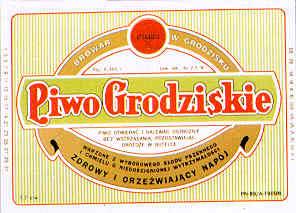
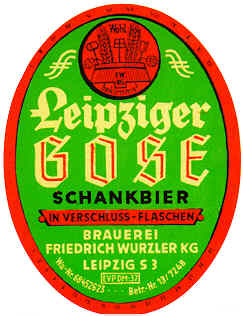
There's barely a true word in the first paragraph. The only brewery producing Gose in the 1940's was not destroyed in the war. It was on a country estate and survived intact. It never restarting brewing after the war. Gose was revived in 1949 (after the communists had taken over) at the newly-founded Friedrich Wurzler Brauerei in Leipzig. They were never short of grain for bread-making in the DDR. In any case, the bread was mostly made from rye, with a little wheat and certainly no barley . The last pre-unification Gose was not brewed in the 1950's. The Friedrich Wurzler Brauerei closed in 1966 after the owner died. It was so small and primitive that it wasn't worth nationalising and just shut down. Gose was revived by Lothar Goldhahn in 1986 and brewed at the Schultheiss Weissbier brewery on Schönhauserallee in Berlin until 1988.

Sorry to come across all negative, but this sort of unresearched "history" drives me nuts. It's not hard to find the correct information, if you can be arsed. Even wikipedia gets it right. Then again, it was me who wrote the section on the history of Gose.

If you're interested, I've an accurate history of Gose here:

http://www.europeanbeerguide.net/leippubs.htm


Sources:
"Gose Häppchen:100 Jahre Gosenschenke Ohne Bedenken", 1999, pages 13 - 63
"Die Biere Deutschlands" Höllhuber & Kaul, 1988, pages 342 - 344.

Friday, 1 August 2008

Momentous

Today has had its moments. Berlinisaplacewithdepthsandbreadthsandheights.

I`m not being all avant garde. That`s how things come out on this crappy hostel keyboard. The space bar is bollocks. Experiments are all very well. but punctuation and spaces between words were invented for a reason. Me. And those milliards of others who can`t make sense out of free flow text.

Internet cafes are great. You can keep in touch while fu ked off. (Sorry about the near square word.The C is malfunctioning. ) That's how I discovered my job has fallen into the great bit bucket of life. Probably.

Thanks internet. I could have lived in delightful, ignorant bliss for two more days.

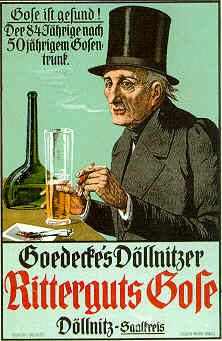
I haven`t forgotten my beer theme. I had Döllnitzer Rittergutsgose today. Who caresabout a fucking job?

Friday, 14 March 2008

Weird wheats

I'm heartened by the response to my posts about old German styles, especially the weird wheat styles. I've had a few enquiries from brewers wanting to make a Grätzer or a Lichtenheiner. Glad to be of help. Maybe I'll even get to try one or two.

Spurred on by brewers' questions, I dug around in the crap that fills my house and exhumed a few numbers. No Lichtenheiner, but Berliner Weisse, Gose and Broyhan.


They are the beers "generally available in Berlin". Most are very weak, as was usual in North Germany. You'd struggle to get very pissed on all except the Gose. Even that's only as strong as Mild.

You've probably guessed by now that I still haven't finished the Berliner Weisse translation. It's Saturday tomorrow. I should have some time.

Saturday, 12 January 2008

Amsterdamse school

"I know what I'm going to post about today."

Andrew: "About the school?"

"No, that has no connection with beer. It has to be about beer."

Andrew: "But I remember you once wrote about something else. Really. You did"

"Do you want to hear what I'll be blogging about?"

Andrew: "But you really did once write about something else. The one with the title Leeuwaarden. That wasn't about beer."

"Do you want to hear what I'll be blogging about?"

Andrew: "It really didn't have anything to do with beer."

"A comment I made on someone else's blog was the inspiration."

Andrew: "Take a look, dad, there's really nothing about beer in that one."

"There's an interesting story behind today's post. Several, in fact."

Andrew: "I'm sure there was another one not about beer, too. What was it . . . . ?"

"Porter in the DDR. "

Andrew: "Why can't you write about the school?"

I give in. I'll write about the school. Andrew's pressure hasn't decided me . The reasons are:

  1. I can't find my DDR label scans
  2. I can't find my translation of Dickscheit (what a dirty mind you've got - he's the author of "Leitfaden Für den Brauer und Mälzer")
Maybe I'll find time tomorrow.

Talking of "Leitfaden Für den Brauer und Mälzer", while flicking through it looking for the bit about Porter just now, I spotted a reference to Grätzer. The book was published in Leipzig in 1953. The mention was in a description of Rauchmalz (smoked malt). This is what says: "The best known Rauchbier is Grätzer." The malt for Grätzer was dried over beechwood fires, it explains.
I'm thrilled. Grätzer only died out about 10 years ago, yet I've only found a few short remarks about it. And I'm always rummaging around in German technical brewing litereature. (I know. I'm weird. Don't worry, I've come to accept it.) It's like unearthing a nugget, seeing the word Grätzer. Someone recently emailed me to say they were supposed to be reviving the beer this year. I hope they do. After I tracked down my original holy grail, Gose, I switched my attention to Grodziskie (the town from which Grätzer derives its name is now in Poland). Beer I would most like to try.

Amsterdamse School. My favourite type of architecture. Andrew starts secondary school next year. Our search for the right one started today at the open day of the Berlage Lyceum. An Amsterdamse School Amsterdam school.

I kept getting distracted. Takstraat is just behind the school. A wonderful bit of de Klerk fantasy, Takstraat is. Unusually for a building of the interwar period, the back elevations are as interesting as the facade. The way the balcony storage boxes (common in Amsterdam flats) have been modelled is pure genius. You can only really see it from the school playgound. As an older bloke, hanging around in school playgrounds isn't something I feel comfortable doing. Unless I have Andrew along, of course.

The Berlage Lyceum isn't bad looking itself. They didn't have leaded glass and frescoes in my school. He could study in worse surroundings. And the views are magnificent.

Friday, 24 August 2007

Gose

I'm having a day off Franconia. Instead I'm going to talk about another of my obsessions: Gose. For years it was the beer style I most wanted to try. When I finally did get my hands on it, I wasn't disappointed.

What is Gose?
Leipziger Gose is one of the world's most obscure beer styles, an isolated remainder of northern Germany's pre-lager traditions. About the only similar beer still brewed in Germany is Berliner Weisse, though Gose seems to have at least as much in common with sour Belgian wheat beers.

It's a pale, top-fermenting wheat beer, flavoured with coriander and salt. There's a hefty lactic acid content and was probably once spontaneously-fermented. A description in 1740 stated "Die Gose stellt sich selber ohne Zutuung Hefe oder Gest" ("Gose ferments itself without the addition of yeast"). I've always suspected some sort of link with the gueuze of Brussels, though not because of the similarity of the names. That, I'm sure is pure coincidence.

A source from 1927 says the following: "Gose is a Leipzig speciality. It is similar to Berliner Weisse, but sourer and not to everyone's taste. (Pour the bottle slowly.)" Now, Berliner Weisse can be mouth-puckeringly sour and most modern drinkers can't stomach it straight. I think that gives you an idea of just how sour Gose must have been.
There was once a whole family of sour wheat beers, brewed right across the North of Germany and the Low Countries, from Brussels to Berlin and beyond. In Germany you had Broyhan, Berliner Weisse, Gose, Grätzer. They were classified as Säuerliche Bier by Professor Franz Schönfeld in 1904. Broyhan, in particular, was brewed over a wide area and for a considerable length of time: for at least 300 years after its birth in 1526, from Hannover to Thüringen. In Belgium, there were Lambiek and several variations on the Witbier theme.

The precise method of brewing Gose was a matter of great secerecy in the 18th and 19th centuries. The beer's popularity (and the premium price that it commanded) made it an attractive proposition for any brewery. Naturally, those already in the business of making it weren't too keen on their rivals getting in on the act. The tricky part was getting the addition of the lactic acid bacteria right. Sometime during the boil, the precise moment was of great importance, a powder was added to the wort (according to a source of 1872).

Another important characteristic of Gose that makes it very different from other German beer of the 19th century is the method of conditioning. There was no long period of lagering at the brewery. Gose was delivered, still fermenting quite vigourously, in barrels to the Schänke. It was stored in the cellar with the tap bung closed but the shive hole left open, so that the still-active yeast could escape. Only when the fermentation had slowed to a point where no yeast was emerging from the shive hole, was the Gose ready to bottle. The barrel was emptied into a tank, from whence it was filled into the characteristic long-necked bottles. These were not closed with a cap or cork, but with a plug of yeast which naturally rose up the neck as the secondary fermentation continued.

How long this conditioning lasted depended upon a number of factors, most importantly the temperature outside. In the Summer an unlucky landlord could see his whole supply turn to vinegar. The minimum period for a bottle to mature was around a week. In warm weather a Gose would be considered undrinkable after about three weeks. The trick for the landlord was in serving his Gose at just the right degree of maturity. Some went so far as to have stocks of beer of different ages, so regular customers could have their beer just as they liked it.

You could consider this method as a sort of combination of the British tradition of cask-conditioning in the pub cellar and the Belgian tradition of lambic blending and bottling by pub landlords. The taste of the final product was determined as much by what happened in the pub as in the brewery.


The History of Gose
Gose has an odd history, having moved home several times in the 250 years it has been around. It was first brewed in the early 18th century in the town of Goslar, from which its name derives. The beer became popular in Leipzig, so popular in fact that the local breweries started to make it themselves. By the end of the 1800's it was considered to be the local style of Leipzig and there were countless Gosenschänke in the city.

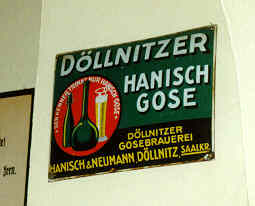
A big contribution to the legend of Gose was made by Johann Philipp Ledermann. In 1824 he started brewing Gose at Rittergut Döllnitz, a country estate between Merseburg and Halle. He had been a brewer in Goslar, but was lured by Johann Gottlieb Goedecke, the owner of the estate, to come and brew for him. Goedecke's own attempts to brew the financially lucrative Gose in the estate's small brewery had not been a great success. After Ledermann died in 1852, his wife took over supervision of the brewing process until her own death in 1883. By this time the brewery had managed to build up a virtual monopoly in the supply of Gose to Leipzig.

Unlike most of their modern counterparts, the Rittergutsbrauerei Döllnitz were happy to put a limit on the expansion of their business. For most of the second half of the 19th century they were producing "around a million bottles" of Gose a year. I make this an annual output of between 7,500 and 10,000 hl (I'm not sure how big the bottles were); not exactly mass production. To put this figure in its historical context, around 1890 the largest Munich breweries were pushing half a million hl a year, and even the smallest could manage 20,000 hl.
The constant supply, but heavy demand, meant that the brewery effectively rationed the supply of Gose. It was seen as a great favour if they agreed to deliver to a new client. Each pub was allowed a specific quantity of Gose, based upon their average number of customers. This policy was, most likely, at least partly based upon the nature of the beer. A bit like British cask beer, it was a living product with a limited shelf-life. Only pubs with a steady stream of drinkers could turn over enough of the beer to ensure that it was always in good condition. It appears that although the beer was synonymous with the city, it was never really the everyday drink of the masses. The majority of pubs never sold it and it was more expensive than other beers.


The Decline of Gose
During the Second World War production of Gose, like all other beer, ceased for a while. Worse was to come in 1945, when the Rittergutsbrauerei Döllnitz was confiscated and closed. It appears that, at the time, it was the last remaining Gose brewery. Only in 1949 did before Gose make a return, brewed in the tiny Friedrich Wurzler Brauerei at Arthur-Hoffmann-Straße 94 in Leipzig. At this time there were a mere 18 pubs taking the beer.

Friedrich Wurzler had worked before the war in the Döllnitzer Rittergutsbrauerei. After landing in Leipzig during the war, he was able to start his own brewery, mostly based on the handwritten notebook in his possession, which explained the secret of brewing Gose. Before his death in the late 1950's, he handed on the secret to his stepson, Guido Pfnister. Brewing of Gose continued in the small private brewery, though there appears to have been little demand. By the 1960's there were no more than a couple of pubs in Leipzig and possibly one in Halle that were still selling it.
Gose struggled along until 1966, when, while working in his garden, Guido Pfnister had a heart attack and died. The local nationalised group, VEB Sachsenbräu, had no interest in taking over the small run-down Wurzler brewery and so it was closed. Another small private brewery, Brauerei Ermisch, considered continuing the production of Gose and took possession of Pfnister's brewing book. Their enthsiasm didn't last long and not only was no Gose produced, but the notebook also appeared to have been accidentally destroyed.

The last Gose was served in Hotel Fröhlich at Wintergartenstraße 14. Here they still carried on the tradition of buying barrels from the brewery and bottling the beer themselves. The final barrel was delivered on 31 March 1966. When the last of the bottles had been drunk, the customers had to make do with Berliner Weiße.The hotel was never to see real Gose again, being closed and then blown up in 1968.


Gose's Revival
That would have been the end of the story and Gose would have become another lost curiosity. In a strange parallel with Belgian witbier, the devotion and determination of one man led to its rebirth. An enthusiastic publican, Lothar Goldhahn, had decided to restore one of Leipzig's most famous old Gosenschenke, Ohne Bedenken, to its former glory. He though that it was only fitting that the revived pub should sell Gose. Goldhahn was determined to resurrect the style and interviewed many old leipzigers to ascertain its precise taste. More importantly, he was able to track down a former employee of the Wurzler Brauerei who had at least some of Pfnister's notes in his possession. The Getränke-kombinat Leipzig developed a "Werkstandard zur Herstellung von Leipziger Gose" ("work standard for the production of Leipziger Gose") based upon this recipe.

Goldhahn's intentions to have his beer brewed locally in Leipzig were soon frustrated. None of the local breweries had either the technology or the inclination to brew such an odd top-fermenting beer, so he had to look further afield for a producer. Eventually, a test batch of Gose was brewed in 1985, at the Schultheiss Berliner-Weisse-Brauerei in East Berlin. At a tasting held in Goldhahn's flat, a group of experienced Gose drinkers came to the conclusion that it was a "real" Gose. The first production batch followed in 1986 and Leipzig had Gose once more, if only in a single pub.
Since then, Gose has once more been on its travels. In 1988 the Schultheiss Berliner-Weisse-Brauerei decided that it couldn't be bothered brewing the tiny quantities of Gose any more. For a while Ohne Bedenken had to resort to serving Berliner Weisse again.

The third postwar Gose-free period ended in 1991, when Goldhahn bought the small Löwenbrauerei in Dahlen. He now had total control of brewing his own Gose. Sadly, the demand for Gose proved too limited even to keep a small brewery fully occupied. Goldhahn was forced to sell it in 1995 and look elsewhere for someone to contract brew for him. The Andreas Schneider brewery in Weissenburg (Bavaria) duly obliged.


Gose Today
For the first time since before 1939 there is more than one brewery currently making a Gose, two in Leipzig itself. It's still easier to find Kölsch in the city, so Gose hasn't been restored to its former popularity, but the style is more secure today than it has been for any time in the last 50 years.

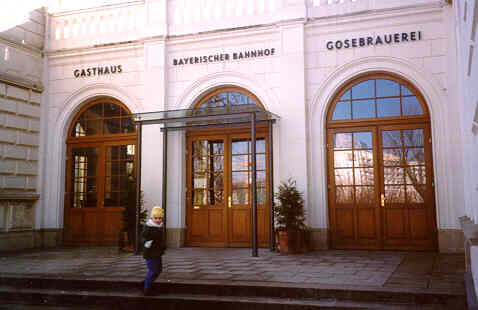
In 1999 a new brewpub opened in central Leipzig, which places great emphasis on the Gose it brews. It's so committed, to the style that it's even part of its name:Gasthaus
& Gosebrauerei Bayerischer Bahnhof
. This now supplies Ohne Bedenken and a few other pubs in the city. Obviously the Andreas Schneider brewery got bitten by the Gose bug whilst brewing for Goldhahn, because it is the owner of the brewpub. Maybe it's just me, but I find it very amusing for a Bavarian-owned brewery to be brewing a non-Reinheitsgebot beer.

The good news just keeps coming: another Leipzig brewery, Ernst Bauer, started brewing a Gose in 2002. The beer is being brewed under contract for Adolf Goedecke, a descendant of the owners of the Rittergut Döllnitz. According to a text from 1824, it was in the Rittergut that the only real Gose was brewed. This beer is also available in Ohne Bedenken and a few other outlets.

Brauhaus Goslar (in Goslar, unsuprsingly) brews not one but two Goses, a pale and a dark version.


Gose Links
These are a couple of links to articles by Michael Jackson about Gose:

Article about new Gose brewpub.
General article about Gose.

For those of you who can read German, here are some more Gose links:

Der Gose-Wanderweg von Leipzig nach Halle. A very interesting guide to walks between Leipzig and Halle. It's underlying theme is Gose and it lists an impressive number of (mostly) country pubs serving the beer.

Leipziger Gose A site dedicated to this very special beer.