Showing posts with label Watney Mann. Show all posts

Monday, 11 March 2024

Watney Mann

The most hated of breweries amongst the CAMRA faithful. For the simple reason that they had moved aggressively into keg beer. Some of their breweries still produced a little cask, but they were deeply committed to keg.

In the 1890s, they leapfrogged into first place in London after taking part in the first big brewing merger. The result was Watney Combe Reid. A company that was producing over 1 million barrels a year.

They owned several breweries in different regions: Norwich, Webster (Halifax), Wilsons (Manchester), Usher (Cheltenham) and Drybrough (Edinburgh). Some producing cask, others not. Webster’s beers were OK in cask form, but nothing special. Wilsons beers, even though often in cask, I never cared for.

Mortlake
One of the breweries owned by the company when it was still Watney Combe Reid, it was their main brewery in London after the closure of the Stag Brewery in Pimlico in 1959. It was first acquired by Watney in 1889.

At the start of the decade, it produced no cask beer and hadn’t for quite a while. Though, under pressure from CAMRA, they introduced Fined Bitter, a cask beer served from kegs, in the middle of the 1970s.

Whitechapel
The former Manns brewery in the East End of London, it was bought by Watney in 1958 to replace their original Stag Brewery, which was demolished to make way for a commercial development.

Manns had been one of the major Ale breweries in the capital. Their biggest claim to fame was to have developed the first modern Brown Ale at the start of the 20th century. Oh, and their brewery tap, the Blind Beggar, was the scene of a notorious gangland murder in the 1960s. I drank in there a couple of times in the 1970s. Scary, is how I would describe it.

Norwich
Of the three independent breweries located in the town during the 1950s, only one remained in 1970. And that was in the hands of Watney, who had bought all three breweries in 1963. Of Steward & Patteson, Bullard and Morgan, only the last continued to brew.

Having inherited the tied houses of all three breweries, Watney had a near monopoly in Norwich and parts of Norfolk. Villages which once had a pub from each of the three, found themselves with just one. Or maybe even none. As Watney ruthlessly closed rural pubs they didn’t consider viable.
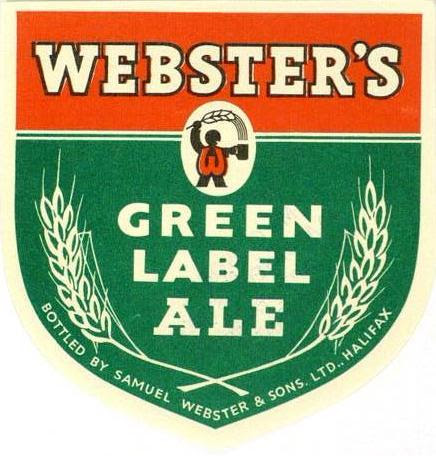
Webster
Despite being owned by Watney, Webster still brewed a range of draught beers typical of West Yorkshire: a fairly light Bitter and a Pale and Dark Mild. The latter two suspiciously of the same gravity. My guess is that it was one beer sometimes coloured up with caramel.

Wilsons
According to John Keeling, who worked in the lab at Wilsons during the 1970s, there was a big split between production methods of the Wilsons and Watneys brands. The former were brewed from malt and sugar and were fermented in open squares, cooled by a water jacket. While the latter contained 40% raw barley along with enzymes to convert it. They were then fermented in conicals.

Usher
Located in Trowbridge in the Southwest of England, Usher was one of the Watney plants which still produced a decent amount of cask beer. In 1977, around 300 of their 688 tied houses stocked cask. Though, typically of the period some of that was served on top pressure.

Drybrough
One of the many breweries which were located in Duddingston, a village on the outskirts of Edinburgh. The brewery started the decade with a mostly fairly dull range of keg-dispensed draught products, all parti-gyled together. Friends who lived in Scotland weren’t great fans of their beers.

It was one of the four Watney breweries which installed continuous fermentation system. And the last one to decommission it.

For a while, they brewed with 60% unmalted barley in the grist. But that was too much even for Watney and it was reduced to “just” 45%.
 

Thursday, 7 March 2024

Carlsberg vs the Big Six

It may be hard to believe now, but the Big Six, in their prime during the 1970s, were some of the largest brewing groups in the world. But, while large breweries on the continent, such as Carlsberg and Heineken have continued to grow, the UK's biggest breweries all fell by the wayside.

When Watney Mann were making deals with Carlsberg in the early 1970s, they were by far the larger brewery of the two. At least in terms of the quantity of beer produced.

The figures are from slightly different dates, Carlsberg being for 1969 and Watney and Bass Charrington from 1976. Even Watney, one of the smallest of the Big Six, produced more than double as much as Carlsberg. Which must have had an impact on the relations between the two. I've included Bass Charrington, the largest of the Big Six, for comparison.

So where did it go wrong for the big UK brewers? They didn't expand internationally. Or at least not as much and not as successfully. Obviously, there wasn't quite the incentive for this as there was for brewers like Carlsberg and Heineken, whose home markets were much smaller. 

Carlsberg vs the Big Six
  hl barrels
Denmark consumption 4,830,000 2,951,256
Total Carlsberg 3,571,000 2,181,974
Carlsberg exports 825,000 504,096
Carlsberg domestic 2,746,000 1,677,877
% Carlsberg domestic 56.85%  
Bass 12,831,060 7,840,111
Watney 7,698,636 4,704,067
Source:    
Brewers' Guardian, Volume 99, April 1970, page 75.
“The Brewing Industry, a Guide to Historical Records” by Lesley Hammons & Alison Turton.


Wednesday, 29 January 2020

Let's Brew Wednesday - 1966 Drybrough MBA Brown Ale

I’ve only just twigged what this beer is. I can be so dumb sometimes. The big clue is that Drybrough was taken over by Watney Mann in 1965. MBA obviously stands for Mann’s Brown Ale.

Which explains why the recipe is so radically different from all their others. I say all their others. They only had the one recipe, from which they brewed Pale Ales of varying degrees of wateriness.

It must have been weird for Drybrough’s brewers to suddenly have all these exotic ingredients: crystal malt, No. 3 invert and torrefied barley. The ingredients are so different from the ones they normally used that I can only assume that it’s very similar to the London-brewed version.

With Brown Ale hugely popular at the time, Drybrough must have already had one in their portfolio. Which they doubtless constructed from 60/- plus priming sugars. With Mann’s being a renowned national brand, I’m sure Drybrough’s own Brown Ale was quickly dropped after the takeover.


1966 Drybrough MBA Brown Ale
pale malt 4.25 lb 57.90%
black malt 0.09 lb 1.23%
crystal malt 60 L 1.75 lb 23.84%
torrefied barley 0.50 lb 6.81%
No. 3 invert sugar 0.50 lb 6.81%
caramel 500 SRM 0.25 lb 3.41%
Fuggles 90 min 0.50 oz
Goldings 30 min 0.50 oz
OG 1034
FG 1012
ABV 2.91
Apparent attenuation 64.71%
IBU 13
SRM 21
Mash at 145 / 158º F
Sparge at 165º F
Boil time 90 minutes
pitching temp 62º F
Yeast WLP028 Edinburgh Ale

The recipe is from from my overly detailed look at post-war UK brewing, Austerity!

http://www.lulu.com/content/paperback-book/austerity/23181344


Which is now also available in Kindle format.

Sunday, 4 December 2016

Beer in 1958 (part two)

The first article in Beer in Britain contains a very handy overview of the brewing industry.

First, the number of people employed directly or indirectly by brewing:

“The industry to-day comprises large, medium and small brewery firms — over 250 of them — but the six largest make over a third of the output. Breweries and maltings together employ about 70,000 people (operatives and staff, including lorry and tanker crews) with a high average net output of £1,240 a year, 45 per cent, above the average for all manufactures. The small number of workers in a brewery is striking. The retail distribution occupies far more; upwards of 350,000 workers are employed in licensed premises, but these include hotels as well as pubs. The whole chain of activities listed earlier must occupy nearly 500,000 people. Many others are employed in allied trades: by suppliers of machinery and bottles and glasses, and by firms using by-products, making yeast into vegetable extracts or supplying fertilizer from hops.”
"Beer in Britain", 1960, page 4.

Of course, there were more than 250 breweries in 1958. They’re talking about the number of brewing companies. Which had been falling throughout the 1950’s, as this table shows:

Number of breweries in the UK 1950 - 1960
Year Breweries
1950 567
1951 539
1952 524
1953 501
1954 479
1955 460
1956 426
1957 416
1958 399
1959 378
1960 358
Sources:
BBPA Statistical Handbook 2003, p. 92
Brewers' Almanack 1955 p.68
Brewers' Almanack 1962 p.67

I’m wondering who the six largest brewers were in 1958. Here’s my guess: Watney Mann, Courage Barclay, Whitbread, Hammond United, Charrington and M&B. I could well be wrong, mind.

70,000 isn’t a huge number. But brewing isn’t very labour-intensive. You only need a handful of people to run a brewhouse. Very few of those 70,000 would have been working in the brewhouse. A large number would have been working in ancillary jobs, such as drayman. And at a time when casks were still made of oak, the cooperage would have been one of the biggest employers in a brewery. With so few workers, it’s not surprising that the average net output was above that of most industries. When the pub trade is included, however, the numbers employed look much more respectable.

In 1958 there were 69,913 pubs in England and Wales* and 6,074** in Scotland, making a total of 75,987. If 350,000 were employed, that comes to just 4.6 per pub. And remember that figure included hotels. But there were also 22,567*** clubs in England and Wales plus 1,219*** in Scotland. If you add in those, that’s just 3.5 employees per licensed premises. That seems pretty low. But, if they aren’t counting the landlord and their family member, it could be right.

Something about mergers in the industry:

“The trend to bigger breweries has been partly by amalgamation, and this continues. The consumption of beer is below the peak (of 1945) and tends still to fall; there are many competing claims on consumers' purses (including television and, of course, wines and spirits). Hence amalgamation is perhaps the main way to further development, though the bigger firms have their own vigorous selling campaigns. (They are conspicuously among the largest poster advertisers; and they differ as conspicuously in the concessions they make in this part of their work to the susceptibilities of the highbrow.)

The most recent amalgamations have included some between already large  firms—Watney's and Mann's, for example, and Barclays and Courage's. Here there are special considerations; the need, for example, to close Watney's brewery at Victoria for town-planning reasons.
"Beer in Britain", 1960, pages 4 - 5.

That last statement is news to me. Watney’s brewery was on a piece of desirable real estate, between Victoria Station and Buckingham Palace. After closure it was redeveloped as an office complex. Not sure why they needed to merge with Manns as they had another large brewery further west along the Thames at Mortlake.

There were a lot of takeovers in the 1950’s, with some breweries, such as Hammonds and Whitbread, going on buying sprees. Which inevitably led to a reduction in the number of breweries and an increase in scale of the remaining ones. Falling beer sales were one of the driving forces behind consolidation. Buying up a rival and its pubs was one of the easiest ways to increase output in a declining market.

Beer production started to rise after 1960, but only exceeded the 1946 figure in 1970. You can see in the table below that despite this average output per brewery rose considerably in the second half of the 1950’s.

Beer production and output per brewery 1950 - 1960
Year Bulk barrels Breweries Average output per brewery (barrels)
1950 26,513,997 567 46,762
1951 24,891,746 539 46,181
1952 25,156,489 524 48,009
1953 24,883,227 501 49,667
1954 24,582,303 479 51,320
1955 23,934,215 460 52,031
1956 24,551,158 426 57,632
1957 24,506,524 416 58,910
1958 24,647,978 399 61,774
1959 23,783,833 378 62,920
1960 26,115,012 358 72,947
Sources:
Brewers' Almanack 1955, p. 50
Brewers' Almanack 1962, p. 48
BBPA Statistical Handbook 2003, p. 92
Brewers' Almanack 1955 p.68
Brewers' Almanack 1962 p.67

More about pubs next. 


* Brewers' Almanack 1971, page 83.
** 1922 – 1972: The Brewers' Society Statistical handbook 1973”, page 52.
*** Brewers' Almanack 1971, page 83.
**** 1922 – 1972: The Brewers' Society Statistical handbook 1973”, page 52.

Sunday, 3 July 2016

Britain’s best Brown Ale

Brown Ale was extremely popular – and gaining popularity – in the 1950’s.

Which explains why it was advertised so much. There was a growing market and brewers wanted their share of it. Especially at a time when overall beer sales were falling. The claims in rival adverts are remarkably similar: everyone is claiming to brew the best Brown Ale.

First Mann. Who at least can claim to be the first (modern) Brown Ale.

Now! You can drink Britain's best brown ale!
Brown Ale is becoming more and more popular with Britain’s beer drinkers. With good reason. No other beer is so rich, so mellow, so smooth-—and at the same time, so kind to the constitution. There is no better Brown Ale than Mann’s, the first ever brewed. No finer methods or malt are used in England. Till now Mann’s Brown Ale has been confined to the Home Counties. Now you can drink it — and taste for yourself. Ask for it at your local suppliers.

Mann's brown ale
BREWED BY MANN, CROSSMAN AND PAULIN LIMITED, LONDON BOTTLED BY HUNTER AND OLIVER LIMITED, BURY ST. EDMUNDS

Drink a Manns Beer
Bury Free Press - Friday 08 February 1952, page 9.

Smooth is a word that crops up often in the description of Brown Ale. And they liked to emphasise how benign it was for “the constitution”, whatever that might mean.

Have you tried the best brown ale in Britain?
More and more people are drinking Brown Ale. It's full, rich, malty beer, but kindness itself to the constitution. The first Brown Ale ever brewed was Mann's and it is the best there is. Get some from your local supplier, or enjoy it at any Mann's house.
MANN'S brown ale
BREWED BY MANN, CROSSMAN AND PAULIN LIMITED, LONDON.
Hastings and St Leonards Observer - Saturday 18 April 1953, page 17.

Also claiming to have the best Brown Ale were London rivals Watney. Who bought Mann in 1958 to form Watney Mann.

"This tastes good!"

"It is - it's Watneys!"

 We can appreciate how he feels. To drink deep of that delicious, nut-sweet brew the moment we see it is natural, right and proper. But our thirsts temporarily slaked, it’s worth remembering that Watney’s Brown Ale will keep as bright as a bead. Take home a few bottles today. And when you drink them, you’ll find the last bottle as good as the first.

WATNEY’S THE BEST BROWN ALE
Hastings and St Leonards Observer - Saturday 19 April 1952, page 6.

Note the emphasis here on the beer being crystal bright and stable. This is probably taking a swipe at beers that were still bottle conditioned.

This Watney second ad uses the words “smooth” and “nutty”:

“What value for money
And what a wholesome drink

You won’t find a more nourishing, sustaining drink anywhere than this smooth, foam-crowned ale with the nutty tang. Take a few bottles home with you and enjoy a glass tonight!

WATNEY’S THE BEST BROWN ALE

WATNEY'S ALES and REID'S STOUT are now available in most off-licences and other bottled beer merchants in your area.
Portsmouth Evening News - Wednesday 28 January 1953, page 12.

It sounds as if Watney were trying to make their Brown Ale a national brand. You’ll note that the adverts mostly talk about buying Brown Ale to drink at home.

If you’re like me you’re probably wondering what these Brown Ales were like. Here’s Mann’s:

Mann's Brown Ale 1946 - 1957
Year Beer Price per pint OG FG ABV App. Atten-uation colour
1946 Brown Ale 14d 1035.4 1011.7 3.06 66.95% 12 + 40
1946 Brown Ale 14d 1034.4 1008.8 3.32 74.42% 10.5 + 40
1947 Brown Ale 14d 1033.6 1008.4 3.27 75.00% 11 + 40
1947 Brown Ale 13.5d 1035.4 1010.9 3.17 69.21% 10 + 40
1947 Brown Ale 14d 1035 1007.8 3.53 77.71% 10 + 40
1947 Brown Ale 14d 1035.3 1011.4 3.09 67.71% 11 + 40
1948 Brown Ale 16d 1035.2 1004.6 3.99 86.93% 14 + 40
1948 Brown Ale 17d 1033 1012.4 2.66 62.42% 12 + 40
1949 Brown Ale 17d 1032.9 1010.2 2.94 69.00% 20 + 40
1950 Brown Ale 16d 1033 1011.7 2.75 64.55% 15 + 40
1950 Brown Ale 18d 1035.8 1013.3 2.91 62.85% 15 + 40
1956 Brown Ale 22d 1035.5 1013.2 2.88 62.82% 115
1957 Brown Ale 33d 1037.5 1014.9 2.92 60.27% 105
Source:
Whitbread Gravity book held at the London Metropolitan Archives, document number LMA/4453/D/02/002.


And here’s Watney’s:

Watney's Brown Ale 1946 - 1956
Year Beer Price per pint OG FG ABV App. Atten-uation colour
1946 Brown Ale 13d 1031.2 1011.4 2.56 63.46% 17 + 40
1946 Brown Ale 12d 1029.6 1008.5 2.73 71.28% 12 + 40
1947 Brown Ale 12d 1028.3 1010.3 2.33 63.60% 13 + 40
1947 Brown Ale 12d 1028.7 1005.5 3.01 80.84% 10 + 40
1947 Brown Ale 13d 1029.8 1009.7 2.60 67.45% 11 + 40
1947 Brown Ale 13d 1029.3 1007.4 2.84 74.74% 17 + 40
1948 Brown Ale 15d 1030.6 1009.3 2.76 69.61% 14 + 40
1948 Brown Ale 16d 1031 1005.7 3.29 81.61% 18 + 40
1949 Brown Ale 16d 1030.3 1009.7 2.66 67.99% 16 + 40
1949 Brown Ale 15d 1030 1007.8 2.88 74.00% 16 + 40
1950 Brown Ale 15d 1029.4 1007.8 2.80 73.47% 10 + 40
1950 Brown Ale 15d 1030.4 1007.9 2.92 74.01% 15 + 40
1950 Brown Ale 17d 1032.6 1010.8 2.82 66.87% 16 + 40
1951 Brown Ale 17d 1031.1 1010.3 2.69 66.88% 40 + 17
1952 Brown Ale 18d 1031.1 1009.3 2.82 70.10% 16 + 40
1953 Brown Ale 19d 1032.1 1009.9 2.87 69.16% 17 + 40
1953 Brown Ale 19d 1032.8 1009.8 2.98 70.12% 16 + 40
1954 Brown Ale 19d 1031.9 1010 2.83 68.65% 18 + 40
1955 Brown Ale 21d 1032.3 1010.9 2.77 66.25% 125
1956 Brown Ale 20d 1032.2 1011.1 2.73 65.53% 120
Source:
Whitbread Gravity book held at the London Metropolitan Archives, document number LMA/4453/D/02/002.

Mann’s had a slightly higher than Watney’s. Though both are pretty weak in terms of ABV. You’d have struggled to get pissed on them. It’s interesting to see how the rate of attenuation fell as the 1950’s progressed. Which implies both were getting sweeter.

Mann’s is one of the few surviving Brown Ales. Not sure what else is left, other than Newcastle Brown, Double Maxim and Harvey’s Brown Ale.

Tuesday, 12 January 2016

How to brew Watney’s Red Barrel

Had you told me 30 years ago that I’d be writing in detail about how to brew Red Barrel, I’d have called you a twat. After I’d finished laughing.

How times, and, more importantly, people, change over the years. I’m certainly much mellower than I was. And I’ve learned not to blindly dismiss things, just because they aren’t to my personal taste. Though whether Red Barrel was or not, I’ll never know. Because I never tried the stuff. Just like Double Diamond, Courage Tavern and Youngers Tartan. Which keg beers did I try? Not many. I can remember accidentally drinking keg Bass in Cornwall. Bastards were using fake handpulls.

Apologies for wandering off topic. Back to Red Barrel. I’m fortunate enough to have come into possession of a pdf of the Watney Mann Quality Control Manual (thanks to Boak and Bailey). It has wonderfully detailed instructions in how to brew all their beers. Including Red Barrel.

Such a document is dead handy. In some ways better than a brewing record. As it documents many things usually left out of brewing logs. Things like the timing of hop additions.  Though it’s for one specific brewery, it still provides an insight into London brewing in general.

Despite its dreadful reputation as absolute dross, there’s nothing particularly different about Red Barrel’s ingredients or production methods. It looks much like other London Pale Ales. In fact the grist has a higher percentage of malt than most. Of course, the damage was done at the end of the process, when Red Barrel was killed then kegged.

I’m not sure what the date of the Quality Control Manual is. But as it says “Watney Mann” on the cover, it can’t be earlier than 1958. There’s a table of amendments at the front with two entries, dated January and February 1965. So it must date from between 1958 and 1964.

Right, let’s crack on with the details. Starting with the grist:

Watney's Red Barrel grist
Ingredient Percentage notes
Pale malt 89
Dixons Enzymic Malt 1
Crystal malt 4.5 (Maximum)
Malt Extract (Paines, Edme or Diamalt) 3 added to the mash tun during mashing.
No. 3 Invert (Manbre, Albion or Clark) 2.5 added to the copper.
Total 100

94.5% malt is a very high percentage. Around 80% was more typical. And the sugar content is very low. Between 10 and 15% was usual.

Let’s do a bit of comparing and contrasting. Starting with a classy London brewer, Whitbread:

1959 Whitbread PA
Ingredient Percentage
PA malt 75.47%
crystal malt 5.66%
no. 1 invert sugar 18.87%
Source:
Whitbread brewing record held at the London Metropolitan Archives, document number LMA/4453/D/01/126

Whitbread had some of the most expensive-looking grists, yet the malt content of their Bitter was just 81%, far less than Red Barrel. Whitbread only ever used unmalted grains when forced to during the war.

Now a more typical grist from Fullers:

1958 Fullers SPA grist
Ingredient Percentage
pale malt 81.90%
flaked maize 14.66%
no. 2 invert sugar 2.30%
glucose 1.15%
PEX 2.30%
CDM 0.48%
total sugar 6.23%
Source:
Fullers brewing record held the brewery.

The malt percentage is similar to Whitbread PA, but the bulk of the rest is made up of flaked maize rather than sugar.

And finally a Bitter from the North:

1950 Lees Bitter grist
Ingredient Percentage
pale malt 87.07%
black malt 0.09%
enzymic malt 1.43%
invert sugar 1.90%
C.W.A. 7.61%
Proteinex 1.90%
total sugar 11.42%
Source:
Lees brewing record held the brewery.

The malt percentage is higher here at 89%. While the remainder of the grist is all sugar. Note that Lees also used enzymic malt. It was dead popular in the 1950’s.

Next we’ll be looking at water treatment and mashing.

Thursday, 13 February 2014

League table of London Milds in the 1920's

So here we are. At the end of a marathon series of posts about London Mild Ale quality in the 1920's. I've laughed, you've cried, we've all forgotten why I started this in the first place.

But to start off I thought I'd summarise the vital statistics of the London Milds we've been looking at. I've averaged out the values for each of the beers. I think you'll agree that they give us some fascinating insights. No? OK, they tell us one thing. London brewers kept a very close eye on each other.

Why do I say that? Because the OG's of Milds in the same class are all very close to each other. I've used the price per pint in 1922 to divide them up: 5d, 6d and 7d. The three 5d Milds have a variation of less than 1 point. If you leave out Watney, the spread across the 7d Milds is exactly 1 point. There's slightly more variation in the 6d Milds - 2.4 points altogether, but the majority are 1034-1035º.

Attenuation is in the high 70's or low 80's for the vast majority of the Milds. Only Hoare X and Truman X were significantly lower.

Here's all the information in handy table form:

Average values for London Mild Ales in the 1920's
Brewery Beer OG FG ABV App. Atten-uation Price per pint
Meux MA 1028.1 1005.9 2.88 78.93% 5d
Whitbread MA 1028.7 1005.1 3.06 82.04% 5d
Truman MA 1029.0 1007.5 2.79 74.31% 5d
City of London X 1033.7 1006.4 3.55 81.04% 6d
Hoare X 1033.8 1009.8 3.11 71.16% 6d
Courage X 1034.5 1007.3 3.53 78.76% 6d
Wenlock X 1034.6 1007.2 3.57 79.21% 6d
Cannon X 1035.1 1008.1 3.53 77.11% 6d
Huggins X 1036.0 1008.1 3.63 77.57% 6d
Charrington X 1040.8 1008.7 4.17 78.63% 7d
Lion Brewery X 1040.9 1007.6 4.33 81.37% 7d
Meux X 1041.2 1008.2 4.28 80.02% 7d
Truman X 1041.2 1011.8 3.82 71.44% 7d
Whitbread X 1041.2 1007.6 4.38 81.62% 7d
Mann X 1041.3 1008.2 4.26 79.96% 7d
Barclay Perkins X 1041.8 1010.7 4.01 74.38% 7d
Watney X 1043.6 1008.8 4.50 79.65% 7d
Sources:
Whitbread Gravity book held at the London Metropolitan Archives, document number LMA/4453/D/02/001.


Let's get on with what I'm sure you've all been waiting for, the London Mild Premier League Table for 1925. It's a bit surprising for anyone who started their drinking in the 1970's, like I did:

League table of London Milds in the 1920's by score
Brewery Beer No. examples no. bright % bright no. good flavour % good flavour average score
City of London X 12 4 33.33% 3 25.00% -1.25
Charrington X 10 3 30.00% 5 50.00% -0.70
Barclay Perkins X 14 1 7.14% 5 35.71% -0.64
Truman MA 8 4 50.00% 2 25.00% -0.63
Meux MA 7 4 57.14% 2 28.57% -0.57
Whitbread X 5 3 60.00% 2 40.00% -0.2
Meux X 11 6 54.55% 6 54.55% 0
Huggins X 10 6 60.00% 7 70.00% 0.20
Hoare X 10 7 70.00% 7 70.00% 0.30
Courage X 16 15 93.75% 11 68.75% 0.38
Lion Brewery X 10 5 50.00% 6 60.00% 0.40
Truman X 14 11 78.57% 9 64.29% 0.5
Cannon X 14 9 64.29% 9 64.29% 0.54
Whitbread MA 3 0 0.00% 2 66.67% 0.67
Wenlock X 12 8 66.67% 10 83.33% 1.17
Watney X 17 16 94.12% 15 88.24% 1.25
Mann X 15 10 66.67% 11 73.33% 1.33
Source:
Whitbread Gravity book held at the London Metropolitan Archives, document number LMA/4453/D/02/001

Yes, it's true: Watney and Mann (in my young days combined into one evil conglomerate) come out on top. As they were two of the beers for which there were the most samples, I don't think it's a freak result. Just shows how dangerous it is to project the future into the past. That their beer was shit in the 1970's tells you nothing about its quality pre-war.

Wenlock is a surprising third with a very respectable score. Whitbread MA at number four is even more surprising, but that is based on just three samples. The X Ales of Huggins, Hoare, Courage, Lion Brewery, Truman and Cannon all come out with modestly positive scores.

It was saddening to see so many of the great Porter breweries with negative scores - City of London, Charrington, Truman, Meux, Whitbread and my own favourite Barclay Perkins. The one other brewery with a negative score was Charrington, one of London's most renowned Ale brewers. All very odd.

One last table. These are the beers rated by clarity:

League table of London Milds in the 1920's by clarity
Brewery Beer No. examples no. bright % bright no. good flavour % good flavour average score
Whitbread MA 3 0 0.00% 2 66.67% 0.67
Barclay Perkins X 14 1 7.14% 5 35.71% -0.64
Charrington X 10 3 30.00% 5 50.00% -0.70
City of London X 12 4 33.33% 3 25.00% -1.25
Truman MA 8 4 50.00% 2 25.00% -0.63
Lion Brewery X 10 5 50.00% 6 60.00% 0.40
Meux X 11 6 54.55% 6 54.55% 0
Meux MA 7 4 57.14% 2 28.57% -0.57
Whitbread X 5 3 60.00% 2 40.00% -0.2
Huggins X 10 6 60.00% 7 70.00% 0.20
Cannon X 14 9 64.29% 9 64.29% 0.54
Wenlock X 12 8 66.67% 10 83.33% 1.17
Mann X 15 10 66.67% 11 73.33% 1.33
Hoare X 10 7 70.00% 7 70.00% 0.30
Truman X 14 11 78.57% 9 64.29% 0.5
Courage X 16 15 93.75% 11 68.75% 0.38
Watney X 17 16 94.12% 15 88.24% 1.25
Source:
Whitbread Gravity book held at the London Metropolitan Archives, document number LMA/4453/D/02/001.

Slightly different results, but Watney still does very well.


