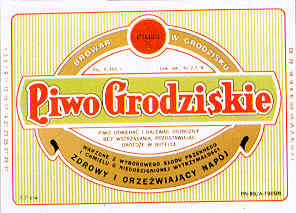
Showing posts with label Grätzer. Show all posts

Tuesday, 2 June 2020

Top-fermenting relics of the 1930s

We're back with good old Schönfeld again.  In this particularly handy section, he runs through which beers had or hadn't made it past WW I.

It includes a couple of surprises.

"In the meantime (from 1900 onwards) a new type of beer in the form of sugar-sweetened and pasteurized Malzbier (Karamelbier) had appeared, giving top fermentation a considerable boost, which has also recently involved the top-fermented, light bitter Lagerbier which was already brewed in the Rhineland.

Otherwise, the old local beers are mostly forgotten. Even famous beers. Such as Danziger Jopenbier, Einbecker beer. The widely spread Porter. Münsterländer Altbier, of which only remnants of inferior quality remain.

A few have managed to survive into the present day, such as Broihan (Hannover)*, which is brewed using wheat malt and has a sweet taste; the dark and weakly sweet brown beer brewed in the Kretschmerei in Breslau, Hamburger "Beer", Lichtenhainer beer and Gose, the wheat malt beer of Bavaria, especially the Berliner Weissbier, and to a lesser extent the non-sour Weissbier of northern Germany. Grätzer beer has saved itself - as a miserable leftover. Rhenish top fermentation, however, has survived the times in improved condition.

* Brown beer with a schnapps (caraway) has been a well-known popular drink in Hamburg as in Hanover under the name "Lüttge Lage"."
"Obergärige Biere und ihre Herstellung" by Dr. Franz Schönfeld, 2nd edition, Verlag von Paul Parey, Berlin, 1938, page 132.

I'd assumed that Broyhan dies out a decade or two earlier. But, no, it was still limping on in the 1930s.

It's weird that he lists Porter in the lost beers. As there were still plenty of breweries making it in the 1930s. At least one in Berlin, where Schönfeld was based. Not sure which beers he means by non-sour wheat beers. Possibly things like Bremer Weissbier. About which I know bugger all, other than having seen the odd label.

Lüttge Lage is a weird survivor. It's a type of low ABV Altbier which is still produced in Hanover.

Schönfeld finishes this section with a quick look at top-fermentation elsewhere in Europe:

"In other countries too, top fermentation was pushed away more and more. However, there are still a number of breweries in Holland and France which produce light LAgerbier in a top-fermenting manner to a not inconsiderable extent. In Belgium, top fermentation still remains in the production of old sour beers.

A very special exception is England. Only top fermentation is known here. Hundreds of years ago, English beers had a well-founded reputation. They were all strong beers with great durability and characteristic taste and fragrance. They have  remained so to this day. Bottom fermentation was unable to gain a foothold. National characteristics and habits have allowed the old method of preparation to hold on."
"Obergärige Biere und ihre Herstellung" by Dr. Franz Schönfeld, 2nd edition, Verlag von Paul Parey, Berlin, 1938, pages 132 - 133.
 Of course, there was far more than sour brown beers being top-fermented in Belgium before WW II. And there was bottom-fermenting beer produced in the UK. Just not very much of it.

Sunday, 22 March 2015

Beer drinking in Germany in the 1890’s

In keeping with my current Berliner Weisse kick, I’ve been searching the British newspaper archive. It’s surprising how many hits I’ve had.

Though obviously I didn’t search for “Berliner Weisse” or “Berliner Weissbier”. “Berlin white beer” is the term that gets results.

BEER DRINKING IN FRANCE AND GERMANY.

. . . .

The United States Consul-General at Berlin, in his last report, states that the German beer production, which in the preceding year had risen, increased again in the fiscal year 1888-89, although the consumption was interfered with by the unfavourable weather of the summer of 1888, and also by the good fruit crops. The increase in the beer production of 1888-89 was confined entirely to the under-fermented (untergahrige) sorts, the highly-fermented beers having fallen off in amount. This was due in part to the bad weather, which was unfavourable to the consumption of highly-fermented (obergahrige) beers ; but chiefly to the growing popularity of the under-fermented sorts, whose sale by the breweries was increased through depots in other places, discounts to dealers, &c., and particularly through the growing popularity in town and land of bottled beer. As a consequence, the smaller breweries of the highly-fermented sorts decrease both in number and in amount of production.”
Aberdeen Journal - Tuesday 27 January 1891, page 2.

I’ve missed out the paragraph about France. It’s not really relevant here.

I’ve pointed out the decline in top-fermentation in North Germany in the final decades of the 19th century. And the fact that, in general, the new Lager breweries that were set up in the North operated on a much larger scale. The market for beer was generally expanding in Germany in this period, but all the growth came from Lager. The output of top-fermenting beer was pretty stable.

Here’s another topic dear to my heart: rice in German Lagers:

“Rice in the form of flour or broken grains, the waste from the Bremen rice mills, is used only in the manufacture of the under-fermented beers light in colour. The higher price of this in comparison with barley is offset by the fact that, in the malt process the latter loses 30 per cent. in weight, while the former in grinding suffers no loss. The addition of beer colour serves to give the proper colour to the beer instead of malt. For the same purpose colour-beers are manufactured in special breweries, which beers are not classified as malt surrogates, but are taxed as finished beers of malt and hops.”
Aberdeen Journal - Tuesday 27 January 1891, page 2.

By “brewing tax district” the author means the Brausteuergebiet, which excluded Bavaria, Baden Württemberg and Alsace Lorraine, but included pretty much all the rest of the German Empire.

“Hop culture is not largely carried on within the limits of the brewing tax district, and only in certain localities is it of any importance. These are the districts of Osterode and Johannesberg in East Prussia; Poerlitz in Pomerania; Neutomischl, Graetz, Wollstein and Mascritz in Posen; the Altmark in the province of Saxony; Luaneberg in Hanover; the Government district of Hohenzollern, part of the grand duchies of Hessen and Oldenburg, and a small part of the duchy of Brunswick. The price of hops in the province of Posen, where the quality was below the average, was tolerably high immediately after the harvest (best 300 marks, middle 140 marks per 100 kilogrammes), but it soon fell (best 180 marks, middle 60 to 80 marks, ordinary 40 marks.)”
Aberdeen Journal - Tuesday 27 January 1891, page 2.

Hops were – and still are – mostly grown in the South. Altmark hops show up in British brewing records, meaning that they grew enough to be able to export.

Here’s a little something about beer styles:

“Of the under-fermented beers there are three principal sorts - Schank or young beer, common lager beer, and the finer, stronger lager beers. One hundred kilogrammes of malt (used in the manufacture of highly-fermented beers), mixed with sugar, syrup, &c., produce from 6 to 8 hectolitres of common, and from 2.8 to 7 hectolitres of strong beer (porter and double beer). Of the under-fermented beers, 100 kilogrammes of malt make 2.5 to 5 hectolitres of good lager beer, 4 to 6 of common lager, and as much as 9.2 of Schank beer. Owing to competition, domestic and foreign, brewers were compelled to drop their prices, and, as an offset, to lighten their beers. The fall in prices, however, has been chiefly in the form of larger discounts to large buyers. It is also noted that prices vary in the same brewery according to the amount ordered, the responsibility of the buyer, competition, and the price of transportation. Average prices were as follows :- In barrels of one hectolitre, highly-fermented beers, common sorts, 6 to 12 marks; better sorts, do., 12 to 18 ; Berlin white beer, 11 to 15,; Graetzer, 13 ; under-fermented Schank, 13 to 17, common lager, 16 to 20; better sorts, 20 to 25.”
Aberdeen Journal - Tuesday 27 January 1891, page 2.

Interesting that Schank is defined as young beer, sort of like Mild, I guess. Would comme Lager be Winterbier and the finer kind Sommerbier? Or are they Lagerbier and Export?

The quantities brewed from 100 kg of malt give us some idea of the strength of the beers. As I already knew, German top-fermenting beers tended to be weaker than bottom-fermenting ones. One exception being Porter, which was usually brewed to a decent strength. It was also in general cheaper than Lager.

Strange to see Grätzer mentioned by name. It’s price – in the middle of the Berliner Weiss range – seems about right, as they were of a similar strength.

Finally something about Alsace-Lorraine, which had only been German for two decades.

“From Alsace-Lorraine it is reported that the consumption of beer during the fiscal year 1888-89 was 876,640 hectolitres, against 868,462 hectolitres in the preceding year. The decrease in the number of breweries in Alsace-Lorraine is due to the competition of better-arranged breweries in Baden and Bavaria. Hop culture is chiefly carried on in the district of Hagenau, and on a smaller scale near Strasburg, Colmar, Mulhausen, Munster, Sarrburg, and Saargemund. In the first mentioned district 2868 hectares were devoted to hops, against 2462 in the preceding year, when the average production per hectare was 925 kilogrammes.”
Aberdeen Journal - Tuesday 27 January 1891, page 2.

Munich breweries – led by Spaten – were the first in Germany to brew on a truly industrial scale, beginning around the middle of the century. It was only when Lager spread to the new industrial centres in the North that brewing there was performed on a large scale, notably in Dortmund. And Bavarian brewers began to face serious domestic competition.

Thursday, 5 December 2013

Why do I bother

spending so much time researching beer history, when lazy idiots keep undoing my work?

Currently my greatest fear is that Grodziskie/Grätzer is going to get classified as a sour beer, when there's not a shred of evidence that it ever was. Type "Grätzer" and "sour" into Google and see how many hits you get.

This is the commercial description of Dr. Fritz Briem's Lichtenhainer, sorry, Grätzer:

"Grodziskie or Grätzer is a Sour Smoked Wheat Ale that was brewed in the 1900s in East Prussia and dates back to as early as the 15th century. It was named after the Polish town of Grodzisk Wielkopolski or Grätz in German. Our historic version is brewed according to the German Purity Law with air-dried barley malt and beech smoked wheat malt and hopped with Perle and Saaz. A sour mash is created using the old and forgotten technique called “Digerieren.” Finally a three month aging and maturation process creates a complex sour, smoky and heavily hopped wheat ale."
 That's an almost Dornbusch level of mistakes.

1. Grodziskie/Grätzer wasn't sour.
2. It isn't a fucking Ale.
3. Grodzisk is not East Prussia. When German, it was in the region of Posen. Grodzisk is approximately 300 km from the closest point in East Prussia.
4. Grodziskie/Grätzer was 100% wheat malt.
5. Grodziskie/Grätzer was 100% wheat malt smoked over oak not beech.
6. The Reinheitsgebot was in force in Posen from 1906* until Polish independence in 1919.

"The beer is not without controversy, however. Do a bit of googling and you’ll soon discover incredibly heated debates about the style. “Is it a sour beer? How much oak-smoked wheat should be used? What sort of yeast should you ferment with?” BrewLab was intrigued, and so was the rest of the SF beer community."
San Francisco Brewers' Guild Blog.
http://sfbrewersguild.org/blog/historic-gratzer-beer-recreated-by-team-of-san-francisco-brewers

There has been no controversy over whether Grodziskie/Grätzer is sour. Just some people who've ignored (or not bothered to look for) the historical and guessed it was a sour beer. That's not a controversy, just poor scholarship.


* http://www.brauer-bund.de/bier-ist-rein/reinheitsgebot/rechtsentwicklung.html

Friday, 30 August 2013

Grätzer/Grodziskie analyses

Nothing very long today. It really is just a couple of analyses of Grätzer and nothing else.

Thanks to Marcus Schmitz for going to the trouble to transcribe these from a handwritten laboratory manual of 1936 by a former Engelhardt-Brauerei Brewmaster.

What's particularly pleasing is that there are examples from both Poland and Germany. In fact, the examples are from all the breweries brewing Grätzer/Grodziskie after WW I. Which was one in Poland and two in Berlin.

Unfortunately, there was no measurement of the level of acidity. Probably the detail that I would most have liked to see. I really want to kill the myth of Grätzer/Grodziskie being a sour beer once and for all. Though I fear I may already be too late. Once a piece of shit information gets out there, it's repeated endlessly until the end of time. Or at least that's what it feels like. I suspect I'm going to be arguing about this one for decades.

I was slightly disappointed, having read that 7.9º Plato was the standard gravity for Grätzer/Grodziskie, to discover that two of the samples were lower than that. The Hochschulbrauereiversion was bang on 7.9º Plato, but Vereinigte Grätzer Bierbrauerei's was only 7.36º Plato and Monopolbräu's only 7.03º Plato. Due to the reasonably high level of attenuation, all come out close to 3% ABV.

I'd love to know how that colour measurement relates to any scale I can understand. As it is, the colour numbers only tell me one thing: that the Hochschulbrauerei version was darker than the other two.

Grätzer in 1936
Year Brewer country Beer Style OG FG Colour ABV Apparent attenuation
1936 Vereinigte Grätzer Bierbrauerei Poland Echt Grätzer Bier Grätzer 1029.1 1007.7 0.45 2.77 73.56%
1936 Hochschulbrauerei Berlin Germany Hochschl. Grätzer Grätzer 1031.3 1006.8 0.9 3.13 78.40%
1936 Monopolbräu Berlin Germany Mon. Grätzer Rauchb. Grätzer 1027.7 1005.7 0.45 2.84 79.60%
Source:
handwritten laboratory manual by a former Engelhardt-Brauerei Brewmaster

I told you I was going to be brief today. Not worry, I've got a real monster of a post coming up. I'd wondered what the maximum size of a post might be. I think I've found out.

Monday, 13 May 2013

Berlin-brewed Grodziskie

Now this is getting confusing. Because I've evidence that Grosziskie was brewed outside Poland.

Here's the evidence:
"Grätzer Bier is brewed in relatively small quantities by just two breweries in Berlin, namely the Monopolbrauerei and the Hochschulbrauerei."
"Die Herstellungobergäriger Biere und die Malzbierbrauerei Groterjan A.G. in Berlin", by Braumeister A. Dörfel, page 31 (my translation).

The original text:
"Grätzer Bier wird in Berlin nur in zwei Brauereien, nämlich der Monopolbrauerei und der Hochschulbrauerei in verhältnismässig kleinen Mengen hergetstellt."
When it was first brewed in Berlin, I don't know. I wouldn't be surprised if it was after Grodzisk became part of the reformed Poland in 1919*. But I've no evidence to back that up. I could just be talking out of my arse.

What to call Grodziskie brewed in Berlin? I think we can all agree that Berlin is definitely in Germany and has been (or in Prussia) for a considerable length of time. Is it fair enough to call it Grätzer? Though obviously it wasn't brewed in the town the style is named after. It's got me scratching my head.

What do you reckon?


* That was a shit guess. The Josty brewery was already brewing a beer called Grätzer in Berlin in 1900. (Thanks Robbie.)

Thursday, 25 April 2013

Grodziskie - I wish they just wouldn't bother

Over at RateBeer they've added a new style category. Or rather a combined one to include Grodziskie, Gose and Lichtenhainer.

Hang on, I hear you say, how can they lump together Grodziskie with Gose and Lichtenhainer? The latter two are extremely sour while Grodziskie is smoky and bitter.

Well, according to RateBeer Grodziskie is sour:

"Grodziskie/Gose/Lichtenhainer

Sour wheat beers were common in many parts of medieval and early Industrial Europe. Two styles – lambic and Berliner weisse – survived, but many others did not. Gose, Grodziskie and Lichtenhainer are historic styles of sour wheat beer, each a unique style of its own. Gose is seasoned with salt, Grodziskie and Lichtenhainer contain smoked malt. Historical sources are mixed about Lichtenhainer containing wheat, so modern interpretations may vary. Grätzer is an alternative name for Grodziskie. All three will be relatively low alcohol, tart, with a strong wheat character, but will be distinct from classic examples of Berliner Weisse or lambic. As all we have are historical recreations, substantial differences may exist between interpretations."

Here we go again. Didn't I have to argue against a dodgy Grodziskie/Grätzer definition just a few weeks ago? Now here's someone else defining the style incorrectly. What's that emotion I'm feeling? Frustration? Despair? Irritation? A bit of all three.

I'm not sure where they got the stuff about Grodziskie being sour from. The man I trust most when it comes to German top-fermenting styles, Schönfeld, says something very different:

"Under the influence of the supposedly excellent well water, to whose qualities until recently the excellent quality of the beer was erroneously attributed, it was possible to brew a beer of far-reaching fame from pure wheat, which has maintained its reputation through the centuries, as a highly sophisticated beverage which because of its smoke and hop bitter taste was not only earlier highly appreciated, but even now is counted among the best top-fermented beers."
"Die Obergärige Biere und ihre Herstellung" by Schönfeld, 1938, page 162.

Smoky and bitter. No mention of sourness and Schönfeld was an expert in sour beers, having studied and written extensively about Berliner Weisse.

Here's another usually reliable source, confirming an intense hop and smoke flavour as being the defining characteristics of Grodziskie:

"3. Grätzer Bier, a rough, bitter beer, brewed from 100% wheat malt with an intense smoke and hop flavour. The green malt undergoes smoking during virtually the whole drying process, is highly dried and has a strong aroma in addition to the smoked flavour. An infusion mash is employed. Hopping rate: for 1 Zentner (100 kg) of malt, 3 kg hops. Gravity just 7º [Balling]. Fermentation is carried out in tuns at a temperature of 15 to 20º C. Since the beer in the tun, as a result of the expulsion of great quantities protein and resin, doesn't break, it is mixed with isinglass and pumped into barrels. After two or three days it is completely clear and ready to be filled into delivery casks or bottles with the addition of 2 to 5% Krausen."
“Bierbrauerei" by M. Krandauer, 1914, page 301.

Here's a classification of German top-fermenting beers where Grodziskie is placed in a different group to Lichtenhainer and Gose:

"1. Low alcohol content, so easy to digest, an Ausstossbier or filled with krausen into bottles, as free as possible from bacteria, carbon dioxide-rich (Lübbener, Werder'sches, Cölner, Bremen, Hamburg, Grätzer, Munich Weissbier, etc.);

2. the same properties, with a higher lactic acid content (Berliner Weissbier, Broyhan, Calenburger Weissbier, Lichtenhainer, Gose beer);

3. more or less rich in alcohol, poorly carbonated, beers with large amounts of lactic acid (Dortmunder Altbier, called Malzweine);

4. low-alcohol, extra-rich, sweet beers (Braunschweiger Mumme, Danziger Jopenbier, Frauenburger Mumme, etc.)."
"Jahresbericht über die Fortschritte in der Lehre von den Gährungs-Organismen" by Professor Dr. Alfred Koch, 1896, pages 160-161. 
Grodziske is put in the same group as Munich Weissbier and is supposedly as free of bacteria as possible. Doesn't sound like a sour beer to me.

Another smoky and heavily hopped confirmation:

"Sour-tasting beers are Berliner Weißbier and Lichtenhainer, brewed from smoked barley malt, even more so Gose, which is also seasoned with cooking salt. Grätzer Bier, brewed from smoked wheat malt, heavily hopped but of a low gravity, also tastes smoky."
"Encyklopädisches Handbuch der technischen Chemie, Volume 4, Part 1", 1915, page 210.
I'll admit this last one is open to different interpretations. I think it says that Grätzer is another smoky beer.

I can't find any description of Grodziskie in an old text that unambiguously describes it as sour. What everyone agrees on is that it was smoky and hoppy.

In addition, there's a practical consideration. How is a heavily-hopped beer soured? Hops will kill lactic acid bacteria. That's why beers soured with it, like Berliner Weisse, usually contain minimal amounts. There were heavily-hopped German beers that were sour. Dortmunder Altbier, or Adambier is a good example. As is Münster Alt. But they were brewed a different way.

Schönfeld classified sour German styles in two groups:

1. Beers that were lightly-hopped and soured during primary fermentation. Berliner Weisse, Gose and Lichtenhainer were in this group.

2. Heavily hopped beers that only soured during a long secondary fermentation Adambier and Münster Alt were about the only beers in this category.

I don't see how a heavily-hopped beer which was sold relatively young like Grodziskie could have been soured. There were too many hops for it to sour during primary fermentation and there was no long secondary fermentation.

I find the evidence overwhelming that Grodziskie was not sour.

I'm not just doing this because I'm scared the Grodziskie and Grätzer I was involved with will be considered "not true to style". I actually find it amusing when cretins erroneously write that in beer reviews.

The real reason is I don't want history to be perverted and Grodziskie to be lost forever. Because if everyone starts thinking it has to be sour and making versions that way, the authentic style will disappear. And that's something I'd hate to see.


I did bring this up on RateBeer itself first. The admins engaged in a dialogue, but haven't changed the dodgy definition.

Friday, 15 March 2013

Grätzer guidelines update

Now there's a surprise. I hadn't bothered commenting to the Brewers' Association on their Grätzer* guidleines, for the simple reason I didn't expect them to pay me any attention. But someone did**.

And blow me if they didn't change them. Take a look and see what you think:
"Grätzer
Grätzer (also Grodziskie) is a Polish-Germanic pre-Reinheitsgebot style of straw to golden colored ale. Chill haze is allowable at cold temperatures. The distinctive character comes from 100% oak wood smoked wheat malt. The overall balance is a sessionably medium to medium-high assertively oak-smoky malt emphasized beer. Aroma is dominated by oak smoke notes. They have a medium low to medium perceived clean hop bitterness. European noble hop flavor notes are very low to low, and low ester may also be present. Body is low to medium low. A Kölsch-like ale fermentation and aging process lends a crisp overall flavor impression and low degree of ester fruitiness. Sourness, diacetyl, and sweet corn-like DMS (dimethylsulfide) should not be perceived. Historic versions were most often bottle conditioned to relatively high carbonation levels.

Original Gravity (ºPlato) 1.028-36 (7-9 ºPlato) ● Apparent Extract/Final Gravity (ºPlato) 1.006-1.010 (1.5-2.5 ºPlato) ● Alcohol by Weight (Volume) 2.1-2.9% (2.6-3.6%) ● Bitterness (IBU) 15-25 ● Color SRM (EBC) 3-6 (6-12 EBC)"

Are they an improvement? Yes. A bit. It's nice that the classic 7.7º Plato version is now included. But unfortunately that's at the expense of the stronger versions brewed in the 1980's and 1990's. I don't seee why the strength range couldn't have been set to include both.

I'm pleased that it says 100% smoked wheat malt, though after all the discussion in the comments, I was starting to come around to the idea of  a percentage of barley malt being acceptable.

Some things are still just plain wrong. "A Kölsch-like ale fermentation and aging process", for example. I'm not even sure what the first half of that means, but Grätzer definitely wasn't lagered like Kölsch. And the classic version was a good bit hoppier than 15-25 IBU, more like 30-40 IBU. And I still don't get what "pre-Reinheitsgebot" means in this context. As Grodzisk/Gratz was only briefly submitted to it, the Reinheitsgebot is pretty irrelevant.

Overall, a slight improvement, but there's still some way to go. At least the Jopen version I was involved with is now just about to style. I can sleep easily.


* I'm using the word Grätzer for reasons of simplicity. It could just as well have been Grodziskie.
** Zafra Whitcomb

Tuesday, 5 March 2013

Grätzer - it's official

Grätzer is now officially a style. At least according to the Brewers' Association.

Unfortunately, they seem to have let Charlie Papazian write the specs:

Grätzer
Grätzer is a Polish-Germanic pre-Reinheitsgebot style of golden to copper colored ale. The distinctive character comes from at least 50% oak wood smoked wheat malt with a percentage of barley malt optional. The overall balance is a balanced and sessionably low to medium assertively oak-smoky malt emphasized beer. It has a low to medium low hop bitterness; none or very low European noble hop flavor and aroma. A Kölsch-like ale fermentation and aging process lends a low degree of crisp and ester fruitiness Low to medium low body. Neither diacetyl nor sweet corn-like DMS (dimethylsulfide) should be perceived.
Original Gravity (ºPlato) 1.048-1.056 (12-14 ºPlato)
Apparent Extract/Final Gravity (ºPlato) 1.008-1.016 (2-4 ºPlato)
Alcohol by Weight (Volume) 3.2-4.3% (4 -5.4%)
Bitterness (IBU) 15-25
Color SRM (EBC) 6-12 (12-24 EBC)

Let's go through what they've got wrong. Or maybe I should do it the other way around and say what they've got right. Unfortunately that's impossible, because none of it is correct.

So here's what's wrong:

Gravity. The classic Grätzer gravity is 7.8º Plato. Not 12º to fucking 14º. Who researched that? Oh, silly me. I assumed they'd have done some research.

Ingredients. It should be 100% smoked wheat malt.

Flavour. Low to medium hop bitterness? Every old description mention the hop character of Grätzer. It was nmoted for being a hoppy beer. "low to medium assertively oak-smoky malt emphasized beer". What the fuck does that even mean?

Fermentation. "A Kölsch-like ale fermentation and aging process"? They've just made that up. Absolutely no evidence that's how Grätzer was brewed. And what about the specific Grätzer yeast strain? No mention of that anywhere in these guidelines.

What does "pre-Reinheitsgebot" mean? The Reinheitsgebot only very briefly applied to the region where Grätzer was brewed: 1906 to about 1916 and maybe a few years during WW II. The style doesn't date from before the Reinheitsgebot of 1516. So what on earth does "pre-Reinheitsgebot" mean?

It would have been nice if they'd bothered to mention the Polish name for the style.

Based on this, the Grätzer/Grodziskie I helped brew at Jopen, which we went to great trouble to get as authentic as possible, isn't true to style.

Why do I get so annoyed? Because plenty of people will take this as the "official" definition of Grätzer. I'll waste days of my time arguing about what Grätzer is really like with those who take the excrement of the Brewers' Association as the gospel on beer styles.

I wish they's just carried on ignoring the style. It would have made my life much easier.

Friday, 23 November 2012

Grätzer lives!

Finally. I finally got to try Grätzer. A proper one brewed from the right malt, hops and yeast. I wasn't disappointed.

Last night was the launch of the Grätzer and Grodziskie I've been involved with. It all hapeened remarkably quickly, this project that's so dear to me. It's just a few months ago that the idea of brewing an historic beer together popped up at a chance meeting in Bierkoning between me, Michiel (of Jopen) and Sebastian (of Freigeist and Monarchy of Musselland). And now here they are. Real living, frothing beers.

I couldn't be more happy with them. The Grätzer combines smoke and hop in just the way the old texts describe. Light and refreshing, but full-flavoured, too. A knockout session beer that you can drink and drink and drink. You'd never think it was just 3.3% ABV from the taste. The Grodziskie is ismilar, but the willow bark somehow cancels out part of the smoke, making it seem hoppier. But another great slurper.

 The launch in Wildeman yesterday was a lot of fun. Especially the drinking bit. Lots of familiar faces showed up. I even got a round of applause for my talk, all 6 minutes of it. Yes, just 6 minutes. That's uncustomarily brief for me. (Anything under an hour is brief. I'm very hard to stop, once I get going.)

You'll have to be quick if you want to try them. There wasn't a great deal brewed and all of it has already been sold to shops and distributors. Wildeman currently has both on tap, but I've no idea how long they will last.


Disclosure time. Obviously, as I was involved in the making of this beer, I have an interest in it. I had a few free beers at the launch; one free beer and a hamburger at Jopen when it was brewed. 

Sunday, 11 November 2012

Grätzer launch

If you're in Amsterdam on 22nd November, you're in luck. You'll be able to hear me talking at the launch of the Grätzer I've been involved in creating.

Don't worry, my talk will only last 10 minutes or so. Then it'll be on to the serios business of drinking beer.

You can find all the details here.


Wednesday, 17 October 2012

Grätzer comes alive

Remember me making some comments in my post about Grätzer Breweries that I was looking at Grätzer again for a reason? I'm going to tell you what the reason was.

It's another one of my projects. In fact the day I'm going to write about sort of included two of my projects, but more of that later. Let's take it one project at a time. The Grätzer project is what I'd started on. It's a collaboration between Michel Ordeman (of Jopen), Alice van der Kuijl, Sebastian Sauer, Evan Rail and me. We've brewed up (the brewers at Jopen have to be completely accurate) brewed up not just a Grätzer but also a Grodziskie. I know, same thing, different language. But we have made a disticntion between the two.

This is starting to get like a memory test. Do you remember me posting about Grätzer containing white willow bark? It sounded too good an idea to pass up. We were already wondering whether we should call the beer Grätzer or Grodziskie. The solution was simple: brew one with willow bark and the other without. Then we get to see what effect the willow bark has, and we can have both a Grätzer and a Grodziskie.

I'm going to go out on a limb here. I think they're the most authentic Grätzer/Grodziskie to have beeb brewed commercially since the brewery in Grodzisk closed in 1993. Why? Because we managed to put together all the key elements of the beer. The recipe is pretty simple. 100% smoked wheat malt and 100% Lublin hops. Now here's the really important bit: fermented with the real Grodzisk yeast strain.

When the brewery in Grodzisk closed in 1993, the head brewer was farsighted enough to send a sample of the yeast to a lab in Poland to be preserved. Somehow, Pivovarský Dům in Prague (a brewing institute as well as a brewpub) got hold of the yeast, too. They have samples of all sorts of yeast, so it isn't that odd. Evan Rail arranged for them to culture up enough to brew several batches and drove from Prague to Haarlem with 3 kegs of yeast in the boot of his car.

The beers have been brewed to the classic 8º Plato strength, with a good dose of hops to balance out the smoke. I can't wait to try them. I'm still kicking myself for never tracking Grodziskie down in the early 1990's when it was still being brewed in Groszisk. This should make up for that terrible ommission.

Exciting, isn't it? The beers were brewed the first weekend in October. Being low gravity, they'll be ready pretty soon. Just another couple of weeks. It'll be a very special day when I take my first sips. Knowing me, gulps more like. I'll be sure to let you know they taste.

That other project? While we were at the Jopenkerk for the brewing, we tried some Porters brewed from historic types of brown malt. I've been working with Ben Heaven for a while on the3 malts. I say working with, but really he does all the work. Kilning the malt (using straw as a fuel sounds pretty scary) and brewing beer with it. I just cheer from the sidelines. He seems to have cracked making diastatic straw-kilned brown malt. Do you know what that means? For the first time in a couple of hundred years it's possible to brew an 18th-century London Porter. What could be more thrilling than that?

Thursday, 11 October 2012

Grätzer Breweries

I've officially ceased to be amazed at anything I find. This one really takes not just the biscuit, but the whole tin of jaffas, digestives and rich teas. Yes, British investors tried to buy all the breweries in Gratz and get a monopoly of Grätzer Bier.

I'm mostly amazed that anyone in Britain knew what the hell Grätzer was. That they should try and get a monopoly in it is just par for the 19th century course. That's what raw, naked capitalism was all about. And capitalism doesn't come much rawer than in 19th-century Britain.

"The LISTS of APPLICATIONS will CLOSE on or before THURSDAY, the 26th day of July, 1888,
Purchase of all the breweries at Gratz, near Posen (five in number), thus giving a practical monopoly for the sale of the well-known Gratzer beer, a speciality peculiar to Gratz, and brewed in no other part of Germany.

All the Breweries and Properties are Freehold.

Annual sale of beer over 1,800,000 gallons.

Notwithstanding strong competition amongst the owners of the breweries, the average annual profit for the last three years, as certified by the accountants, amounted to £21,238. which, after deducting the interest on Debentures and Preference Shares, leaves sufficient to pay a dividend of 14 per cent, and in addition a sum of £2,338 per annum.

THE GRATZER BREWERIES LIMITED.
Incorporated under the Companies Acts, 1862 to 1886. Share capital £160,000, divided into 16,000 Seven per Cent Cumulative Preference Shares of £5 each, £80,000; 16,000 Ordinary Shares of £5 each, £80,000. First issue, 14,000 Seven per Cent Cumulative Preference Shares of £5 each, £70,000; 15,000 Ordinary Shares of £5 each, £75,000. Payable 10s. per share on application. £2 per share on allotment, and £2 10s. on August 16, 1888. In addition to the above shares, £70,000 Five per Cent Debentures are offered for subscription, redeemable, at the company's option, in 20 years, at £105, payable £10 per cent on application, £40 per cent on allotment, and £50 per cent on August 16, 1888.

Trustees for the Debenture Holders.
The Trustees, Executors, and Securities Insurance Corporation Limited, Winchester House, Old Broad-street, E.C.
Directors.
Robert Curzon, Esq., Colchester, Director of Daniell and Sons' Breweries Limited.
Charles Horsley, Esq., of Messrs. Mountain, Horsleys, and Co., hop merchants, Southwark-street. S.E.
Major H. W. Scriven, of Messrs. Paley, Scriven, and Co., 34, Great St. Helens, E.C., Chairman of Gilman and Spencer Limited, brewers.
Henry Stopes, Esq., Cintra Park, Upper Norwood, S.E., Director of Colchester Brewing Company Limited,
*Herr Otto Bahnisch. Proprietor of the Bähnisch Grätzer Brewery (Managing Director).
*Herr Otto Grünberg, of the Grünberg Grätzer Brewery.
*Herr A. Herzfeld, President of the Grätzer Town Council and a Magistrate.
*Will join after allotment and form a Local Advisory Board.

Bankers.
Messrs. Brown, Janson, and Co., 32, Abchurch-lane, E.C.
Herr Heimann Saul, Posen.
Herren Marcus Nelken and Son. Berlin and Breslau.

Brokers.
Messrs. Henry Pawle and Co., 13, Copthall-court, E.C.

Solicitor.—W. Capel Slaughter. Esq., 18. Austinfriars, E.C.

Auditors. Messrs. Monkhouse, Goddard, and Co.. chartered accountants, St. Swithin's-lane, E.C.

Secretary (pro tern.)— Mr. G. H. Dixon.
Registered Office. 10, Queen-street-place, Cannon-street, E.C.


ABRIDGED PROSPECTUS.
This company is formed to purchase and amalgamate the five well-known Freehold Breweries at Grätz, in the Province of Posen, together with the goodwill, the lands, buildings, maltings, plant, machinery, materials and utensils, horses, vans, and every description of appliance necessary for the carrying on of a brewing business on a large scale, and also the branches established at Berlin, Posen, and Bromberg, including horses, carts, plant, fixtures, &c.

There are qualities in the water at Gratz, used in making this beer, which have, for a long time past, justified medical men in recommending the use of Gratzer and it is highly appreciated throughout Germany; in fact, so well known is it in North Germany, that the "Gratzer Goblet," a specially designed glass, is in general use in Hotels, Restaurants, Cafes, and Railway Refreshment Rooms throughout the country.

Mr. H. Stopes, whose exceptional experience in all matters connected with brewing gives especial value to his opinion, has, before consenting to join the board, personally inspected the five Breweries, and his report, which accompanies the prospectus, is of the most favourable character. In it he states:—

"Taking into consideration the whole special character of the business of these Breweries, the number, nature, and position of the properties, and plant and rolling stock included in the purchase, and the possession of the monopoly of so well-known and rapidly increasing a trade as that in Grätzer Beer, the prices and terms fixed in the prospectus submitted to me are fair and reasonable, and with proper management the business should develop into one of considerable prosperity and success.

"The present trade of over 50,000 barrels per annum can very readily be increased, and the cessation of all competition, coupled with the simplest, cheapest, and most lucrative form of brewing I have yet seen in any country, makes successful working as much a certainty as can be expected in a commercial undertaking."

The accounts for the past three years have been examined by Messrs. Monkhonse, Goddard, and Co., 28 and 29, St. Swithin's-lane, E.C., and Mr. W. E. Pearse, 10, Queenstreet-place, E.C., chartered accountants, and in their report they detail the steps they have taken to enable them to certify a profit of £21,258 per annum for the five Breweries.

A copy of the joint report of the accountants accompanies the prospectus, and the original can be seen at the office of the solicitor. This certified profit gives the following result:—


Average profit for the last three years (without taking into account the profits derived from the branches on the Bottling and Retail Sales) 
£21,238 0 0 
Deduct annual interest on £70,000 Debentures at 5 per cent  £3,500 0 0 
Annual Dividend on £70,000 Preference Shares at 7 percent  4,900 0 0 


8,400 0 0 
Leaving a Balance of 
£12,833 0 0 

Whilst it will only require £10,500 per annum to pay a dividend of 14 per cent on the £75,000 Ordinary Shares now issued. The vendors pay all the expenses attending the formation of the company up to allotment, including brokerage.

In case no allotment be made the deposit will be returned in full, and if a smaller number of shares be allotted than are applied for, the money paid on deposit will be applied towards further payments.

Full prospectuses and forms of application can be obtained of the bankers, brokers, aud solicitor, and from the secretary, at the office of the company.
London, July 18,1888.

The following table shows the dividends paid on, and the value on the 16th July , 1888, of the shares of some German breweries, from which it will be seen that this class of investment returns a highly profitable rate of interest to the original investor, and is held in high estimation in Germany :—


Dividend 1886.  Dividend 1887.  Price Per Cent. 
Böhmisches  12.5 14 296.5
Dortmunder  20 23.33 342
Dortmunder Union  15 18 267
Friedrichshain 10 10 205
Leipzig Riebeck    10 202
Lindener  26.67 28.67 366.75
Patzenhofer  43.33 53.5 630.5
Schultheiss  14 14 294.25


The directors of the St. Pauli Breweries Company, of Bremen, which was incorporated as an English company in January last, have recently declared an interim dividend for the half-year on the Ordinary Shares at the rate of 12 per cent per annum, and the shares are now quoted as follows: —
£10 Ordinary Shares, fully paid             £15 15 0
£10 Seven per Cent Preference Shares, fully paid      12 10 0 "
Manchester Courier and Lancashire General Advertiser - Wednesday 25 July 1888, page 1.
You may be wondering why I've suddenly returned to Grätzer. There's a good reason. Which you may be able to guess. Otherwise you'll have to wait until I tell you.

50,000 barrels isn't a huge amount of beer. It's a sign that, in terms of renown, Grätzer definitely punched above its weight.  That's if it's true that it was sold in pubs and refreshment rooms across North Germany. You always have to approach claims in a prospectus with a healthy degree of cynicism. I always keep this in the back of my mind: they're trying to prise your money out of you.

One thing I noticed about the locals who were to join the board: all had German names. I know from Bohemia that you have to be really careful with jumping to too many conclusions from names. In Bohemia the same individual would use German and Czech versions of their name, depending on the circumstances.

Interesting to know that they employed the "simplest, cheapest, and most lucrative form of brewing". Would have been even more interesting if a few details of the brewing method had been provided. Can't have everything, I suppose.


Thanks to Bailey for putting me on the trail of this story.

Monday, 20 August 2012

Grätzer beer

Do you remember the days when I used to write regularly about my favourite obscure extinct beer styles? Well those days have returned. At least for one day.

Grätzer is a beer I can never get enough of. In a literary sense. Physically, I've only had a single bottle home-brewed by Kristen. I'm hoping to get more. Much more. Which, indirectly, is why I'm writing this now. Confused? All will become clear in the near future.

"Grätzer beer (from the small town of Gratz in Posen)
This bright, light, highly effervescent fine wheat beer is shipped far. It owes its peculiarities of the use of willow bark. It has a slight taste of smoke from the drying of the malt with smoke. Mashing is done by infusion, but willow bark is scattered on the cooler, and on the next day it is put into the fermentation vat. In this way you create fermentation material from one brew to the next. The beer is well mixed and immediately filled into barrels that have a wide bung hole, which is bunged with straw. The beer is delivered to the customer in this state. While being transported foam penetrates through the straw in the bung hole. Landlords put the beer in the cellar, leave it with open bungs for a further eight days, after which a foamy cap forms. After this time the beer has been fermented, but is still thick with sediment. Draymen also bring landlords isinglass finings, which are used to fine the beer. After it has cleared, it is filled into half bottles and left to lie until it is sparkling, which often requires a period of several weeks. People who have become used to the beer like no other drink. Hence it is that, for example, an inn in Breslau always has 15 to 20,000 bottles of such beer in stock.

The willow bark contains tannin and a well known bitter substance, which is recommended as a substitute of China and is called salicin.

Habich makes (Bierbrauer 1864 p 119) this comment: If willow bark is regarded as the instigator of the fermentation, then there's no reason to suspect the cooler. The real cause lies in the movements of the transport casks in which there is always enough yeast left from the previous fermentation. Habich is here again very fast with his claim.

* Willow bark added to a glucose solution gives rise to a vinous fermentation."
"J.C. Leuchs Braulexikon", 1867, pages 65 - 66 (my translation).

Can you guess what got me excited about this? Pretty obvious, really: the use of willow bark. Not very Reinheitsgebot, but remember Gratz (Grodzisk) is long, long way from Bavaria. And the text is from the 19th century, decades before it became law in this part of Germany. In fact, it was in effect for a very short time here. The Reinheitsgebot was only applied to the whole of Germany in 1906 and Grodzisk became part of Poland in 1920.

Why would they add the willow bark in the cooler? I'd guess to infuse the wort. I assume the idea was to have it added while the wort was still hot.

Salicin is a painkiller. The one from which aspirin was developed. Sounds like a great idea to me, having the hangover cure in the beer itself. But somehow I doubt that was the reason for its use.

The fermentation is also intriguing. It seems Grätzer fermented during transport and in the pub cellar. That's a bit like Berliner Weisse and Gose, which were also sent out very young in barrels and then bottled by publicans. The use of isinglass is different, though. I can't remember reading of it being used to clear any other type of German beer.


Here's the German original, in case you don't trust my translation:


"Grätzer Bier (vom Städtchen Grätz im Posenschen)
Dieses helle leichte feine stark schäumende Weißbier wird weit versandt. Es soll seine Eigenheiten der Anwendung von Weidenrinde verdanken. Ein leichter Rauchgeschmack den es hat rührt vom Darren des Malzes mit Rauch. Das Einmaischen geschieht durch Aufguß, auf die Kühle aber wird Weidenrinde (Lohe) gestreut und diese am nächsten Tag auch in den Gärbottich gebracht. Auf diese Weise macht man sich von Gebräu zu Gebräu Ferment. Das Bier wird gut durcheinander gearbeitet und sofort auf Fässer gefüllt, die ein weites Spundloch haben, welches mit Stroh gespundet wird. So wird das Bier den Kunden zugefahren. Während des Fahrens dringt Schaum durch das Stroh im Spundloch. Die Wirthe bringen das Bier in die Keller, lassen es bei offenem Spunde noch acht Tage liegen, wonach sich eine schaumige Kappe bildet. Nach dieser Zeit hat das Bier ausgegoren, ist aber noch dick getrübt. Die Fuhrleute bringen den Wirthen Hausenblase-Klärsel mit, und damit wird das Bier geschönt. Nachdem es fein blank, ist füllt man es auf halbe Flaschen und läßt es liegen bis es moussierend wird, was oft einen Zeitraum von mehreren Wochen erfordert. Leute die sich an das Bier gewöhnt haben, mögen kein anderes trinken. Daher kommt es, daß z.B. ein Wirth in Breslau stets 15 - 20,000 Flaschen solchen Biers auf Lager hat.

Die Weidenrinde enthält bekanntlich Gerbsäure und einen bitterschmeckenden Stoff, den man als Ersatzmittel der China empfohlen und Salicin genannt hat.

Habich macht hiezu (Bierbrauer 1864 S. 119) die Bemerkung: Wenn die Weidenrinde als Anstifter der Gärung angesehen wird, so ist das eine Verdächtigung, die sich auch das Kühlgeläger nicht gefallen zu lassen braucht. Die wahren Sturmvögel stecken vielmehr in den Wanderungen der Transportfässer, an denen immer noch Hefe genug von der vorigen Gärung haften blieb.
Habich ist indessen auch hier wie gar oft sehr rasch mit seinen Behauptungen.

* Weidenrinde zu Traubenzuckerlösung gegeben erregt Weingärung."

Saturday, 11 December 2010

Pale colour again

I seem to be going off on a pale colour tangent. Hope you don't mind. I see it as the charm of this blog. Occasionally wandering off unexpectedly.

I'll start off with another quote of a quote. This is the "Journal of the Institute of Brewing" summarising an article from a German technical publication:

"The Pale Colour of Beer. (Gambrinus; through Der Bierbrauer, 1900, 473).—The Pilsener beer has stimulated the demand for very pale beers, but a correct imitation of the slight greenish tint of Pilsener beer is a matter of some difficulty. The author has observed this greenish colour in four kinds of beer, namely, the Berlin "white beer," the Scotch export pale ale, the Pilsener and the Gratz beers. The first and fourth are prepared by top fermentation, " the second partly by top and partly by bottom," and the third by bottom fermentation.

In considering the causes of this tint the Berlin white beer may be left out of account, since it is made from unboiled wort and the albuminoids of the wort have no chance of being converted into soluble products affecting the colour.

The Indian pale ale for export is brewed as follows :—68 lb. of best hops are used for 1000 lb. of pale malt; 60 lb. of the hops are digested separately with 108 lb. of water at 75° C., and allowed to infuse. This hop infusion is added to the wort, which is then boiled with 8 lb. of hops. The author suggests that the hop infusion extracts the tannin of the hops, which precipitates the albuminoids of the wort during boiling, and the greenish shade is produced.

The Pilsener beer is treated with so large a proportion of hops, that if these were all boiled with the wort the beer would be unpalatable. The hops are therefore divided into three parts: one-third is boiled with the wort in the usual manner, another third receives only half-an-hour's boiling, and the hot wort is then run through the other third at the time of striking the pan. In this way there is a selective extraction of the tannin from the large quantity of hops, and only a partial extraction of the bitter principles ; the large amount of tannin is therefore available for interacting with the albuminoids to produce the greenish colour. The Gratz beer also receives an excessive proportion of hops, and if they were fresh hops the beer would be undrinkable. But only hops five or six years old are employed; it is well known that the storage of hops for long periods causes a destruction or disappearance of the bitter principles and the essential oil, but the tannin would not be affected.

Hence, in all these cases where the greenish colour is characteristic of the beer, the conditions are such as to favour the utilisation of the tannin of the hops, and to restrict that of the bitter and flavouring principles. It therefore follows that the same effect ought to be obtainable by the artificial addition of tannin to a wort treated with a more moderate proportion of hops. This is in fact the case as regards colour, but the artificial addition of tannin causes disturbances in the albuminoids which serve as yeast nutrients, and the fermentation is not satisfactory."
"Journal of the Institute of Brewing, Volume 7" , 1901, pages 122-123.
That lumps together an odd collection of beers: IPA, Berliner Weisse, Pilsener and Grätzer. Beers whose only connection is their pale colour. I missed the Grätzer reference first time I read it. Another one for my collection. It's the first mention I can remember of it using hops that were 5 or 6 years old.


Lets look at the IPA recipe. 68 lbs of hops for 1000 lbs of malt. That's approximately 3 quarters of malt, so around 22 lbs per quarter. That sounds about right.  Around 5 or 6 lbs a barrel, depending on the gravity of the beer. But did they really infuse most of the hops in hot water before adding them to the boil? I'm not convinced about that.

Now Pilsener. That, they say, had three hop additions: a third at the start of the boil, a third half an hour before the end of the boil and a third right at the end. Looks like one of those modern hop schemas. It looks pretty plausible for a beer as renowned for its hoppiness ad Pilsener.


On to quote number two.

"Personally, I have always considered malt flavour a most important characteristic of first-class ale, both pale and mild, but of late years the increased demand for low gravity pale-coloured ales has greatly reduced the sale of full malt-flavoured ales. Pale malts being in such demand, the maltster is afraid to fire his malt high enough to develop much flavour, and consequently most of the pale ale of the present day lacks the delicate malt flavour which only a fair amount of firing, as distinct from curing, will produce.

The use of a high percentage of thin foreign malts which seldom or never give much flavour, and flaked rice and maize, also accounts largely for this absence of true malt flavour."
"Journal of the Institute of Brewing, Volume 7" , 1901, page 199.

Someone else who wasn't too happy of the impact of the serach for a very pale colour on beer flavour.

I must find that piece in "Zeitschrift für das gesammte Brauwesen" about German rice beer. They were obsessed with a very pale colour as well.

Saturday, 5 September 2009

German top-fermenting styles in 1915 (part one)

I told you I'd translate the section on top-fermenting beers in "Encyklopädisches Handbuch der technischen Chemie". Not all at once though. It's too long and I'm a deeply lazy person.

A little general stuff to start off:

"German top-fermenting beers can be divided into four large goups (according to Schönfeld): Süß- or Einfachbier, smoky bitter beers (Grätzer), Bitterbier similar to Lagerbier and sour beers (Berliner Weißbier).

Most German top-fermenting beers are in the group Süß- or Einfachbier. They are as varied in name as they are in colour, brewing methods and flavour. The majority of these beers (Weißbier, Weizenbier, Malzbier, Doppelbier, Kraftbier, Broyhan, Werdersches Bier, Hamburger „Beer" etc.) are, through the use of Farbmalz or Couleur, coloured dark and are to a greater of lesser degree sweet in flavour, which derives partlt from the addition of sugar. The orignal gravity of varies between 5º and 7º Balling for many Einfachbier to 20º Balling for some Doppel- and Kraftbieren. The worts are prepared from barley malt, wheat malt or a mixture of the two. In many, up to 20% of the grist is made up of sugar. Fermentation takes place in tuns or barrels of widely varying sizes and lasts for two or three days at a temperature of 18º-20º C; for secondary fermentation some beer is filled into transport casks from the tun and sold after being briefly bueged up, other beer is put unbunged (ungespundet) into small casks in which it will be later transported and left to condition. A strong, foamy head is demanded of all these beers, the degree of attenuation is usually low. Sugar is added to many of these beers just before bottling and their shelf-life is increased by pasteurisation at 55 to 60º C."
"Encyklopädisches Handbuch der technischen Chemie, Volume 4, Part 1", 1915, page 303. My translation.

More tomorrow. I think. Unless anything particularly fascinating pops out of my Scottish material.

Again, in case you don't believe my translation, here's the original German:

Die deutschen obergärigen Biere lassen sich in vier große Gruppen einteilen (Schönfeld): Süß oder Einfachbiere, rauchig-bittere Biere (Grätzer), dem untergärigen Lagerbier ähnliche Bitterbiere und säuerliche Biere (Berliner Weißbier).

Die große Gruppe der Süß- oder Einfach- biere bilden die Hauptmenge der in Deutschland hergestellten obergärigen Biere. Sie sind ebenso verschieden dem Namen, als der Farbe, der Herstellungsart und dem Geschmack nach. Die meisten dieser Biere (Weißbier, Weizenbier, Malzbier, Doppelbier, Kraftbier, Broyhan, Werdersches Bier, Hamburger „Beer" u. a.) sind indessen durch Zusatz von Farbmalz oder Couleur dunkel gefärbt und besitzen einen mehr oder weniger süßen Geschmack, der seinen Ursprung zum Teil in dem den Bieren zugesetzten Zucker hat. Die Konzentration der Stammwürzen dieser Biere schwankt von 5 bis 7 Proz. Bllg bei vielen Einfachbieren, bis zu über 20 Proz. bei einigen Doppel- und Kraftbieren. Die Würzen werden teils aus Gersten-, teils aus Weizenmalz, oft auch aus Gemischen beider Malze hergestellt. Manche Malze erhalten einen Zuckerzusatz, der bis zu 20 Proz. der Schüttung beträgt . Die Gärung in Bottichen oder Fässern verschiedenster Größe dauert bei einer Temperatur von meist 15 bis 18° etwa zwei bis drei Tage; zur Nachgärung werden die Biere teils vom Bottich auf Transportgebinde gefüllt und nach kurzer Spundung ausgeschenkt, teils zunächst ungespundet in kleinen Fässern, in denen sie dann später zum Versand gelangen, der Nachgärung überlassen. Von allen diesen Bieren wird ein starkes Moussieren verlangt, der Vergärungsgrad ist meist niedrig. Viele dieser Biere erhalten den Zuckerzusatz erst kurz vor dem Abfüllen auf Flaschen, man erhöht ihre Haltbarkeit durch Pasteurisation bei 55 bis 60°.

Wednesday, 2 September 2009

German beer styles in 1915

Technical publications are great sources. Especially chemistry publications. I've found so much useful stuff in them.

Below is a quick overview of German beer types in 1915. Read it carefully. I'll be asking questions later.
"Bottom-fermenting beer types. First in line amongst dark beers is the Munich type of dark beer. It tastes malty, full-bodied, lightly-hopped and not greatly attenuated. Munich Export Beers are more highly attenuated and consequently differ in taste from the local beers. Nürnberger beer - also Salvator and Bockbier - are darker than Munich beer. Märzenbier is usually paler than the standard dark Schankbier and Lagerbier.

Beers with a middle colour are represented by Wiener Beer, which however no longer always retains its former character of a golden to red-brown pithy-tasting beer, and which is less malty and full-bodied than Munich beer.

Amongst pale beers there can be differentiated beers of the Pilsen or Bohemian type which are yellow, with little malt flavour but a strong, pleasant hop aroma and the paler Dortmunder and Berlin or north German beers. Dortmunder is more highly attenuated than Pilsner, has more alcohol and a higher starting gravity. Hop flavour is not particularly strong, the flavour noble and full-bodied, the head less lasting than with Pilsener. Berlin beers are halfway between Pilsner and Dortmunder: they are mostly yellow to dark yellow powerful-tasting beers without such a prominent hop flavour as Pilsener.

Top-fermenting beer types. In Germany lightly-hopped Malzbier, Süßbier and Braunbier are brewed that vary greatly in original gravity. Only beers sold under the name of Malzbier have to contain a minimum amount of malt according to the Brausteuergesetz of 15. Juli 1909 for the North German Brausteuergebiet. These beers are sometimes light and sweetened with sugar, sometimes heavy (Malzkraftbier, Malzextraktbier, etc.).

Sour-tasting beers are Berliner Weißbier and Lichtenhainer, brewed from smoked barley malt, even more so Gose, which is also seasoned with cooking salt. Grätzer Bier, brewed from smoked wheat malt, heavily hopped but of a low gravity, also tastes smoky.

Apart from sweet, sour and smoky top-fermenting beers, there is another bitter-tasting type, mostly found in thge West of Germany. These beers are pale in colour, heavily-hopped and are lagered in cold cellars."
"Encyklopädisches Handbuch der technischen Chemie, Volume 4, Part 1", 1915, pages 209-210. My translation.

So, did you notice? Do I have to do all the work? That Märzen was listed amongst the dark lagers. And pale lagers. Split into Pilsener, Dortmunder and Berliner. The Berlin type is a new one on me. And no mention of Munich Helles.

And top-fermenting beers. I love the division there: sweet, sour, smoky and bitter. Not quite how the BJCP sees them.


Below is the original text, should you wish to check my translation.

Untergärige Biertypen. Als dunkles Bier kommt in erster Reihe das dunkle Bier vom Münchener Typus in Betracht. Es schmeckt malzig, vollmundig, schwach hopfig, meist ist es niedrig vergoren. Münchener Exportbiere sind höher vergoren und deshalb auch im Geschmack von den Lokalbieren etwas verschieden. Dunkler als das Münchener Bier ist der Typus des Nürnberger Bieres, ebenso das Salvator- und das Bockbier. Die Märzenbiere sind etwas heller als die gewöhnlichen dunklen Schank- und Lagerbiere.

Die mittelfarbigen Biere werden durch das Wiener Bier repräsentiert, das allerdings nicht immer den früher vorherrschenden Charakter eines goldgelben bis rothellbraunen, kernig schmeckenden Bieres bewahrt hat, und weniger malzig und vollmundig als das Münchener Bier schmeckt.

Bei den hellen Bieren sind zu unterscheiden Biere vom Pilsen er oder böhmischen Typus, gelbe wenig malzig schmeckende Biere mit starkem, aber angenehmem Hopfenaroma, und die helleren Dortmunder und Berliner oder norddeutschen Biere. Das Dortmunder Bier ist höher vergoren als das Pilsener, es ist alkoholreicher und aus stärkerer Stammwürze hergestellt als letzteres. Der Hopfengeschmack tritt nicht besonders stark hervor, der Geschmack ist edel und vollmundig, die Schaumhaltigkeit geringer als beim Pilsener Bier. Die Berliner Biere stehen zwischen Pilsener und Dortmunder Typ etwa in der Mitte; es sind meist gelbe bis tiefgelbe kräftig schmeckende Biere mit einem nicht so stark wie beim Pilsener Bier in den Vordergrund tretenden Hopfengeschmack.

Obergärige Biertypen (s. auch S. 303). In Deutschland stellt man schwach gehopfte Malz-, Süß- oder Braunbiere her, deren Stammwürzegehalt in sehr weiten Grenzen schwankt. Nur für Biere, die unter dem Namen Malzbier verkauft werden, ist die Verwendung einer Mindestmenge von Malz durch das Brausteuergesetz vom 15. Juli 1909 für das norddeutsche Brausteuergebiet gesetzlich vorgeschrieben worden. Die Biere sind teils leicht, mit Zucker gesüßt, teils schwer eingebraut (Malzkraftbier, Malzextraktbier usw.).

Säuerlich schmeckende Biere sind das Berliner Weißbier und das aus geräuchertem Gerstenmalz hergestellte rauchig schmeckende Lichtenhainer Bier, ferner die Gose, die noch durch einen Zusatz von Kochsalz gewürzt wird. Rauchig schmeckt auch das Grätzer Bier, ein aus geräuchertem Weizenmalz hergestelltes, stark gehopftes, schwach eingebrautes Bier.

Außer den süßen, den säuerlichen und den rauchigen obergärigen Bieren kennt man noch einen bitter schmeckenden, hauptsächlich im Westen Deutschlands vorkommenden Typus. Diese Biere sind von heller Farbe, sie werden stark gehopft und machen eine Lagerzeit im kalten Lagerkeller durch.

Tuesday, 1 September 2009

German top-fermenting beer styles

I've just come across a neat classification of German top-fermenting styles in the late 1890's. Thought it might interest you.

I can't be arsed to do an exact translation, this paraphrases the original:

1. Low-alcohol, light beers filled as Ausstossbier or bottled with Kräusen which are mostly free from bacteria and rich in CO2. Examples: Lübbener, Werder'sches, Cölner, Bremer, Hamburger, Grätzer, Münchener Weissbier etc.

2. Beers with similar attributes to those just named, but with a higher lactic acid content. Examples: Berliner Weissbier, Broyhan, Calenburger Weissbier, Lichtenhainer, Gose-Bier.

3. Beers high in alcohol, low in CO2 and with large amounts of lactic acid. Examples: Dortmunder Altbier, so-called Malzweine.

4. Low-alcohol, high-gravity beers, sweet beers. Examples: Braunschweiger Mumme, Danziger Jopenbier, Frauenburger Mumme etc.

There's a bit more description of Malzwein brewing. Fascinating and unusual, even for a weird old German style. After mashing, the wort was left to sour at 50º C before boiling with hops. It was fermented with pure wine yeast, collected from various wine-growing regions. The wort was 14º Plato, but could be topped up repeatedly with sugar solution to produce a beer with 13% alcohol, a lactic acid taste and a calculated OG of between 30º and 40º Plato. After long lagering it acquired a wine-like taste that was sometimes similar to a dessert wine such as Tokay.

Sounds like an extreme beer. I wonder why no-one has given one a try yet? High ABV, sour, weird yeast. Should be right down the street of those letter-pushing breweries the other side of the pond.


For those who can read German, this is the original text:

"Reinke (350) ist der Meinung, dass neben den geringprocentigen, sogenannten untergährigen Einfachbieren die 6-10 proc. obergährigen die Konkurrenz aushalten werden. Der Charakter eines Bieres muss präcisirt werden. An maassgebende Stelle wird man von obergährigen Bieren jene Typen zu setzen haben, die folgendes zeigen:

1. Geringen Alkoholgehalt, daher leicht bekömmlich, als Ausstossbier oder mit Kräusen auf Flaschen gefüllt, möglichst frei von Bakterien, kohlensäurereich (Lübbener, Werder'sches, Cölner, Bremer, Hamburger, Grätzer, Münchener Weissbier etc.);

2. dieselben Eigenschaften, denen sich noch ein hoher Milchsäuregehalt zugesellt (Berliner Weissbier, Broyhan, Calenburger Weissbier, Lichtenhainer, Gose-Bier);

3. mehr oder minder alkoholreiche, kohlensäurearme, stark milchsaure Biere (Dortmunder Altbier, sogenannte Malzweine);

4. alkoholarme, extraktreiche, süsse Biere (Braunschweiger Mumme, Danziger Jopenbier, Frauenburger Mumme etc.).

Dazu gesellen sich noch weitere Unterschiede bezüglich der Art der Materialien und der Farbe.

Bei den milchsauren Bieren sind die Wünsche nach Einführung reiner Hefen und reiner Bakterien-Kulturen lebhafter, zumal sich bei vielen Betrieben bleibende Biertrübungen, lange, fadenziehende Biere zeigen.

Verf. führt weiter aus, wie vielfach von Seite der Brauer schon bei der Herstellung der obergährigen Biere Fehler gemacht werden und wie dieselben dann häufig von den Wirthen weiter verdorben werden.

Der Herstellung von Malzweinen wird auch noch grössere Aufmerksamkeit zu schenken sein. Aehnlich den alten Verfahren der Presshefenmaischenbereitung lässt man die verzuckerten Maischen oder deren Filtrate bei 40 ° R. milchsauer werden, kocht dann die Würzen mit Hopfen und stellt sie mit rein kultivirten Weinhefen, aus den verschiedensten Weinbaugebieten entlehnt, zur Fassgährung an. Den etwa 14proc. Würzen kann man dann nach und nach Zuckerlösungen zusetzen, bis ein etwa 13% Alkohol enthaltendes, fein nach Milchsäure und Bouquet abgerundet schmeckendes Bier von etwa 30-40% berechneter Stammwürze resultirt.

Je nach der Malzfarbe, dem Maischverfahren und der Hefenart bildet sich nach längerer Lagerung ein weinähnliches Bier, das reicher an Extraktivstoffen gegenüber dem Weine ist und im Geschmack lebhaft an die Dessertweine, wie Tokayer n. s. w. erinnert."
"Jahresbericht über die Fortschritte in der Lehre von den Gährungs-Organismen" by Professor Dr. Alfred Koch, 1896, pages 160-161.

Thursday, 12 February 2009

Drinking the past

Mike's getting restless. He's very excited by the beers I brought back from the US. The recreations brewed by Kristen. "When can I come around?", he keeps asking.

I can't say I blame him. There's some very tempting ones. Lichtenhainer, Grätzer, almost the full range of Fuller's beers from 1910. It's been a struggle to keep my hands off them. I've been dying to try a Grätzer. Can you believe I have two different Lichtenhainers in my posession. That's something I never imagined happening. There's a WW I Barclay Perkins X, too. [I'm on a theme-maintenance roll: two Barclay Perkins mentions already this week.]

Interest in old beers is greater than I imagined. My Whitbread recreations have gone down very well. Let's hope the next two - hopefully being brewed very soon - are as well received. Other projects to delve into brewing's past have come to my attention. Exciting times indeed.

I'd like to go one step further. Not just recreate the odd individual beer, but the complete pub experience. An Edwardian pub with a full set of draught and bottled beers from the period. There would have to be an Edwardian interior, too. It could make for a unique brewpub concept. You could even have a chain, with each link a different period.

What do you think? Would there be enough consumer interest? Or would it only appeal to a few weirdoes like me?

Wednesday, 4 February 2009

Back in New Jersey

The last 36 hours have been some of the most knackering in a long time. And almost beer-free. Work, dontcha just love it?

But my spirits rose as soon as I entered my room. When I saw The Box on the desk. (This sounds like a reading primer: the box sat on the desk. The box is full of beer. Ron is happy.)

It's full of beer. Not just any beer. Fuller's 1910 X, AK and Porter. A couple of versions of Barclay Perkins X from WWI. Lichtenhainer. Graezer. 1850 Salvator. Barclay Perkins IBSt. And much more. I'm so excited.

There's a glass of Fuller's AK in front of me. I'm raising it in a toast to Kristen. Thanks mate. I don't owe you one. Not even a couple. I owe you several.

Friday, 16 May 2008

Is Kölsch an Ale?

I try to stay out of arguments with certain American homebrewers. The ones who lurk on beer forums. That's where you find all the self-appointed experts. People who've read a few homebrewing texts and think they know everything. I'm not calling every homebrewer a smug idiot. The majority aren't, I'm sure. Just the Homebrew Twats*.

So I really should know better than to get involved in a discussion about whether Kölsch is an Ale with these people. They've read that top-fermented = Ale. Try telling them any different and see what shit you get thrown back at you.

As I've said before, lots of things annoy me. Calling German top-fermented beers "Ales" is one. Why does it irritate me so much? It's an example of nailing Anglo-American terminology onto a foreign beer culture. Like reducing Czech beer styles to Bohemian Pilsner. It's lazy, sloppy and rather condescending.

German top-fermented beers have their own, very long history. One that is pretty well totally independent of British top-fermenting beers. By calling them "Ales" a false connection is made. It's not only inaccurate, but highly misleading.

Naively, I tried explaining that Kölsch is an Obergäriges Lagerbier. Top-fermenting Lagerbier in English. What an idiot I am. Evidently that demonstrates just how little I've read about brewing and my total lack of practical experience. Silly me. All those German brewing manuals must have just been a dream.

I do my best to respect different beer cultures and not to impose my own systems of classification and terminology on them. Lagerbier has a couple of meanings in German. Just how much the Homebrew Twats know about German beer is evident by the fact that they are clearly unaware of one of them. Here they are:

  1. - beer which has undergone lagering, i.e. a long period of cold storage where the temperature is gradually reduced to around 0º C.
  2. - a bottom-fermenting beer of around 12º Plato
Kölsch obviously falls into the first category. The primary fermentation is with a top-fermenting yeast, but it's then lagered at low temperature, pretty much exactly like bottom-fermenting beer should be. (I say should be, because much "lager" is just rolled through the lagering cellar nowadays.)

There's a reason why they produced top-fermenting Lagerbier in Cologne: their Reinheitsgebot. No, it's not the Bavarian Reinheitsgebot. Cologne had a quite different law. There it was forbidden to brew bottom-fermenting beer. If you wanted to produce a Lagerbier - which as the 19th century progressed more and more breweries wanted to - then you had to top-ferment it. But, if you'll excuse my French, that doesn't make your beer a f*cking Ale.

If you've been paying attention, you may have noticed that, in addition to Obergäriges Lagerbier and Untergäriges Lagerbier, I've mentioned a third type. You don't remember? It was in one of my many translations of "Die Herstellung Obergähriger Biere". Where it describes the practice of, during years when there was little natural ice, mixing top-fermenting and bottom-fermenting beer. Of course the Homebrew Twats will never had heard of it. For a couple of reasons. They've read no German texts nor anything earlier than Charlie Papazian.

Let's see how Dr. Franz Schönfeld categorised top-fermenting beers in his definitive "Die Herstellung Obergähriger Biere":

German beer:

I Lagerbier ähnliches Bitterbier
II Grätzer Bier
III Süßbier - Einfachbier
IV Berliner Weißbier

English Beer:

A. Stout
B Ale

It seems pretty clear that the German types are not classified as Ales. Who am I to argue with Dr. Franz Schönfeld?

I try to use the word "Ale" carefully. Basically for those beers that are called Ales by natives of the country in which they originated. British, American, Irish and Belgian top-fermenting beers. That seems reasonable enough to me.

Now if I were to be a real pedant, I'd start getting funny about calling Porter, Stout and even Pale Ale "Ales". They're Beers, not Ales. But I've given up on that one. I'd spend the whole of my life arguing about it. And I have better things to do.

That's why I shouldn't have got involved in arguing the toss about Kölsch with Homebrew Twats. It's a waste of my time. They know all the answers. No amount references, history or logic will convince them otherwise.

How do I know this? I've argued with some of them before. Porter and Stout is a good example. I supplied 150 years worth of evidence showing no difference between the malts used in Porter and Stout for any given brewery. Did that convince them? Don't be stupid. Their homebrewing books said something different. They didn't have a scrap of evidence to support their point of view, but that didn't matter. They had something far more important: belief.

Why does this stuff upset me? Because the Homebrew Twats aren't just keeping this misinformation to themselves, they're actively propagating it. Building a giant edifice of beer "knowledge" without the slightest factual foundation.

OK. Rant over. Normal programming will now resume.

And before you ask, yes; Altbier is an Obergäriges Lagerbier, too.

*Homebrew Twat - a homebrewer who writes with self-proclaimed authority on a beer forum, whose opinions cannot be swayed by anything as boring as facts and whose faith in American homebrewing texts is absolute.