Showing posts with label Watney. Show all posts

Friday, 20 February 2026

Continuous fermentation (part two)

A Drybrough India Pale Ale label featuring a drawing of a man in 18th-century dress holding a glass of beer.
I’d always laboured under the assumption that the main reason for dropping continuous fermentation was that it produced beer that tasted shit. I’m now beginning to doubt this. At least as the main cause of the system being ditched.

According to taste tests carried out by Bishop, continuously fermented beer only scored marginally worse than that produced by batch fermentation. Though with just six tests, the sample size was pretty small.  As further proof, Bishop comments that continuous fermentation beer wasn’t blended with batch fermented, as would have been the case if there were significant flavour differences. And none of the customers complained.  (The least ringing endorsement that you can imagine – no-one complained.)

According to George Thompson, who ran the system at Drybrough, even the quality control people in London couldn’t tell the difference between batch and continuously fermented Heavy. 

Yet, in the late 1970s and early 1980s, UK brewers abandoned the system. If the beer quality was acceptable, why was this the case? You can probably guess: economics.

Continuous fermentation systems were good at producing large volumes of a single beer, but rather inflexible. Switching from one beer to another could be a complicated and lengthy process. Running the systems proved more difficult than expected, requiring constant monitoring by highly skilled personnel. Making them more expensive to run than batch systems. 

In addition, there were big advances in cylindroconical technology, speeding up batch fermentation and providing a more flexible method of fermentation. 

At Drybrough, it was probably the need to monitor the system 24/7 and the cost of employing shifts of workers for the task, which the conical fermenters didn’t require. 

I was most intrigued by the impact of the system on yeast. In the early days, Drybrough’s system was run for very long periods – more than six months. But it was found that the yeast began to change at certain point, leading to a different flavour profile in the beer. To prevent this, the system was brought down twice a year: midsummer and midwinter. 

Yeast harvested from the continuous fermenter was more vigorous than that from conicals and at Drybrough was used to ferment stronger beers. 

This is an excerpt from my book on 1970s brewing, "Keg!". Get your copy of "Keg!" now!

Listen to George Thompson, who ran the last continuous fermentation system in the northern hemisphere, talk about the process.

Thursday, 19 February 2026

Continuous fermentation

A drybrough India Pale Ale label.
A dream of some large brewers was continuous fermentation. Where fresh wort was continuously added to fermenters as finished beer was taken out. A process way more efficient that traditional fermentation. 

Briggs described the potential benefits:

there was real hope for the commercial success of continuous systems with the advantages comprising:

• lower capital cost
• lower working capital because of less beer in process, as a result of faster throughput
• lower product cost as a result of lower beer losses, more ethanol and less yeast
• lower fixed costs because of less manpower as a result of less cleaning and automatic
• fermenter control. 

The first attempts were made in the late 19th century and several different systems were tried in the years leading up to WW I. None proved successful in practice. One system involving beer moving from one open tank to another was revived in the 1950s, with experiments in the UK, Canada and New Zealand. It was in the latter two that these trials were put into practice in the 1960s. 

In the UK, the process was championed by L.R. Bishop, who worked at the Watney brewery in Mortlake. He seems to have dedicated a good chunk of his career to developing the process, starting in 1925 when he was a post-graduate student. But it was only after WW II that his interest was able to take practical form, in the shape of a 1,000-gallon pilot plant. When this proved a success, a 1,000-barrel plant was constructed. 

By the early 1970s, Watney had the system installed in four of their breweries: Mortlake, Mile End, Drybrough and Murphy. Between them, they were capable of producing 20,000 barrels a week. Or around a million barrels a year.  Which was around 22% of their total output.  The bulk of this capacity – 13,000 barrels per week - was at Mortlake. 

At its peak in the early 1970s, around 4% of UK beer was brewed using one of the continuous fermentation systems.  Though much of that seems to have been at Watney. With their capacity equivalent to 2.7% of UK production.  

This is an excerpt from my book on 1970s brewing, "Keg!". Get your copy of "Keg!" now!

Listen to George Thompson, who ran the last continuous fermentation system in the northern hemisphere, talk about the process. 

Saturday, 31 August 2024

Let's Brew - 1970 Watneys Red Barrel

A couple of days ago someone asked me if I'd ever published a recipe of Watneys Red Barrel. I knew I'd written one and assumed that I'd posted it at some point. It turns out that I hadn't. So here you go.

I couldn’t miss this iconic beer. Even if it’s iconic for all the wrong reasons. Gaining a reputation as the classic terrible beer. But was it intrinsically awful?

The recipe doesn’t look much different to other Bitters of the day. It’s over 90% malt, which most of its rivals weren’t. And it’s only malt and sugar. There are no adjuncts. There was a little Dixon’s enzymic malt, which I’ve replaced with more base malt.

The hopping looks fine, too: Fuggles for bittering and Goldings for aroma. And enough to leave a decent degree of bitterness. Dry-hopped, too. Though that was with some form of hop concentrate.

Overall, it looks like a pretty decent beer. That’s before it was pasteurised. Derek Prentice told me that the Truman’s beers of this period always tasted stale because of the heavy pasteurisation. Perhaps that was also the case with Red Barrel. 

1970 Watneys Red Barrel
pale malt 7.50 lb 87.41%
crystal malt 60 L 0.33 lb 3.85%
No. 3 invert sugar 0.50 lb 5.83%
malt extract 0.25 lb 2.91%
Fuggles 105 min 1.75 oz
Goldings 15 min 0.75 oz
Goldings dry hops 0.125 oz
OG 1039.2
FG 1006
ABV 4.39
Apparent attenuation 84.69%
IBU 32
SRM 8
Mash at 158º F
Sparge at 175º F
Boil time 75 minutes
pitching temp 60º F
Yeast WLP023 Burton Ale


Monday, 11 March 2024

Watney Mann

The most hated of breweries amongst the CAMRA faithful. For the simple reason that they had moved aggressively into keg beer. Some of their breweries still produced a little cask, but they were deeply committed to keg.

In the 1890s, they leapfrogged into first place in London after taking part in the first big brewing merger. The result was Watney Combe Reid. A company that was producing over 1 million barrels a year.

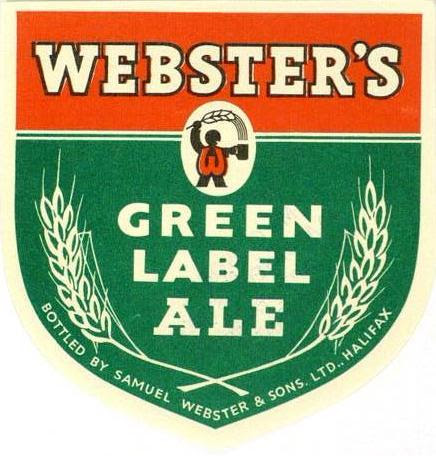
They owned several breweries in different regions: Norwich, Webster (Halifax), Wilsons (Manchester), Usher (Cheltenham) and Drybrough (Edinburgh). Some producing cask, others not. Webster’s beers were OK in cask form, but nothing special. Wilsons beers, even though often in cask, I never cared for.

Mortlake
One of the breweries owned by the company when it was still Watney Combe Reid, it was their main brewery in London after the closure of the Stag Brewery in Pimlico in 1959. It was first acquired by Watney in 1889.

At the start of the decade, it produced no cask beer and hadn’t for quite a while. Though, under pressure from CAMRA, they introduced Fined Bitter, a cask beer served from kegs, in the middle of the 1970s.

Whitechapel
The former Manns brewery in the East End of London, it was bought by Watney in 1958 to replace their original Stag Brewery, which was demolished to make way for a commercial development.

Manns had been one of the major Ale breweries in the capital. Their biggest claim to fame was to have developed the first modern Brown Ale at the start of the 20th century. Oh, and their brewery tap, the Blind Beggar, was the scene of a notorious gangland murder in the 1960s. I drank in there a couple of times in the 1970s. Scary, is how I would describe it.

Norwich
Of the three independent breweries located in the town during the 1950s, only one remained in 1970. And that was in the hands of Watney, who had bought all three breweries in 1963. Of Steward & Patteson, Bullard and Morgan, only the last continued to brew.

Having inherited the tied houses of all three breweries, Watney had a near monopoly in Norwich and parts of Norfolk. Villages which once had a pub from each of the three, found themselves with just one. Or maybe even none. As Watney ruthlessly closed rural pubs they didn’t consider viable.

Webster
Despite being owned by Watney, Webster still brewed a range of draught beers typical of West Yorkshire: a fairly light Bitter and a Pale and Dark Mild. The latter two suspiciously of the same gravity. My guess is that it was one beer sometimes coloured up with caramel.

Wilsons
According to John Keeling, who worked in the lab at Wilsons during the 1970s, there was a big split between production methods of the Wilsons and Watneys brands. The former were brewed from malt and sugar and were fermented in open squares, cooled by a water jacket. While the latter contained 40% raw barley along with enzymes to convert it. They were then fermented in conicals.

Usher
Located in Trowbridge in the Southwest of England, Usher was one of the Watney plants which still produced a decent amount of cask beer. In 1977, around 300 of their 688 tied houses stocked cask. Though, typically of the period some of that was served on top pressure.

Drybrough
One of the many breweries which were located in Duddingston, a village on the outskirts of Edinburgh. The brewery started the decade with a mostly fairly dull range of keg-dispensed draught products, all parti-gyled together. Friends who lived in Scotland weren’t great fans of their beers.

It was one of the four Watney breweries which installed continuous fermentation system. And the last one to decommission it.

For a while, they brewed with 60% unmalted barley in the grist. But that was too much even for Watney and it was reduced to “just” 45%.
 

Thursday, 7 March 2024

Carlsberg vs the Big Six

It may be hard to believe now, but the Big Six, in their prime during the 1970s, were some of the largest brewing groups in the world. But, while large breweries on the continent, such as Carlsberg and Heineken have continued to grow, the UK's biggest breweries all fell by the wayside.

When Watney Mann were making deals with Carlsberg in the early 1970s, they were by far the larger brewery of the two. At least in terms of the quantity of beer produced.

The figures are from slightly different dates, Carlsberg being for 1969 and Watney and Bass Charrington from 1976. Even Watney, one of the smallest of the Big Six, produced more than double as much as Carlsberg. Which must have had an impact on the relations between the two. I've included Bass Charrington, the largest of the Big Six, for comparison.

So where did it go wrong for the big UK brewers? They didn't expand internationally. Or at least not as much and not as successfully. Obviously, there wasn't quite the incentive for this as there was for brewers like Carlsberg and Heineken, whose home markets were much smaller. 

Carlsberg vs the Big Six
  hl barrels
Denmark consumption 4,830,000 2,951,256
Total Carlsberg 3,571,000 2,181,974
Carlsberg exports 825,000 504,096
Carlsberg domestic 2,746,000 1,677,877
% Carlsberg domestic 56.85%  
Bass 12,831,060 7,840,111
Watney 7,698,636 4,704,067
Source:    
Brewers' Guardian, Volume 99, April 1970, page 75.
“The Brewing Industry, a Guide to Historical Records” by Lesley Hammons & Alison Turton.


Monday, 4 March 2024

The birth of Keg

The Brewers' Guardian is a gift that just keeps giving. I'm only halfway through 1970 and it's had articles - or even whole features - on exactly the topics I wanted either more information or references. As well as subjects I didn't know I needed to know more about. Like continuous fermentation.

Then I come across an article that references the title of my book on the 1970s: Evolution of the British keg system.

It kicks off with a bit of history. Some of it a little dodgy:

Mr Davidson continued with a brief look at the progress of the U.K. brewing industry over the past 100 years. Facts and figures given in this outline showed that from over 5,000 individual brewers in 1870, there are now seven large brewing groups and approximately 100 smaller and medium sized independent breweries. A great reduction in the number of public houses had taken place in the same period. Other changes had been alterations in the specific gravities of beers often averaging 1100º prior to 1870, these now averaged between 1030º and 1040º. There had also been a transition from naturally conditioned beer in wooden container (with fining taking place in the public house) to beer chilled and filtered in the brewery.
Brewers' Guardian, Volume 99, May 1970, page 68.

That 1100º is way off. Average OG in 1870 was more like half that. Then he mentions evil keg replacing proper beer. The bastard.

He continues with a justification for keg. And how this cancer started.

"With bottled beer in widespread use by the mid 1930’s, the next natural logical development,” Mr. Davidson went on, "was bright beer in cask.”

"It can be said that the first step towards the keg system as we know it today was taken by Watneys, who purchased in 1929 a Bergendorfer bulk pasteuriser, which had been exhibited that year. With this pasteuriser it was hoped to overcome problems of conservation of beer exported to the Far East. In 1930 Watneys were the first to export a filtered, pasteurised beer, known as Watney Container Bitter, in stainless steel five-gallon drums.

In the following two to three years the brewery launched this container beer throughout the U.K., using stainless steel drums with a Baines neck. You will be familiar with this neck, which became virtually standard throughout the U.K. To seal the container, a snap valve was used and dispensing was by means of a Barnes syphon tube and CO2. Watneys continued to use this system until as late as 1959.
Brewers' Guardian, Volume 99, May 1970, page 68.

I'm hoping this bit of history is better. Mr Davidson was sales director, Grundygroup Export Ltd., manufacturers of things like kegs. And, er Grundy tanks. Start of the 1930s. That's earlier than keg is normally supposed to have started its deadly rise. End of the decade is usually quoted. Interesting that Keg Bitter started as an export beer. That sort of makes sense.

I'm just not sure how much I should trust a salesman. I'd be more committed to it if it were coming from a brewer at Watney. Rather than the man selling them kegs. Still, it was in the Brewers' Guardian. Let's see if anyone from Watney commented on the article in a later edition.

Monday, 22 January 2024

Brewing Yorkshire Stingo

In an article by Bishop about continuous fermentation there's an intriguing paragraph about the brewing of Yorkshire Stingo. Revealing it to have been brewed a very traditional way well after WW II.

Here's the passage:

Strong beers.— Until few years ago strong beers fell into two distinct classes — either very sweet and only partly fermented because the yeast had come out too soon, or overdry because they had been fermented completely by the traditional rolling in cask over several months. The latter method was that used at my brewery for producing Stingo — a method which took nine months. Needless to say, the losses of this very expensive beer were extremely high. In contrast, we found we could produce Stingo by continuous fermentation in two days instead of nine months without direct loss of beer or loss through development of acidity—either of the lactic or acetic variety. In addition, the beer could be produced with an intermediate degree of sweetness exactly as required.
Journal of the Institute of Brewing, Vol. 76, 1970, page 175.

Those two classes of strong beers are presumably ones which did or didn't undergo a secondary fermentation. And, with such beers becoming "overdry", it's clear that Brettanomycers was at work. Which is clearly what was happening with Stingo, being rolled around in casks for nine months. During which time it hopefully wouldn't turn into vinegar and need to be discarded.

I wonder what happened to Stingo when the continuous fermenters were removed in the late 1970s? I'm pretty sure they wouldn't have reverted to rolling it around in casks for months. They might well have just quietly discontinued the beer.

Sunday, 21 January 2024

Continuous fermentation

A dream of some large brewers was continuous fermentation. Where fresh wort was continuously added to fermenters as finished beer was taken out. A process way more efficient that traditional fermentation.

Briggs described the potential benefits:

there was real hope for the commercial success of continuous systems with the advantages comprising:

•    lower capital cost
•    lower working capital because of less beer in process, as a result of faster throughput
•    lower product cost as a result of lower beer losses, more ethanol and less yeast
•    lower fixed costs because of less manpower as a result of less cleaning and automatic
•    fermenter control.

The first attempts were made in the late 19th century and several different systems were tried in early years leading up to WW I. None proved to be a commercial success. One system involving beer moving from one open tank to another was revived in the 1950s, with experiments in the UK, Canada and New Zealand. It was in the latter two that these trials were put into practice in the 1960s.

In the UK, the process was championed by L.R. Bishop, who worked at the Watney brewery in Mortlake. He seems to have dedicated a good chunk of his career to developing the process, starting in 1925 when he was a post-graduate student. But it was only after WW II that his interest was able to take practical form, in the shape of a 1,000-gallon pilot plant. When this proved a success, a 1,000-barrel plant was constructed.

By the early 1970s, Watney had the system installed in four of their breweries: Mortlake, Mile End, Drybrough and Murphy. Between them, they were capable of producing 20,000 barrels a week. Or around a million barrels a year.  Which was around 22% of their total output.  The bulk of this capacity – 13,000 barrels per week - was at Mortlake.

At its peak in the early 1970s, around 4% of UK beer was brewed using one of the continuous fermentation systems.  Though much of that seems to have been at Watney. With their capacity equivalent to 2.7% of UK production.

I’d always laboured under the assumption that the main reason for dropping continuous fermentation was because the beer produced using it tasted shit. I’m now beginning to doubt this. At least as the main cause of the system being ditched.

According to taste tests carried out by Bishop, continuously fermented beer only scored marginally worse than that produced by batch fermentation. Though with just six tests, the sample size was pretty small.  As further proof, Bishop comments that continuous fermentation beer wasn’t blended with batch fermented, as would have been the case if there were significant flavour differences. And none of the customers complained.  (The least ringing endorsement that you can imagine – no-one complained.)

Yet, in the late 1970s and early 1980s, most brewers abandoned the system. If the beer quality was acceptable, why was this the case? You can probably guess: economics.

Continuous fermentation systems were good at producing large volumes of a single beer, but rather inflexible. Switching from one beer to another could be a complicated and lengthy process. Running the systems proved more difficult than expected, requiring constant monitoring by highly skilled personnel. Making them more expensive to run than batch systems.

In addition, there was big advances in cylindroconical technology, speeding up batch fermentation and providing a more flexible method of fermentation.


Friday, 8 December 2023

Barley Wine sugars 1970 - 1982

There are so many sugars that I’ve split them into two tables. This is pretty typical of UK brewing in the 1970s. With all types of specialist sugars still being in use.

Let’s start with the “normal” sugars. That is, ones where I know what the hell they are.

Starting with the most common: malt extract. This turns up a lot in 20th-century recipes. Usually in very small quantities. Presumably, for extra enzymes. Something brewers seemed to be particularly paranoid about. Perhaps because they no longer used malt made from North American barley, which contained more enzymes.

A dark sugar like No. 3 invert is no surprise in a dark beer like Tally Ho. More so, in Golden Pride. Again, I think, on account f the parti-gyling. Caramel only shows up in the two dark versions, other than a minute quantity in Stingo Gold.

Then we have glucose in Golden Pride and fructose in Tally Ho. Both there because, well, they were the sugars that the breweries used in general.

Having fun? Well, we haven’t finished the sugars yet. Now we have the ones for which I have no fucking clue.

Five of the beggars. None of them in multiple beers. CWA I at least know was an enzymatic syrup. Yet another attempt at boosting enzymes. Not really anything I can say about the rest. 

Barley Wine sugars 1970 - 1982
Year Brewer Beer malt extract no. 3 sugar caramel glucose fructose
1977 Adnams Tally Ho   6.29% 0.87%   3.15%
1971 Watney Yorkshire Stingo 3.20%   0.50%    
1981 Eldridge Pope Hardy Ale          
1982 Eldridge Pope Goldie          
1968 Fullers Golden Pride 0.69% 2.31%   0.93%  
1970 Higson Stingo Gold 3.48%   0.04%    
1971 Watney Export Gold 3.00%        
1973 Whitbread Gold Label          
Sources:
Adnams brewing record held at the brewery.
Eldridge Pope brewing record.
Fullers brewing record held at the brewery.
Boddington brewing record held at Manchester Central Library, document number M693/405/134.
Watney Man Quality Manual
Whitbread brewing record held at the London Metropolitan Archives, document number LMA/4453/D/09/141.
Whitbread Gravity book held at the London Metropolitan Archives, document number LMA/4453/D/02/002.


Barley Wine proprietary sugars 1970 - 1982
Year Brewer Beer PEX CWA DS SLS Fermax
1977 Adnams Tally Ho          
1971 Watney Yorkshire Stingo         13.00%
1981 Eldridge Pope Hardy Ale          
1982 Eldridge Pope Goldie          
1968 Fullers Golden Pride 1.62%        
1970 Higson Stingo Gold   3.48% 4.35%    
1971 Watney Export Gold         2.00%
1973 Whitbread Gold Label       21.41%  
Sources:
Adnams brewing record held at the brewery.
Eldridge Pope brewing record.
Fullers brewing record held at the brewery.
Boddington brewing record held at Manchester Central Library, document number M693/405/134.
Watney Man Quality Manual
Whitbread brewing record held at the London Metropolitan Archives, document number LMA/4453/D/09/141.
Whitbread Gravity book held at the London Metropolitan Archives, document number LMA/4453/D/02/002.


Thursday, 7 December 2023

Barley Wine grists 1970 - 1982

The recipes for Barley Wine were pretty diverse. A total of five different malts were used, including three different base malts: pale, mild and lager. Both f the beers using the latter had the word “gold” in their names: Export Gold and Gold Label.

After the base malts, the most common malt was crystal, appearing in three beers. A bit surprised to see it in Hardy Ale. As with Golden Pride, I’m sure that its presence can be explained by the fact that it was parti-gyled with Bitter.

I’ll be honest with you: I’m not sure what form the wheat was in the Eldridge Pope beers. The brewing records aren’t very specific. It could have been flaked or even just simple flour.

Most examples have a malt content of 80% or more. The exception being Gold Label, with just 70% malt.

No shock that flaked maize is the most popular adjunct. Given how beloved it was of UK brewers. The only other unmalted grain was a tiny amount of roast barley in Yorkshire Stingo. Obviously there for colour. Something which the majority of the beers, being pale in colour, didn’t require. 

Barley Wine grists 1970 - 1982
Year Brewer Beer pale malt mild malt lager malt crystal malt wheat malt total malt flaked maize roast barley
1977 Adnams Tally Ho   84.97%   4.72%   89.69%    
1971 Watney Yorkshire Stingo 83.00%         83.00%   0.30%
1981 Eldridge Pope Hardy Ale 59.67%   26.52% 4.97% 8.84% 100.00%    
1982 Eldridge Pope Goldie 92.59%       7.41% 100.00%    
1968 Fullers Golden Pride 77.78%     2.08%   79.86% 14.58%  
1970 Higson Stingo Gold 80.84%         80.84% 7.82%  
1971 Watney Export Gold     90.00%       5.00%  
1973 Whitbread Gold Label     69.70%     69.70% 8.88%  
Sources:
Adnams brewing record held at the brewery.
Eldridge Pope brewing record.
Fullers brewing record held at the brewery.
Boddington brewing record held at Manchester Central Library, document number M693/405/134.
Watney Man Quality Manual
Whitbread brewing record held at the London Metropolitan Archives, document number LMA/4453/D/09/141.
Whitbread Gravity book held at the London Metropolitan Archives, document number LMA/4453/D/02/002.


Monday, 4 December 2023

Barley Wine in the 1970s

Usually, the strongest beer produced by a brewery, these beers were almost exclusively available in bottled form.

A surprising number of breweries still made these very strong beers, which had gravities over 1070º and 7% ABVnd greater. Going to over 1100º and 10% ABV.

Classic beers in this style were Bass No. 1 and Whitbread Gold Label The latter was very widely available, often even in pubs owned by rival brewers. They represented the two substyles of Barley Wine, No. 1 being of the older dark kind, while Gold Label was a modern pale version.

I was pleased to discover that I have examples from six different breweries. Which is a little under half of the breweries in the recipe section. Most of the beers are in the pale style, with only two dark examples.

There are some pretty impressive gravities in there, with Tally Ho the lowest at 1073º. The highest, no shock here, is Hardy Ale at 1124.7º. There were few beers in the world brewed at gravities as high as the stronger versions.

One of the oddities of UK brewing was that its standard beers were some of the weakest anywhere. While at the same time brewing the strongest beers in the world. It’s an unusual split.

Some of the FGs should be taken with a grain of salt, as they are racking gravities rather the true end point. Hardy Ale is a good case in point. After secondary conditioning, it fermented out a lot further.

On the other hand, the Watney FGs, which come from analyses, genuinely reflect the beer as sold. And they show a pretty high degree of attenuation: 77% and 87%. Even with a couple of unrealistically high FGs, the average of both types is over 70%.

The hopping rate per quarter (336 lbs) of malt – which takes the OG of the beer out of the equation – varies from 4 lbs to 8 lbs. Which is from slightly below average to well above. The average in 1970 being 4.9 lbs per quarter of malt.

There’s a large variation in the colour, too. But note there’s a combination of measured and calculated numbers. Watney and Whitbread being the former and all the others the latter. I suspect that Golden Pride is relatively dark on account of being parti-gyled with Bitter.

Most of the others took advantage of being single-gyled by using lager malt as their base. Eldridge Pope parti-gyled their beers and used lager malt anyway.

As all the bitterness values are my calculation, I wouldn’t take them as gospel. Most were pretty bitter by the standards of the day. Something they needed to balance out all the malt. The outlier being Tally Ho, with a bitterness level more typical of a Bitter. 

Barley Wine 1970 - 1982
Year Brewer Beer OG FG ABV App. Atten-uation lbs hops/ qtr hops lb/brl colour IBU
1977 Adnams Tally Ho 1073.0 1026.0 6.22 64.38% 4.04 1.41 70 33
1971 Watney Yorkshire Stingo 1086.4 1019.9 8.80 76.97%     110  
  Average   1079.7 1023.0 7.51 70.68% 4.04 1.41 90.0 33.0
1981 Eldridge Pope Hardy Ale 1124.7 1055.4 9.16 55.56% 7.57 3.73 48 60
1982 Eldridge Pope Goldie 1085.3 1027.7 7.62 67.53% 5.56 2.88 26 63
1968 Fullers Golden Pride 1090.0 1026.6 8.38 70.44% 7.51 2.57 52 57
1970 Higson Stingo Gold 1083.7       8.12 2.71 40 56
1971 Watney Export Gold 1079.9 1010.3 9.21 87.11%     24  
1973 Whitbread Gold Label 1101.4 1014.8 11.46 85.40% 5.48 2.34 30 49
  Average   1094.2 1027.0 9.17 73.21% 6.85 2.85 36.7 57.0
Sources:
Adnams brewing record held at the brewery.
Eldridge Pope brewing record.
Fullers brewing record held at the brewery.
Boddington brewing record held at Manchester Central Library, document number M693/405/134.
Watney Man Quality Manual
Whitbread brewing record held at the London Metropolitan Archives, document number LMA/4453/D/09/141.
Whitbread Gravity book held at the London Metropolitan Archives, document number LMA/4453/D/02/002.


Saturday, 2 December 2023

Let's Brew - 1971 Watneys Yorkshire Stingo

This is a famous beer acquired by Watney when the took over the Yorkshire Stingo Brewery in 1907. A brewery which wasn’t, as the name implies, in Yorkshire, but on the Marylebone Road in London.

Yorkshire Stingo must have been a decent brand, as Watney was still brewing it 70-odd years later.

This has been another piece together job. The Watney Mann Quality Manual doesn’t have a full entry for Stingo. Just a list of the grist ingredients. Luckily, I have some analyses which tell me the FG and OG. The No. 2 is my substitution for something called Fermax.

That just left the hopping to guess. I used the same hopping rate as for Watneys Pale Ale, obviously scaled up for the gravity. Because of the strength, I extended the boil time to 120 minutes. And I used a combination of Fuggles and Goldings, as in many of their other beers.

Despite the guesswork, I feel it was worth putting together this recipe. 

1971 Watneys Yorkshire Stingo
pale malt 15.25 lb 84.07%
roast barley 0.05 lb 0.28%
malt extract 0.50 lb 2.76%
No. 2 invert sugar 2.25 lb 12.40%
caramel 2000 SRM 0.09 lb 0.50%
Fuggles 120 mins 3.25 oz
Goldings 120 mins 2.25 oz
OG 1086
FG 1020
ABV 8.73
Apparent attenuation 76.74%
IBU 62
SRM 21
Mash at 156º F
Sparge at 175º F
Boil time 120 minutes
pitching temp 60º F
Yeast WLP023 Burton Ale