Saturday, 27 April 2019

Stop or not?

Want me to continue?


Then buy a book.


http://www.lulu.com/spotlight/andrewsblag

It'll tell me I'm not wasting my time.


Which is what Dolores says.


Prove her wrong.

Let's Brew - 1864 Lovibond X

Lovibond was a smaller London brewery. Which may explain why their X Ale looks shockingly weak for a Mild from the capital. In the 1860s, the X Ale from large London breweries was around 1060º.

It’s a very simple recipe: 9 quarters of pale malt, 1 quarter of while malt, American and Kent hops. But that’s typical for the middle of the 19th century. There’s really not a great deal else I can say about the recipe.

There’s one obvious big difference with the other London brewers’ records I’ve looked at: Lovibond don’t seem to have underlet during mashing. In England – but especially in London – it was usual to start with an infusion mash, then add a smaller amount of hotter water via the underlet after 60 to 90 minutes. This raised the temperature of the goods, effectively forming a step mash. Lovibond seem to have gone with a single infusion and then a sparge.

The other defining feature of Lovibond X is it’s very low gravity – just 1041º. This is exceptionally weak for an X Ale in the 1860s, especially one brewed in London. But on closer inspection, I noticed that Lovibond brewed very little X Ale. Usually, you would expect it to be one of their most popular beers. But it isn’t. They brewed more XX than any other X Ale. And XX was in the 1060º’s.

The hops were a combination of American yearlings – in this case, as this beer was brewed in October, than would mean from the 1867 harvest – Kent yearlings and new Kent hops.


1864 Lovibond X
mild malt 9.25 lb 100.00%
Cluster 120 mins 0.75 oz
Goldings 90 mins 0.75 oz
Goldings 30 mins 0.75 oz
OG 1041
FG 1014.5
ABV 3.51
Apparent attenuation 64.63%
IBU 37
SRM 5
Mash at 146º F
Sparge at 165º F
Boil time 120 minutes
pitching temp 58º F
Yeast Wyeast 1099 Whitbread Ale


This is one of the dozens of recipes in my book Mild! plus. Which is avaiable in both paperback:


and hardback formats:


Friday, 26 April 2019

Mild musings

It's getting closer and closer to Mild month. Time for some more stuff about the world's best style of beer.

Back when I started boozing in the early 1970s, Mild was very much a mainstream style. It even outsold Lager. But not for long.

The reality was quite different, because the availability of Mild was very patchy. In some parts of the North and Midlands, Mild made up 30-50% of draught beer sales. But in other areas - London, Scotland, Sheffield, the Northeast - Mild was already quite rare. Mild-free areas began to spread and, by the time I left the UK in the mid-1980s, Mild was hemmed into a few enclaves.

Currently Mild accounts for less than 1% of beer sales. You can't get much more marginal than that. As you can see from the table, there was a steadydecline in Mild's market share from 1971 to 1991.  There was also a similar decline in other top-fermenting styles - basically Bitter and Stout - over the same period. And a mirri-image rise in Lager sales.

It's hard to see Mild ever making a comeback as a mainstream style. But you never know. Who would have predicted thereturn of Milk Stout? I certainly wouldn't.

What's likely to happen with UK beer styles in the future? It's difficult to say. But one trend is already noticeable: the rise of Lager seems to have ended. Its market share has been pretty much constant at around 74% for the last ten years. My guess is that we're about to see Lager go into decline.

When styles start to decline, it can happen surprsingly quickly. It always kicks off the same way: young drinkers don't adopt it. Then a style begins to be associated with old men. And no-one wants to drink what grandad's drinking.

Lager sales really took off in the late 1970s. The young drinkers who adoped it back then are now around 60. How long before Lager becomes associated with old blokes?


UK beer sales by type 1971 - 2016
Year Bitter and Stout Mild Lager
1971 72.4 17.7 9.9
1972 72.4 15.9 11.7
1973 70.9 14.2 14.9
1974 69.8 13.8 16.4
1975 67 13.3 19.7
1976 63.9 12.6 23.5
1977 62.8 12.7 24.5
1978 61.1 12 26.9
1979 59.4 11.5 29.1
1980 58 11.3 30.7
1981 57.8 11.2 32.0
1982 59 8 33.0
1983 56.8 7.3 35.9
1984 54.2 6.9 38.9
1985 52.7 6.4 40.9
1986 50.7 5.9 43.4
1987 48.1 5.3 46.6
1988 46.3 4.9 48.8
1989 45.2 4.5 50.3
1990 44.5 4.1 51.4
1991 44.9 4 51.1
2016 25.6 0.3 73.7
Sources:
“The Brewers' Society Statistical Handbook 1978” page 10.
“The Brewers' Society Statistical Handbook 1988” page 17.
“The Brewers' Society Statistical Handbook 1990” page 17.
Statistical Handbook of the British Beer & Pub Association 2003, p. 21.
Statistical Handbook of the British Beer & Pub Association 2005, p. 17.
“The Brewers' Society Statistical Handbook 2011” page 17.
BBPA Statistical Handbook 2017, page 15.

Thursday, 25 April 2019

Burton-brewed Pale Ale on the eve of WW II

The spiritual home of Pale Ale was a law until itself. Not weird, given its reputation for the style. Here beers close in strength to classic 19th-century versions continued to be brewed. Though draught versions didn’t drift above 1055º. Blame those pesky WW I price controls for the gravity cap on draught beers.

The stronger examples in the table, those with an OG around 1055º could also be classed as IPA.

Though just as elsewhere, Burton-brewed Pale Ales came in a variety of strengths. Ones in the Burton classic style were typical 8d per pint beers, with gravities around 1055º. The bottled versions were the same strength and were some of the most widely available beers. As with Guinness, they were often sold in other breweries’ tied houses. Which might explain the high price. Beers of that strength wouldn’t usually cost more than 10d per pint.

At the Burton plant of London brewer Truman, three Pale Ales were brewed. Or maybe just two, really. Because Pale 1 and Pale 1 B (the B standing for “Bottling”) look identical.

Pale 1 is clearly an 8d per pint beer and Pale 2 a 7d per pint beer. To confuse matters, Truman also brewed a 6d Pale Ale, XLK, in their Brick Lane brewery.

Pale 2 was brewed in a slightly weird way. It was parti-gyled with Pale 1 at a gravity 1044.9º. It was then blended post-fermentation with some Pale 1 to raise the effective gravity to 1047.4º. Truman started doing weird stuff like this towards the end of WW I. Blending their parti-gyles both pre- and post-fermentation.

The hopping is surprisingly modest for Burton. At under 7 lbs per quarter (336 lbs) of malt, the rate is lower than Barclay Perkins X Ale (7 lbs per quarter) and Whitbread X Ale (7.75 lbs).


Burton Pale Ale 1932 - 1937
Year Brewer Beer Price per pint (d) package OG FG ABV App. Atten-uation
1932 Bass Pale Ale draught 1054.7 1012 5.56 78.06%
1933 Bass Pale Ale 13.5 bottled 1055.8 1012.2 5.68 78.14%
1935 Bass Pale Ale 7 bottled 1037 1007.8 3.79 78.92%
1933 Worthington Pale Ale 14 bottled 1055.4 1011.6 5.71 79.06%
1936 Worthington Pale Ale 7 draught 1046.9
1937 Worthington Pale Ale 8 draught 1054.3
Sources:
Whitbread Gravity book held at the London Metropolitan Archives, document number LMA/4453/D/02/001.
Truman Gravity Book held at the London Metropolitan Archives, document number B/THB/C/252.


Truman Burton Pale Ales in 1939
Date Beer Style OG FG ABV App. Atten-uation lbs hops/ qtr hops lb/brl
28th Apr Pale2 Pale Ale 1047.4 1009.7 4.98 79.53% 6.75 1.22
1st May Pale1 Pale Ale 1053.5 1013.3 5.31 75.13% 6.75 1.37
28th Apr Pale1 B Pale Ale 1053.5 1013.6 5.28 74.61% 6.75 1.37
Source:
Truman brewing record held at the London Metropolitan Archives, document number B/THB/C/339.

Wednesday, 24 April 2019

Let's Brew Wednesday - 1910 Fuller’s X

A stronger, 5% ABV Mild. Loaded with lots of lovely sugar. Yum! From before WW I messed up Mild forever.

The recipe is slightly more complicated than it appears, as the pale malt was an eclectic mix of 50% English, 25% Californian and 25 % Australian. Using grain from all over the world – though it was always malted in the UK – was typical of English beers before WW I.

The sugar is about a 50-50 split between No. 3 invert and something called – think, the handwriting is hard to read – Trintose. Or possibly Tintose. I’ve assumed it’s another dark sugar and have just increased the amount of No. 3.

The hops were Oregon from the 1907 harvest, Mid-Kent from 1909 and East Kent from 1908. I’ve interpreted the latter two as Fuggles and Goldings, respectively.


1910 Fullers X Ale 
pale malt 8.00 lb 73.94%
flaked maize 2.00 lb 18.48%
No. 3 invert sugar 0.75 lb 6.93%
caramel 1000 SRM 0.07 lb 0.65%
Cluster 120 mins 0.25 oz
Fuggles 120 mins 1.00 oz
Goldings 30 mins 1.00 oz
OG 1053
FG 1014.5
ABV 5.09
Apparent attenuation 72.64%
IBU 29
SRM 17
Mash at 149º F
After underlet 153º F
Sparge at 168º F
Boil time 120 minutes
pitching temp 59º F
Yeast Wyeast 1968 London ESB

This is one of the dozens of recipes in my book Mild! plus. Which is avaiable in both paperback:


and hardback formats:

Tuesday, 23 April 2019

Tacky Merchandise

Sorry, classy meomorabilia.

Just a reminder:


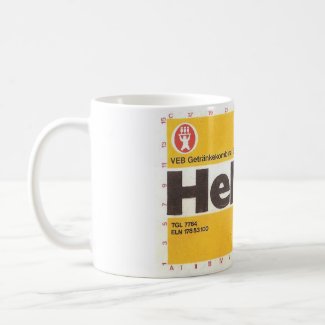
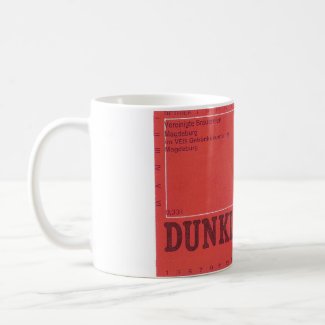
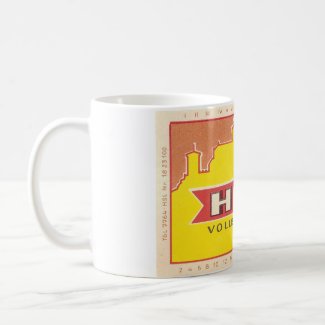
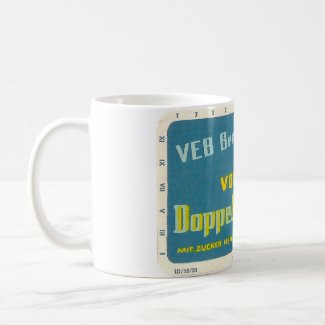
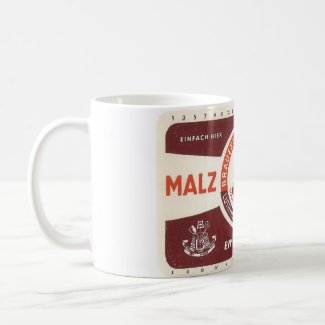
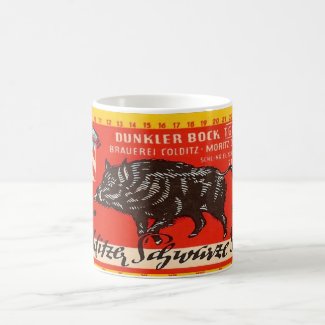
A lovely one from the town where I was married:


And one for a beer style specific to East Germany:


Cool, eh?

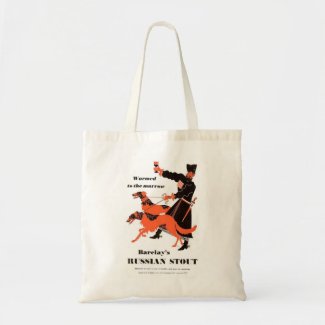
There's also this groovy bag:


And how could I could forget my own favourite mug?


Every mug purchased buys Andrew 3 cans of Lager. The nice stuff. (But only when it's on special offer.)


Obadiah Poundage launch

Continuing my dreams coming true series. next week I'll be drinking, sorry, presenting, my latest long-term collaboration.

You might not have realised that I'm producing a series of beers with Goose Island. Because six years in, and we're only just ready with beer number two. My grandkids will be in college by the time we hit double figures.

I don't care, The whole point has been brewing aged beers. Ones that require a little patience. Something I have little of in my normal life. But when it comes to beer . . . I'm more mellow.

Though when I finally get to taste that 1840s Porter, brewed from the right malt - even the right barley variety - then aged and blended the right way, excitement may get the better of me. As I think: you're such a jammy twat, Ronald. Then chug down a pint, obviously.

This is a little about the project. Please excuse my waffling and waving.


Come and share my joy.

Monday 29th April
Goose Island Tap Room,
1800 West Fulton St.,
Chicago
Doors 6:30pm, event 7:00-9:00pm

I'll have books for sale at the event.


Bring cash. I'll need it to buy vodka to take back for the kids.

London bottled Pale Ale on the eve of WW II

Bottled Pale Ales fell into similar classes, except the same strength of beer cost 1d per pint more.

By far the most popular price class was the 7d per pint one, the equivalent of a 6d per point draught beer. Note that there’s only a single beer in the most expensive 9d class. Which is significant because the equivalent draught beer class was one of the more popular ones, at least in London.

One of the lasting effects of WW I was to make bottled Pale Ales generally weaker than draught versions. The big exception being the classic Burton beers, such as Bass Pale Ale which remained stronger than draught versions.

The rate of attenuation is generally pretty high, with only one example under 75% and around half are above 80%. Not so surprising, given that they would have been conditioned in the brewery for a while before bottling.

The war would swing production away from bottled to draught beer. For a couple of reasons. First was a shortage of glass and bottles. The second was simple economy: draught beer required less energy and labour to produce.


London bottled Pale Ale 1936 - 1938
Year Brewer Beer Price per pint (d) OG FG ABV App. Atten-uation colour
1938 Charrington Golden Dinner Ale 6 1033.8 1006.3 3.57 81.36% 22
1938 Truman Sparkling Ale 6 1029.6 1007.3 2.89 75.34% 27
1938 Truman Eagle Ale 6 1036.6 1005.4 4.06 85.25% 20
1936 Beasley PA 6 1036.6 1007.4 3.79 79.78%
1938 Barclay Perkins Pale Ale 7 1038.3 1008.7 3.84 77.28%
1937 Fullers Pale Ale 7 1039.8 1009.9 3.88 75.13%
1938 Ind Coope Sparkling Ale 7 1040.4 1008 4.21 80.20% 20
1938 Lovibond Yeoman Ale 7 1043.9 1005.4 5.03 87.70% 20
1938 Mann Bitter Ale 7 1037.5 1006.6 4.02 82.40% 21
1938 Meux Pale Ale 7 1037.6 1006.5 4.05 82.71% 23
1938 Taylor Walker Pale Ale 7 1034.6 1010.6 3.11 69.36% 19
1937 Wenlock Pale Ale 7 1042.2 1007.6 4.50 81.99%
1936 Friary Holroyd Friary Ale 7 1038 1008.1 3.88 78.68%
1936 Lion Brewery Dinner Ale 7 1039.9 1006.7 4.32 83.21%
1936 Watney Watney's Pale Ale 7 1041 1009 4.16 78.05%
1938 Charrington Toby Ale 8 1045.5 1011.1 4.47 75.60% 25
1938 Mann Rustic Ale  9 1051.3 1008.03 5.65 84.35%
Source:
Whitbread Gravity book held at the London Metropolitan Archives, document number LMA/4453/D/02/001.

Monday, 22 April 2019

Scottish Mild Ales in the mid 19th century

Specially for Mild month, here's an extract from my amazing book, Scotland! vol. II, about Scottish Mild.


Differentiating Shilling Ales and Mild Ales is, in many, totally arbitrary. But I’m going to do it anyway. If only because Scottish brewers liberally sprinkled the X’s I associate with the style around their brewing records.

Putting on my serious hat, there was one defining difference between the two beers types. Both were sold young. But Shilling Ales were shipped out to retail outlets in hogsheads for bottling while Mild Ales were filled into barrels and kilderkins for sale on draught. Though they may have been born of the same mash, the method of conditioning differentiated them. Just like Mild Ale and Brown Ale in the 20th century.

Younger Mild Ales 1851 - 1854
Year Beer OG FG ABV App. Atten-uation lbs hops/ qtr hops lb/brl
1851 X 1075 1036 5.16 52.00% 1.94 1.82
1851 XX 1081 1037 5.82 54.32% 4.97 2.37
1851 XX 1082 1035 6.22 57.32% 9.16 2.42
1851 XXX 1095 1037 7.67 61.05% 17.94 5.50
1852 X 1071 1034 4.89 52.11% 8.00 2.73
1853 X 1062 1029 4.37 53.23% 7.52 2.19
1853 X 1068 1032 4.76 52.94% 8.00 2.97
1853 X 1070 1031 5.16 55.71% 7.73 2.83
1853 XX 1076 1030 6.09 60.53% 8.00 3.08
1853 XXX 1088 1038 6.61 56.82% 8.00 3.69
1854 X 1053 1017 4.76 67.92% 10.00 2.50
Source:
William Younger brewing record held at the Scottish Brewing Archive, document number WY/6/1/2/5.


At mostly around 8 lbs of hops per quarter of malt, the hopping rate is very similar to London Mild Ales. Whitbread’s Ales of the same period look very similar to those of William Younger:

Whitbread Ales in 1851
Beer OG FG ABV App. Atten-uation lbs hops/ qtr hops lb/brl
X 1074.8 1025.2 6.56 66.30% 9.07 3.21
XX 1088.6 1030.2 7.73 65.94% 9.07 3.81
XXX 1099.2 1041.6 7.62 58.10% 9.23 4.46
Source:
Whitbread brewing record held at the London Metropolitan Archives document number LMA/4453/D/01/16.

On average, Whitbread’s Ales were a little more heavily hopped, but not by a significant amount. The big difference is in the rate of attenuation, which is very low in the Younger Milds. Poor attenuation is a fairly constant feature of Scottish brewing. And may account for why Scottish beers were often perceived as sweeter than their English counterparts.

Moving forward a couple of decades, Younger’s Milds have dropped considerably in gravity:

William Younger Mild Ales in 1868
Year Beer OG FG ABV App. Atten-uation lbs hops/ qtr hops lb/brl
1868 X 1053 1023 3.97 56.60% 6.30 1.36
1868 XX 1057 1024 4.37 57.89% 9.58 2.25
1868 XXX 1068 1028 5.29 58.82% 8.00 2.55
Source:
William Younger brewing record held at the Scottish Brewing Archive, document number WY/6/1/2/21

X has fallen from 1075º to 1053º, XX from 1082º to 1057º and XXX from 1095º to 1068º. Though the hopping rate, averaging around 8 lbs per quarter of malt has remained pretty constant.

Similar changes had taken place at Whitbread:

Whitbread Mild Ales in 1868
Year Beer OG FG ABV App. Atten-uation lbs hops/ qtr hops lb/brl
1868 X 1056.8 1014.4 5.61 74.63% 7.41 1.93
1868 XL 1066.2 1019.7 6.16 70.29% 10.34 3.28
1868 XX 1080.9 1027.1 7.11 66.44% 9.61 3.54
Source:
Whitbread brewing record held at the London Metropolitan Archives, document number LMA/4453/D/01/034.

The strongest Mild, XXX had been discontinued and a new beer, XL, introduced with a gravity between X and XX. The fall in the gravity of Whitbread X, from 1075º to 1057º wasn’t quite as large as at Younger, but still considerable. XX, on the other hand, only had a small reduction in gravity from 1087º to 1081.º. The hopping of the two sets, averaging around 8 lbs per quarter of malt, remained roughly similar.

Between 1851 and 1868 the strength of William Younger’s Milds diverged considerably from Whitbread’s. Though they continued to be hopped at a similar rate.


Wht to read more fun stuff about Scottish beer? Then buy the book:


http://www.lulu.com/shop/ronald-pattinson/scotland-vol-2/paperback/product-23090497.html 

Sunday, 21 April 2019

Adnams grists in 1946

The recipes Adnams employed changed little more than their gravities. They’re easily the brewery where the war had the least impact. At least amongst the breweries whose records I’ve seen.

The only really significant change was the appearance of an adjunct – in the form of flaked barley – in PA and XX. The quantities of coloured malts used in XX and DS remained much the same at around 5% of each. And PA started to use medium malt for about half of the base malt.

The addition of flaked barley didn’t lead to a reduction in the proportion of malt being used. Instead, it mostly seems to have been used as a substitute for sugar.

The sugar content of XX and PA fell from 12-13% to 7-8%. Only in DS, which didn’t include flaked barley, did the proportion of sugar remain roughly the same.

The hops for both the 1939 and 1946 versions of the beers were all English. Which is about everything I know about them. The records aren’t very revealing on this point, not even listing the year of harvest.


Adnams malts in 1946
Date Beer Style OG pale malt amber malt choc. Malt crystal malt medium malt flaked barley
1st Jan PA Pale Ale 1036 41.38% 46.55% 5.17%
2nd Jan XX Mild Ale 1027 5.17% 5.17% 72.41% 10.34%
10th Jan DS Stout 1039 5.17% 5.17% 5.17% 77.59%
Source:
Adnams brewing record Book 33 held at the brewery.


Adnams sugars in 1946
Date Beer Style OG no. 1 sugar no. 3 sugar Tintose total sugar
1st Jan PA Pale Ale 1036 6.90% 6.90%
2nd Jan XX Mild Ale 1027 6.90% 1.11% 8.00%
10th Jan DS Stout 1039 6.90% 2.62% 9.51%
Source:
Adnams brewing record Book 33 held at the brewery.