Tuesday, 26 June 2018

Substitutes in German brewing

You may recall that I have a bit of a thing about the Reinheitsgebot. I find it a fascinating topic.

Of course, in the period this article was written there was no such thing as the Reinheitsgebot. That term only came into use after WW I. And until 1908, the law on only brewing from malt, hops, water and yeast only applied to Bavaria, not the rest of Germany.

But it seems that things were more complicated than that. There were restrictions on the ingredients that could be used in beer in the whole of Germany.
"The use of substitutes in Bavaria is forbidden absolutely. There are two laws bearing on the question:—

(1) The Food and Drugs Act, and (2) The Malt Act.— Under the Food and Drugs Act it has been decided by, the Courts in a series of cases that the use of any material which tends to make the beer appear or actually be better or worse than is actually the case - viewed in the light of the fact that normal beer in Bavaria is by law and popular opinion regarded as a product obtained from malt, hops, and water, and subsequent fermentation — is not allowable.

The use of any material which alters the normal composition of a beer, tends to hide natural deficiencies, &c, is absolutely forbidden. The enalty is a fine of not more than 1,500 marks (£75), and six months’ imprisonment. Anyone concerned in the use or sale of such substances is subject to these penalties. It has been decided by the Courts that the use of caramel, bicarbonate of soda, tartaric acid, heading powder, grape-sugar (glucose), tannin, salicylic acid, &c., are illegal under the Food Act, and the persons concerned were condemned to various penalties. These cases occurred in the years 1885 and 1886. (Literature available.)

Under the Malt Act (a fiscal measure), the use of any material whatever in the manufacture of beer, except barley, malt, hops, water, and yeast is absolutely forbidden. Where the offencc can be brought either under the Food Act or the Malt Act, the former is always put in force, as the penalties are heavier.

In Germany generally (Imperial Law — Reichsgesetz) apart from Bavaria, the use of certain substitutes is allowed, but if these substitutes in any way alter the composition of the beer from the normal (i.e. a beer brewed from malt and hops alone), or tend to make a beer brewed from bad materials appear better than it really is, or worse, the use of such substitute is forbidden except on condition that such beers be qualified as "substitute ” beers, and given a special name clearly showing to the public that such beer is not a normal liquid. If a pure substitute be used and the normal composition of the beer be thereby in no way altered, the beer may be sold as “beer,” but it may not be sold in such a manner as to make the buyer believe that it is a beer brewed from "normal” materials alone. This applies also to wine. From this, and the decision of the Courts, it appears that there is a rigorous check on the use of impure substitutes and the abnormal use of even pure substitutes. In Bavaria it is held by the authorities that even a pure substitute must alter the actual character and properties of a beer, and, if this view be adopted by the Judges in Germany, it is evident that the existing Imperial Laws are sufficient to prohibit their use absolutely in the whole of Germany. This view has been adopted by some of the Courts. It is, therefore, incorrect to say that the use of substitutes is allowed in Germany, with the exception of Bavaria alone. As stated before, there are Imperial regulations as to analytical methods for detecting impurities and abnormal composition of wine, beers.

Apart from Chemical analysis, however, it was considered by all the authorities consulted in Munich that it would be quite impossible for a brewer to use substitutes without detection, and detection would mean his absolute ruin. Each brewer in Munich vies with the other in trying to produce a better beer; the quality of the beer is his chief advertisement. The manager of the largest brewery in Munich said to me, "If a brewer were detected in the use of substitutes — and he could not help bein detected — he would not only be ruined, but the people would try to lynch him as well.” This graphically expresses the very strong opinion on this question held in Bavaria."
"The Brewers' Journal, 1898", page 242.
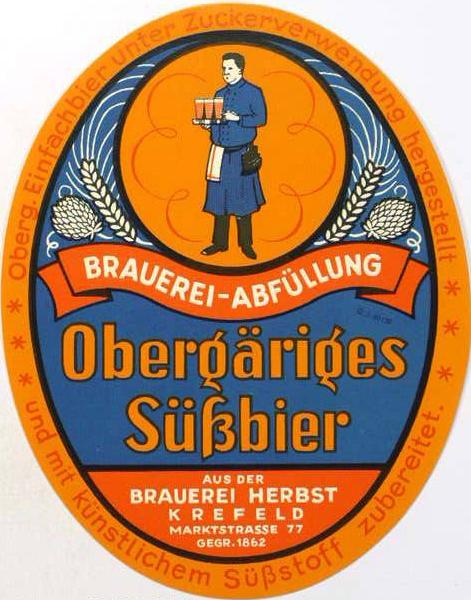
So you were only allowed to use substitutes if they didn't alter the nature of the beer. That doesn't really fit with what I've read about German rice beer, where the whole point of its use was to produce something that was lighter and more delicately flavoured.

The idea of having to name beer that wasn't brewed from malt and hops alone something else was floated in the UK around this time. Campaigners for "pure beer" wanted beer contained adjuncts or sugar to be clearly stated as doing so. They didn't get very far with that one.

I wonder if any Bavarian brewerss were ever lynched? It wouldn't surprise me. They are pretty crazy when it comes to beer down there.

Monday, 25 June 2018

Lager brewing in late 19th century Japan

I often do searches for "Lager" in books. It turns up all sorts of fascinating stuff. Like this article about Lager brewing in Japan.

"The Journal of Commcrre of Victoria is responsible for some information anent the brewing industry in “Jolly Japan" that will be read with pleasure by all who rejoice to see the extension of the realms over which John Barleycorn holds sway. It appears that the director and manager of the Osaka Beer Brewery Company, Osaka, has recently been on a protracted visit to the United States of America, and whilst there he confided to the ears of some American journalists a few details concerning the extent of the beer trade in the go-ahead empire of Japan. We learn that the annual output of beer amounts to 100,000 barrels, but that the demand is increasing so rapidly that in time beer will seriously rival “saka” in the afiections of the Japanese native. The sooner the better, all of us will say, but that a stern battle will have to be fought, a mere mention of the fact that there are about five millions of barrels of “saka ” annually consumed, amply testifies. This native beverage, being made from the abundant cereal rice, naturally has a firm footing in a land where rice is as much an article of daily food as is Wheaten bread in our own country, but considering that Japan was hardly heard of from a European point of view of civilisation before 1870, it must be conceded that the drinks of the Goths and Vandals of Northern Europe are steadily gaining in popular favour. The system of brewing hitherto pursued at Osaka is that in force in Bavarian breweries, where, indeed, the manager of the Osaka establishment learnt his profession, but his mission to the States was undertaken solely with the object of supervising the manufacture of new plant for the production of lager beer in Japan on American principles. The raw materials for manufacturing this beer will include, besides, we assume, maize and rice, barleys hailing from America and Japan, and hops grown under the scorching skies of California. The Journal of Commerce of Victoria says, somewhat despondently, that Australasian hops do not apper to have received the attention of the manager of the Osaka Beer Brewery Company, but doubtless if the Journal should meet his eye, he will be able to remedy this little oversight. Transport freights should not be very high from Australian ports to Osaka, as inhabitants of these bright countries are in the habit of exchanging holiday visits to one another's hospitahle shores. Whilst commenting on the beneficial spread of beer-drinking habits as opposed to a proneness to imbibe ardent spirits, we might point out the neat increase in the ranks of beer drinkers in Paris an France generally. Every humanitarian will view with pleasure the abolition of those innumerable “petits verres," and the adoption instead thereof of a sound, healthy beverage such as the juice of honest Barleycorn. We believe the same tendencies are at work in Russia, and doubtless as civilisation marches along, we shall witness a gradual lessening in the consumption of absinthe, inferior brandy, and vile vodka."
"The Brewers' Journal, 1898", page 66.

I can't remember ever hearing Japan described as "jolly" before.

Interesting that the Osaka Brewery had started with German technology but was moving over to UA kit. To me, that says brewing with corn grits and fermenting in sealed vessels. Obviously, it made far more sense for a Japanese brewery to buy Californian rather than European hops. Though Australian ones would indeed have meade even more.

During WW I, the Japanese moved into the Far Eastern market., especially the Dutch East Indies. With brewing in trouble in Holland and international trade disrupted by German submarine warfare, Japanese brewers faced little competition. Especially when the export of beer from Holland was forbidden:

"Beer Export Forbidden
The export of beer is forbidden."
De Tijd, 29-05-1916, page 2. (My translation.)
In other parts of Asia, Japanese Lager replaced the products of the Central Powers.
"The Germans have many smart well as shameful things to their credit. In the former is the success with which have been able to capture a considerable portion of the Indian market with their beer. The most famous of all English beers — pale ale — which is known and appreciated all over the world, originated with the demand by Anglo-Indians, and, according to tradition, the reputation and fortune of one of our greatest brewing firms owes its origin to the wreckage of a cargo off the British Isles, when the virtues "East India Pale Ale" first became known to stay-at-homes. The explanation of the present esteem of the German article lies in a preference for a lighter drink. At the moment Japanese brews are replacing those of Munich and Pilsen. But surely England will come into its own again."
Exeter and Plymouth Gazette - Monday 25 January 1915, page 3.
The last senetnce proved to be overly optimistic.

Sunday, 24 June 2018

An accident in a Lager brewery

Why am I posting a areport of an industrial accident court case? Because it gives some interesting details about the pitching of lagering vessels.

It sounds like a fairly unpleasant accident. it would have to be to get £60 damages. That's like a year's salary.
"Employers’ Liability.
The case of Hume v. Imperial Lager Beer Company, Limited, which came before the Lord Chief Justice and Mr. Justice Mathew on January 29th, was an appeal from the County Court at Edmonton where the plaintiff had obtained a verdict for £60 damages for personal injuries.

Mr. Colam, appearing for the appellants, said the notice of motion was that judgment should be entered for the appellants or in alternative for a new trial, on the ground that there was no evidence of negligence to go to the jury, and that the learned judge had misdirected the jury in the summing-up. The defendant company had several large vats in which they stored beer, which had to be cleaned out about every three months. For that purpose hot pitch was poured into them, and it was afterwards heated with red hot irons, and ignited by a kind of torch, and stirred round with the hot irons until the whole of the pitch was liquid, and then the vats were rolled about the yard until the inside was thoroughly coated with pitch.

The Lord Chief Justice asked if that was done to give a flavour to the beer.

Mr. Colam said no; it was to make them thoroughly beer-tight. That practice had been in use for a long tune. The plaintiff spoke to it for five years, and no explosion had ever taken place before, but on the occasion in question an explosion occurred, which drove a piece of wood out of the bottom of the vat. This struck the plaintiff and knocked him down, and some hot pitch which he was carrying fell over him and scalded him. There was no evidence to show how the explosion was caused.

The Lord Chief Justice asked if there was not some evidence that the hoops were loose.

Mr. Colam said that point was expressly abandoned by Mr. Statham, who appeared for the plaintiff. He submitted that there must have been some chemical in the pitch which caused the explosion, but there was no evidence that the pitch ought to be lighted or tested in any way before it was used."
"The Brewers' Journal, 1898", page 116.
If they were repitching every three months, that implies a lagering time of that length. Which is the classic lagering time. The process of setting light to hot pitch sounds pretty dodgy. And I certainly wouldn't want to have pitch splash over me, as in the case of the unfortunate Mr. Hume.

I like the judge asking if the pitch lining was for flavour. Though there are plenty of reports of Lager made this was having a garlicy flavour. Sounds lovely.
"The Lord Chief Justice said perhaps the word explosion was hardly the correct term in the ordinary sense, but probably in every case when the light was applied there was something of the same nature in a less egree. There would be a sudden expansion of the gases in the interior. Mr. Colam said the evidence was that there had never before been any explosion, but that there was a sort of humming noise. His complaint was that the learned judge by his summing up led the jury to believe that because a piece of the vat came out w en the explosion took place, that was evidence that the vat was defective. There was no evidence whatever of actual defect.

Mr. Justice Mathew said there was evidence that the vat was an old one.

Mr. Colam said it was only proved to be five years old, and it had gone through this process about every three months.

Mr. Justice Mathew said there was no evidence it was only five years old.

The Lord Chief Justice said a pitcher might go often to the well and yet get broken at last.

Mr. Colam then read the summing up, pointing out passages of which he complained, and again submitted that the learned judge had led the jury to a wrong conclusion, and that there was no evidence of negligence.

The Lord Chief Justice, without calling on Mr. Statham, said the learned judge left the question to the jury whether the injury to the plaintiff arose from the defective state of the vat, and whether such defect might by reasonable care have been discovered and guarded against, and it could not be contested that that was a roper uestion to be left to the jury. But it was contended on the part of the defendants that there was no evidence which ought to have been left to the jury that the injury did arise from the defective state of the vat. After reading the section of the Act, and referring to the operation performed, he said it seemed clear on the evidence that this operation exerted a certain amount of pressure outwards on the vat which was submitted to it. One of the witnesses said that when the light was applied flames came out, and a noise is heard; "hum ming, like a report." He did not doubt, therefore, that there was caused by the lighting of the pitch a kind of modified explosion in every case, or at all events a pressure arising from something of the character of an explosion. On the occasion in question this pressure resulted in a portion of the vat being forced out. He did not find in the evidence that the plaintiff was at any great distance, but he fell to the ground, and the pitch he was carrying went over him. Did not that state of facts raise a prima facie case of negligence within the meaning of the Act, which had to be answered? It could only have arisen from the fact that the vat was not strong enough to bear the operation. It was suggested that this was an exceptional operation, that there were chemicals in the pitch which caused the explosion, but if that was the suggestion it was for the defendants to show that such a thing was possible, and they called no evidence at all. The evidence was that this vat was five years old to the knowledge of the plaintiffs, but of its actual age there was no evidence at all: or that any examination had been made of it to see whether it was sound. Under these circumstances he could not say that there was not evidence proper to be considered by the jury, and what they said after giving their verdict showed that they understood and appreciated the matter submitted to them, and had formed an opinion which seemed to him to be a sensible one. They said, “The jury would like to add that if proper means had been adopted to ascertain the strength of the vat before firing, the explosion probably would not have occurred." The summingup must be taken as a whole, not isolated sentences or half sentences by themselves, and taking it as a whole he thought the learned judge had left the proper questions to the jury, and in the proper way. The verdict and judgment would therefore stand.

Mr. Justice Mathew concurred, and the appeal was therefore dismissed with costs."
"The Brewers' Journal, 1898", page 116.
I'm glad that Mr. Hume got to keep his sixty quid. Sounds like he deserved it.

The Imperial Lager Brewery was in Tottenham. It opened in 1882 as the Anglo-Bavarian Lager Beer Brewery & Crystal Ice Factory. It changed its name to the Tottenham Lager Beer & Ice Factory 1886. That went into liquidation in 1895and a new company called the Imperial Lager Brewery was created. It stopped brewing in 1903.

Saturday, 23 June 2018

Let's Brew - 1952 Shepherd Neame SXX

WW II was even more difficult for Shepherd Neame than other brewers. Because they were forced to use unmalted adjuncts, something they'd eschewed beefore the war. Once the shackles were off, they resorted to their pre-war habits.

Which were to brew all-malt Pale Ales. That doesn’t leave much to discuss about the recipe. It’s just a load of pale malt and a touch of malt extract. I assume that the latter was for extra enzymes in the mash tun. Though why you would need that in a beer without unmalted grains I’m not sure.

Shepherd Neame brewed an impressive range of Pale Ale, in ascending order: LDA (1030º), BB (1030º), BA (1035º), PA (1037º) and SXX (1041º). SXX was their Best or Special Bitter.

I find it strange that a brewery bang in the middle of England’s main hop growing area should use so many old hops. In this case around 85% of the hops were from the 1949 crop. Though, as they were all from its own hop garden, that might explain why. Were they just using up hops that they’d been saving for a rainy day?

Talking of hops, none of Shepherd Neame's Pale Ales were very heavily hopped. Again, not what you'd expect from a brewery in hop country.


1952 Shepherd Neame SXX
pale malt 9.25 lb 97.37%
malt extract 0.25 lb 2.63%
Fuggles 120 mins 1.00 oz
Goldings 30 mins 1.00 oz
Goldings dry hops 0.25 oz
OG 1041
FG 1008
ABV 4.37
Apparent attenuation 80.49%
IBU 26
SRM 4
Mash at 149º F
Sparge at 170º F
Boil time 120 minutes
pitching temp 62º F
Yeast WLP007 Dry English Ale

Friday, 22 June 2018

UK beer imports 1895 - 1897

As we've been looking at beer exports, we may as well look at imports, too.

There are a couple of things to be careful about. First, it's packages rather than a volume. Secondly, just because the beer was dispatched from a port in Belgium or Holland, it doesn't necessarily mean that the beer was brewed there. Much likely came from somewhere else, most likely Germany.

Though the beer shipped from Copenhagen probably did come from Denmark. And I think it's safe to assume anything coming from New York had been brewed in the USA. I'm shocked to see that any beer at all was imported from the US. The stuff coming from Copenhagen was probably mostly Carlsberg and Tuborg.

The beer itself was probably almost all Lager. That was about all that was imported into the UK. Top-fermenting styles were provided by domestic breweries.

Note that more than half of the imports came in via London. Not really surprising: London waws a massive port and much closer to the Continent than Liverpool, Dublin or Glasgow. I'd guess that the same was also true for exports. Though maybe not to quite the same extent.

Total importations of beer into the United Kingdom:—
From  London Liverpool Hull Harwich O.E Ports Dublin. Clyde &c. Total
pkgs. pkgs. pkgs. pkgs. pkgs. pkgs. pkgs. pkgs.
Hamburg 7,885 3,977 2,215 700 1,604 457 908 17,746
Bremen 20,827 1,075 1,351 - - - 3,525 27,078
Rotterdam 18,593 171 4,129 11,183 725 9,098 1,831 45,730
Antwerp 4,574 732 18 4,576 672 - 3 10,575
Amsterdam 14,718 282 5,655 - 2,754 - 3,064 26,473
Copenhagen 1,882 105 2,033 - - - 5,275 9,296
Christiania 154 - 618 - 14 - 66 852
New York 100 46 - - - - 50 195
Ostend 4,934 - - - - - - 4,934
Totals,1897 73,667 6,388 16,019 16,459 5,769 9,555 15,022 142,879
Do. 1896 53,257 10,179 13,468 14,026 4,997 8,250 14,655 129,442
Do. 1895. 55,429 11,868 11,775 17,082 4,079 8,282 14,130 122,645
Source:
"The Brewers' Journal, 1898", page 64.

Here are the numbers in bulk barrels:


UK beer imports 1895 - 1897 (bulk barrels)
1895 1896 1897
44,399 45,000 45,752
Source:
Dundee Evening Post - Monday 01 April 1901, page 2.


As 1 package seems to equate to about a third of a barrel, here's are the bulk barrels for each point of origin:


From bulk barrels
Hamburg 5915.33
Bremen 9,026
Rotterdam 15,243.33
Antwerp 3,525
Amsterdam 8,824.33
Copenhagen 3,098.67
Christiania 284
New York 65
Ostend 1,644.67

It's not a huge amount of beer.

Thursday, 21 June 2018

UK beer exports in 1897 (part two)

More table fun. Except this time I've derived my own new set of numbers. Cool, eh?

One thing is immediately clear: the biggest export market for Scottish brewers was the West Indies. I wonder why that was? I know that they did a big trade in strong Scotch Ale there. The high average price per barrel of those exports tends to confirm that.

Though overall, English exports were higher in price. Is that because English exports were mostly either Pale Ale or Stout, two expensive styles?

I'm truly shocked at how big a proportion of the beer sent to East India were from Scotland. That's certainly a change from a couple of decades earlier, when Burton and London provided most. In the form of Pale Ale and Porter. I wonder what the scots were sending? Maybe it was already Lager.

I think I've worked out the Irish conundrum. It's probably to do with how the statistics were collected. My guess is they did it at the port where the beer left the UK. Any Guinness that was shipped to Liverpool and then dispatched to wherever would be counted in the English numbers.

The same could be true of Scotland. Beer shipped from Leith to London and then sent on.

UK beer exports in 1897
England Scotland
Countries to which exported average value % average value %
Russia 3.69 95.94% 3.00 0.16%
Sweden 4.85 85.86% 2.79 14.14%
Norway 3.07 100.00%
Denmark 3.32 97.24% 3.50 2.76%
Germany 3.27 98.48% 3.94 1.23%
Holland 3.09 93.18% 3.14 6.70%
Belgium 3.02 92.20% 3.26 7.36%
Channel Islands 2.25 100.00%
France 2.91 100.00%
Portugal, Azores, and Madeira 3.23 98.42% 4.67 1.58%
Spain and Canaries 3.56 87.40% 4.47 12.60%
Gibraltar 3.09 99.86% 3.07 0.14%
Italy 3.93 91.50% 4.23 8.50%
Austrian Territories 5.00 100.00%
Malta 3.22 72.88% 3.16 27.12%
Greece 5.33 100.00%
Bulgaria 4.00 100.00%
Turkey, European 3.40 100.00%
Turkey, Asiatic 3.69 100.00%
Egypt 2.68 97.88% 4.30 2.12%
Tripoli and Tunis 2.98 100.00%
Algeria 4.50 100.00%
Morocco 3.28 100.00%
Spanish Ports in North Africa 3.00 100.00%
West. Africa, Foreign 3.56 100.00%
Western Africa, British 3.51 100.00%
Ascension & St. Helena 3.06 100.00%
British Possessions in South Africa 3.66 80.40% 3.77 19.60%
Eastern Africa, Foreign 4.90 79.69% 4.84 20.16%
Eastern Africa, British 5.30 100.00%
Abyssinia 4.50 100.00%
Madagascar 3.77 75.84% 4.49 24.16%
Bourbon 3.56 27.17% 4.51 72.83%
Mauritius 3.05 56.86% 2.85 43.14%
Aden 3.21 100.00%
Persia 3.43 100.00%
British East Indies
Continental Territories 3.21 27.13% 2.60 72.87%
Straits Settlements 4.17 45.94% 2.92 54.06%
Ceylon 2.85 83.66% 4.64 16.34%
lndia: Dutch Possessions
Java 4.28 99.07% 9.00 0.93%
Other Possessions 3.50 100.00%
Spanish Possessions
Philippine Islands 4.55 96.40% 4.78 3.60%
British Possessions:
Borneo 0.00% 4.25 100.00%
Labuan 6.67 100.00%
Siam 3.56 12.86% 4.75 87.14%
French Indo-China 6.54 68.42% 4.17 31.58%
China 3.74 91.37% 4.48 8.63%
Hong Kong 2.84 64.83% 2.68 35.17%
Japan 3.89 100.00% 0.00%
Australasia:
West Australia 3.94 81.19% 3.61 18.81%
South Australia 4.36 68.89% 5.04 31.11%
Victoria 4.13 64.09% 4.32 35.91%
New South Wales 3.79 64.98% 5.25 22.17%
Queensland 4.52 79.88% 3.24 20.12%
Tasmania 5.19 96.25% 2.41 3.75%
New Zealand 5.39 98.88% 3.56 1.12%
Fiji Islands 3.30 100.00% 0.00%
Islands in the Pacific 3.52 100.00% 0.00%
British North America 4.54 85.34% 2.88 14.66%
U. States of America 4.27 87.86% 6.80 1.45%
Bermudas 2.68 37.27% 3.23 62.73%
British W. Ind. Islands 3.90 20.68% 4.10 79.32%
Spenish W. Ind. Islands 3.23 85.28% 4.57 14.72%
French W. Ind. Islands 4.93 100.00% 0.00%
Dutch W. Ind. Islands 3.81 100.00% 0.00%
Danish W. Ind. Islands 4.69 43.48% 5.29 56.52%
British Honduras 3.83 70.65% 5.12 29.35%
British Guiana 3.88 12.67% 3.91 87.33%
Dutch Guiana 3.77 100.00% 0.00%
Hayti and S. Domingo 9.20 21.88% 4.57 78.13%
Mexico 3.93 89.87% 4.46 10.13%
Central America 4.69 96.43% 3.67 3.57%
Republic of Colombia 3.27 83.53% 4.49 16.47%
Venezuela 3.54 61.78% 4.60 38.22%
Ecuador 4.50 80.00% 7.00 20.00%
Peru 4.17 100.00% 0.00%
Chili 3.76 79.17% 4.03 20.83%
Brazil 3.52 99.19% 6.89 0.81%
Uruguay 4.10 88.12% 4.83 11.88%
Argentine Republic 4.08 99.59% 4.40 0.41%
Falkland Islands 3.34 100.00% 0.00%
Average 3.48 69.37% 3.17 29.87%
Source: 
The Brewers' Journal, 1898, page 391.

Wednesday, 20 June 2018

Let's Brew Wednesday - 1948 Lees Bitter

After all of those watery Milds here's something a little beefier. But only a little.  I wouldn't want you to go crazy or anything.

This iteration of Lees Bitter is notable for being very unremarkable. If you get what I mean.

If you’ve been paying attention, you might have noticed the lack of crystal malt in many Bitters, as is the case here. It’s surprisingly recently that it became a standard element of Pale Ale grists.

Black malt is slightly unusual in a Bitter. The quantity is so small it’s clearly just to add a little colour. The No.2 invert in the recipe is my substitution for invert and CWA.

As the hops were all English, I’ve guessed Fuggles and Goldings. The chances are they were that, or something similar.

An underlet raised the mashing temperature to 149º F.


1948 Lees Bitter
pale malt 7.00 lb 86.63%
black malt 0.08 lb 0.99%
enzymic malt 0.125 lb 1.55%
glucose 0.125 lb 1.55%
No. 2 invert sugar 0.75 lb 9.28%
Fuggles 105 mins 1.00 oz
Goldings 30 mins 1.00 oz
Goldings dry hops 0.25 oz
OG 1038
FG 1010
ABV 3.70
Apparent attenuation 73.68%
IBU 26
SRM 8
Mash at 147º F
Sparge at 170º F
Boil time 105 minutes
pitching temp 60º F
Yeast Wyeast 1318 London ale III (Boddingtons)