The main advantages restaurants had over pubs were more liberal licensing hours. Meaning that you could spend the evening on the piss down the pub, then tip down a curry house for some food and more beer.
Though the choice of beer in restaurants ranged from nothing to bollocks. If you were really lucky, there might be bottle-conditioned Guinness. The other choices being fizzy Bitter or fizzy Lager.
In my case, at this period, restaurants would mean curry houses. Pakistani-owned, I think. The default was three chapatis. Rice was a special order.
45p for a curry with three chapatis it was at Chakwal, handily located right next to the Pack Horse. A Tetley pub with a pretty decent pint of Mild. If not quite in the A-class of the Cardigan Arms. (At the time, a pint of Mild next door was around 18p.) You had to order rice specially.
Chakwal wasn’t even BYO. Totally dry. Not that it worried me that much. I usually went during pub opening hours. And when I’d finished eating, there was the Pack Horse and Tetley’s Mild waiting next door.
Tuesday, 16 January 2024
Restaurants in the 1970s
Monday, 15 January 2024
Scottish Mild Ales 1880 - 1914
This period is quite confusing with regard to Mild Ale. Brewers continuing to produce Shilling Ales – which were mostly the equivalent of English Mild Ales – but also made beers which were specifically called Mild Ale or designated by X’s as Mild Ales were in England.
William Younger further muddied the waters by giving the same beer an X designation when intended to be sold on draught and a shilling designation when destined for bottling. It’s taken me several years of study to get my head around and I still sometimes get confused.
For comparison purposes, I've also included a table of London Milds from the end of the 19th century and early 20th century.
General trends seem to be William Younger’s Mild Ales becoming less heavily hopped and lower gravity than equivalent London beers. A similar trend of a fall in hopping rate can also be seen in London. Whitbread and Truman’s hopping declined from over 7 lbs per quarter in 1885 to around 5 lbs, while Fuller’s fell from 6.5 lbs to 5 lbs. Only Barclay Perkins had a pretty much unchanged hopping.
Note that the stronger Milds had all disappeared in London by 1914. X Ale reigned supreme in the capital.
| William Younger Mild Ales 1885 - 1913 | ||||||||
| Year | Beer | Style | OG | FG | ABV | App. Atten-uation | lbs hops/ qtr | hops lb/brl |
| 1885 | X | Mild | 1048 | 1009 | 5.16 | 81.25% | 5.29 | 0.99 |
| 1885 | XX | Mild | 1056 | 1012 | 5.82 | 78.57% | 6.19 | 1.53 |
| 1885 | XXX | Mild | 1065 | 1021 | 5.82 | 67.69% | 6.67 | 1.86 |
| 1898 | XX | Mild | 1061 | 1016 | 5.95 | 73.77% | 5.45 | 1.50 |
| 1898 | XXX | Mild | 1074 | 1018 | 7.41 | 75.68% | 8.81 | 2.74 |
| 1913 | XX - X | Mild | 1055 | 1017 | 5.03 | 69.09% | 4.07 | 0.88 |
| 1913 | XX | Mild | 1055 | 1018 | 4.89 | 67.27% | 4.07 | 0.87 |
| 1913 | XXK | Mild | 1056 | 1016 | 5.29 | 71.43% | 4.07 | 0.81 |
| 1913 | XXX | Mild | 1065 | 1021.5 | 5.75 | 66.92% | 4.55 | 1.15 |
| Source: | ||||||||
| William Younger brewing records held at the Scottish Brewing Archive, document numbers WY/6/1/2/31, WY/6/1/2/45 and WY/6/1/2/58. | ||||||||
| London Mild Ales 1885 - 1912 | ||||||||
| Year | Brewer | Beer | OG | FG | ABV | App. Atten-uation | lbs hops/ qtr | hops lb/brl |
| 1885 | Truman | X Ale | 1059.0 | 7.3 | 1.87 | |||
| 1885 | Whitbread | X | 1059.6 | 1015.0 | 5.90 | 74.88% | 7.49 | 1.90 |
| 1886 | Barclay Perkins | X | 1055.0 | 1010.0 | 5.96 | 81.87% | 6.42 | 1.61 |
| 1886 | Barclay Perkins | XX | 1076.0 | 1022.7 | 7.05 | 70.11% | 12.00 | 3.86 |
| 1887 | Fuller | X | 1050.7 | 1013.6 | 4.91 | 73.22% | 6.64 | 1.41 |
| 1887 | Fuller | XX | 1064.8 | 1023.3 | 5.50 | 64.10% | 6.64 | 1.93 |
| 1891 | Barclay Perkins | X | 1058.0 | 1015.0 | 5.69 | 74.21% | 8.32 | 2.07 |
| 1894 | Truman | X Ale | 1056.5 | 9.0 | 2.19 | |||
| 1894 | Whitbread | X | 1058.4 | 1016.0 | 5.62 | 72.62% | 8.23 | 2.09 |
| 1897 | Fuller | X | 1049.6 | 1012.2 | 4.95 | 75.42% | 6.58 | 1.44 |
| 1909 | Barclay Perkins | X | 1053.6 | 1013.9 | 5.26 | 74.16% | 7.49 | 1.62 |
| 1909 | Truman | X Ale | 1056.8 | 5.8 | 1.41 | |||
| 1910 | Fuller | X | 1052.6 | 1014.7 | 5.01 | 72.08% | 5.2 | 1.21 |
| 1912 | Whitbread | X | 1054.0 | 1012.0 | 5.56 | 77.78% | 4.49 | 1.05 |
| Sources: | ||||||||
| Barclay Perkins brewing records held at the London Metropolitan Archives, document numbers ACC/2305/1/584, ACC/2305/1/587 and ACC/2305/1/601 | ||||||||
| Whitbread brewing records held at the London Metropolitan Archives, document numbers LMA/4453/D/01/051, LMA/4453/D/01/060 and LMA/4453/D/01/077. | ||||||||
| Truman brewing record held at the London Metropolitan Archives, document number B/THB/C/166, B/THB/C/175 and B/THB/C/190. | ||||||||
| Fullers brewing records held at the brewery. | ||||||||
The above is an excerpt from my excellent book on Scottish brewing:
Which is also available in Kindle form:
https://www.amazon.com/dp/B07Q8XHBL2
Sunday, 14 January 2024
Perry Beers just after WW II
To say there had been a cull in Perry’s beers across the war would be an understatement. Only two remain: XX and IPA. Leaving a range of beers which doesn’t look particularly Irish.
In particular, the lack of a Black Beer of any description. During the war, Perry brewed two: Porter and XX Stout. The latter seems to have been dropped during the war, the former just after its end.
Both have, as you would expect, reduced gravities. More extreme in the case of IPA, down from 1052º to 1038º. While XX has only lost 7º. The changes leave the two with the same 1038º gravity.
What’s the difference between the two, then? Rather more hops in the IPA and rather more black malt in the XX, to put it simply. The hopping rates (per quarter) are much the same as before the war. As is the rate of attenuation.
IPA no longer includes crystal malt. And neither it nor XX has any malt extract.
The supply situation has obviously improved, due to the presence of American hops. Being from Yakima gives it rather the look of a modern beer. The vast majority of the hops are English and American, as pre-war.
Really not much more to discuss here, given the limited number of beers and ingredients.
| Perry beers in 1947 | |||||||
| Beer | Style | OG | FG | ABV | App. Atten-uation | lbs hops/ qtr | hops lb/brl |
| XX | Mild | 1038 | 1011.5 | 3.51 | 69.74% | 4.97 | 0.85 |
| IPA | IPA | 1038 | 1013.0 | 3.31 | 65.79% | 6.62 | 1.10 |
| Source: | |||||||
| Perry brewing records held at the local studies department of Laois county library. | |||||||
| Perry grists in 1947 | |||||
| Beer | Style | OG | pale malt | black malt | hops |
| XX | Mild | 1038 | 96.18% | 3.82% | English, Yakima |
| IPA | IPA | 1038 | 99.35% | 0.65% | English, Yakima |
| Source: | |||||
| Perry brewing records held at the local studies department of Laois county library. | |||||
This is an excerpt from my recently-released Blitzkrieg!, the definitive book on brewing during WW II.
The second volume contains the recipes. But not just that. There are also overviews of some of the breweries covered, showing their beers at the start and the end of the conflict.
Buy one now and be the envy of your friends!
Both volumes are also available on Kindle:
Volume 2Saturday, 13 January 2024
Let's Brew - 1943 Perry XX
You may be shocked to see that XX has only lost 1º in gravity since the start of the war. But the reality is slightly more complicated.
This recipe comes from October and the X Ale above from May. There’s a big difference between the beers from early in the year and those from later. A brew of XX from May had an OG of just 1039º. What was going on?
Funnily enough, when this stronger example was brewed was exactly the time when the Republic of Ireland and the UK were having a trade tussle. The Irish government banned the export of beer to the UK as a lever to get more grain from the UK. The Republic provided 90% of the beer drunk in Northern Ireland, so cutting off supplies was a big problem. The UK government eventually caved in and supplies of Guinness were resumed.
You’d expect the weaker beer to be brewed now, not earlier in the year. Irish average OG hit its wartime nadir of 1043.63º in 1943, then rose back 1º, where it remained for the rest of the war.
There’s very little to the recipe. Mostly base malt and one type of hops. Only the tiny amount of black malt prevents it from being a SMASH recipe. The hops, incidentally, were English and from the 1942 harvest. Pretty fresh, especially compared to what Perry used pre-war.
| 1943 Perry XX | ||
| pale malt | 10.75 lb | 99.17% |
| black malt | 0.09 lb | 0.83% |
| Fuggles 150 mins | 0.75 oz | |
| Fuggles 60 mins | 0.75 oz | |
| OG | 1046 | |
| FG | 1012.5 | |
| ABV | 4.43 | |
| Apparent attenuation | 72.83% | |
| IBU | 20 | |
| SRM | 8 | |
| Mash at | 149º F | |
| Sparge at | 160º F | |
| Boil time | 150 minutes | |
| pitching temp | 60º F | |
| Yeast | Wyeast 1084 Irish ale | |
This recipe is from my recently-released Blitzkrieg!, the definitive book on brewing during WW II.
The second volume contains the recipes. But not just that. There are also overviews of some of the breweries covered, showing their beers at the start and the end of the conflict.
Buy one now and be the envy of your friends!
Both volumes are also available on Kindle:
Volume 2Friday, 12 January 2024
Special Bitter adjuncts and sugars in the 1970s
Not a great deal going on in adjunct land. Just three of them. And no more than one of them in any beer. The adjunct content averages out to just 5%.
Old favourite flaked maize only turns up, in modest quantities, in Abbey Ale. There’s rather more flaked barley in Abbey Ale. Slightly exceeded by Truman, with their unusual attachment to pearl barley.
Moving quickly on, sugars. Quite a few of them, again.
OK. Not many that I know bugger all about. Malt extract. We know the deal there. It’s been added to the mash tun for extra enzymes. No.3, would be normal in a Mild. And maybe in small amounts in a Bitter. Over 12% of the grist is a crazy amount for the style.
While the average sugar content is around 13%, a couple of the examples, Abbey Ale and County Ale, contain much more. The former being not far short of 20%. Which about as much sugar as you ever see in a beer.
I’ve already said often enough how clueless I am about the proprietary sugars. No need to repeat it here.
| Special Bitter adjuncts 1969 - 1981 | ||||||
| Year | Brewer | Beer | flaked maize | flaked barley | pearl barley | total adjuncts |
| 1971 | Shepherd Neame | Abbey Ale | 3.82% | 3.82% | ||
| 1981 | Eldridge Pope | Royal Oak | 0.00% | |||
| 1969 | Truman | Ben Truman | 8.89% | 8.89% | ||
| 1969 | Fremlin | County Ale | 7.54% | 7.54% | ||
| Average | 5.06% | |||||
| Sources: | ||||||
| As in the table above. | ||||||
| Special Bitter sugars 1969 - 1981 | ||||||||||
| Year | Brewer | Beer | malt extract | no. 3 sugar | cane sugar | Wortex | Flow-sweet | WSI | caramel | total sugar |
| 1971 | Shep. Neame | Abbey Ale | 0.64% | 12.74% | 6.37% | 19.75% | ||||
| 1981 | Eld. Pope | Royal Oak | 8.77% | 8.77% | ||||||
| 1969 | Truman | Ben Truman | 2.96% | 1.48% | 4.44% | |||||
| 1969 | Fremlin | County Ale | 17.87% | 0.05% | 17.92% | |||||
| Average | 12.72% | |||||||||
| Sources: | ||||||||||
| As in the table above. | ||||||||||
Thursday, 11 January 2024
Ireland here I come
Like the Perry stuff at the Laois County Library. Filling in a few, of the gaps, in my knowledge of Irish brewing. Filling more in would be great.
I've been asked about writing a book om Irish brewing. Maybe I will, if I can scrape together enough information.
I know they have some brewing records in the Cork archives. But I'm damned if I can find them in their online catalogue. If you can help a poor oldie person to find the relevant documents, do let me know.
Probably in April I'll be over. Any other archive suggestions are very welcome.
Ireland here I come
Like the Perry stuff at the Laois County Library. Filling in a few, of the gaps, in my knowledge of Irish brewing. Filling more in would be great.
I've been asked about writing a book om Irish brewing. Maybe I will, if I can scrape together enough information.
I know they have some brewing records in the Cork archives. But I'm damned if I can find them in their online catalogue. If you can help a poor oldie person to find the relevant documents, do let me know.
Probably in April I'll be over. Any other archive suggestions are very welcome.
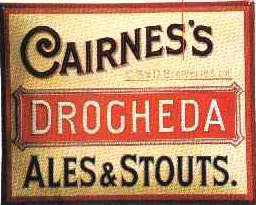
Can I add that I'm a bit obsessed with Cairnes. No idea why. These things just take me.
Special Bitter malts in the 1970s
Each of the four beers contains more than just the base pale malt. Though in the case of County Ale, it’s just enzymic malt. Which I can’t imagine had any impact on the flavour.
Two out of four contain crystal malt. See? Crystal malt wasn’t universally employed in any class of Bitter. I wonder if use of crystal malt was tied to home brewing? If you’re brewing with malt extract, as many home brewers did in the 1970s, steeping crystal malt is a way of adding an extra dimension to your Bitter.
Amber malt, as in Abbey Ale, seems like an odd choice. Especially as it wasn’t a malt which was much used at the time. No wonder the beer turned out so dark.
Who would have expected half the examples to contain wheat? Perhaps someone with knowledge of brewing practices at the time. I always assume its presence is for heading purposes.
What can I say about enzymic malt? Other than that it’s weird how many brewers persisted in using it. Was it really to help conversion?
An average malt content of 82% is fairly high. But that is a little less that the 85% of Best Bitter.
| Special Bitter malts 1969 - 1981 | ||||||||
| Year | Brewer | Beer | pale malt | crystal malt | amber malt | wheat malt | enzymic malt | total malt |
| 1971 | Shepherd Neame | Abbey Ale | 61.15% | 5.73% | 5.73% | 3.82% | 76.43% | |
| 1981 | Eldridge Pope | Royal Oak | 76.57% | 8.67% | 5.98% | 91.23% | ||
| 1969 | Truman | Ben Truman | 86.67% | 86.67% | ||||
| 1969 | Fremlin | County Ale | 70.36% | 4.19% | 74.54% | |||
| Average | 82.22% | |||||||
| Sources: | ||||||||
| As in the table above. | ||||||||
Wednesday, 10 January 2024
Let's Brew Wednesday - 1898 Cairnes Ale
One step up from Table Beer is something simply called “Ale”. A term, which, in the 19th century, usually referred to Mild Ale. I’m assuming that’s what this is. An Irish Mild Ale.
It’s a type of beer which, until I got my hands on some Irish brewing records, I was very much in the dark about. Seeing as it gets pretty much zero attention in contemporary brewing literature. Which focuses completely on Stout. I guess English brewers weren’t really interested in Irish Mild.
At 1067º, it’s a good bit stronger than a London X Ale, which, at the time, was around 1055º. It’s around the strength that an XX Ale would have been, had anyone still brewed one in London.
In essence, it’s a scaled-up version of Table Beer. With the same three elements: base malt, sugar and caramel. The sugar being simply described as “Sacch.” I’ve plumped for No. 2, it being a fairly neutral choice.
The result isn’t a particularly dark beer. Though more colour could have been added through primings.
Just the one type of English hops, for which I’ve guessed Fuggles. A fairly robust hopping rate, leaves a fairly bitter beer.
| 1898 Cairnes Ale | ||
| pale malt | 13.35 lb | 91.38% |
| No. 2 invert sugar | 1.25 lb | 8.56% |
| caramel 1000 SRM | 0.01 lb | 0.07% |
| Fuggles 120 mins | 2.00 oz | |
| Fuggles 60 mins | 2.00 oz | |
| Fuggles 30 mins | 2.00 oz | |
| Fuggles dry hops | 0.25 oz | |
| OG | 1067 | |
| FG | 1017 | |
| ABV | 6.61 | |
| Apparent attenuation | 74.63% | |
| IBU | 64 | |
| SRM | 9 | |
| Mash at | 150º F | |
| Sparge at | 165º F | |
| Boil time | 120 minutes | |
| pitching temp | 60º F | |
| Yeast | Wyeast 1084 Irish ale | |
Tuesday, 9 January 2024
1970s Special Bitter
Though I did remember that I have all those technical brewing journals from the 1970s. Ones I've never really looked at. Full of rabbit holes, I'm sure.But, what the hell? I' retired. Time is one thing I've loads of. At least for now.
Only one type of Bitter left: Special Bitter. Not as many of these, as by no means every brewery produced one.
A slightly lower degree of attenuation than in the other types of Bitter. Though the high gravities mean that all are above 4% ABV. And Fremlin County Ale manages to just top 5% ABV.
The hopping rate per quarter (336 lbs) of malt, at 5.5 lbs, is the highest, by a shade, of all the Bitter types. No shock, then, that the bitterness levels are also the highest, though only very slightly.
A couple of the beers have very dark colours for the style. Especially Abbey Ale which is darker than some Milds. Though a particularly pale Ben Truman keeps the average colour around the same as for Best Bitter.
| Special Bitter 1969 - 1981 | ||||||||||
| Year | Brewer | Beer | OG | FG | ABV | App. Atten-uation | lbs hops/ qtr | hops lb/brl | colour | IBU |
| 1971 | Shepherd Neame | Abbey Ale | 1044.3 | 1014.0 | 4.01 | 68.41% | 5.59 | 1.05 | 50 | 28 |
| 1981 | Eldridge Pope | Royal Oak | 1048.2 | 1013.9 | 4.54 | 71.26% | 4.33 | 0.74 | 40 | 20 |
| 1969 | Truman | Ben Truman | 1046.8 | 1010.0 | 4.87 | 78.70% | 4.13 | 0.76 | 16 | 18 |
| 1969 | Fremlin | County Ale | 1049.5 | 1011.5 | 5.03 | 76.77% | 7.99 | 1.45 | 26* | 41 |
| Average | 1047.2 | 1012.3 | 4.61 | 73.79% | 5.51 | 1.00 | 33.0 | 26.8 | ||
| Sources: | ||||||||||
| Shepherd Neame brewing record held at the brewery, Brewing book 1971 H-5O5. | ||||||||||
| Eldridge Pope brewing record. | ||||||||||
| Truman brewing record held by Derek Prentice. | ||||||||||
| Fremlin brewing record held at the Kent Arrchives, document number U3555/2/F/Bx2/1/93. | ||||||||||
| Note: | ||||||||||
| Colour and IBU values marked with * were taken from brewery sources rather than calculated. | ||||||||||
Monday, 8 January 2024
An Irish idea
I was fortunate enough to be sent some brewing records from a couple of Irish Ale breweries: Cairnes and Perry. I find them fascinating. As they demonstrate that Irish brewing was about a lot more than just Stout and Red Ale. Comparing and contrasting with beers brewed on the other side of the Irish Sea is dead instructive.
I would bang out a book on the topic. Except I have nothing like enough information about Irish beer.Just a couple of snapshots rather than a full-length documentary film. Frustrating, but I need to be realistic.
The material I have, however, would make a dead good talk. There's more than enough to fill 45 minutes of me waffling on. Looking at Irish beers of the 1890s and /or 1930s at comparing them to ones from similar-sized English and Scottish brewers. All I need to do is find someone willing to host it.
Anyone care to give it a punt? Anywhere in Ireland is fine by me. Or anywhere else, for that matter. I just want a good excuse to write it. I hate leaving good material unused.
If you would like to host me, get in touch. I'm incredibly flexible as to dates. If you have a brewery, recipes could be arranged. Irish, English, and Scottish. I've loads of interesting ones.