Friday, 25 July 2008

Is brewery consolidation over?

No.

What? You expect more detail? Usually the complaint is that I provide far too much detail. What a picky lot you are.


Mega deals like that between Inbev and Anheuser-Busch usually concentrate the minds of those suddenly confronted with an enormous competitor. I expect a reaction.

Currently, assuming the AB-Inbev merger does go ahead, there are 5 serious global players:

AB-Inbev
SABMiller
Carlsberg
Heineken
MolsonCoors

I expect that number to fall by at least two. Who will join forces with whom? Assuming Inbev will be occupied for some time digesting AB, that leaves us just four.

From a US point of view, combining SABMiller and MolsonCoors would make sense. They've already combined their North American operations. Like AB, the activities of MolsonCoors are mostly concentrated in America. Which puts them at a distinct disadvantage. The only growth in the US is in imports and craft beer.

SABMiller, Carlsberg and Heineken all have a good geographical spread around the world. Though only SABMiller do serious amounts of brewing in the USA. Are they about to start fighting over MolsonCoors?

Yes.

Let's have a look at the possibilities for mergers.

SABMiller-Heineken
Carlsberg-MolsonCoors
Heineken-Carlsberg
Carlsberg-SABMiller
SABMiller-MolsonCoors
Heineken-MolsonCoors
SABMiller-Heineken-Carlsberg
Heineken-Carlsberg-MolsonCoors
SABMiller-MolsonCoors-Heineken
Carlsberg-MolsonCoors-SABMiller

Which is your favourite? Mine has to be Heineken-Carlsberg. Give me a few minutes and I'll think of the reason why. Or SABMiller-Heineken-Carlsberg. How about that for world-domination?

That should be all the permutations. I'll be able to say "I predicted that" no matter what happens.

Is brewery consolidation over?

No.

What? You expect more detail? Usually the complaint is that I provide far too much detail. What a picky lot you are.

Mega deals like that between Inbev and Anheuser-Busch usually concentrate the minds of those suddenly confronted with an enormous competitor. I expect a reaction.

Currently, assuming the AB-Inbev merger does go ahead, there are 5 serious global players:

AB-Inbev
SABMiller
Carlsberg
Heineken
MolsonCoors

I expect that number to fall by at least two. Who will join forces with whom? Assuming Inbev will be occupied for some time digesting AB, that leaves us just four.

From a US point of view, combining SABMiller and MolsonCoors would make sense. They've already combined their North American operations. Like AB, the activities of MolsonCoors are mostly concentrated in America. Which puts them at a distinct disadvantage. The only growth in the US is in imports and craft beer.

SABMiller, Carlsberg and Heineken all have a good geographical spread around the world. Though only SABMiller do serious amounts of brewing in the USA. Are they about to start fighting over MolsonCoors?

Yes.

Let's have a look at the possibilities for mergers.

SABMiller-Heineken
Carlsberg-MolsonCoors
Heineken-Carlsberg
Carlsberg-SABMiller
SABMiller-MolsonCoors
Heineken-MolsonCoors
SABMiller-Heineken-Carlsberg
Heineken-Carlsberg-MolsonCoors
SABMiller-MolsonCoors-Heineken
Carlsberg-MolsonCoors-SABMiller

Which is your favourite? Mine has to be Heineken-Carlsberg. Give me a few minutes and I'll think of the reason why. Or SABMiller-Heineken-Carlsberg. How about that for world-domination?

That should be all the permutations. I'll be able to say "I predicted that" no matter what happens.

Thursday, 24 July 2008

19th century Belgian beers

I don't currently have details of many old Belgian beers. A few lagers from the 1950's. Nothing that interesting there. And a handful from the 19th century, mostly lambics. That's more intriguing.

Let's take a look at them.


Someone asked the other day how the acidity was measured in one of my tables. In this case, it's lactic acid percentage by weight. If you compare these lambics with the German top-fermenting beers I wrote about a couple of days ago, you'll see that the lactic acid content of some of the German beers is even higher. Mouth-puckeringly sour, I would say.

The attenuation of the lambics is, as you would expect, pretty high. What surprised me was the alcohol content. Much higher than modern versions. Now can anyone explain that? The Petermann is also unexpectedly strong. I would have guessed 5% ABV max. Just goes to show how accurate guesswork is.

Wednesday, 23 July 2008

Brewery Life

Despite all my obsessing on the subject, my professional contact with brewing has been achingly brief. Just a few weeks between school and university, back in 1975.

I'd been looking forward to a summer on the dole and was a bit miffed when the Labour Exchange found me a job. Bastards. On the plus side, it was in a brewery and the money wasn't bad. On the minus side, it was shift work and it brewed no cask beer.

There's a particular smell that all breweries have. A mixture of fermentation and disinfectant. As soon as I catch a whiff, I'm transported back to James Hole's 1975. it permeated the whole brewery. Even the kegging line, where I worked.

My work was relatively simple, but physically demanding. Put six kegs in the rack and set the washer going. While that went through its cycle, I'd fill another six kegs and roll them over to a corner of the bay or straight onto a lorry. By the time I'd filled the kegs, it was time to take the six others off the washer and start the whole process again. Not exactly varied.

I'd been taken on because of increased sales due to hot weather. Not something you always get in England. That had affected what was going into the kegs, too. More lager than usual. Most of what I filled was lager, AK and, to a lesser extent, Mild. There was also the odd keg of IPA. It was a former Warwick's beer and at that time was sold in just one Newark pub, The Vine. I can clearly remember that the IPA sticker was blue - just like the bottle label had been for decades before.

We had two 15 minute "tea" breaks and half an hour for dinner. These were spent in a dank and dingy cellar, with a couple of kegs standing in the corner. I put tea in inverted commas because no-one drank tea during breaks. The kegs were full and you could help yourself to as much beer as you wanted. The regular staff could easily knock back 5 pints in 15 minutes. My intake was far more modest. Firstly, I couldn't physically drink that fast. Secondly, because I wasn't that keen on the beer. Typical. Get a job in a brewery and it's one whose beer you dislike.

I'm sure no brewery still allows its workers to slurp down as much as they like during the working day. We were working pretty heavy machinery and lugging weighty full kegs around. It can't have been very safe if you were half (or three-quarters) cut. Though I have noticed that hard, manual labour soon wears of the effect of alcohol.

I never got to see most of the brewery. The mash tuns, coppers and fermenters. All the interesting bits. I did once go up into the malt loft. Shafts of sunlight from the tiny windows illuminated the thick dust and the air was filled with the sweet, comforting smell of malt.

It was just as well that I'd been issued with a pair of industrial steel toe capped wellies. A couple of times I dropped a full keg on my feet. I'd have had a full set of matching broken toes, if not for those wellies. And there was water all over the place. I remember the floors being permanently wet everywhere I went in the brewery. From my viewpoint, it seemed to exist exclusively of gloomy, damp spaces. Except where we worked which, being next to the loading bay, was open to the outside on one side.

Though it never brewed anything decent after I started drinking, it was still nice to have Hole's in Newark. It spread the delectable smell of mashing across the town every day. Every day until 1982, when it was closed by Courage. And that was it. The end of Newark's brewing industry. Today the town has no brewery of any kind. I'm glad that, in some small way, I got to participate in the trade that had once made Newark famous. Before just its memory remained.

Tuesday, 22 July 2008

German top-fermenting beers 1850 - 1910

Time to look at German Ales. Sorry, German top-fermenting beers. The period I've chosen is when most of them began their dash to extinction. Very few of the styles listed still exist. Those that do won't require a second had to count all the examples.

What are the common characteristics of many traditional German top-fermenting styles? Low ABV and high level of acidity. That about sums them up. A beer like Berliner Weisse, nowadays at the extreme low end of ABV and extreme high end of acidity, was a fairly run-of-the-mill beer 150 years ago.


Many of those listed above would nowadays barely qualify as beer because of their minimal alcohol content. In fact, the Gose aside, I doubt any of them could get you very intoxicated. It's no wonder North Germans were prepared to pay more for Bayerisches Lagerbier with 4-5% ABV.

The contrast with British Ales of the same period is striking. These range from 5% to over 10% ABV.

But the story is more complicated than that. At the same time there were top-fermenting beers - such as Mumme ot Adambier - with massive OG's. Though, as in the case of Mumme, this didn't necessarily a mean a high ABV.

Adambier sounds impressive. I know at least one brewer in the States has had a go at it.

Monday, 21 July 2008

Bottled Stout 1959

Another very specific post today. I just hit a rich seam in the Whitbread Gravity Book. Loads of Stouts, all analysed on September 3rd 1959. The beers came from an array of regional breweries across the Midlands, North and Scotland. A couple are even still around.


The Stouts have broadly similar OG's - between 1039 and 1049 - yet are remarkably diverse in ABV and apparent attenuation. They range from Holt's Brown Stout at 4.7% ABV and 83% attenuation to Younger's Capital Stout at 2.8% ABV and 51% attenuation. The other beers are spread pretty evenly between these maximum and minimum figures.

What does that tell us? That British Stouts were very diverse. The ones at the bottom end of the attenuation scale must have been pretty sweet. The word "Sweet" in the names of many of these beers is a bit of a giveaway on that count. On the other hand, anything with over 80% attenuation must have been dry. These are how they break down:

>80% attenuation 3
70-80% attenuation 4
60-70% attenuation 16
<60% attenuation 15

From which I deduce that a majority of these Stouts were quite sweet. A significant minority - 18% - were dry.

What's the purpose of this? Just me hammering away at the point "Not all British Stout was sweet".

Sunday, 20 July 2008

Five beers for five pubs

I'm meeting anti-American Mike in Wildeman tonight. He's keen to experience a smoke-free environment in his favourite places. I think Ooievaar tops his list.

Which got me thinking. I've done "10 Amsterdam pubs to visit this summer" and "10 Dutch beer you should try". What about a combination list? "Five Amsterdam pubs to visit this evening and 5 Dutch beers to drink in them". Or isn't that snappy enough?


Ooievaar/Brand Up
I'm never disappointed by a visit to Ooievaar. The barmen are friendly and attentive, the atmosphere intimate and the clientele varied. You could sit next to a suit on his way home from the office or a girl taking a break from a very different type of work. Or both. Despite being tiny and really a Jenever bar, it still has a decent lineup of draught beers. La Chouffe, Brugse Zot, Gouden Carolus Classic. And Brand UP, of course. Should you ask "Ron, which Dutch Pilsners are worth drinking?" my answer would be brief. Grolsch, Christoffel Blond, Amstel 1870 and Brand UP. UP is very plae in colour, dry and with a delicious hop character. It was recently returned to its classic recipe after the bitterness had been ratcheted down a few notches some years ago. I find it goes very nicely with one of the boiled eggs they sell.

For the pisshead: a Kopstoot Royale of Brand UP and Wees 5 jaar jenever.


Cafe Belgique/Vlo
Me and Café Belgique have grown apart in recent years. I blame fag smoke and Mike. I used to be a regular feature at the end of the bar. Many assumed I was part of the fittings. It's a super little pub, which is great for atmosphere, but not for the atmosphere. get 3 or 4 smokers in there during the winter and the air was blue as a caribbean sky. Now fags have been banished, I'm looking forward to getting reacquainted. Given it's name, it's no surprise the choices of Dutch beer are limited. But it does have one that is both a rarity, distinctive and very good: 't Ij Vlo. As I wrote about Vlo yesterday, I'll limit myself to just one additional detail. Vlo is Dutch for flea. "Two fleas please, barman."

Pisshead combination: Vlo and Filliers 8 jaar jenever.


Haven van Texel/Texels Skuumkoppe
Beer from Dutch micros, 't Ij excepted, are rarely spotted outside specialist beer bars. This is an exception. Haven van Texel is, for its old town location, quite spacious, with effectively two rooms. I'm impressed that the owner went to the trouble of getting beers to match the pub's name. They sell most of the Texels range, split between draught and bottled. I've chosen witbeier Skuumkoppe mostly because of its crazy name. The canalside outdoor seating area is particularly pleasant and has a great view of some of the oldest parts of the city.

Steady your hands with: Texelse Skuumkoppe and Bols Korenwijn.


De Balie/Columbus
I'm not a fan of the Leidseplein. Crap pubs filled, later in the evening, with threatening drunks. I prefer my crap pubs filled with unthreatening drunks. When in the area, the one place I can drink with pleasure is de Balie. Stylish, modern and trendy. Sounds like a description of me, doesn't it? Columbus is one of their permanent tap selections. It's a powerful, tasty beer and the occasional random touch of brettanomyces does it no harm. Not for me. Purists may disagree.

Pisshead special: Columbus and Bols Korenwijn.


De Beiaard/Manke Monnik
Last time I dropped by here with my kids, I was disconcerted when the barman immediately shouted out "Korenwijn" to his colleague. I didn't think I drank that much of it. Being close to Heiligenweg, me and the kids often pop in after they've conned me into buying lego. Manke Monnik is a Tripel brewed at Bekeerde Suster, also part of de Beiaard chain. It's a pleasant, lightish beer, with a touch of orange and some hoppiness in the finish. Though I believe they've toned down the bitterness since it first appeared. A long glazed wall provides excellent views of the passing trams and the bikes that weave suicicdally between them.

For the alcoholically challenged: Manke Monnik and Bols Korenwijn.


De Ooievaar
Sint Olofspoort 1,
1012 AJ Amsterdam.
Tel. 020-420 8004
Opening hours: Mon - Thu 15:00-01:00
Fri - Sat 15:00-03:00,
Sun 12:00-01:00.

Café Belgique
Gravenstraat 2,
1012 NM Amsterdam.
Tel. 020-625 1974
http://www.xs4all.nl/~phj
Opening hours: Mon - Thur: 12:00-01:00
Fri - Sat: 12:00-03:00
Sun: 14:00-01:00

De Haven van Texel
St. Olofssteeg 11,
1012 AK Amsterdam.
tel: 020 - 427 07 68
fax: 020 - 427 07 68
http://www.havenvantexel.nl/


De Balie
Kleine Gartmanplantsoen 10,
Amsterdam.
Tel. 020 - 553 5131
Fax: 020 -
Email: info@balie.nl Homepage: http://www.balie.nl/
Opening hours: Sun - Thur 10:00-01:00
Fri - Sat 10:00-02:00


De Beiaard
Spui 30,
1012 XA Amsterdam.
Tel. 020-622 5110
Opening hours: Mon - Thu 11:00-01:00,
Fri - Sat 11:00-02:00

Saturday, 19 July 2008

Fuller, Smith & Turner

One of the thrills of the Whitbread and Truman gravity books is finding the beers of long-vanished breweries with exotic names. Beer & Rigden; Buddon Bigg; Catterick & Swarbrick; Cox & Holbrook; Gordon & Blair; Groves & Whitnall; Norman & Pring; Red Tower Lager Brewery; Russell & Wrangham; Starkey, Knight & Ford; Steel & Coulson; Warwick & Richardson; Wells & Winch; Wenlock; Whitworth Son & Nephew; Young, Crawshay & Young.

Then there's the occasional one that's still around. Like Fuller, Smith & Turner.

Let's take a look at their beers, shall we?


London Pride has been around in its current form the longest. I'm not sure when it was given that name, but I'm pretty sure the 1951 Best Bitter is the same beer. You can see how their Pale Ale (or Bitter) was emasculated during WW II, dropping from 1050 to a puny 1032. In 1959 it managed to have an even lower OG than their Mild. I assume that London Pride was introduced around 1951 when government controls on beer gravity were loosened. Many breweries took the opportunity to re-introduce a stronger Bitter, though not at pre-war strength.

Why doesn't ESB appear until so late? Because it wasn't introduced until 1971, when it replaced their Burton (Strong Ale in the table). Fuller's Mild, by then called Hock, was discontuinued as a regular beer in the early 1980's. A shame, as it was rather nice, when you could find it. Mild had already pretty much disappeared as a mainstream beer in London by the late 1970's.


Groves & Whitnall
Regent Road,
Salford,

Red Rose Stout, September 3rd 1959:

Price size package FG OG Colour ABV attenuation
12.5d halfpint bottled 1018.7 1047.5 250 3.7% 60.63%

Bought by Greenall Whitley (spit) 1961 and closed 1972.

There's also a Groves & Whitnall forum. The mere knowledge of its existence brings a smile to my face.

Awards

I was pleased to read that the British Guild of Beer Writers has introduced a new category in its annual awards. For beer writing published in electronic media. About time. There's much excellent stuff about beer on the interweb. Some of it not even written by me.

It's a recognition that "proper" writing isn't limited to printed media. That's been true for a decade. Like I said, about time. The small market for specialist beer publications means that not much makes it into print. How many full-time beer writers are there in the world? A dozen? Maybe not even that. Some of the field's most distinguished scribes - Martyn Cornell and Pete Brown, for example - still need other work to survive financially. The arrival of the internet has given hundreds more the possibility of writing about beer. That can only be a good thing.

The quantity and range of beer writing has expanded enormously. Obviously the quality varies, but there are some damn good writers out there. The best easily match those working in physical media. Stonch, Tandleman, The Beer Nut, Boak and Bailey, Impy Malting, to name just a few. They deserve to have their work recognised.

I hope the web's best writers will submit pieces for this year's awards. You don't need to be a Guild member. Come on, show the world how good web writing can be.

Friday, 18 July 2008

Irish breweries

Whilst researching British beer, I come across quite a bit about Ireland. Not surprising, as it was part of the UK before 1922. Irish beer is also one of my side interests. That partly stems from a fascination with Guinness. Not the crappy standard Guinness spouting out of nitro fonts at sub-zero temperatures. Proper Guinness. The (sadly now deceased) bottle-conditioned version and the Special Export Stout reserved for us lucky bastards in the Benelux.

Today I've got two more tables for you. The first shows beers from Ireland's other two Stout breweries, Murphy's and Beamish & Crawford:


If you compare this with the figures I've already published for Guinness gravities, you'll see that they're generally similar.

The second table shows the number of brewers and beer retailers in the divisions of the UK in 1838:


Don't you just love numbers? These ones tell us so much about the differences between the regions.

First, the number of breweries varies hugely. England has far more than either Scotland or Ireland. This isn't just because of the greater population of England. At this period, before the Irish famine, the difference between the population of England and Ireland was much, much smaller. Why are there so many more breweries in England?

Here are the population figures from the 1841 census:

England: 15,002,000
Scotland: 2,621,854
Ireland: 8,199,853

(How many other countries in Europe have a population much lower than in 1841? My guess is none. A demonstration of the terrible impact of the famine in Ireland.)

Take a look at the spread across the output categories. More than half the English breweries were producing less than 100 barrels a year, or around 166 hectolitres. That's bugger all. Few modern brewpubs produce less than 300-400 hl annually. In the 1830's in most of England, except for London, a large proportion of pubs still brewed. And a lot of them were pretty small. Only brewers in the last category, making more than a 1,000 barrels a year, were really operating on a commercial scale.

This is probably about the maximum number of breweries ever operating at one time in England. Publican brewers were already well on their way out in London, and the same was about to haoppen in much of the rest of the country. Though in some areas, such as the Black Country and part of Yorkshire, there were still considerabnle numbers of pub breweris well into the 20th century (the last one in Leeds, the Lord Nelson, ceased brewing in the 1950's)

The figures show a very different situation in Scotland and Ireland, where very few breweries were in the smallest three categories. This tells us that brewing was already mainly a commercial industry, carried out in stand-alone breweries. This feature is most apparent in Ireland.

You'll notice that when it comes to beer retailers, the figures are much closer. These undoubtedly more closely reflect the relative populations of the three regions. The greater wealth of England is reflected in the much higher proportion of retailers whose premises had a rateable value greater than 20 quid.

I'll doubtless post more soon about Ireland. I've just ordered a book published in 1902 about Irish agriculture and industry. It'll make a change for you from decoction and the Gravity Books.

Thursday, 17 July 2008

Ten Dutch beers you should try

I've noticed how much people like lists. And it's always been my policy to give people what they want. Except when I give them something else instead and hope they don't notice. So following on from my "Ten Amsterdam pubs to visit this summer" post, here are suggestions for what to drink in them. If you can find them. Dutch pubs have a habit of selling of selling good Belgian beers and crap Dutch beers.

As usual, these are in no particular order.


Christoffel Blond
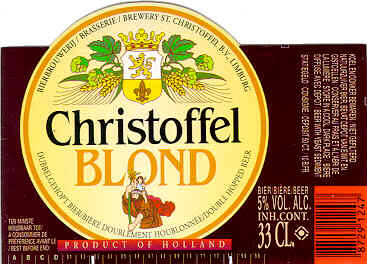
Christoffel is the only new Dutch brewery to concentrate exclusively on lagers. Not surprising, as it was founde by a member of the Brand family who had studied at Wehenstephan. A pale lager, it's usually classified as a Pilsner, despite its 6% ABV. The first thing you notice is the massive hop aroma. It's one of those beers I could just sit and sniff all day. The aroma is that good. Should you manage to get it into your mouth, you'll be greeted by more abundant hop flavours and a scorching bitterness. (Here's an alternative description for American hopheads: there's a little a hoppiness in the aroma and a slight trace of bitterness in the finish.) Distinctive and very drinkable. That's a winning combination in my book.


Amstel Bock
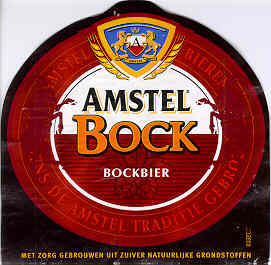
That's right. I'm seriously proposing that you try a beer brewed in one of Heinken's mega lager factories. Amstel Bok is a surprisingly good beer, that regularly scores well in blind tastings. It's the classic old-fashioned Dutch Bock, malty, but without the tooth-rotting sweetness of more modern versions, such as the sugary Grolsch attempt. In my years on the dole, I drank hectolitres of the stuff, as it's dirt cheap. It demonstrates that Heineken can, when they want, brew something pretty decent. Clearly, they don't always aim that high. You'll have to wait to try it. It's only available October to January.


Van Vollenhoven's Stout
I have a soft spot for classic beer recreations, as you might have noticed. This is a cracker: deep, complex and satisfying. Guus, owner of de Schans, is a talented brewer. And this is one of his best efforts. Van Vollenhoven's was an Amsterdam brewery taken over by Heineken in the 1940's and closed around 1960. Heineken brewed a bottom-fermenting version until about half a dozen years ago. I was told yesterday that it won't be available again until Autumn. So you may have to be very lucky to try it this summer.


De Molen Tsarina Esra
Now I'm being perverse, picking a beer with incredibly limited availability. It's brewed just a few times a year in tiny batches and is sold only at the brewery in Bodegraven. Let's just say it gives you a good reasion to visit the brewery. If you're lucky, you may meet Menno. A great guy and a great brewer. Say "hi" to him from me. He's such a nice bloke that I don't even mind him describing it as an Imperial Porter. Powerful and complex without being overpowering or unbalanced. A top beer by any standards.


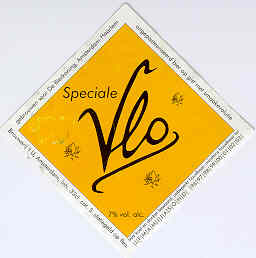
't Ij Vlo
Most of 't Ij's beers are firmly based on Belgian examples. Vlo is an exception. Brewed originally for beer shop De Bierkoning, the recipe is supposedly the result of an accident at the brewery. Now where have I heard that one before? It's certainly an unusual beer, dark amber in colour and with more coriander than an Indian spice shop. The coriander stops just short of total craziness and it's surpisingly drinkable and refreshing (what am I saying here, this is like a marketing man's description). Joris, you probably think it tastes like soup. I think it tastes delicious. This one at least is pretty easily avaible. If you're in Mokum. Unsurpisingly, you can find it bottled at Bierkoning. And it's one of Café Belgique's regular draught beers.


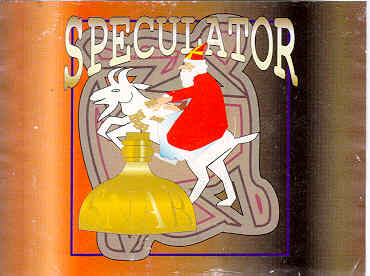
SNAB Speculator
Speculaas is a type of spiced biscuit eaten around Sinter Klaas. SNAB, not a brewery but an organisation that gets beers contract brewed, has created a beer featuring the same spices. It took them a couple of tries to get the balance right. Goldilocks. First year too much spice, second too little, since then spot on. A unique beer with a particularly Dutch identity.


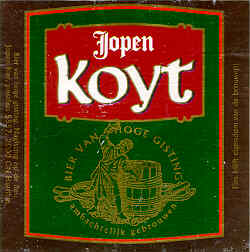
Jopen Koyt
It's disheartening that Dutch micros usually draw their inspiration from abroad, Belgium in particular, ignoring their own rich brewing tradition. Koyt is an exception. A modern interpretation of a style of pre-hop beer once common in Holland. Some hops are used in Jopen's version, but they are barely noticeable through the spices. As was usual in medieval and renaissance Holland, the grain bill is a combination of wheat, barley, rye and oats. That adds a particular depth to the malt flavours I just adore.


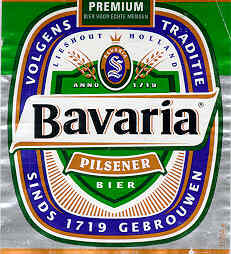
Bavaria Pils
I've included this for a very special reason. To demonstrate just how disgusting a mass-produced Dutch Pils can be. Best would be to get a less discerning friend to buy it and just take a sip yourself. If it's chilled enough, you'll be spared some of the nastiness. A masochist might want to try it at cellar temperature.

Since the takeover of Grolsch by SABMiller, Bavaria has become Holland's largest independent brewery. Unfortunately, all their beer is crap.


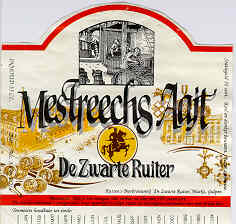
Mestreechs Aajt
You may notice a theme here: uniquely Dutch beers. Meestrechs Aijt has similarities with Belgian styles such as Oud Bruin, where aged, sour beer is mixed with young beer. The twist here, is that Aijt is only 3.5% ABV. There's only one brewery that makes it: Gulpener. There was a rumour that production would have to cease because of EU rules about the use of wood in food manufacture. Thankfully, that hasn't happened yet.


Double Saison de Liège
The De Keyzerr brewery in Maastricht was closed and left intact in 1970. It's recently been opened for tours. This is a recreation of one of their products contract brewed by Den Engel Bierbrouwers. Why did a Dutch brewery make a Saison? Because they owned another brewery across the border in Liege. When they shut that down, production was moved to Holland. It's dry and spicily hoppy, as you would expect from a Saison.


Budels Oud Bruin
It doesn't necessarily have to be Budels Oud Bruin. Any other one will do. Not to be confused with the sour Belgian beer with the same moniker, Oud Bruin is one of a handful of indigenous Dutch styles. (It always makes me smile when I see them lumped together with Belgian Oud Bruin on beer ratings sites. And it's a good one to bring up when someone claims every single style of beer is brewed in the US.) Based on a very cursory look through Amstel and Heineken records, it seems to have appeared after WWII. Very sweet, low in alcohol and with virtually no hop presence. One for the extreme beer fans.

Wednesday, 16 July 2008

Inspiration and synergy

There were many reasons for me starting this blog. Finding an audience for Barclay Perkins monologues. Keeping track of my research. Showing off. Hoping to inspire others.

What had struck me about beer writing was the minute amount of original research being done compared to the volume of words generated. Not good. My own little forays into the archives had revealed how much primary source information was lying there unused. Guesswork, assumptions and fairy tales were being used instead of cold, hard facts.

I tried to collect details of 19th and early 20th century beers from published sources for five years or more. You should see the pathetic little list I assembled. Fewer than 100 entries. Half a dozen archive visits has increased that by four thousand. That's what I call progress. But it begs the question: with so little material available, what the hell were writers using as sources for their books on beer styles?

I was delighted when Beer Nut told me of a project to document Ireland's vanished breweries. It's a much neglected topic. Unless there's a whole load I've missed. He asked if I could suggest any sources. I can't claim to have been the inspiration, but I'm happy to share my research experience.

To that end, I did a quick web search for Irish trade directories. A great source of brewery names and addresses. Some are available on CD from a web shop at fairly reasonable prices. The same site also offers something that set my heart racing: Barnard's "Noted Breweries of Britain and Ireland". I've wanted to get my hands on a copy for ages. Unfortunately, it's rare and expensive. Twenty-odd euros for a CD version is a bargain. I've already put in my order.

Inspiration is a two-way street. Synergy. Without Beer Nut, I may not have found the Barnard. A book with which I'm sure I'll be boring you for months to come. Another triumph for blogging. Thanks Beer Nut.

Copenhagen festival

Before yesterday's beer tour*, I grabbed a quick beer with anti-American Mike. He had good news. He's found us rooms in Copenhagen. And only 40 euros a night. Well done, Mike.

We're off to Copenhagen for the first European Beer Festival in September. It should be a great event, with the best beers from across Europe. Up until now, the large European festivals have mostly represented a single country. Some, such as the Great British Beer Festival, have featured foreign beers for many years. But it's only a small percentage of the total. Even the Berlin International Beer Festival has a majority of German beers.

The only exception I can think of is the small, but perfectly-formed, Bruxellensis. Also held in September. I must check if it clashes with the Copenhagen festival**. It would be a shame if it did. My kids are keen on revisiting it. They liked the food.

I'm uncertain if I'll be able to cram in everything I would like to do in Copenhagen into just two days. It's a great city. With many wonderful pubs, including Mike's favourite, plan-b. You can tell it's a modern sort of place by its eschewing of capital letters. But don't let that put you off. The idiosyncratic and eclectic beer selection is unrivalled. I've been to plenty of places with a far greater number on their menu, but none with as many unexpected treats.

Tatoverede Enke is another must. A beer cuisine restaurant that rivals the best in Belgium. And which has a pretty good beer range, too. Also on the list is BrewPub. Last time I was in the city I planned to visit it on Sunday, forgetting it doesn't open that day. I want to get to Ølbutikken as well, a beer boutique bulging with delights. Pegasus is another stylish beer bar that warrants a return visit. Sounds like I won't have much time left over for the festival itself.

Let me know if you'll be going to the festival. I might have a spare five minutes to chat. You'll have no trouble finding me. I'll be standing next to Mike.


*The beer tour was good fun, by the way. A very pleasant couple from Kansas City. And I was in bed by midnight. Very important with an 8-hour shift today.

**I've just checked. They do clash. The kids are heartbroken.

Tuesday, 15 July 2008

Commerce

If you look at the left frame of this page you'll see a link called Amsterdam Beer Tours. It's a little sideline of mine. Basically, people pay me to take them on a pub crawl of Amsterdam. Sounds like the perfect job, doesn't it?

This isn't an advertising pitch, by the way. I just mention it because I'm doing one this evening. With one exception, they've been good fun so far. I work out a rough itinerary but often change it around, depending on the interests of the participants. Amsterdam isn't that big. And the city centre has a stack of decent boozers. The possibilities are endless.

Only one problem. This is a school night. Every morning when I stare in the mirror to shave, I'm reminded of a depressing truth. I'm no longer a young man. Four-hour drinking sessions midweek take their toll. I've only just about recovered from Saturday's sesh in Folkestone. Though I did start at 9:30 AM. That might have had an impact. As I just said, young I ain't.

I'm frequently told I should be more commercial. "Ron*, be more commercial." they say. It's true. I should be. The amounts I earn from beer are pitiful. Far less than what I spend on books and travel for research. I'm not naive enough to expect to earn a living from beer. Just breaking even would be nice.

Proactive. That's what I need to be. Unfortunately, I'm a more propassive sort of bloke. Except when it comes to dusty, old books. Those I rather too actively seek out. According to Dolores. God forbid she notices my latest buying spree. I've got rather used to having a matching pair of bollocks.

Which is why I came up with my plan. I think it's a good one. Making Andrew my commercial manager. I've offered him an 11% commission on any new advertising he can drum up. He's still got 6 weeks of his summer holiday left. He was already starting to get bored after week one. Then we unwisely installed video editing software on his PC. Big mistake. Now he's busy the whole day videoing and editing. I can't think where he gets that sort of obsessive behaviour from.


*Or, as a Czech would say, Rone (pronounced as two syllables). Don't you just love the vocative case? It's always been one of my favourites. Especially as it entails sticking an ending on my name.

Monday, 14 July 2008

Folkestone

The last couple of years I've visited Britain much more frequently than in the previous two decades. Many of these visits have been beer-connected. Trips to the archive, judging for Tesco, Beer Writers' Guild dinners. That sort of thing.

My short stay in Folkestone last weekend was an exception. It was principally a shopping expedition. For food. Now Mikey has a car, it's simple. For me, at least. I don't have to drive. The only slight worry is that his car is about to fail its MOT and was making some rather disturbing noises. And the hole in the exhaust made it sound like a Heinkel 111 with a sore throat.

We left Amsterdam 08:30 on Saturday. An hour or so later I was scanning the beer section of a Belgian petrol station. Pretty crap, to be honest. But you can't expect somewhere like that to stock Westvleteren or Struise. I had to settle for a few cans of Gordon's Finest Gold. Not the world's greatest, but, at 10%, at least it has a little poke. And the only other options were either dull pale lagers or Inbev nasties like Leffe.

For some of you, 09:30 might be on the early side to be guzzling a ten percenter. You're probably right. I'm not so sure it was a particularly wise course of action. But when did that ever stop me? Two hours later, with an achingly full bladder and Calais still 30 km away, I was already beginning to regret the beer. I didn't have a spare pair of kecks with me, so any toileting accident would have caused real problems. Some bushes on the tunnel approach arrived with seconds to spare. What a relief.

Mikey had bought a new lighter-socket powered cool box. To test it out, he'd put a couple of cans of Strongbow in it. We cracked these in the tunnel. I was already over my daily recommended limit, and we hadn't even got to Britain. Things were going well.

Why Folkestone? Simple, the tunnel entrance is on the edge of town. Only ten minutes driving and we were at our hotel. Just 25 quid for an ensuite room with a sea view. Bargain. And just a couple of hundred metres from Sainsbury's.

My watch was showing 12:15 when we walked into Chambers, the town's premier real ale pub. I hadn't had to adjust my watch. Since the little screw fell into the toilet bowl, I haven't been able to change the time. I've got used to it being an hour behind the real time. Suddenly having it correct was confusing. I'm easily confused. That's what happens when you get old. You'll find out for yourselves soon enough.

I can't remember what I had. Mikey was a bit pissed off because they only sold still cider. He likes his fizzy. So we stayed only for the one. Time for dinner. Well, breakfast. We had a full English in a cafe. Next stop was a Weatherspoon's in an old church. What can I say, it was a typical Weatherspoon's. Definitely far fewer nutters than in the Newark branch, at least. But Newark is full of headcases, so that isn't saying much. Mikey wasn't to keen on it. Just the one, again.

I'm not going to bore you with the details of my shopping. Well, maybe a bit. Pies, sausages, mini sotch eggs, pork pies, salt and vinegar crisps, tea, malt vinegar, pickled onions and sloe gin. The last one was for Dolores. The two before that for me and the rest for the kids. I'm doing my best to pass on my British culture to them. Pies, vinegar on their chips, yorkshire puddings and taking the piss. I think that about covers it. And being able to pronounce "the" properly. Talking of which, Andrew gave me a masterclass in pronouncing the word "Spui" last week. I still can't get it right.

So now we were loaded down with shopping, right? No. Because we'd arranged to leave it in Sainsbury's cool room until just before our departure the next day. But we decided to stroll back to the hotel anyway. Mikey was in need of a rest. Lightweight. Luckily, our route took us right past a pub, Harvey's. Unfortunately, not a Harvey's pub. Courage Best was the best they had to offer. A pretty unexciting beer, but cask. That's enough of a thrill for me.

Harvey's, despite its trendy-sounding name, is the sort of unashamedly downmarket pub that I rather like. "It a builders' pub. A bit rough and ready" the friendly owner of our hotel later told us. We just stayed for the three. Then it was siesta time. For Mikey. I still had a couple of cans to get through.

The evening session started at Skuba. A smart, modern bar with no cask. I had to make do with a couple of bottles of London Pride. It could have been worse. Mikey got chatting to some locals who recommended another pub, the Bank (or was it Bank's?). No real ale and not even any bottled London Pride. Time for Guinness. How they can make a Stout as bland as Draught Guinness is beyond me. Virtually flavour-free, with only the slightest hint of roast. So I only had two or three.

This is where the evening starts getting rather vague. Mikey tells me we chatted with some French people. Can't really recall that, myself. Nor going back to the hotel. Everything's a blank until I woke up to the sound of seagulls the next morning. Feeling as rough as a badger's arse, I dragged myself down to breakfast. After forcing down the last mouthful, I got the setting concrete feeling in my gut that's the usual precursor to vomitting. Wonderful. I rushed back to my room. Throwing up in the breakfast room is frowned on in most hotels. But the puke didn't come. After 45 minutes lying in bed watching the Hollyoaks omnibus, I felt a little better. Semi-human.

I didn't buy much in Tesco. Just a bag of Jersey Royal potatoes and a couple of magazines. My heart wasn't in shopping, the way I felt. Watching a low-quality soap opera in a reclining position was about all I was good for.

We went back to Skuba for Sunday dinner. A roast, of course. Not bad. I'd just about reacquired an appetite by then. But my thirst was still AWOL. I did something I very rarely do. I left a pint unfinished.

We went straight from the pub to the tunnel. We both wanted to be back in Amsterdam at a reasonable hour, having to work the next day. We weren't quite finished yet, though. In Calais we had an appointment in Beer and Wine World to pick up 10 slabs of Strongbow. Eight for Mikey and two for Dolores. I had a look at the beer, but there wasn't anything very interesting. I limited myself to a couple of bottles of decentish wine.

We arrived back at my gaff at 20:30. Exactly 36 hours after our departure. The car hadn't fallen apart, which was relief. Mikey only told me after we got back that the main problem with the car was a knackered chassis. The mechanic had advised him not to put anything heavy into the boot. 240 half litre cans of Strongbow doesn't count as heavy, does it?

Sunday, 13 July 2008

Whither Lager?

If reader responses are anything to go by, you're just about decoction mashed out. I wondered how long it would take. My money was on the material stretching further than your patience. It seems I've been proved right.

But it would be a shame to finish with lager so quickly. And the relevant books are still piled up on my desk. I may as well continue with another aspect of lager brewing. The obvious choices are: boiling, fermentation or lagering. Any of those three particularly take your fancy?

You're probably thinking "Oh no. Not another endless series of obscure technical posts." "All three choices are dull, dull, dull. Can we get back to travel reports and jokes, please?"

Adding a practical twist is a possibility. I could post details of how to make a particular beer, say, an 1880 Dunkles Export. Or a 1870's DDR Helles. Really useful stuff. If you're a homebrewer with a lager obsession. Or a lager obsessive with an interest in homebrewing. That covers about 99% of the population, doesn't it? Though not me. I'm not a homebrewer. I could call it Let's Brew Lager. Or Lagering for Fun and Profit. Something snappy like that.

Saturday, 12 July 2008

The Bohemian method of decoction mashing

This is more like it. Jumping over the Bayerischer Wald into Bohemia. Exciting, isn't it? Well, I'm excited, even if you aren't. This is taken from "Schule der Bierbrauerei" pages 306-308.

In Bohemia decoction mashing is carried out differently to in Bavaria and provides an interesting practical example of dispensing with the last starch rest.

Before discussing this method in more detail we first need to learn more about the division of the brewing water. For 100 kg of malt 750 kg of water is required. Of this amount, a quarter is used for the Nachguß (sparge) and the rest for mashing, except for one thirtieth, which is used to dilute the first wort. Of the remaining mash water, four fifths is used for Ausschütten (pouring) and one fifth for the following temperature rises (Zubrühen). The 750 kg are divided like this:

435 kg pouring
108 kg warming
19 kg diluting the first wort
188 kg Nachguß

The water required for pouring [Ausschütten] is boiled in the kettle (a highly wasteful and unnecessary practice; rational brewers heat just a little water and put cold water into the mash tun) and put into the mash tun where it is allowed to cool (to 33º C in summer, 40º C in winter). The warming [Zubrühen] water is now put into the kettle and brought to the boil.

The ground malt is added to the cooled water in the mash tun and mashed well for 5 or 6 minutes, after which the boiling Zubrühen water is added and stirred in well. Then about a third of the mashed grains are moved to one side of the mash tun and transferred to the kettle as Dickmaische. There it is careful brought to the boil (to prevent burning or boiling over) and simmered for 30 minutes. The foam that accompanies saccharification then appears. As soon as this foam starts to disappear and the pale colour of the wort starts to turn brownish-yellow (as a result of the transformation of proteins) the Dickmaische is considered to have boiled long enough and is returned to the mash tun. There it is mixed in well. Now another Dickmaische is assembled, but from another side of the mash tun (why "from another side?" Hasn't it been mashed properly?) put into the kettle, boiled for 20 to 24 minutes (why not again until the appearance of signs of saccharification, as with the first Dickmaische?) and returned to the mash tun. Finally there is a third Dickmaische which is boiled for 20 minutes.

Through the three boils, the temperature in the mash tun is raised to 71-75º C. The remaining one thirtieth of the mashing water is now put into the kettle.

The wort is run off into the underback until it becomes clear. The cloudy wort (which is full of starch) is added to the boiling water in the kettle and boiled for several minutes (whereby the starch is gelatinised). It is returned to the mash tun, but without disturbing the sediment which has already settled. Then the saccharification is left to complete.

If, however, the intended complete saccharification can ever take place is doubtful, since, as Balling has shown, the temperature in the mash tun is already over 75º C after the third Dickmaische and is now raised even further.

It's pretty obvious from the snide comments that the author isn't too impressed with this method. I wonder if this is how they mashed at Pilsner Urquell 150 years ago? As some of the wort is boiled four times, I suppose this is a quadrupel decoction.

Friday, 11 July 2008

Filling gaps

I've finally finished harvesting gravities from the Barclay Perkins logs I have photographed. What next? Pretty obvious, really. Time to fill in some of the gaps.

"Which gaps might those be?" The two decades of the 20th century so far unrepresented in my Mega-Gravity Table. The 1980's and 1990's. I've started on with the oldest Good Beer Guide I own, 1983. My guess is that it only contains around 500 beers. With any luck that shouldn't take more than a week.

This seems a good point to renew my call for volunteers. "What do you want us to volunteer for?" Transcribing the gravities and ABV's from part of an old Good Beer Guide. I don't even expect you to do a whole one. Just a couple of letters. Every little helps. This is an example spreadsheet

I've just thought of something else for which I need help. Colours. I have beer colours in a few different formats. Many are in lovibond, but a 1 inch column rather than the 0.5 inch column used today. Anyone any idea how I can convert these figures to EBC? Whitbread uses another variation of 1 inch lovibond, with numbers for brown and red. Help converting these would be handy, too.

Thursday, 10 July 2008

Brussels again

Catching the international train to Belgium is always fun. If you get on at Amsterdam Centraal. Then you're sure of a seat. Join from Schiphol onwards and you may well have to stand.

That's on a good day. It being summer, the backpackers have made their summer migration to Amsterdam. You see them lying around in piles, their luggage piled around them, all around the station. The youth of all nations. With and without beards. With and without hippy skirts. They're harmless enough, unless you have to crawl over their rucksacks to reach the toilet. I wonder where they're all going?

I'd decided to be on my best behaviour. So no beer on the outward journey. God that was hard. Our train left at 08:56. I'm usually on my third beer by that time. Yesterday, just coffee.

One of the first things I ever read in a Dutch newspaper was about the highspeed trainline to Belgium. That was in 1987. The thing still isn't operational. The track has been ready for some time. But there's some delay in actually running trains along it. Most carriages on the Brussels-Amsterdam run have already been painted in the new Hispeed (the inspirational name for the service) livery. I'd assumed that it had been built as a TGV line capable of taking trains travelling at 300 kph. Silly me. They'll only be going 160 kph - no faster than some existing lines. It makes you wonder why they bothered.

We watched the "high speed" line split away from the Schiphol mainline and disappear into Holland's green heart. It rejoined us, equally empty, just before we entered Rotterdam Centraal. People piled off in Rotterdam nearly emptying our carriage. Then more people piled in to leave it fuller than at the start of the exercise. Will they run more trains when the new track opens? Probably not. When they introduced an ICE service to Cologne, they reduced the number of trains each day.

Dolores hadn't been to Antwerp since the tunnel was opened. It's quite an impressive hole, filled with trains, they dug under Antwerp station. Though from inside a train, you can see little more than a bare concrete wall and a shiny escalator.

As Dolores was along, we were well provisioned with sandwiches and drinks. She's very good at that sort of thing. We also has A Plan. Something I rarely bother with. What can I say? I'm a spur-of-the-moment sort of bloke. I take a map, not A Plan.

First stop was Beenhouwersstraat for a meal. Putting all the restaurants in one street makes like easy. After a quick look around we settled on a place with escargots in its fixed-price menu. Our kids are pretty perverse in what they will and won't eat. Lexie won't touch chicken, but insists on eating snails whenever possible. Andrew won't eat a cod fillet, but tucks happily into fried baby squid, complete with ink. I've given up trying to fathom any logic in their tastes.

How can some places serve a 3-course meal for as little as 8.75 euros? By bumping up the price of the drinks. We went for somewhere expensive. With a 12.50 3-course menu. But the cheapest bottle of wine was 29 euros. Luckily, in Belgium every restaurant sells half a dozen beers. Time for a Duvel. At 4.50, still a little steep, but not ridiculous. There are pubs in Amsterdam that charge as much, or even a little more, than that. Dolores had to drink water. I promised her a nice beer later. "You can have a nice beer later." I said. I'm so considerate.

My Duvel came ready-poured. There was something slightly odd about it. Too sparklingly bright and slightly too golden in colour. Had they just slipped me a Pils in a Duvel glass. I took a sniff. Some spice - was that coriander and a touch of cloves? That's not how Duvel smells is it? I thought I could recognise it. No, too sweet for Pils. And too strong. Sweet and a bit nasty tasting, but blonde and alcoholic. Now what could it be?

I had a suspicion. My second beer was meant to confirm it. I ordered the only dark beer - Leffe Bruin. That came still in its bottle to my table. So that was definitely the right beer. I sniffed it. There was the same hint of spice, presumably from the yeast. Yup, the first beer had been Leffe Blonde. I would have complained. Except I'm not a great complainer. And I'd already destroyed the evidence.

Phase two of the plan was the "nice beer" I'd promised Dolores. Delirium Cafe is, conveniently, on an alley off Beenhouwersstraat. We would have sat ouside, but it was raining. It's funny how quickly you get used to no smoking pubs. Walking downstairs into the cellar bar, it was a shock to be greeted by fag smoke.

Delirium has a huge beer list. A list so huge, it's hard to work out what you want. I didn't have time, so I ordered a hercules. Not had one in a while. Dolores chose a draught Floris Kriek. A bit girly, but, hey, she is a girl. And she enjoyed it. That was her treat for the day, so she better had do.

There was little moaning from the kids, despite Delirium being quite dingy and smoky. Lexie did try to hurry us out after the first beer, but his heart wasn't really in it. We all mellow with age. I'd noticed Hansens Kriek while flicking through the menu. Not something I can find easily in Amsterdam. And I'd already started lecturing Andrew on fruit beer. It would be a good tool for explaining my point. "Smell that. Like mouldy hay with a little cow dung in it. Maybe a trace of cow piss, too. Lovely, isn't it? Have a taste." He wasn't having any of it. "It might smell like poo, but it tastes like cherryade. Honestly." Andrew still wouldn't budge. "I can smell vinegar." he said.

Lexie was keen to move on for a reason. Stop three was his choice: a toy shop. That, too, was just around the corner. A Bart Spit. Nothing very exotic in that. They run about half the toy shops in Holland. Yet everything, at least according to the kids and they should know, was cheaper than in Holland. Including computer games. That's what they bought, games. A WII game each.

The forth and final stage of The Plan was the War Museum. Andrew's choice. Just 5 stops on the Metro. It's pretty hard to miss, stuck on a hill at the end of a monumental boulevard heading east out of the centre. A monumental structure in all senses of the word. And free. That's a pleasant change from Holland, where no museums are free. Not any ones I've been to, at least.

Dolores hadn't expected to like the museum much. Tanks and guns aren't really her thing. But the museum is about a lot more than that. The first room is full of cabinets packed with the objects soldiers carried in different periods. Their uniforms, weapons and the crap they kept in their pockets. All sorts of small personal items. Now that is Dolores's thing.

The museum looks big from the outside. But from that vantage point, you can't see most of it. In reality, it's enormous. Just when you think you've been around it all, you discover suites of further rooms. Finding an enormous hanger full of aeroplanes was a shock. And the courtyard crowded with tanks. Including a Hetzer. Andrew guided Lexie around the tanks, explaining about the different suspension systems. It's one of his specialist subjects.

We didn't get chance to explore fully. Throwing out time arrived before we'd finished. At least we'd got our money's worth. Before leaping on the Metro, we went in search of a supermarket. To stock up on scran for the journey home. I stood, gob well and truly smacked, at the bread counter. They had crumpets. Since Marks & Spencer closed, crumpets have been unobtainable in Amsterdam. Brussels truly is the capital of Europe, if you can buy crumpets everywhere.

By now we were too late for the 17:15 trains we'd planned to take back. But, arriving at Centraal Station, we noticed that it was still on the departures board. Sure enough, when we rushed to the platform it was there. But with its doors closed. The conductor's whistle blew as we reached for the door handle. Bottom. Just missed it.

Rather than hang around in gloomy Brussels Centraal, we took the next train to Antwerp. Dolores wanted to look around the new bits of the station. And we could picnic in its more pleasant surroundings.

If you're thinking that there's remarkably little beer in this tale, you're correct. At 18:00 my beer counter was still stuck on 4. In the supermarket I had considered this shameful situation and did something to rectify it. I bought a four-pack of Guinness Special Export. It's a good train-drinking beer. Not bottle-conditioned, so no disturbed yeast to worry about. And a tasty beer.

The train back wasn't crowded at all. It helped that it didn't go via Rotterdam or The Hague, as it was supposed to. A problem between Rosendaal and Dordrecht meant that it was diverted through Den Bosch and Utrecht. Though they forgot to stop in Den Bosch.

We were home at 21:45. I thought you'd like to know that. And I hadn't even finished all the Guinness. I'm losing my touch.
Wednesday, 9 July 2008

Busy week

This week's going to be pretty busy. I've two foreign trips planned. What a globe-trotting jet-setter I am.

Until the EBCU recption the week before last, I hadn't visited the centre of Brussels for ten years. Wednesday I'll be there for the second time in a month. This time with the whole family in tow. That will limit my pub time.

It isn't a beer-drinking trip, of course. It's a stop the kids going stir crazy trip. Both kids have already picked where they want to visit in Brussels. Andrew - war museum; Lexie - lego shop. I should be able to slip in the odd beer in Delirium Cafe, as we'll be eating just around the corner. At least that's the plan.

Saturday, I'm off to Folkestone with Mikey. It's mostly a stocking up on cider and sausages trip. Knowing at least one car-owner can be handy. Given the kids' appetite for pies. But who doesn't like pies? With any luck, we'll arrive at about midday. Perfect for a dinnertime session. Anyone have any suggestions for good pubs in Folkestone?

Gloria Monday

Gloria Monday's van isn't well. That's what I've heard. Is the writing on the wall for Pils? Will it plummet into obscurity in the next decade? The pint beside the old bloke sat in a corner with his dog - is this the future of Pils?

Everything I've learned about beer evolution and the fickle nature of public taste screams the answer "Yes!!!". I've been scouring the statistics for years, searching for the slightest sign of a slip. In Pils sales, I mean. I might have spotted the very beginning. Is it real, hope or expectation? A few more years should tell us for sure.

Of course, in many countries Pils has nowhere to go but down. Places like Holland where it hit a peak of a 98% market share. Last time I looked, it had slumped to just 95%. In Germany, too, sales of Pils have fallen. But what will replace it as the world's favourite beer?

Here are some of my suggestions. Not particularly rational or probable, as you'll see. But when have minor considerations like that stopped me?

- Dark Mild
- Broyhan
- Porter
- Berliner Weisse
- Keut
- session-strength IPA
- Oud Bruin (the Dutch lager version)
- Dunkles Export
- English-style wheat beer
- amber Lagerbier

Do you have any better ideas?