Showing posts with label Allied Breweries. Show all posts

Tuesday, 23 April 2024

Allied Breweries

Unlike the other large brewing groups, which had mostly coalesced around one large brewery, Allied was more like a merger of equals. Those parties being Tetley Walker, Ind Coope and Ansells, which joined together in 1961.  And, to some extent, they kept their regional identity. Other than Double Diamond and Skol, they didn’t really have national draught brands.

The grouping made a lot of sense. Tetley Walker was active mostly in the North, Ansells in the Midlands and Ind Coope in the South. Combined, they covered most of the country.

Allied didn’t go for a standard livery across the group, as most of the Big Six did. Well, not quite. The whole group had yellow signboards with brown lettering in a standard font. However, this was accompanied by the trademark of one of the constituent breweries

In the 1980s, this uniform look was dropped and the constituent breweries reverted to something like the livery they had before they grouped together.

In 1973, the group owned eight breweries, split amongst the three original companies. The relatively low number of breweries meant that Allied closed fewer breweries during the 1970s than most of the Big Six.

They also owned two breweries in Holland: Oranjeboom in Rotterdam and Drie Hoefijzers in Breda.

Let’s look at the three members of the group in detail.

Ansells
Founded in 1857, Ansells grew to be one of the largest breweries in Birmingham.  In 1973, it operated two breweries in Birmingham: the original Ansells plant in Aston and the former Holts brewery. The latter had been acquired in 1934 and remained active until 1974.

In 1973, the brewery served 1,890 pubs. Which was less than a third of the 8,000 or so pubs controlled by Allied.

The Ansells brewery in Birmingham was the scene of much industrial unrest. Which led to its closure in 1981, with the Ansells beers being moved to other breweries in the group. Mainly the Ind Coope brewery in Burton.  Though the pubs retained their Ansells branding.


Ind Coope

Based in Romford, just outside London, Ind Coope moved into the big boy leagues in 1934 by merging with Allsopp. Whose brewery in Burton they continued to operate in the 1970s.

Romford
Two cask beers were brewed in the Romford plant, a Light Mild called KK (1031º) and Bitter (1037º). I can’t remember ever drinking either. Though I might have tried the Mild at a beer festival.

Burton
In the mid-1970s, Burton Ale, a cask version of Double Diamond, was introduced. Taken by CAMRA as a reassuring sign of a Big Six brewer taking cask seriously. Despite its confusing name. It being a Burton Pale Ale and not a Burton Ale. Which is a completely different style. At a gravity of 1047.5º, it was amongst the stronger Bitters brewed in the UK. And an excellent beer, when in good condition.

The only other cask beer from Burton was a fairly bland Bitter of 1037º.

Double Diamond, which had been a premium bottled Pale Ale, was first sold in keg form in 1962. It was a big success, becoming the best-selling keg beer in the UK. It was exclusively brewed in the Burton plant.

Tetley Walker
This arm of Allied operated two breweries, the former Walker plant in Warrington and Tetley in Leeds. Each serving one side of the Pennines.

Leeds
In Yorkshire, Tetley was much better than most of the Big Six. They didn’t mess their pubs around and were happy for most of them to sell cask beer. It’s a brewery I had a lot of affection for. Obviously, it’s now closed.


Warrington

The Tetley brewery West of the Pennines was a little schizophrenic. It brewed versions of the Leeds Mild and Bitter, but also Walkers Bitter, named after the original firm. They later also introduced a Walkers Mild.

Alloa
Of the many breweries that once graced Alloa, in the 1970s just two remained: this and Maclay.

Formerly known as Arrols, this was one of handful of brewers making Lager between the wars. When Allsopp went bust just before WW I and John Calder was called in to sort the mess out, the extremely expensive Lager kit was moved from Burton to Alloa.

That kit was the reason this was the group’s principal source of Skol, their main Lager. A beer which had started life between the wars as an Arrol’s beer called Graham’s Golden Lager, with the name being changed to the more Germanic Skol in the 1950s.  

Wrexham Lager Brewery
It’s really strange that two of the six breweries producing Lager between the war, two ended up in the hands of Allied.

Wrexham was one of the specialist Lager breweries in the late 19th century. But, unlike most such breweries, it didn’t go bust after a few years.
 

Tuesday, 27 February 2024

Foreign adventures

In 1970, the biggest UK brewing groups were amongst the largest in Europe. Yet they made remarkably few inroads in Europe. Eventually being overtaken by brewers like Heineken and Carlsberg, who had been far smaller in size. Why did UK brewers end up mostly concentrating on the UK market?

Difficult to say. Though one problem may well have been the kind of beer they were trying to sell. Lager was king in continental Europe. But that wasn't what UK brewers were trying to sell abroad.

Allied, with their purchase of two decent-sized Dutch breweries, seemed to have taken a more progressive approach. Especially as it gave them a genuine Dutch Lager brand to compete with Whitbread=brewed Heineken.

Allied find going Dutch does pay
This month. the Rotterdam Brewery of Breda-Oranjeboom N.V., the Dutch concern owned by Britain's Allied Breweries. are to increase their total fermentation capacity by 16,000 hl. with the installation of 12 Ziemann stainless steel combi-tanks of 1,500 hl. capacity. These new fermenters are to be equipped with in-place cleaning and temperature control.

Forming the second stage of work at the brewery, the move follows increased output of 50 per cent from the brewhouse, which consists of a four-vessel Steinecker plant operational since April, 1969. Later on in the year, silos will be installed in the old brewhouse which has virtually been gutted.

For future expansion in production the company can look to their recent purchase from Heineken-Amstel, Holland's largest brewing group. Situated at Helmond, near the German border, it is a 30-acre site — quite a handy acquisition when one considers that this is almost twice the area available at Breda and Rotterdam. At the time of purchase, the plant had no brewhouse but with the company’s current annual capital expenditure running at £l.5m. developments there seem more than likely.

But this is mere speculation on future trends. At present the bare facts are that in its first year of operation the Dutch group made a pre-tax profit of £500,000, after allowing for the cost of loans carrying high interest rates. Mr. Nicholas Herald, the Allied Breweries vice-chairman in charge of the International operations in Holland, also predicts an increase in that figure during the current year.

But this is mere speculation on future trends. At present the bare facts are that in its first year of operation the Dutch group made a pre-tax profit of £500,000, after allowing for the cost of loans carry-high interest rates. Mr. Nicholas raid, the Allied Breweries vice-chairman in charge of the International operations in Holland, also predicts an increase in that figure during the current year.

In the Dutch market the Breda-Oranjeboom grouping claims 20 per cent of the market while Heineken-Amstel have cornered a 55 per cent share. The only other brewery having a sizeable market share is Grolsch Bierbrouwerij, who claim 10 per cent. On the home market, Allied say that per capita beer consumption in Holland has more than doubled in the last ten years — from 41 pints in 1960 to 90 pints in 1969. The picture is just as rosy on the export front. Of last year’s production of l.5m. hl., 13 per cent went to 80 countries.

In the U.K., however, Oranjeboom has not been particularly in evidence. True, Allied did cease sales of Skol 2000 and put the Dutch beer in its place but they have, perhaps, not pushed the beer too much. In 1968, their first year of ownership, £1,312 was spent on advertising Oranjeboom compared with £64,946 on the already established Skol Lager.

But the beer flow is not all one way. Double Diamond is being sold through its namesake's pub in Rotterdam and it is proving extremely popular with the locals. In fact, it accounts for a little under 25 per cent of beer sales through the particular outlet, although it costs more than the ordinary Dutch beers sold there.

When questioned on the reason for Allied success in Holland, despite gloomy forecasts made by some pundits Mr. Herald pointed to the splendid cooperation between the merged breweries which had previously been competitors. The companies they had taken over were sound, he said, and Allied had taken a good, long look at them before making any move. And when they had he, he continued, the deal had been a fair one for both sides. From then on much of the credit goes to the Dutch team who worked together in complete harmony from the start. Draught beer was now bring produced at one brewery, while bottled beers were the sole domain of the other.

Beer is not the only side to Allied trading in the Netherlands. They also acquired Warninks, the well-known advocaat producers, and both Breda and Oranjeboom have large soft drink holdings. In fact, Breda say that 30 per cent of their revenue comes from this sector. Oranjeboom own C P. Fabrieken, fruit juice, mineral and syrups manufacture who in turn control North Netherlands Bottling Co., a company holding the Coca Cola franchise in the three northern provinces of Holland.

All in all the Dutch affair has developed into a strong and growing combine forming a solid base for any further expansion into Europe, should opportunity arise.
Brewers' Guardian, Volume 99, June 1970, page 34.

You can see they were still trying to flog English Pale Ale, in the form of Double Diamond, to Europe. Longterm, Oranjeboom would fare far better in the UK market.

Sunday, 17 September 2023

The Big Six (part two)

Today we're going to look at a couple of the Big Six members. Specifically Allied Breweries and Bass Charrington.

Allied Breweries
Unlike the other large brewing groups, which had mostly coalesced around one large brewery, Allied was more like a merger of equals. Those parties being Tetley Walker, Ind Coope and Ansells. And, to some extent, they kept their regional identity. Other than Double Diamond and Skol, they didn’t really have national draught brands.

In Yorkshire, Tetley was much better than most of the Big Six. They didn’t mess their pubs around and were happy for most of them to sell cask beer. It’s a brewery I had a lot of affection for. Obviously, it’s now closed.

The Ansells brewery in Birmingham was the scene of much industrial unrest. Which led to its closure, with the Ansells beers being moved to other breweries in the group.

Bass Charrington

Who knows what Bass Charrington could have achieved, if they hadn’t been led by a lunatic with no knowledge of the brewing industry. Despite his best efforts, the company became the biggest in the UK and one of the largest in the world. In the hands of someone more competent, they could only have been more successful.

The chairman’s insane plan was to have just two breweries, Cape Hill in Birmingham and the new brewery in Runcorn serving the whole of the UK. Which led them to closing most of their breweries. Though, when they discovered Runcorn couldn’t brew acceptable versions of some of their Northern brands, breweries such as Stones in Sheffield and the Tower Brewery in Tadcaster were reprieved.

They were one of the worst in terms of pub vandalism. When there was a pub swap in the 1980s, they took over the Little Park from Tetley. It was a Leeds little lovely pub, with two distinct rooms. Bass almost immediately fucked it up, knocking it through into a single room. Totally ruining the atmosphere.

Tuesday, 28 February 2023

Tetley Ale malt specifications (part five)

Now for some stuff about the barley itself.

I had to look this one up to see what it was.

3.5. Abraded malt is permitted at proportions of up to 100% of the total malt grist at all breweries.
Tetley Beer and Malt Specifications, 1985, malt page 2.

I'll let the scientists do the explaining again.

It has recently been shown that mechanical abrasion of barley grains, by a process which removed only very small quantities of husk, permitted exogeneous gibberellic acid to reach a larger number of aleurone cells, thus increasing the production of enzymes and modification of the endosperm.

Abrasion of the grain was achieved by a mechanical hand-mill which consistently rendered the pericarp layer at the nonembryo (distal) end of the grain permeable to gibberellic acid without damaging the embryo or the overlying husk. Micro-scale malting trials using gibberellic acid revealed that malts produced from abraded grain were visually identical with control malts but gave higher hot water extracts.

The present results describe the performance, in pilot malting and brewing plants, of comparatively large quantities of abraded barley.
Malting and Brewing with Abraded Barley, Journal of the Institute of Brewing, Vol. 76, 1970, By G.H. Palmer, J. Barrett and B.H. Kirsop, page 65.
https://onlinelibrary.wiley.com/doi/pdf/10.1002/j.2050-0416.1970.tb03263.x
That sounds fairly harmless.

Now the permitted vatieties of barley.
3.4. Permitted varieties.
3.4.1. Proctor
3.4.2. Maris Otter*
3.4.3. Mazurka
3.4.4. Golden Promise
3.4.5. Midas
3.4.6. Ark Royal
3.4.7. Triumph*
3.4.8. Keg
3.4.9. Tipper*
3.4.10 Halcyon
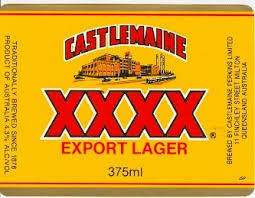
* Permitted for Castlemaine XXXX
Tetley Beer and Malt Specifications, 1985, malt page 2.
It may come as a surpprise that Maris Otter, the classic Ale barley variety, was only only allowed in Castlemaine XXXX, a Lager. Halcyon was added later, as it's just written in pencil.

I don't think I'll bore you with the lager malt specifications. Unless someone insists on it. Otherwise I'll be heading straight onto cask Tetley Bitter.

Monday, 27 February 2023

Tetley Ale malt specifications (part four)

Still more types of nitrogen to plough through. I never realised there were so many different types of the stuff in malt. I bet you'll be glad when I get to Tetley's beers.

Righto, then. Here we go with FAN (free amino nitrogen).

FAN compounds are formed naturally during malting and mashing by the action of protein degradation enzymes on hordein, a protein found in the grain. The level of amino acids available in the wort relies on several variables including grain variety, as well as malting and mashing conditions, but the overall types of amino acids available will be similar among all whole malt worts.

Together with ammonia, FAN/PAN makes up what is known as Yeast Assimilable Nitrogen or YAN.
Brewers Journal, Free Amino Nitrogen, January 24, 2017.
https://www.brewersjournal.info/free-amino-nitrogen/
OK, that's how the FAN thingies are formed. Let's take a look at what it does.
Free amino nitrogen (FAN)
FAN is the weight per unit weight of amino nitrogen available from the malt. FAN is principally amino acids which as stated above are vital for yeast nutrition. While it might seem that having high FAN can only be a good thing if there is too much breakdown of the nitrogenous materials in the grain it is detrimental to the foam stability of the beer because the longer chained polypeptides and proteins which stabilize the bubbles in the head of beer are broken down into smaller molecules as FAN is produced. It is also thought that more extensively modified proteins in the grain detract from the body of the beer as some of the mouthfeel is conferred by polypeptides and proteins. The amount and degree of modification of protein in the malt is one of the many compromises in the process that you need to manage as a brewer.
The Craft Brewing Handbook by Stewart Howe, 2020, chapter 1.
FAN helps yeast nutrition. So, obviously useful for promoting a healthy fermentation. A characterictic which is pretty handy in malt. But too much buggers up head formation. How much is the right amount? How much is too little? The next source spells that out:
There has been much debate regarding the minimal FAN required to achieve satisfactory yeast growth and fermentation performance in normal gravity (10–12 °P) wort, and it is generally agreed to be around 130 mg FAN/L, with the minimum varying between 100 mg FAN/L and 140 mg FAN/L. This is consistent across both brewing and wine fermentations. Below 100 mg FAN/L, yeast growth is nitrogen-dependent, and sub-optimal concentrations of available nitrogen are associated with lagging, incomplete fermentation and sulfide evolution. In the stationary phase of yeast development, only low levels are required as a fermentation stimulant of the yeast, while higher levels are required during the growth phase.

Optimum FAN levels differ from fermentation to fermentation and also with yeast strain, wort sugar levels and type. For wine fermentation, the optimal nitrogen concentration in the must is 190 mg FAN/L, with similar levels (200–250 mg FAN/L) regarded as optimal for standard gravity brewery fermentations. There are differences between lager and ale yeast strains with respect to wort-assimilable nitrogen uptake characteristics. However, with all brewing strains, the amount of wort FAN content required by yeast under normal brewery fermentation is directly proportional to yeast growth.
Hill, Annie E., and Graham G. Stewart. 2019. "Free Amino Nitrogen in Brewing" Fermentation 5, no. 1: 22. https://doi.org/10.3390/fermentation5010022
https://www.mdpi.com/2311-5637/5/1/22
That's pretty clear: 200-250 mg/l is optimal for standard-strength beer; minimum amount for a healthy fermentation 130 mg/l. Which means that the standard for the Leeds brewery was about the minimum, given that the tolerance of +-20 would permit malt with just 130 mg/l.

Why is the figure for Castlemaine 4X higher? Probably because it was fermented with Lager yeast and a dry finished beer was required.

Almost done now. We can rattle through the rest of these. Arsenic and lead. I think it's pretty obvious why you wouldn't want either in any great quantity in what was, essentially, a food product.

Dust and offal. The former might be a little irritating, but the latter sounds positively scary. Depending on what they exactly mean by offal. For me, it's the innards of animals. Was 2% of unidentified animal bits really acceptable?

Finally, another type of nitrogen, NDMA (N-Nitroso-dimethylamine), is next. This sounds quite scary.
NDMA (n-nitrosodimethylamine) in Malt/Beer
During the malting process, barley is forced to germinate, after which the grain is dried in kilns. This process freezes the sugar and flavour compounds for the brewing process. During the kiln drying process, nitrosamines may be formed in the grain, which could remain within the extract and still be present in the final brewed product. Many recently used techniques, minimise the formation of nitrosamines. However, low levels of these carcinogenic compounds still remain.
The Analytical Scientist, NDMA in Malt and Beer by Ellutia, published 11/13/2017.
https://theanalyticalscientist.com/app-notes/ndma-in-malt-and-beer
Right, the stuff is carcinogenic. No shock, then, that the permitted amount was tiny.

Barley varieties next time. A topic you may find more amusing. 

Tetley Ale malt specifications
1.1 Extract  282 brl°/336 lb (on dry)
  301 l°/kg (on dry)
1.2 Fine coarse difference 2-7 brl°/226 lb.
1.3 Moisture  not more than 3.5%
1.4 Colour  5.5 ± 1.5° EBC
  6.5 ± 1.5° EBC (Leeds)
  4.5 ± 1.5° EBC (Castlemaine 4X)
1.5 Total N 1.60 ± 0.1% average
  not more than 1.90% on individual samples
1.6 TSN (total soluble nitrogen) 0.60 ± 0.04% (Burton, Warrington)
  0.58 ± 0.04% (Leeds, Romford) -
  not more than 0.70% on individual samples.
  0.65 ± 0.5% (Castlemaine 4X)
1.7 SNR (specific nitrification rate) 38 ± 2 (Burton, Warrington)
  36 ± 2 (Leeds, Romford)
  41 ± 2 (Castlemaine 4X)
1.8 FAN (free amino nitrogen) 180 ± 20mg/1 at 1048 0G
  200 ± 20mg/1 at 1048 0G (Castlemaine 4X)
  150 ± 20mg/1 at 1048 OG (Leeds)
1.9 Arsenic not more than 0.5 mg/kg.
1.10 Lead not more than 1.0 mg/kg.
1.11 Dust and Offal not more than 2.0% (2.2 mm screen)
1.12 NDMA (N-Nitroso-dimethylamine) not more than 5 μg/k
Source:
Tetley Beer and Malt Specifications, 1985, malt page 1.

Sunday, 26 February 2023

Tetley Ale malt specifications (part three)

This going really well. This is my third post based on Tetley's specification manuals. And I haven't even got off the first page yet.

Lots of technical stuff today, that I don't fully understand. Let's be honest, that I don't understand at all. So excuse me if I make lots of stupid mistakes.

I've repeated the table again at the bottom so you have something to refer to on this page. 

The next nitrogen figure now. SNR, Soluble Nitrogen Ratio. I'll let the real scienticians explain it.

2.3.3. Soluble Nitrogen Ratio (Kolbach Index)
Soluble nitrogen ratio of the malts was based on the concentration of soluble protein present in the malt and concentration of total protein in the malt and calculated according to the formula below:

SNR = S/T * 100%

S — concentration of the soluble protein in the malt (% w/w, dry mass)
T — concentration of total protein in the malt (% w/w, dry mass)

Błazewicz, J.; Kawa-Rygielska, J.; Leszczynska, D.; Grabinski, J.; Gasinski, A. Influence of Variety and Nitrogen Fertilization on the Technological Parameters of Special Malts Prepared from Naked and Hulled Oat Varieties. Agronomy 2021, 11, 2566. https://doi.org/10.3390/agronomy11122566, pages 5 - 6.

The next bit explains what the significance of the SNR is:

Proteins present in the malt are broken down by proteolytic enzymes during the mashing process to forms, such as, for example, free amino acids, that can be used by yeast; therefore, the use of raw material that is too low in protein may adversely affect the fermentation process of the wort. In addition, too low protein content in the wort may contribute to the deterioration of the stability and quality of the foam of the produced beer. Excessive content of protein enzymatic hydrolysis products, especially high-molecular ones, deteriorates the clarity of beer and facilitates the formation of various types of turbidity.
Błazewicz, J.; Kawa-Rygielska, J.; Leszczynska, D.; Grabinski, J.; Gasinski, A. Influence of Variety and Nitrogen Fertilization on the Technological Parameters of Special Malts Prepared from Naked and Hulled Oat Varieties. Agronomy 2021, 11, 2566. https://doi.org/10.3390/agronomy11122566, page 10.

Is that clear? Too little, and there might be problems with the fermentation and head retention. Too much, and your beer would be cloudy. It makes sense that you'd want to have the right level.

How much was too much and how much was too little? I'll leave the explanation to the scientists again:

The parameter that describes the ratio of the soluble protein content to the total protein content is the Kolbach index, which indicates the percentage of proteins that have undergone enzymatic hydrolysis during the malting and mashing process and may be dissolved in the wort. Too low Kolbach index usually indicates insufficient activity of proteolytic enzymes present in the produced malt. The brewing technology usually uses malts with Kolbach index above 35% and below 45%. Malt with a Kolbach number above 41% is described in malting terminology as having “very good proteolytic relaxation” and is well seen in the brewing industry.
Błazewicz, J.; Kawa-Rygielska, J.; Leszczynska, D.; Grabinski, J.; Gasinski, A. Influence of Variety and Nitrogen Fertilization on the Technological Parameters of Special Malts Prepared from Naked and Hulled Oat Varieties. Agronomy 2021, 11, 2566. https://doi.org/10.3390/agronomy11122566, page 10.

I'm really glad that they give specific values. 35% to 45% was what you were looking for. Which means that the Leeds and Romford malts were right at the bottom end of good., While Castlemaine 4X was up towards the top end. That's quite a large variation. I suppose that there must have been some point to it.

I think that's about enough for today. Still lots more to come. Probably more entertaining when I get onto the beers. Don't worry. They'll be along soon.

Tetley Ale malt specifications
1.1 Extract  282 brl°/336 lb (on dry)
  301 l°/kg (on dry)
1.2 Fine coarse difference 2-7 brl°/226 lb.
1.3 Moisture  not more than 3.5%
1.4 Colour  5.5 ± 1.5° EBC
  6.5 ± 1.5° EBC (Leeds)
  4.5 ± 1.5° EBC (Castlemaine 4X)
1.5 Total N 1.60 ± 0.1% average
  not more than 1.90% on individual samples
1.6 TSN (total soluble nitrogen) 0.60 ± 0.04% (Burton, Warrington)
  0.58 ± 0.04% (Leeds, Romford) -
  not more than 0.70% on individual samples.
  0.65 ± 0.5% (Castlemaine 4X)
1.7 SNR (specific nitrification rate) 38 ± 2 (Burton, Warrington)
  36 ± 2 (Leeds, Romford)
  41 ± 2 (Castlemaine 4X)
1.8 FAN (free amino nitrogen) 180 ± 20mg/1 at 1048 0G
  200 ± 20mg/1 at 1048 0G (Castlemaine 4X)
  150 ± 20mg/1 at 1048 OG (Leeds)
1.9 Arsenic not more than 0.5 mg/kg.
1.10 Lead not more than 1.0 mg/kg.
1.11 Dust and Offal not more than 2.0% (2.2 mm screen)
1.12 NDMA (N-Nitroso-dimethylamine) not more than 5 μg/k
Source:
Tetley Beer and Malt Specifications, 1985, malt page 1.


Friday, 24 February 2023

Tetley Ale malt specifications (part two)

I'm going to try and explain what the hell those Ale malt specifications mean. Not an easy job, given my level of technical understanding is pretty limited.

Of course, I was aware of the significance of the nitrogen content of malt. It's only when I started looking at what all these terms in the analysis meant that I got an inkling of just how complex it is. I still don't really understand it all. Or even much. Those of you lucky enough to have studied brewing properly will have to bear with me.

I'm going to repeat the table so you don't have to keep flicking backwards and forwards from one post to another.

It's wonderful getting hold of documents like this. If any of you have something similar from another brewery, I would love to see it. They go a couple of levels deeper than brewing records.

Enough of my waffle. Here's that lovely table again.

Tetley Ale malt specifications
1.1 Extract  282 brl°/336 lb (on dry)
  301 l°/kg (on dry)
1.2 Fine coarse difference 2-7 brl°/226 lb.
1.3 Moisture  not more than 3.5%
1.4 Colour  5.5 ± 1.5° EBC
  6.5 ± 1.5° EBC (Leeds)
  4.5 ± 1.5° EBC (Castlemaine 4X)
1.5 Total N 1.60 ± 0.1% average
  not more than 1.90% on individual samples
1.6 TSN (total soluble nitrogen) 0.60 ± 0.04% (Burton, Warrington)
  0.58 ± 0.04% (Leeds, Romford) -
  not more than 0.70% on individual samples.
  0.65 ± 0.5% (Castlemaine 4X)
1.7 SNR (specific nitrification rate) 38 ± 2 (Burton, Warrington)
  36 ± 2 (Leeds, Romford)
  41 ± 2 (Castlemaine 4X)
1.8 FAN (free amino nitrogen) 180 ± 20mg/1 at 1048 0G
  200 ± 20mg/1 at 1048 0G (Castlemaine 4X)
  150 ± 20mg/1 at 1048 OG (Leeds)
1.9 Arsenic not more than 0.5 mg/kg.
1.10 Lead not more than 1.0 mg/kg.
1.11 Dust and Offal not more than 2.0% (2.2 mm screen)
1.12 NDMA (N-Nitroso-dimethylamine) not more than 5 μg/k
Source:
Tetley Beer and Malt Specifications, 1985, malt page 1.

Let's start at the beginning, with extract. Note that it's given per 336 lbs, that is, per quarter. I couldn't help but covert that into lbs per barrel. Which is 101.4 lbs per quarter. I'm pretty sure that this is the theoretical extract under lab conditions, not what could be achieved in the mash tun. Around 90 lbs or a little more per quarter was the highest actually achievable.

I'll skip over 1.2 and 1.3. The first, because I'm not quite sure what it means. And moisture, well, that's pretty obvious.

It's interesting that the colour specifications vary. It's fairly obvious why the malt for Castlemaine 4X, a Lager, would need to be paler. Less clear is why the Tetley brewery in Leeds allowed slightly darker malt that all Allied's other sites. Including the Tetley brewery in Warrington.

Now we get all the different types of nitrogen. Starting with TSN.

"Soluble nitrogen (% TSN): The amount of nitrogen in soluble form, expressed as a percentage of malt weight. The TSN parameters are used to calculate the soluble nitrogen ratio."
https://www.geterbrewed.com/blog/2017/08/23/how-to-read-malt-analysis/

That's quite simple. Though it's not clear to me why a higher value was permitted in Castlemaine 4X.

I think that's enough for today. There's lots of technical stuff coming in the next post. Won't that be fun?

Thursday, 23 February 2023

Tetley Ale malt specifications

The first post in a series based on the Tetley Beer & Malt Specifications document. A treasure trove of technical information. Especially this stuff on malt. 

Though looking more closely, the malt standards aren't Tetley's. They're Allied Breweries'. As you will see below, the standards weren't the same for all the breweries. Oddly, the standards don't seem to be grouped by the three constituent parts. Burton and Warrington have the same standard, while the former was Ind Coope and the latter Tetley.

Also interesting is how Castlemaine 4X, a Lager, has different standards for its Ale malt. As there are also Lager malt specs, it appears that 4X was brewed from a mixture of Ale and Lager malt.

I'll be honest, I had no idea what some of these things were. Which shows how little I understand about malting and brewing chemistry. I had to look a lot of them up. It was very educational. Even if nitrogen in malt and beer is incredibly complicated.

I'll be imperfectly relaying what I've learnt next time.

Tetley Ale malt specifications
1.1 Extract  282 brl°/336 lb (on dry)
  301 l°/kg (on dry)
1.2 Fine coarse difference 2-7 brl°/226 lb.
1.3 Moisture  not more than 3.5%
1.4 Colour  5.5 ± 1.5° EBC
  6.5 ± 1.5° EBC (Leeds)
  4.5 ± 1.5° EBC (Castlemaine 4X)
1.5 Total N 1.60 ± 0.1% average
  not more than 1.90% on individual samples
1.6 TSN (total soluble nitrogen) 0.60 ± 0.04% (Burton, Warrington)
  0.58 ± 0.04% (Leeds, Romford) -
  not more than 0.70% on individual samples.
  0.65 ± 0.5% (Castlemaine 4X)
1.7 SNR (specific nitrification rate) 38 ± 2 (Burton, Warrington)
  36 ± 2 (Leeds, Romford)
  41 ± 2 (Castlemaine 4X)
1.8 FAN (free amino nitrogen) 180 ± 20mg/1 at 1048 0G
  200 ± 20mg/1 at 1048 0G (Castlemaine 4X)
  150 ± 20mg/1 at 1048 OG (Leeds)
1.9 Arsenic not more than 0.5 mg/kg.
1.10 Lead not more than 1.0 mg/kg.
1.11 Dust and Offal not more than 2.0% (2.2 mm screen)
1.12 NDMA (N-Nitroso-dimethylamine) not more than 5 μg/k
Source:
Tetley Beer and Malt Specifications, 1985, malt page 1.


Friday, 2 April 2021

The pubs of Formby

While doing a deep dive into Formby and its breweries, I cam across a handy list of of the town's pubs in 1911.

There were 12 full-licensed pubs and 4 beer houses. Of the fully-licensed pubs, seven were owned by breweries. Though that number doesn't include the Railway Hotel, which was really tied as its owner, Willian Dickinson, also owned the Old Brewery. Interestingly, none of the beerhouses appear to have been tied. Though two of them were owned by our old friend Charles Weld-Blundell. Oddly, neither of the two fully-licensed pubs called the Weld-Blundell Arms was owned by him.

Three pubs were tied to Liverpool brewer Thelfalls, with one each belonging to Ellis, Warde, Webster Co., Peter Walker, Thorougood and Whittle Springs Brewery. Meaning there must have been a decent variety of beer available.

All of the breweries are from fairly close by. Peter Walker, in Warrington  being the most distant.

You'll notice that there's a huge difference between the value of fully-licensed pubs and beerhouses. The rateable value of the former varied from £85 to £888. While the latter went from a mere £12 to £59 10s. Why the difference? Because the profit on selling spirits was much greater than on beer. If a beerhouse, which couldn't sell spirits, was granted a full licence its value shot up. Beerhouses were often quite small, too. Many had originally been converted from either housed or shops.

The pubs of Formby in 1911
LICENSED VICTUALLERS
  Rateable value of licensed premises Annual Value taken by Excise for the purpose of licensed Duties
Robert Formby, Rifle Range, Altcar; owner, Earl of Sefton.  £85 0 £100 0
Annie Sawyer, Park Hotel, Birkdale; owners, Execs R. and C. Watson £251 0 £314 0
John Coke, Blundell Arms Hotel, owner *Ellis, Warde, Webster Co., Ltd.  £297 10 £350 0
Harriet J. Balch?, Palace Hotel, Birkdale; owners, Execs. Wm Sharpe, Sale, & H. Ainscough, Buracough. £888 0 £1100 0
Herbert Hough, Portland Hotel, Birkdale; owner *Peter Walker and Sons £161 10 £190 0
Arthur Ernest Vaughan, Crown Hotel, Birkdale; owners, Crown Hotel, Co., Ltd £127 10 £150 0
Alfred J. Bolton, Blundell Arms Hotel, Formby; owner *Threlfall's Brewery Co., Ltd.  £255 0 £300 0
John Rimmer, Royal Hotel Formby; owners, *Thorougood, Limited, Brewers, Waterloo.  £131 10 £155 0
Wm. R. Dickinson, Railway Hotel, Formby; owner, Licensee.  £127 10 £150 0
Chas. R. Sullivan, Grapes Hotel, Formby; owner *Threlfall's Brewery Co., Ltd.  £276 0 £325 0
John Adams, Freshfield Hotel; owners *Threlfall's Brewery Co., Ltd. £102 0 120 0
John H. Crankshaw, Railway Hotel Ainsdale; owners Whittle Springs Brewery Co., Ltd.  £158 0 £306 0
BEERSELLERS "ON"    
Sarah Ann Whitehead, 20, Upper Aughton-rd., Birkdale; owners Execs of Sarah Ann Coke  £59 10 £70 0
Joseph Allcock, Bay Horse; owner C. J. Weld-Blundell £42 10 £50 0
William Bolton, New Bridge Inn, Formby; owner C. J. Weld-Blundell  £12 0 £15 0
Jane Linaker; Farmers' Arms, Banks; owner T. T. L. Scarisbrick £38 0 £50 0
Source:
Formby Times - Saturday 04 February 1911, page 7.

Note that four of the licences were held by women.

60 years or so later, Threlfalls still dominated the pub scene:

"Hotels.-Of the public houses an Formby, two are associated with Bents Breweries - the Royal Hotel in Liverpool Road and the Bay Horse in Church Road. The Railway Hotel near Formby Station, is a Walker Tetley House and the only one in Formby. The Blundell Arms Hotel, Cross Green, the Grapes Hotel on the corner of Ryeground Lane and Church Road, and the Freshfreld Hotel, Massams Lane, are all Threlfalls houses. Of these only one takes residential guests — the Grapes Hotel. The Formby House Hotel, pleasantly situated in wooded surroundings on the old Southport Road, is also residential."
Formby Times - Wednesday 07 January 1970, page 28.

By that time, however, Threlfalls had been taken over by Whitbread and Bents by Bass Charrington. Neither would be brewing much longer. Although, on paper, the breweries were all quite local, all of them were part of Big Six national combines.


Ellis, Warde, Webster Co., Ltd.

Snig's Foot Brewery, 26 Church Street, Ormskirk.
Founded 1871, bought by Walker Cain in 1929 with 102 pubs, closed 1955.
"A Century of British Brewers plus plus" by Norman Barber, 2012, page 80.

Peter Walker and Sons
Dallam Lane, Warrington.
Founded 1846, merged with Robert Cain to form Walker Cain in 1921. Merged with Tetley in 1960, closed 1996.
"A Century of British Brewers plus plus" by Norman Barber, 2012, page 15.

Threlfall's Brewery Co., Ltd.
Trueman Street, Liverpool. Bought by Whitbread in 1967 with 800 pubs, closed in 1982.
"A Century of British Brewers plus plus" by Norman Barber, 2012, page 110.

Thorougood, Limited
Lion Brewery, 12 Queen Street, Waterloo. Founded in 1877, bought by Threlfalls in 1921.
"A Century of British Brewers plus plus" by Norman Barber, 2012, page 111.

Whittle Springs Brewery Co., Ltd.
Crown Brewery, Springs Mews, Whittle Springs. Founded in 1891, bought buy Nuttall & Co. in 1928 with 54 pubs.
"A Century of British Brewers plus plus" by Norman Barber, 2012, page 82.

Bent's Brewery
New Brewery Johnson Street, Liverpool. Founded 1910 bought by Bass Charrington in 1967 with 514 pubs, closed in 1975.
"A Century of British Brewers plus plus" by Norman Barber, 2012, page 109.

Sunday, 1 July 2018

Defence by Boddington

Most of you are probably too young to remember this event. When Boddington fought off an attempted takeover by Allied Breweries.

There were two ways brewery takeovers could take place. When control was still in the hands of family members, it was when they decided to sell up. Either because they had no interest in running a brewery or because the brewery was rundown and needed a big investment to keep it going.

When the share ownership was widely helf, there was an opportunity for a hostile takeover. By offering over the odds for the shares, sharholders could easily be tempted to sell up.

Allied's attempt to buy Boddington was in the latter category Why is this attempted takeover so noteworthy? Because Boddington successfully fought it off.  It might well be the only time this happened in the UK brewing world.

"Defence by Boddington
Boddingion's Brewery has fired off some ammunition in its defence against Allied Breweries.

Backed by the merchant banker Hill Samuel, the Boddington board says that the combination of increased trade plus improved efficiency enabled it to attain substantially higher earnings in 1969. Unaudited figures now published show that in 1969 pre-tax profita Jumped from £40l,000 to £463,000, while after-tax profits were up from £214,000 to £252,000.

Following the unchanged five per cent interim dividend, the directors now propose  ay a second of interim (in lieu of final) of 15 per cent, which compares with the 1966 final of 11 per cent.
The chairman, Mr. C. G. Boddington. tells shareholders that Allied has not given an assurance that if takes the company over it will keep the brewery open.

If it is closed, says Mr. Boddington, "the traditions of the company will come to an end." The tradition he speaks of is making fine bitter beer.

Boddington's Brewery also says that, following the award of the 2d per pint price increase last month, Boddington should be able to add £125,000 to its revenue this year.

The market clearly expects Allied to increase its bid, or for Whitbread (which holds a 13 per cent stake in Boddington) to enter the fray.

The shares at present stand at a premium of about 6s 6d on Allied's offer price."
Birmingham Daily Post - Saturday 24 January 1970, page 4.

The last sentence of the penultimate paragraph is prescient. Because in the 1980s Whitbread did indeed taakeover Boddington A sad day. And proceeded to totally trash the brand.

Thursday, 31 October 2013

The Big Six

The Big Six. Who remembers them now? Probably no-one under forty. How did the companies who dominated British brewing manage to disappear so completely?

For the younster amongst you, the Big Six consisted of Allied Breweries (Tetley, Ansells and Ind Coope), Bass Charrington, Courage, Scottish & Newcastle, Whitbread and Watney Mann. None are still in brewing.

But, a bit like the fifth Beatle, there was really a seventh member of the Big Six. Which was never lumped with the others. Probably because CAMRA didn't have a beef with them, as they owned no pubs and sold real ale in every pub: Guinness. The Big Six was shorthand for the enemy.

Their dominance of British drinking was based on pub ownership. With the majority of beer being drunk in pubs, owning them was the key to success as a brewer. Which was why large breweries would snap up smaller, run-down breweries. They didn't want the brewing kit or the brands. They wanted the pubs.

Time for some numbers. But, for once "ohne Gewähr", as they say when announcing the lottery results on German TV.  I collected these figures a long time ago. When I hadn't learned to always identify the source. I can't remember where I found them. So I can't guarantee their accuracy. They look about right to me.

Pub ownership
1974
Brewer no. pubs % of total
Courage 5,921 8.18%
Watney 5,946 8.21%
S&N 1,678 2.32%
Allied 7,665 10.59%
Bass 9,256 12.78%
Whitbread 7,865 10.86%
Big Six 38,331 52.94%
Other brewers 13,800 19.06%
All brewers 52,131 72.00%
not brewery owned 20,273 28.00%
total full on-licences 72,404

The Big Six's control of the pub trade was even greater than it appears from these figures. Many of supposedly "Free Houses" were in fact loan-tied to a brewery. Mostly one of the Big Six.That's reflected in their market share, which was larger than the percentage of pubs they owned:

Market share (%) All Sales
Brewery 1976 1985
Watney 13 12
Courage 9 9
S & N 11 10
Bass 20 22
Whitbread 13 11
Allied 17 13
All National (Big 6 only) 83 78
All National brewers 82
11 Regional brewers 11
41 local brewers 6
Micro breweries 1
Sources: 
BLRA and breweries
1986 Courage estimate

If you'd told me early on in my drinking career that all of them would disappear within a decade or two, their tied estates be dissolved, their breweries taken over and mostly closed, I'd have thought you were having a laugh. That's understandable. I lacked perspective.

When we're young, we lack historical depth. We think that the present and the immediate past will continue indefinitely into the future. We fail to grasp that the dramatic changes of the more distant past can happen again. That the future is full of surprises.

That always pops into my mind when I read about the inexorable rise if "craft" beer in the USA. And particularly of IPA. Both booming are all that younger drinkers can remember. They expect current trends to extend infinitely into the future. They won't. Because nothing ever works like that. Fashions and beer styles rise and fall, are born and often die.

It was the Beer Orders, to a large extent, that did for the Big Six. Forced to choose between their tied houses and their breweries, they either drifted away from brewing or sold up.

Lack of international ambition was another cause of their demise. In the early 1970's, they had been amongst the largest breweries in the world. But they were too slow in spotting the internationalisation of the industry and found themselves small fish in an ocean full of sharks.

It makes you wonder what will happen to to the current crop of multinational giants. Heineken, AB Inbev, Carlsberg, SAB. How long will they survive? I'm sure there will be plenty of surprises.

Saturday, 4 May 2013

Dutch Lager in 1940's Britain

Here's some confirmation, in the form of newspaper ads, of the presence of foreign Lager in Britain just after WW II.

Remember how an earlier article claimed that the imports would mostly be Lager at 1 shilling a bottle. It was more expensive than that, according to this advert:


Gloucestershire Echo - Wednesday 26 May 1948, page 3.

That works out to 1s 4d per bottle, presumably a half pint. (Golden Tree, incidentally, is a literal very liberal translation of the Dutch brewery's name: Oranjeboom.) To contextualise that, a pint bottle of Charrington's Toby Ale would have cost you the same, and, at 1033º, was a similar gravity to Oranjeboom.


Over-priced Lager. It's a recurring theme from the 1860's to the 1980's.

Here are some details of Oranjeboom from a few years later:


Oranjeboom in the UK
Year Brewer Beer Price size package Acid-ity FG OG colour ABV App. Atten-uation
1957 Oranjeboom Dutch Lager half bottled 0.04 1007.5 1035.4 10 3.62 78.81%
1957 Oranjeboom Dutch Pilsener 1/9d half bottled 0.02 1007.8 1033.3 9 3.31 76.58%
Source:
Whitbread Gravity book held at the London Metropolitan Archives, document number LMA/4453/D/02/002


Oranjeboom was really pushed in the UK in the 1980's. That's probably not unconnected from the fact that they were at the time owned by Allied Breweries. Oranjeboom had two breweries in Holland, one in Rotterdam and another in Breda. If I remember correctly, the Rotterdam brewery closed around when I lived in the city in 1987.

The Breda brewery closed a few years back, after it had fallen into the hands of Interbrew. It wasn't a great loss. It's beers were pretty awful, especially the Pils. Down at the same disgusting level as Bavaria and Dommelsch.