Monday, 3 June 2019
Back from the USA yet again
Just got in from my last cross-Atlantic jaunt. Mostly good fun, other than some stomach problems.
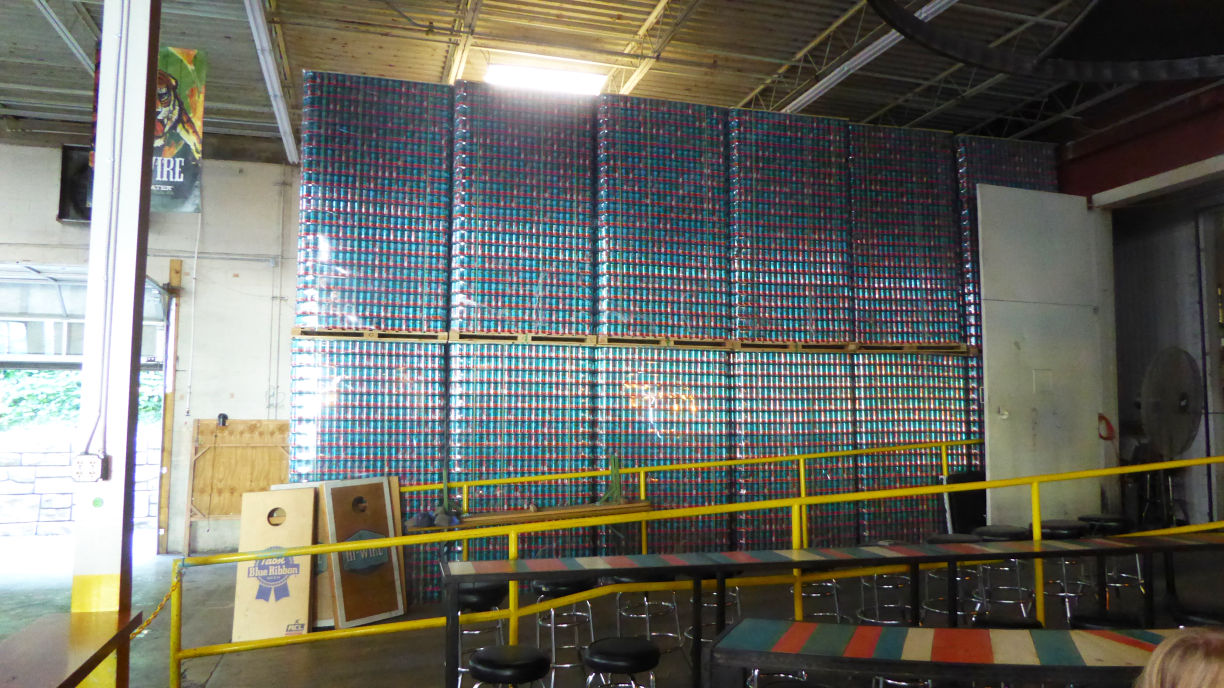
I'll be boring you stupid with reports of every beer I drank and every meal I ate. In the meantime, here are a few snaps I took while away. In no particular order.
Sunday, 2 June 2019
webinar on Porter
While in Asheville, in addition to talking a couple of times, I also gave a webinar on Porter:
https://www.crowdcast.io/e/bjcp_study_groups-ron_pattinson-porter
A new experience for me. Though there were some technical difficulties.
https://www.crowdcast.io/e/bjcp_study_groups-ron_pattinson-porter
A new experience for me. Though there were some technical difficulties.
London Porter grists in the 1920s
To say that there was diversity in post-WW I Porter great understatement. There’s only one constant in this set: black malt.
They don’t even all use pale malt as a base. SA – Stock Ale – malt was specifically designed to produce a less readily fermentable wort. Which is a desirable feature in a beer intended to undergo a secondary fermentation with Brettanomyces. There’s a reason why it’s present in such a light beer as TT: it was parti-gyled with Russian Stout. A beer that underwent a long secondary.
I’m slightly surprised to see flaked maize only in one example. Whitbread, of course, were malt and sugar only. Barclay Perkins, while big fans of maize in their Ales, didn’t use any in their Porter and Stout. The same was true at Courage. Leaving Fullers as the only adjunct users.
The sugars employed were as equally varied. There are several different types of invert, what looks like raw cane sugar, caramel and a proprietary sugar.
All four of these beers were only ever brewed parti-gyled with a Stout of some description. And, unlike before the war, Porter was always the junior partner. Meaning the Porter recipe was determined by the demands of the Stout.
You'll find more information that you'll ever need to know about Porter in my excellent book on the subject:
They don’t even all use pale malt as a base. SA – Stock Ale – malt was specifically designed to produce a less readily fermentable wort. Which is a desirable feature in a beer intended to undergo a secondary fermentation with Brettanomyces. There’s a reason why it’s present in such a light beer as TT: it was parti-gyled with Russian Stout. A beer that underwent a long secondary.
I’m slightly surprised to see flaked maize only in one example. Whitbread, of course, were malt and sugar only. Barclay Perkins, while big fans of maize in their Ales, didn’t use any in their Porter and Stout. The same was true at Courage. Leaving Fullers as the only adjunct users.
The sugars employed were as equally varied. There are several different types of invert, what looks like raw cane sugar, caramel and a proprietary sugar.
All four of these beers were only ever brewed parti-gyled with a Stout of some description. And, unlike before the war, Porter was always the junior partner. Meaning the Porter recipe was determined by the demands of the Stout.
| London Porter grists in the 1920s | ||||||||||
| Year | Brewer | Beer | OG | pale malt | brown malt | black malt | amber malt | SA malt | flaked maize | oats |
| 1922 | Whitbread | P | 1028 | 63.96% | 14.15% | 13.02% | 0.57% | |||
| 1928 | Barclay Perkins | TT | 1032.6 | 12.08% | 6.99% | 16.53% | 50.85% | |||
| 1925 | Fullers | P | 1041.5 | 64.15% | 8.44% | 0.00% | 8.44% | 0.66% | ||
| 1923 | Courage | Porter | 1032.7 | 66.21% | 6.90% | 10.34% | 0.00% | |||
| Sources: | ||||||||||
| Whitbread brewing record held at the London Metropolitan archives, document number LMA/4453/D/09/115. | ||||||||||
| Barclay Perkins brewing record held at the London Metropolitan archives, document number ACC/2305/01/614. | ||||||||||
| Fullers brewing record held at the brewery. | ||||||||||
| Courage brewing record held at the London Metropolitan archives, document number ACC/2305/08/253. | ||||||||||
| London Porter sugars in the 1920s | |||||||||
| Year | Brewer | Beer | OG | no. 2 sugar | no. 3 sugar | black invert | Mauritius | Sp Dark | caramel |
| 1922 | Whitbread | P | 1028 | 8.30% | |||||
| 1928 | Barclay Perkins | TT | 1032.6 | 13.56% | |||||
| 1925 | Fullers | P | 1041.5 | 13.50% | 4.80% | ||||
| 1923 | Courage | Porter | 1032.7 | 4.60% | 5.75% | 6.21% | |||
| Sources: | |||||||||
| Whitbread brewing record held at the London Metropolitan archives, document number LMA/4453/D/09/115. | |||||||||
| Barclay Perkins brewing record held at the London Metropolitan archives, document number ACC/2305/01/614. | |||||||||
| Fullers brewing record held at the brewery. | |||||||||
| Courage brewing record held at the London Metropolitan archives, document number ACC/2305/08/253. | |||||||||
You'll find more information that you'll ever need to know about Porter in my excellent book on the subject:
Saturday, 1 June 2019
Let's Brew - 1939 Whitbread X
This version of X Ale was brewed just a couple of weeks after Britain declared war on Germany. Too soon for the war to have had any impact.
The biggest change to X Ale’s recipe after WW I was the addition of crystal malt in 1924. Which was quite late. Crystal malt was originally developed for use in Mild Ale. Barclay Perkins were already using it in theirs in the 1880s.
As was usual, the colour mostly derives from the No.3 invert sugar and caramel. Despite the dark colour, there is no roasted malt of any kind.
Ironically, given that the UK was at war with Germany, around a quarter of the hops were Hallertau from the 1935 harvest. The remainder being Mid-Kent from 1937 and 1938.
Dark brown and just over 3% ABV. It’s looking very much like a modern Dark Mild.
This is one of the dozens of recipes in my book Mild! plus. Which is available in both paperback:
and hardback formats:
The biggest change to X Ale’s recipe after WW I was the addition of crystal malt in 1924. Which was quite late. Crystal malt was originally developed for use in Mild Ale. Barclay Perkins were already using it in theirs in the 1880s.
As was usual, the colour mostly derives from the No.3 invert sugar and caramel. Despite the dark colour, there is no roasted malt of any kind.
Ironically, given that the UK was at war with Germany, around a quarter of the hops were Hallertau from the 1935 harvest. The remainder being Mid-Kent from 1937 and 1938.
Dark brown and just over 3% ABV. It’s looking very much like a modern Dark Mild.
| 1939 Whitbread X | ||
| pale malt | 5.75 lb | 76.21% |
| crystal malt 60 L | 1.00 lb | 13.25% |
| No. 3 invert sugar | 0.67 lb | 8.88% |
| caramel 2000 SRM | 0.13 lb | 1.66% |
| Hallertau 75 mins | 0.50 oz | |
| Fuggles 75 mins | 0.50 oz | |
| Fuggles 30 mins | 1.00 oz | |
| OG | 1034 | |
| FG | 1010 | |
| ABV | 3.18 | |
| Apparent attenuation | 70.59% | |
| IBU | 25 | |
| SRM | 23 | |
| Mash at | 150º F | |
| Sparge at | 168º F | |
| Boil time | 75 minutes | |
| pitching temp | 65º F | |
| Yeast | Wyeast 1099 Whitbread Ale | |
This is one of the dozens of recipes in my book Mild! plus. Which is available in both paperback:
and hardback formats:
Labels:
1930s,
beer recipes,
Dark Mild,
Let's Brew,
London,
Mild,
Mild Ale,
Whitbread,
WW II
Friday, 31 May 2019
WW II - Lager imports dry up again
World War II, just like WW I, caused huge difficulties for the British brewing industry. There were shortages of raw materials and limits placed on output and on the strength of beer. One of the results was that most breweries trimmed down their ranges. A policy that led to Porter’s extinction in London, with Whitbread brewing their last Porter in September 1940.
So it’s interesting to see what happened to Barclay Perkins beers. Them being one of the big players in the Lager trade. They started the war with an enormous range of draught beers: Porter, Stout, five Mild Ales, two Bitters and two Burtons. In November 1940 two Milds and Best Bitter were discontinued. Porter didn’t last much longer.
A price list from 1943 shows that they were still brewing their full pre-war set of five Lagers: bottled Light and Dark Lager; draught Export, Light and Dark Lager. The draught Lager came in metric-sized barrels of 5.5 and 11 gallons. The brewery also supplied CO2 cylinders to serve the beer.
The fact that they retained all their Lagers while paring down the varieties of other styles demonstrates how important Lager was. You could say, oh well they brewed it in such small quantities discontinuing would have had little impact. Yet the beers that disappeared, such as Porter, were mostly ones that didn’t sell much.
Whitbread had bigger problems. Before the outbreak of war, they sold four types of Lager: Graham’s, Carlsberg, Tuborg and Artois, all bottled. In 1940, supplies of three of those were cut off by the German army. It caused their sales of Lager to drop more than 50% compared with 1939.
But we shouldn’t get too carried away about that drop. It looks enormous in percentage terms, however in absolute terms, it’s bugger all. Total Lager sales for 1940 were 115 barrels, down from 254 barrels in 1939. Especially when you compare it with bottled Ale sales: they were 204,098 in 1940.
I assume that it was difficulties in obtaining supplies of continental Lager that prompted Whitbread to do something very unusual in July 1940. They brewed a Lager in their Chiswell Street brewery in London. Though it wasn’t fermented with Lager yeast and it was brewed from pale rather than lager malt. It did use Saaz hops, at least. And the colour was nice and pale at just 7.5º Lovibond, compared to around 27º for their Pale Ales.
Whatever their reasons for brewing it, they didn’t make a regular habit of it. There was just a single batch.
Like this? Then you'll love the book it comes from, Lager! (UK):
So it’s interesting to see what happened to Barclay Perkins beers. Them being one of the big players in the Lager trade. They started the war with an enormous range of draught beers: Porter, Stout, five Mild Ales, two Bitters and two Burtons. In November 1940 two Milds and Best Bitter were discontinued. Porter didn’t last much longer.
A price list from 1943 shows that they were still brewing their full pre-war set of five Lagers: bottled Light and Dark Lager; draught Export, Light and Dark Lager. The draught Lager came in metric-sized barrels of 5.5 and 11 gallons. The brewery also supplied CO2 cylinders to serve the beer.
The fact that they retained all their Lagers while paring down the varieties of other styles demonstrates how important Lager was. You could say, oh well they brewed it in such small quantities discontinuing would have had little impact. Yet the beers that disappeared, such as Porter, were mostly ones that didn’t sell much.
Whitbread had bigger problems. Before the outbreak of war, they sold four types of Lager: Graham’s, Carlsberg, Tuborg and Artois, all bottled. In 1940, supplies of three of those were cut off by the German army. It caused their sales of Lager to drop more than 50% compared with 1939.
But we shouldn’t get too carried away about that drop. It looks enormous in percentage terms, however in absolute terms, it’s bugger all. Total Lager sales for 1940 were 115 barrels, down from 254 barrels in 1939. Especially when you compare it with bottled Ale sales: they were 204,098 in 1940.
I assume that it was difficulties in obtaining supplies of continental Lager that prompted Whitbread to do something very unusual in July 1940. They brewed a Lager in their Chiswell Street brewery in London. Though it wasn’t fermented with Lager yeast and it was brewed from pale rather than lager malt. It did use Saaz hops, at least. And the colour was nice and pale at just 7.5º Lovibond, compared to around 27º for their Pale Ales.
Whatever their reasons for brewing it, they didn’t make a regular habit of it. There was just a single batch.
Like this? Then you'll love the book it comes from, Lager! (UK):
Thursday, 30 May 2019
Winding down
My latest US trip is about done. Been as cool as ten cool sticks.
And I've been out in the sticks:
Though it's actually been as hot as fucking hell down here in the South. Fortunately, it being the US, I've rarely needed to stray far from air conditioning. Just as well, seeing my propensity to melt when the temperature gets above 20 C. I say melt, I really mean sweat like a pig on a spit in Arizona.
Met lots of really good people. Some I already knew, some new. Beer really does bring people together. In a good way.
My mate Mike at Zebulon made more of my dreams come true. A full set of Warwick & Richardson draught beers from 1910 and eight old Porter recipes. That bastard spoils me rotten. And he arranges a room of people for me to shout about beer at.
I got to rant about Scottish beer yesterday here in Raleigh for another of my chums, Stuart. The cask-strength bourbon got me right in the mood.
As I said earlier, it's all been as cool as ten cool sticks. Other than the weather.
Such a shame that I won't be back this side of the Atlantic soon. Not until the NHC next month in Providence.
And I've been out in the sticks:
Though it's actually been as hot as fucking hell down here in the South. Fortunately, it being the US, I've rarely needed to stray far from air conditioning. Just as well, seeing my propensity to melt when the temperature gets above 20 C. I say melt, I really mean sweat like a pig on a spit in Arizona.
Met lots of really good people. Some I already knew, some new. Beer really does bring people together. In a good way.
My mate Mike at Zebulon made more of my dreams come true. A full set of Warwick & Richardson draught beers from 1910 and eight old Porter recipes. That bastard spoils me rotten. And he arranges a room of people for me to shout about beer at.
I got to rant about Scottish beer yesterday here in Raleigh for another of my chums, Stuart. The cask-strength bourbon got me right in the mood.
As I said earlier, it's all been as cool as ten cool sticks. Other than the weather.
Such a shame that I won't be back this side of the Atlantic soon. Not until the NHC next month in Providence.
Porter after WW I
In the early 1920s, London Porter went into a dramatic decline. Its last bastion in the UK started to crumble. Sales of Porter plummeted, possibly in response to the dramatic fall in strength. In the immediate aftermath of WW I, most had gravities in the low 1040ºs – about the same as Best Mild – a 7d per pint beer. Soon it had been dropped down a couple of classes, to a 5d beer. The same strength as the weakest Milds, successors to the dreaded wartime “Government Ale”.
Looking at the numbers from Whitbread, it looks as if many Porter drinkers may have shifted their allegiance to draught Stout. A beer which was much like the Porter from before the war. I can’t blame them. Given adequate financial resources, I’d have done exactly the same.
As London brewers parti-gyled their Porter and Stout, they were beers of very similar character. If you wanted a beer like the Porter of 1914, Stout was your obvious choice in the 1920s.
Outside London and Ireland, Porter was stone dead after WW I. Even in the capital, it wasn’t doing that well. Though most brewers still produced one. Though, had they not been parti-gyled with Stout, I doubt many brewers would have bothered brewing Porter even in London.
You'll find more information that you'll ever need to know about Porter in my excellent book on the subject:
Looking at the numbers from Whitbread, it looks as if many Porter drinkers may have shifted their allegiance to draught Stout. A beer which was much like the Porter from before the war. I can’t blame them. Given adequate financial resources, I’d have done exactly the same.
As London brewers parti-gyled their Porter and Stout, they were beers of very similar character. If you wanted a beer like the Porter of 1914, Stout was your obvious choice in the 1920s.
Outside London and Ireland, Porter was stone dead after WW I. Even in the capital, it wasn’t doing that well. Though most brewers still produced one. Though, had they not been parti-gyled with Stout, I doubt many brewers would have bothered brewing Porter even in London.
| London Porter in the 1920s | ||||||||
| Year | Brewer | Beer | OG | FG | ABV | App. Atten-uation | lbs hops/ qtr | hops lb/brl |
| 1922 | Whitbread | P | 1028 | 1007 | 2.78 | 74.98% | 7.47 | 0.93 |
| 1928 | Barclay Perkins | TT | 1032.6 | 1009 | 3.12 | 72.36% | 15.10 | 0.63 |
| 1925 | Fullers | P | 1041.5 | 1015.5 | 3.44 | 62.62% | 7.95 | 1.55 |
| 1923 | Courage | Porter | 1032.7 | 1008.3 | 3.22 | 74.58% | 8.29 | 1.18 |
| Sources: | ||||||||
| Whitbread brewing record held at the London Metropolitan archives, document number LMA/4453/D/09/115. | ||||||||
| Barclay Perkins brewing record held at the London Metropolitan archives, document number ACC/2305/01/614. | ||||||||
| Fullers brewing record held at the brewery. | ||||||||
| Courage brewing record held at the London Metropolitan archives, document number ACC/2305/08/253. | ||||||||
You'll find more information that you'll ever need to know about Porter in my excellent book on the subject:
Wednesday, 29 May 2019
Let's Brew Wednesday - 1950 Whitbread Best Ale
The rather inappropriately-named Whitbread Best Ale was introduced in the Autumn of 1949. Unbelievably, despite only having a gravity of 1029.1º, it really was a Best Mild, as their existing beer, XX, was a mere 1026.3º.
The two only seem to have very briefly been brewed in parallel. By 1950 XX was gone, and Best Ale was left to fly the Mild flag alone.
The main difference between Best Ale and Whitbread's pre-war Mild (apart from the lower gravity) was the amount of crystal malt. In 1939 X Ale, over 13% of the grist was crystal malt. In 1950, it was just about half that. As is typical for mass-produced Milds of the period, the colour comes from dark No.3 invert sugar and caramel.
The grist retains the typical Whitbread simplicity: mild and crystal malt, plus No.3 invert and caramel. There were, however, two types of mild malt and two of crystal malt.
The hops were English: Mid-Kent from the 1948 and 1950 harvests, plus Essex hops from 1949.
This is one of the dozens of recipes in my book Mild! plus. Which is available in both paperback:
and hardback formats:
The two only seem to have very briefly been brewed in parallel. By 1950 XX was gone, and Best Ale was left to fly the Mild flag alone.
The main difference between Best Ale and Whitbread's pre-war Mild (apart from the lower gravity) was the amount of crystal malt. In 1939 X Ale, over 13% of the grist was crystal malt. In 1950, it was just about half that. As is typical for mass-produced Milds of the period, the colour comes from dark No.3 invert sugar and caramel.
The grist retains the typical Whitbread simplicity: mild and crystal malt, plus No.3 invert and caramel. There were, however, two types of mild malt and two of crystal malt.
The hops were English: Mid-Kent from the 1948 and 1950 harvests, plus Essex hops from 1949.
| 1950 Whitbread Best Ale | ||
| mild malt | 6.00 lb | 87.27% |
| crystal malt | 0.50 lb | 7.27% |
| No. 3 invert sugar | 0.25 lb | 3.64% |
| caramel 2000 SRM | 0.125 lb | 1.82% |
| Fuggles 60 mins | 0.75 oz | |
| Fuggles 30 mins | 0.75 oz | |
| OG | 1031 | |
| FG | 1009 | |
| ABV | 2.91 | |
| Apparent attenuation | 70.97% | |
| IBU | 18 | |
| SRM | 21 | |
| Mash at | 148º F | |
| Sparge at | 168º F | |
| Boil time | 60 minutes | |
| pitching temp | 65º F | |
| Yeast | Wyeast 1099 Whitbread ale | |
This is one of the dozens of recipes in my book Mild! plus. Which is available in both paperback:
and hardback formats:
Tuesday, 28 May 2019
Lager brewers ask for help
During the 1930’s there were various attempts to promote Lager brewing in Britain through legislation. Either by lowering the excise duty on British-brewed Lager or raising the import duty on foreign Lager . The former was never implemented due to the difficulty in coming up with a legal definition of Lager. However in 1936 an extra £1 a bulk barrel import duty was imposed on beer from outside the Empire.
British Lager brewers felt that the system of taxation put them at a disadvantage relative to their competitors. Continental brewers, they said, only paid tax when their beer arrived in Britain. While British brewers paid tax as soon as the wort hit the fermenter.
Of course, that assumes that the beer is being properly lagered for several months.
According to a parliamentary debate, in 1936 there were just six breweries producing Lager in Britain. Between them they brewed 114,000 barrels in 1935.
Who were these brewers? Arrol, Tennent, Barclay Perkins, the Red Tower Lager Brewery in Manchester, the Wrexham Lager Brewery and Jeffrey of Edinburgh. That's an impressive three out of six for Scotland.
Based on newspaper advertisements of the period, Graham’s, Barclay’s, Tennent’s and Wrexham Lagers were marketed nationally, unusual at a time when brewing was still very regional.
But the relative amount of Lager being brewed was tiny. According to the Brewers' Almanack 20,864,814 barrels were brewed in Britain in 1935. I make Lager just 0.55% of total beer production.
But what about imported Lager? Good question I happen to know the import figures for a year or two earlier:
Adjusting those to more useful bulk barrels (assuming a gravity of imported Lager of 1048), I make that 25,765 barrels in 1932-33 and 37,217 barrels in 1933-34. Of course, that's all imports from the Continent, but it's safe to assume the vast majority was Lager. Even assuming that all British-brewed Lager stayed in the country (not actually true) that's still less than 150,000 barrels in total.
Like this? Then you'll love the book it comes from, Lager! (UK):
British Lager brewers felt that the system of taxation put them at a disadvantage relative to their competitors. Continental brewers, they said, only paid tax when their beer arrived in Britain. While British brewers paid tax as soon as the wort hit the fermenter.
“Until comparatively recent times, lager beer was virtually a foreign monopoly, but manufacturers in this country have been trying to make it an entirely British article, and but for the heavy pressure of foreign competition would have been successful. The home producer has to store his beer for four months, and the high rate of duty entails a considerable loss of interest on the capital so locked up, whereas the foreign competitor, on the other hand, does not pay duty on the beer until it arrives at the port, and is also able to purchase his raw materials more cheaply.”
Brewers' Journal 1934, page 324.
Of course, that assumes that the beer is being properly lagered for several months.
According to a parliamentary debate, in 1936 there were just six breweries producing Lager in Britain. Between them they brewed 114,000 barrels in 1935.
Who were these brewers? Arrol, Tennent, Barclay Perkins, the Red Tower Lager Brewery in Manchester, the Wrexham Lager Brewery and Jeffrey of Edinburgh. That's an impressive three out of six for Scotland.
| Brewer | Location | Date started |
| Arrol | Alloa | 1921 |
| Tennent | Glasgow | 1885 |
| Barclay Perkins | London | 1921 |
| Red Tower Lager Brewery | Manchester | 1920’s |
| Wrexham Lager Brewery | Wrexham | 1883 |
| Jeffrey | Edinburgh | 1902 |
Based on newspaper advertisements of the period, Graham’s, Barclay’s, Tennent’s and Wrexham Lagers were marketed nationally, unusual at a time when brewing was still very regional.
But the relative amount of Lager being brewed was tiny. According to the Brewers' Almanack 20,864,814 barrels were brewed in Britain in 1935. I make Lager just 0.55% of total beer production.
But what about imported Lager? Good question I happen to know the import figures for a year or two earlier:
1932-3 22,486 standard barrels
1933-4 32,480 standard barrels
Brewers' Journal 1934, page 324.
Adjusting those to more useful bulk barrels (assuming a gravity of imported Lager of 1048), I make that 25,765 barrels in 1932-33 and 37,217 barrels in 1933-34. Of course, that's all imports from the Continent, but it's safe to assume the vast majority was Lager. Even assuming that all British-brewed Lager stayed in the country (not actually true) that's still less than 150,000 barrels in total.
Like this? Then you'll love the book it comes from, Lager! (UK):
Monday, 27 May 2019
Oat Porter
The Free Mash Tun Act opened the door for another ingredient, flaked oats. The first Oatmeal Stout, brewed by Maclay in Alloa in 1890s contained a whacking 30% of malted oats.
Brewers who followed the trend, most likely trying to dodge Maclay’s patent on Oat Malt Stout, usually went for flaked oats. In quantities so small, they could only have been for legal purposes. At no more than 1% of the grist, far too little to have any impact on the character of the beer.
No-one in London set up to brew an Oatmeal Porter. It was simply a side-effect of parti-gyling. As Porter usually shared its grists with the Stouts, there was simply no avoiding it, if you wanted to brew an Oatmeal Stout.
There never seems to have been an attempt to market this by-product. Perhaps because Oat Stout was usually a bottled product. And by this point Porter wasn’t usually bottled. A fact which probably hastened its demise. Stout, for example, managed to survive in bottled form long after draught versions disappeared.
With oats making up less than 1.5% of the grist at Truman, they were pretty typical of London brewers.
You'll find more information that you'll ever need to know about Porter in my excellent book on the subject:
Brewers who followed the trend, most likely trying to dodge Maclay’s patent on Oat Malt Stout, usually went for flaked oats. In quantities so small, they could only have been for legal purposes. At no more than 1% of the grist, far too little to have any impact on the character of the beer.
No-one in London set up to brew an Oatmeal Porter. It was simply a side-effect of parti-gyling. As Porter usually shared its grists with the Stouts, there was simply no avoiding it, if you wanted to brew an Oatmeal Stout.
There never seems to have been an attempt to market this by-product. Perhaps because Oat Stout was usually a bottled product. And by this point Porter wasn’t usually bottled. A fact which probably hastened its demise. Stout, for example, managed to survive in bottled form long after draught versions disappeared.
With oats making up less than 1.5% of the grist at Truman, they were pretty typical of London brewers.
| Truman Runner grists 1880 - 1909 | |||||||||||
| Year | OG | lbs hops/ qtr | hops lb/brl | pale malt | brown malt | black malt | crystal malt | oats | flaked maize | caramel | sugar |
| 1880 | 1056.8 | 12.8 | 3.84 | 44.15% | 11.13% | 4.45% | 40.27% | ||||
| 1890 | 1058.2 | 9.1 | 2.50 | 66.77% | 10.02% | 6.01% | 17.20% | ||||
| 1895 | 1057.6 | 7.1 | 1.92 | 65.33% | 10.89% | 6.82% | 16.97% | ||||
| 1899 | 1058.2 | 7.3 | 1.99 | 56.17% | 11.70% | 7.83% | 10.01% | 14.30% | |||
| 1905 | 1054.3 | 5.8 | 1.35 | 63.91% | 7.58% | 5.13% | 9.57% | 3.19% | 10.63% | ||
| 1909 | 1058.2 | 8.2 | 2.31 | 67.30% | 5.66% | 5.41% | 5.41% | 1.47% | 2.60% | 4.05% | 8.10% |
| Sources: Truman brewing records held at the London Metropolitan archives, document numbers B/THB/C/082, B/THB/C/092, B/THB/C/096, B/THB/C/102, B/THB/C/108 and B/THB/C/112. | |||||||||||
You'll find more information that you'll ever need to know about Porter in my excellent book on the subject:
Sunday, 26 May 2019
Allsopp’s great gamble
The 19th century ended with one of the most significant events in British Lager brewing: the building of Allsopp’s Lager brewery, which was completed in 1899.
Why was it so important? Because Allsopp was one of the greats of British brewing, second only in size to Guinness and Bass. And they were a Pale Ale brewer. Not just any old Pale Ale brewer, but one of the most renowned. Their move into bottom fermentation must have made some of their competitors stop and think.
The brewery was imported at great expense from the USA. Almost as much fuss was made of its opening as the visit of the Prince of Wales a dozen or so years earlier. A special train was laid on to bring the invited guests to the brewery.
Considering the consumption of Lager in Britain at the time it was huge, capable of brewing 50,000 barrels a year. To put that into context, in 1935 the total output of Lager in Britain was just 114,000 barrels. Though it’s likely that Allsopp, which was a big exporter, also had its eye on foreign markets.
Newspaper reports of the opening were wildly optimistic:
Newspaper advertisements confirm that Allsopp’s Lager was promoted in Britain. The Gloucester Citizen of 4th June 1900 advertised Allsopp’s Lager Beer, East India Pale Ale and Light Dinner Ale. Significantly the Lager appeared first in the list of beers. At 3s 6d for a dozen pint bottles, it was the same price as East India Pale Ale. That’s relatively cheaper than in the early days of the 1860’s, when Lager was double the price of Bass. In the late 19th century it had been expected that Lager beer would massively increase in popularity if it was priced the same as Bass, that is around 4d a pint.
Those expectations were to be disappointed. Despite Allsopp’s Lager costing the same as their IPA, a very reasonable 3.5d per pint bottle, sales didn’t take off as anticipated. It didn’t help that Allsopp was in financial turmoil, with collapsing sales and minimal profits.
Like this? Then you'll love the book it comes from, Lager! (UK):
Why was it so important? Because Allsopp was one of the greats of British brewing, second only in size to Guinness and Bass. And they were a Pale Ale brewer. Not just any old Pale Ale brewer, but one of the most renowned. Their move into bottom fermentation must have made some of their competitors stop and think.
The brewery was imported at great expense from the USA. Almost as much fuss was made of its opening as the visit of the Prince of Wales a dozen or so years earlier. A special train was laid on to bring the invited guests to the brewery.
Considering the consumption of Lager in Britain at the time it was huge, capable of brewing 50,000 barrels a year. To put that into context, in 1935 the total output of Lager in Britain was just 114,000 barrels. Though it’s likely that Allsopp, which was a big exporter, also had its eye on foreign markets.
Newspaper reports of the opening were wildly optimistic:
“There is little room to doubt that in a short time the public demand for Allsopp's Lager will be such as to tax to the utmost the capacity of this their newest brewery”.
Isle of Man Times - Saturday 28 October 1899, page 3.
Newspaper advertisements confirm that Allsopp’s Lager was promoted in Britain. The Gloucester Citizen of 4th June 1900 advertised Allsopp’s Lager Beer, East India Pale Ale and Light Dinner Ale. Significantly the Lager appeared first in the list of beers. At 3s 6d for a dozen pint bottles, it was the same price as East India Pale Ale. That’s relatively cheaper than in the early days of the 1860’s, when Lager was double the price of Bass. In the late 19th century it had been expected that Lager beer would massively increase in popularity if it was priced the same as Bass, that is around 4d a pint.
Those expectations were to be disappointed. Despite Allsopp’s Lager costing the same as their IPA, a very reasonable 3.5d per pint bottle, sales didn’t take off as anticipated. It didn’t help that Allsopp was in financial turmoil, with collapsing sales and minimal profits.
Like this? Then you'll love the book it comes from, Lager! (UK):
Saturday, 25 May 2019
Let's Brew - 1917 Whitbread Government Ale
And here’s the beer that replaced X Ale, the first iteration of Whitbread’s Government Ale.
It must have been a bit of a shock for drinkers when they first got to try Government Ale. Just a few months earlier Whitbread’s X Ale had still been over 5% ABV, around 1.5% ABV stronger than this beer.
The recipe, despite the lower gravity, is very similar to the final version of X Ale. It’s just pale malt and sugar. Whitbread really weren’t into complicated grists. By not using maize, as most other UK brewers did, they were under less pressure to modify their recipes due to wartime supply difficulties. Maize, which at the time had to be imported, was unavailable in the later war years.
While this version of Whitbread GA was watery compared to pre-war Milds, at least it still contained enough alcohol to be intoxicating. As long as you drank enough of it. That wouldn’t be true of some later wartime Milds.
This is one of the dozens of recipes in my book Mild! plus. Which is available in both paperback:
and hardback formats:
It must have been a bit of a shock for drinkers when they first got to try Government Ale. Just a few months earlier Whitbread’s X Ale had still been over 5% ABV, around 1.5% ABV stronger than this beer.
The recipe, despite the lower gravity, is very similar to the final version of X Ale. It’s just pale malt and sugar. Whitbread really weren’t into complicated grists. By not using maize, as most other UK brewers did, they were under less pressure to modify their recipes due to wartime supply difficulties. Maize, which at the time had to be imported, was unavailable in the later war years.
While this version of Whitbread GA was watery compared to pre-war Milds, at least it still contained enough alcohol to be intoxicating. As long as you drank enough of it. That wouldn’t be true of some later wartime Milds.
| 1917 Whitbread Government Ale | ||
| pale malt | 6.25 lb | 89.29% |
| No. 3 invert sugar | 0.75 lb | 10.71% |
| Goldings 105 mins | 0.50 oz | |
| Fuggles 60 mins | 0.75 oz | |
| Goldings 30 mins | 0.75 oz | |
| OG | 1033.5 | |
| FG | 1005 | |
| ABV | 3.77 | |
| Apparent attenuation | 85.07% | |
| IBU | 28 | |
| SRM | 6 | |
| Mash at | 149º F | |
| Sparge at | 168º F | |
| Boil time | 105 minutes | |
| pitching temp | 61º F | |
| Yeast | Wyeast 1099 Whitbread Ale | |
This is one of the dozens of recipes in my book Mild! plus. Which is available in both paperback:
and hardback formats:
Friday, 24 May 2019
The rebirth of Porter
Porter didn’t desert the British Isles for long. It only disappeared for four orfive years, reborn through the rekindled interest in beer ignited by CAMRA. During Real Ale revival of the 1970s, two brewers introduced beers called Porter: Penrhos Court and Timothy Taylor.
The authenticity of Timothy Taylor Porter could be doubted. The recipe was based on a Sweet Stout and it tasted like it. Far too sweet. I can remember being greatly disappointed when I first tried it.
Penrhos Court was closer, but still not quite right. At least it was somewhere near the classic pre-WW I Porter strength of 1050º.
A few other brewers released Porters in the 1980’s, with varying degrees of authenticity.
There were still only a handful of breweries producing Porter. Mostly in tiny quantities. The only established breweries in that list are Timothy Taylor and the Three Tuns. Neither of those was exactly a giant. The others are new micros and brewpubs.
For me, London Porter was reborn when Fullers released theirs. Brewed from the classic combination of pale, brown and black malt, the recipe closely resembles that of their pre-WW I Porter.
You'll find more information that you'll ever need to know about Porter in my excellent book on the subject:
The authenticity of Timothy Taylor Porter could be doubted. The recipe was based on a Sweet Stout and it tasted like it. Far too sweet. I can remember being greatly disappointed when I first tried it.
Penrhos Court was closer, but still not quite right. At least it was somewhere near the classic pre-WW I Porter strength of 1050º.
A few other brewers released Porters in the 1980’s, with varying degrees of authenticity.
There were still only a handful of breweries producing Porter. Mostly in tiny quantities. The only established breweries in that list are Timothy Taylor and the Three Tuns. Neither of those was exactly a giant. The others are new micros and brewpubs.
For me, London Porter was reborn when Fullers released theirs. Brewed from the classic combination of pale, brown and black malt, the recipe closely resembles that of their pre-WW I Porter.
| Revived Porters 1979 - 1983 | |||
| Year | Brewer | Beer | OG |
| 1979 | Penrhos | Penrhos Porter | 1050 |
| 1979 | Timothy Taylor | Porter | 1043 |
| 1981 | Bragdy'r Defaid Du (Black Sheep Brewery) | Defaid Du | 1045 |
| 1981 | Bruce's (Portobello) | Portobello Porter | 1040 |
| 1981 | Pier Hotel | Pirate's Porter | 1035 |
| 1981 | Ringwood | Blackjack Porter | 1036 |
| 1981 | Three Tuns | Castle Steamer | 1045 |
| 1983 | Burton Bridge | Porter | 1045 |
| 1983 | Dempsey | Porter | 1034 |
| 1983 | Oak | Porter | 1050 |
| 1983 | Royal Tunbridge Wells | Entire | 1055 |
| 1983 | Woodforde | Norfolk Porter | 1042 |
| Sources: | |||
| Good Beer Guide 1980, 1982 and 1984. | |||
You'll find more information that you'll ever need to know about Porter in my excellent book on the subject:
Subscribe to:
Posts (Atom)