Thursday, 17 January 2008

Joy unbound

Spike Milligan once said he envied laughter of children. He'd lost their capacity for pure, unbridled joy. Was his comedy just a vain attempt to recapture that feeling?

Today was brewing day at De Molen. Not just any brewing day. Brewing my Whitbread 1914 SSS day. I even got to help. I weighed out the hops and tipped them into the boiling wort. They even let me rake the spent grains out of the mash tun.

(I was thinking of metaphors last night while I was trying to fall asleep. The slashing sword of sedition. Spitting arrows of spite. Are they metaphors? I went to school at a strange time. English grammar wasn't taught. All mine comes from learning foreign languages. Could explain my English.)
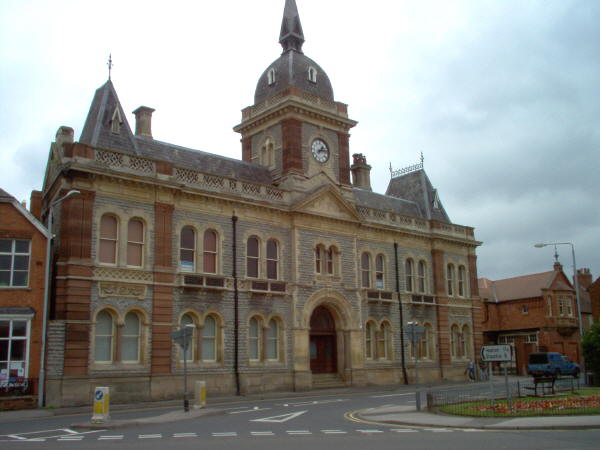
Even before I crossed the threshold, I was transported back to my youth. The warm, comforting, sweet malt bath of mashing. Magnus Grammar, my secondary school, was just a couple of hundred metres from the Castle Brewery. Our playground was washed with the aromas of brewing every day. That's mashing and boiling. Now the odour of fermenting, that I associate with my one brief professional connection with the brewing industry. The summer of 1975, when I filled kegs at the Castle Brewery. AK. IPA. Whatever the Mild was called (no-one I've asked can remember its name). Have I told you this before? Give me a kick if I start repeating myself.

Menno (the brewer at De Molen) let me try his new Imperial Stout, Tsarina Esra, bottled and draught. It's the one he let me taste very young last time I was there. I'd give it a four dead rating - dead, dead, dead, dead good.

Did I tell you that I hadn't had a beer since last Wednesday? I was ill and couldn't stomach a beer, then I thought I'd give my poor, wasted body a couple of days rest. At 9 AM I broke my fast with Tsarina Esra. It's 11% ABV. Let's consult my notes: "Thick, chewy and delicious. Chocolate, liquorice, leather, elderberry, blackcurrant, roast - it has it all plus some."

I'm a lucky guy. A very lucky guy. Poor Spike, losing his capacity for joy unbound. But he didn't get to see his own beer brewed.

Wednesday, 16 January 2008

I'm so excited

And I just can't hide it. It's not Lichtenhainer that's getting me worked. Nor my DDR label scans that I finally found this evening. Something much more momentous is the reason for my excitement.

Tomorrow I'm off to Bodegraven to see one of my beers brewed. Not quite sure which it will be (Whitbread Porter or SSS). It should be a memorable experience even though I do have to get up at some ungodly hour. I'll tell you all about it in tomorrow's post.

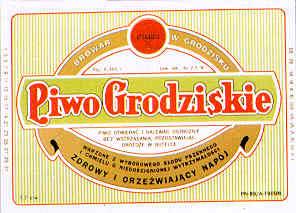
Bit of a short post today, so here are some of the DDR labels I meant to share with you earlier in the week.


Tuesday, 15 January 2008

Reinheitsgebot II

I was going to talk about Lichtenhainer. You know of the article I found about Lichtenhainer, don't you? Well, you should pay more attention. I mentioned it at the end of yesterday's post.

I won't bore you with the details (not these ones, I have some others already prepared). Today I discovered an incredible resource. I quadrupled my material on Lichtenhainer in 5 minutes. More than enough to make me a total Lichtenhainer bore. I'll be droning on about it for years. But not today.

Everyone's heard of the 1830 Beer Act. When the whole country was pissed for days after the price of beer was halved. That Beer Act. But there was another Beer Act in 1823. Not as radical as that of 1830, but with one fascinating section.

"That such persons brewing porter, or using in the brewing of such ale or beer any other ingredients than water, malt, hops, and yeast, or mixing therewith, or with the wort or worts thereof, any water, or other ingredient than hops and the necessary quantity of yeast and fining, all such porter, &c. shall be forfeited, and may be seized by any Excise officer ; That every offence against these rules shall be visited with a penalty of 200/- ; and a penalty of 50/- for every offence is imposed upon persons selling, or permitting to be sold, beer brewed under this Act, in any quantity at one time of nine gallons, or quarter barrel, or upwards, at a higher price than 27s. per barrel, or any quantity at one time, less than nine gallon-, at a higher price than 10d. per gallon."

A British Reinheitsgebot.

The Reinheitsgebot is often (somewhat contentiously) portrayed as a piece of consumer protection legislation. Now the second part of the quote - that's what I call consumer protection. A fify shilling fine (about the price of two barrels of beer) for trying to overcharge you. You may think "Look at those quantities - the smallest is a gallon. Who buys that much at once?" Ah, things were so different in the 1800's. There was a big trade in selling beer by the barrel to private households.

Notice how Porter is mentioned first? In the bits I haven't quoted, it just says beer and ale. Only when talk turns to the use of illegal ingredients does Porter get a mention.

Oh yes, and the bit about not adding water to the wort is relevant. I'm sure that's one of the reasons London brewers brewed the way they did. Three or four worts blended together to get spot on the right gravity for perhaps as many as three different strength beers. And why brewing manuals of the period have detailed instructions on how to do the calculations needed for blending worts.

Monday, 14 January 2008

DDR beer styles

While nosing around in books and the web looking for stuff about DDR Porter, I stumbled across a couple of other things I thought worth sharing.

I only found quite a limited range of beer available - Helles, Pils, Pilsator, Berliner Weisse, Bock, Schwarzbier, Porter (once). That was about it. Browsing the old manuals, I noticed that they mentioned a few other styles - Märzen, Dunkles, Spezial - that I never came across.

Old labels betray that this wasn't the full picture. The Jena region had Lichtenhainer and Wöllnitzer Weissbier (though that still exists). In Magdeburg, they used to make an Altbier. In Berlin a Märzen-Weisse, whatever that is. Sounds suspiciously like a modern, made-up style. If anyone knows any more about it, please tell me. A search on the web came up with a single lonely hit.

Another thing I came across. Something about Gose. It was in a bound edition of Brawelt from 1960. In issue number 70 from September 8th 1960 (on page 1485) there's a table of prices for the different types of beer in the DDR. It's a very specific price list: for carryouts from a pub. Obligingly, the gravity of the beer types is included. Gose appears in the list twice. First, alongside Berliner Weisse in the Schankbier category - 8.7 to 9.3º Plato. The second is as a Vollbier - 11.7 to 12.3º Plato. 38 and 75 pfennigs respectively per half litre bottle. In case you were wondering. The most expensive beer by far was Porter, at 1.53 DM. (DM isn't a mistake. The currency in the East was called that in 1960.) Then again it was the strongest.

I've just spotted another one. DDR beer type, that is. At the very bottom is something called Giraffe-Bier. All I know is that it was 18º Plato and cost 1.02 DM for a 33 cl bottle. A web search yielded slightly fewer results than for Märzen-Weisse. Any further information, gratefully received.

I'm now really excited. I've just found what looks like a properly sourced article about Lichtehainer. What a productive day.


A book arrives

A book was delivered this morning. Nothing special in that. Except that I haven't ordered one for months. Dolores has enacted strict book buying guidelines and I want to retain both bollocks.

A book from England. How exciting. What could it be? Ainslie Books, the return address said. That rang a bell. Now why was that? Aaaaah "I bet I know what it is" I said to Dolores.

I took a butcher's at the postmark, just to be sure. February 10th. Wow. That's quick. Delivered in just minus four weeks. February 10th . . . . 2007. Make that delivered in just 11 months. Where on earth could it have been for the best part of a year?

Now I was sure of the book's identity. Heartbroken I was, when it didn't arrive last year. I'd coveted it so long. Eventually, I ordered another copy. Now I have two. Anyone interested in buying my spare "The Anchor Magazine 150th Year Commemoration 1781-1931"?

"How does this fit in with your blog theme?" Ah well, whose house rag was the Anchor Magazine? That's right - Barclay Perkins.

Sunday, 13 January 2008

Porter in the DDR

See, I promised you the tale of DDR Porter and here it is. A coupling of two of my favourite obsessions.

How was it brewed
Let's start with "Leitfaden Für den Brauer und Mälzer" by Rudolf Dickscheit (Leipzig, 1953, pages 163-164).

"Porter
What in Germany is designated Porter, would be called Stout in England. For export, Stout is brewed with a graity of up to 21% [21º Plato]. Porter is a beer of similar character, but has amn original gravity of just 12%. To avoid confusion, in the following I will stick with the term Porter which is normally used in Germany.

The basis for a good Porter is a very well-modified malt. To obtain this, the usual method is a 14 day cold process.

The malt is heated in piles on the upper level and dried in the same way as Munich malt.

Porter is made by the infusion mash method which is standard in England. It can, for example, be brewed as follows:

Mash 69º C for 3 hours
Pump the whole mash into the heated Läufer tun
Rest 69º C for 30 minute
First sparge let stand for 30 minutes
Draw off first sparge
Second sparge let stand for 30 minutes
Draw off second sparge, add the hops and boli for 3 hours

Add caramel [Kulör] to obtain the desired colour, and add sugar in the kettle to obtain a gravity of 18 to 20% [Plato].

The grist generally contains caramel malt and Farbmalz. Farbmalz makes up 7 to 10% of the grist. The hopping rate is 600 to 700 grams per hectolitre. After the wort has been boiled for three hours it's transferred to the cool ship and with cooling apparutus brought down to 18º to 24º C. To the cooled wort a top-fermenting yeast is added. Since the fermentation temperature lies between 18º and 24º C, a violent fermentation soon begins. During the primary fermentation, the wort is only carefully cooled so that a temperature of 18º to 24º C is maintained.

The room temperature should be about the same as the wort temperature.

The aim is an unbroken fermentation of all the fermentable extract.

When the primary fermentation is over, the young beer is transferred to small lagering barrels. There it is infected with Brettanomyces and a sugar solution added. After a relatively short time a lively secondary fermentation starts. The lagering barrels are not bunged but allowed to froth over.

Brettanomyces produces substances which lend the beer particular vinous flavour. As soon as this appears to a sufficient extent, the Porter is filtered: afterwards, more sugar is added at a rate of 50 grams per hectolitre. It's inoculated with Brettanomyces a second time and filled into bottles.

Bottle-conditioning takes place at 15º C in a warm cellar, so that the Brattanomyces can produce a strong fermentation and the bottles gain a sediment. As soon as there is sufficient conditioning, the cellar is cooled to 0º C.

The Porter is now ready for consumption. However it can be matured for longer to develop and round off its flavour.

In general, pasteurisation is not necessary; if it does occur, the pasteurised taste is not so unpleasantly discernible as in pale beers.

A Porter brewed by the aforementioned method would not be identical to the beer produced in the DDR with the name 'Porter', but would be more similar to the English beer than is currently the case."

I like the bit about pasteurisation. Reading between the lines in brewing manuals, it's clear many professional brewers thought pasteurisation was detrimental to a beer's flavour. Dickscheit's differentiation between Porter and Stout is pretty spot on. As is his description of how Stout was brewed in England circa 1914 (by the time he wrote the book, probably only Barclay Perkins Russian Stout was made that way). I wonder how the hell he knew all of this?

But most important is the last paragraph. The method laid out wasn't how DDR breweries actually brewed, but something to which they should aspire in order to make an authentic English-style Porter. You can find this in a Michael Jackson article about Porter:

"Even after or War II, at least one German brewer continued to make a "British-style" Porter with a Brettanomyces yeast culture."

It's my fault. I sent him a translation of part of Dickscheit's instructions which omitted the final paragraph.

Where was it brewed
These are the breweries in the East that I know for certain (I've seen a label) brewed Porter:

Brauerei Eibau, Eibau
Schultheiss, Berlin
Brauerei Th. Krepper, Burg bei Magdeburg
Brauerei Sternburg, Leipzig
Brauerei Schmiedefeld, Schmiedefeld
Brauerei Meiningen, Meiningen
Brauerei Krampf, Eibau
Brauerei Braugold, Erfurt
Riebeck Brauerei, Erfurt
Rose-Brauerei, Grabow
Brauhaus Halle, Halle
Freyberg's Brauerei, Halle
Brauerei Lübz, Lübz
Brauerei Erich Weltz, Sülze (Extra Stout XXX)

Some of these probably date to before WW II, but I'm sure there are many others missing.

What it was like
I'm in a generous mood again. Here are the technical details of beers brewed in the DDR during the 1970's:


"Technologie Brauer und Mälzer" by Wolfgang Kunze (Leipzig, 1975) is a wonderful book. It tells you everything you need to know about running a brewery in the DDR. Right down to the how the labels should look:

- name and location of the producer
- bottling date
- size: 90 mm X 60 mm for 33 cl bottles, 100 mm X 70 mm for 50 cl bottles
- retail price in at least 12 point letters
- colour: for Porter, carmine red

When I open my brewery, I intend sticking to the rules. Except for the retail price, of course.

Saturday, 12 January 2008

Amsterdamse school

"I know what I'm going to post about today."

Andrew: "About the school?"

"No, that has no connection with beer. It has to be about beer."

Andrew: "But I remember you once wrote about something else. Really. You did"

"Do you want to hear what I'll be blogging about?"

Andrew: "But you really did once write about something else. The one with the title Leeuwaarden. That wasn't about beer."

"Do you want to hear what I'll be blogging about?"

Andrew: "It really didn't have anything to do with beer."

"A comment I made on someone else's blog was the inspiration."

Andrew: "Take a look, dad, there's really nothing about beer in that one."

"There's an interesting story behind today's post. Several, in fact."

Andrew: "I'm sure there was another one not about beer, too. What was it . . . . ?"

"Porter in the DDR. "

Andrew: "Why can't you write about the school?"

I give in. I'll write about the school. Andrew's pressure hasn't decided me . The reasons are:

  1. I can't find my DDR label scans
  2. I can't find my translation of Dickscheit (what a dirty mind you've got - he's the author of "Leitfaden Für den Brauer und Mälzer")
Maybe I'll find time tomorrow.

Talking of "Leitfaden Für den Brauer und Mälzer", while flicking through it looking for the bit about Porter just now, I spotted a reference to Grätzer. The book was published in Leipzig in 1953. The mention was in a description of Rauchmalz (smoked malt). This is what says: "The best known Rauchbier is Grätzer." The malt for Grätzer was dried over beechwood fires, it explains.

I'm thrilled. Grätzer only died out about 10 years ago, yet I've only found a few short remarks about it. And I'm always rummaging around in German technical brewing litereature. (I know. I'm weird. Don't worry, I've come to accept it.) It's like unearthing a nugget, seeing the word Grätzer. Someone recently emailed me to say they were supposed to be reviving the beer this year. I hope they do. After I tracked down my original holy grail, Gose, I switched my attention to Grodziskie (the town from which Grätzer derives its name is now in Poland). Beer I would most like to try.

Amsterdamse School. My favourite type of architecture. Andrew starts secondary school next year. Our search for the right one started today at the open day of the Berlage Lyceum. An Amsterdamse School Amsterdam school.

I kept getting distracted. Takstraat is just behind the school. A wonderful bit of de Klerk fantasy, Takstraat is. Unusually for a building of the interwar period, the back elevations are as interesting as the facade. The way the balcony storage boxes (common in Amsterdam flats) have been modelled is pure genius. You can only really see it from the school playgound. As an older bloke, hanging around in school playgrounds isn't something I feel comfortable doing. Unless I have Andrew along, of course.

The Berlage Lyceum isn't bad looking itself. They didn't have leaded glass and frescoes in my school. He could study in worse surroundings. And the views are magnificent.

Friday, 11 January 2008

Average OG UK beer 1900 - 1993

I'm not feeling that well. Hence today's brief post.

Everyone knows that the British like their beer weak. But it wasn't always like that. Before 1917, British beer was usually stronger than that elsewhere.

This should tell you everything you need to know about the development in average OG during the 20th century.


What strikes me is the incredibly small variation in average gravity in the second half of the 20th century. The lowest average OG was 1036.9º the highest 1038º. That's pretty minimal variation, especially when compared to the first half of the century (low 1030.55º, high 1054.93º).

The minimal change in average strength is even more surprising when another factor is taken into consideration: the dramatic change in the type of beer drunk. In 1951, more than 50% of beer consumed was Mild. The second most popular beer was Bitter. In 1992, the 51% lager, 45% Bitter (and Stout) and 4% Mild. All of these types have different gravities. Yet somehow, the average managed to remain the same, despite dramatic variations in in the share of each different type.

What do you think this tells us? Do the British have a subconscious proclivity for beer of 3.7% ABV?

Thursday, 10 January 2008

Tax and income

Yesterday I mentioned the catastrophic increase in beer duty in the early 1930's. Today I'm going to give you more details about it.


As you can see, in 1930 41 million barrels of beer were produced. Taxed at 80 shillings (4 pounds) per standard barrel, this brought in the government 71 million quid. Two years later, with tax at 114 shillings per standard barrel, fewer than 18 million barrels brewed and the total revenue collected was down to 67 million pounds.

Realising their mistake, the government dropped duty back to its old level, but it was too late. Beer production remained at around 20 million barrels and government revenues were just 54 million pounds.

There's a lesson in there for governments who greedily eye beer as an easy source of cash.

Wednesday, 9 January 2008

London Mild 1926 - 1941

Having obsessions is great. You always have something to talk about. Whether or not anyone wants to listen is another matter. Today it's the turn of of one of my favourites: Mild.

In 1914, standard London Mild (X Ale) was around 1051°, slightly higher than ordinary Bitter (1050°). During the war, the gravity of X Ale was slashed and during 1918 and 1919 was discontinued (in the case of Barclay Perkins) and replaced by 4d Ale, a price-controlled, low-gravity Mild of 1026-1029° After the War, the gravity bounced back to around 5-7° lower than in 1914, 1043-1045° and 4.3% ABV. That´s still substantially stronger than Mild today.

The crucial change came in the early 1930´s, when beer duty was increased from 80/- to 114/- per barrel. The effect was dramatic: brewers dropped their Mild gravities by 5-7° virtually overnight. It´s an even greater percentage change than that caused by WW I. The tax increase was repealed in 1933, partly because the drop in beer consumption it caused meant that the revenue collected was lower. But rather than increasing the gravity back to the old levels, the brewers kept the beer the same but dropped the price 1d to 5d a pint. The gravities in 1933 - 1032-1035° - match exactly those of modern Mild.


The full response from Barclay Perkins is interesting, because it illustrates a phenomenon that has occurred more than once in British brewing. They dropped the gravity of their X Ale to from 1043° to 1035°, but introduced a new beer, XX Ale, at 1043°. Looking at the specs, it seems to be the old X Ale renamed. This seems to be a common response to downward pressure on gravities: weaken a beer but at the same time introduce a "new" beer at the old strength. This is how Young´s Special was born - when the PA (Ordinary) was reduced in strength Special was introduced at the old PA gravity.

Towards the end of the 1930's Mild gravities did creep up a little - to 1036°-1038°. But a little event called World War Two soon knocked them back down to under 1035°. By 1945 Mild was hovering around 1030°.

Tuesday, 8 January 2008

Suspected Burton

Today's post is especially for Zythophile. Sorry that I couldn't come up with any AKs. Burton should be a good substitute. Burton is close to my own heart: it's the middle name of my second son (the initials of the first are AK).

Burton, ah, Burton. Once so common, now misunderstood or forgotten. For those of you who have arrived late, a word of explanation about Burton. It's not Burton Pale Ale I'm talking about, but Burton Ale. A strong, dark beer, it was one of the standard draught beers in London pubs until well into the 1950's. The last two Burtons were brewed by Fullers and Youngs. Fullers replaced theirs with ESB in the early 1970's. Around the same time Young's renamed theirs Winter Warmer and made it a seasonal beer.

Explanation over. But what about the title? Why suspected Burton? Because not all are called that by name in the Whitbread and Truman gravity books. Some are called Strong Ale, others just XXX or KKKK. I can''t be 100% sure these were Burtons. But as the list of named Burtons is just seven long, I've included the suspected Burtons, too.


Wondering about what the colour numbers mean? They lie in about the same range as Dark Mild. What was the relative strength of Burton? About the same or a little higher than Best Bitter. Want more details? Look below.


Suspected Burton. Better than an attempted moustache.

Monday, 7 January 2008

Two drinks

At least it gave my kids had a good laugh. The story about Wetherspoon's limiting adults accompanying children to just two alcoholic drinks. "You'd only be in pub five minutes, dad."

I've quite often taken the kids to a Wetherspoon. Usually the one in Lincoln. It's not particularly out of choice. Just one of the very limited options when you have children in tow. By the time we hit 'Spoons I've trailed around all the places the kids want to go - bakery, toy shop, firing range - I'm ready for a drink. Make that several drinks.

I start with a pint of the strongest cask beer on offer and accompany it with a double whisky. That takes the edge off the day. By the time the food turns up, I plan on being on my third round.

In Groningen on Saturday, I would have been in trouble after 12 minutes in the first pub. If it had been a Wetherspoons with an idiot manager. And in the second one, too. I had more of a thirst on by then. So after just 8 minutes. Yet my kids didn't run riot. Instead they gave me useful advice like: "Dad, no more than three jenevers." "Drink Dubbel not Tripel." Maybe having German passports makes my kids behave so responsibly. Being British myself, I act like a mindless twat.

What effect is all my abuse having on the kids? They hate our excursions so much they keep saying "Dad, can we go to the pub?" I can't be doing much wrong.

American Stout

I've noticed something: nothing gets more response than when I slag off American beer. Despite you telling me what you liked best were travel reports. Numbers don't lie. Me being nasty is popular.

I had great hopes of Deschutes Obsidian Stout. After the American Stouts I've drunk recently, I was hoping for another chance to pontificate on the inappropriate use of c-hops in Stout. Disappointingly, Obsidian was rather nice. Oh dear. What should I do? Lie and say I hated it. Keep shtum and passively give the impression I hate all American Stouts. As you can see, I've taken a third option: honesty.

Sunday, 6 January 2008

Definitely Groningen

It was Groningen we visited yesterday. Dolores recognised the beautiful new museum. She really recognised the station. Which handily also has "GRONINGEN" in big letters on the facade.

In case yesterday's posts had you imagining me stumbling drunkenly through the city, dragging the kids. In case you believe my trips are just one long pub crawl. Allow me to drift, for a while, from the confines of my beery theme.

Groningen has a new museum. It's right opposite the station, and the bridge across the old town's former moat passes, well, right through it. I suppose it's one way of finding a site: build in a canal. The galleries are one floor down from the bridge. Disconcerting is how it feels when, looking through one of the windows, you notice that the water is around waist height.

The museum is currently holding an exhibition called "Russusche Sprookjes" (Russian Fairy Tales). Some was what you would expect - pre-Raphaelite medieval romanticisation. But they also had a couple of Kandinsky paintings. Alexei liked the paintings with Viking ships in them. He's just finished his own version. The kids were entertained for oh, maybe 30 minutes. Longer than I expected.

None of the real beer destinations . . Sorry Neither of the real beer destinations opens at lunchtime. We arrived at one. Pintelier opens at three. Half an hour at the museum, ten minutes to walk there . . . that's nearly two hours to fill.

I've been to countless towns with something called Vismarkt or Fischmarkt. Usually there isn't a fish to be seen. How different is Groningen's Vismarkt. It's still a real market. A sizeable number of the stalls were selling fish. The rest were cheese-sellers, butchers, bakers (no candlestick makers). Just food. I took the kids there to buy food for the return train ride. (Have you seen the price they charge for sandwiches in the station?) And lunch , too. The kids had a little healthfood number called Vlaamse Frites. (Andrew has just reminded me that his came with ketchup.)

We were leaning on the door of Pintelier at 14:55. Not a bad place. They have a special tap - shaped like the glass and its wooden holder - for Kwak. I should have taken a photo. But this is December in northern Europe. There's precious little daylight, even at midday.

They had a few christmas beers on tap. I had a Gouden Carolus Kerstbier. Very nice. I should say "with that distinctive spicy house yeast character" or some cobblers like that. But I wasn't sampling the beer. I was just having a drink. Over-analysis can take all the fun out of beer-drinking.

The friendly bloke at Van Erp had pointed out the way, quite literally, to Pintelier. Van Erp is a very decent beer shop, in the same mould as Bert's Bierhuis, Bierkoning or Gekraakte Ketel. I see that scandinavian beers are edging into Holland. There were a couple here. Good to see. I'm quite partial to Danish beer. And Norwegian and Swedish. I had a bottle of that Nils Oscar Imperial Stout on Friday. Very nice, indeed. More to my taste than the three strong AMerican Stouts I'd tried earlier in the week.

Andrew's getting impatient. I told him he could draw a map of our wanderings yesterday. Maybe I'll find time to add more words between my Sunday afternoon doze and my Tatort nap. Or maybe not.

..
..

..
..

Not.


Grotere kaart weergeven
Belgisch Café de Pintelier
Kleine Kromme Elleboog 9,
9712 BG Groningen.
Tel: 050 - 318 5100
Fax: 050 - 311 9358
http://www.pintelier.nl/


Van Erp Dranken
Grote Kromme Elleboog 16,
9712 BK Groningen.
Tel.: 050 - 312 6414
Fax: 050 - 313 9324
http://www.vanerpwijn.nl/

Saturday, 5 January 2008

Leeuwaarden


"Andrew is crazy. Dad is great. The best dad ever. I'm so lucky to have a dad like him. . . . . Now let me type" . . . . if Lexie really wants to have his say on this blog, he'll need to learn to type.

Ice cream lolly, la la.

Better when I take over. He's been out all day and is as overexcited as a chav in the Red Light district.

Fruit lolly. Paint heart. Lungs. Printer with a mattress. Ba ba goo goo.

Told you so. He speaks fluent gibber. Worse in person. Honest.

Breaking news, chocolate lolly he, he he he he he he, he he he

Mornings, he's coherent.

"Lexie: give me a sentence with beer in it. At least five words."

"Ice cream lolly is; that's it."

Magic. I got a free word out of him. One nil to Dad. (If you count something with an apostrophe in it as just one word.) Beer wasn't in his sentence. But that doesn't matter now. Does it?

Groningen

Day been a it's quite. Rearrange the words to make your own sentence. What am I, your slave or something?

I took the kids to Leeuwaarden today. Pretty sure it was Leeuwaarden we went to. They split the train in Zwolle (PEC Zwolle played in the first Dutch league game I attended [against my lads, the mighty Sparta] {don't ask why I support Sparta; it's a story that starts in Warswa}). There were these signs on the platform saying GRONINGEN, but I think they were just try to fool us. Black ops and all that.

Leeuwaarden/Groningen - what does it matter? Once you pass outside the A10 it's all the sticks. Maastricht, Middelburg, Groningen. Stickland.

Friday, 4 January 2008

total alcohol

What better time than the first week of the New Year to look at total alcohol consumption? (In the UK.)

Just like shares, consumption of various alcoholic drinks can go up as well as down. To appreciate this, you need to take a long view. Like, say, 150 years. Then you get a genuine historical perspective.

Funny you should mention 150 years. I happen to have figures for the years 1852 - 2002. Here's a little quiz. Promise not to peek at the tables first.
  1. In which of those years did the British slosh the greatest quantity of spirits?
  2. Was more cider drunk in 1975 or 2002?
  3. Was more wine drunk in 1940 or 1960?

Zi li gong shung, as I always say to the kids. (I don't think I've spelled the last bit of that right. I can't seem to find my copy of Elementary Chinese. . . . . Zi li geng sheng, that's the proper spelling.) Zi li geng sheng, as I always say to the kids. As an approach to the world and its vagaries, it can't be beat.

Have you made your guesses yet? I mean your answers to my questions. Have you? No? Then - hurry - bloody - well - up. And remember, no peaking.

Finished yet? About time. (Or get on with it, if you haven't yet.)

Finally . . .

Here are the answers. You have to hunt them down yourselves - zi li geng sheng, remember.


If you're wondering what "standard barrels" and "bulk barrels" are, there's an explanation here. Courtesy of The Brewers' Almanack, surely one of the greatest books of all time, sandwiched between "Three Men on the Bummel" and "An Ordinary Life" in the top three.


Tomorrow
The kids are trying to choose tomorrow's destination. I've never been to Leeuwaarden, so I'm rooting for that. I still have two 10 euro Blokker train tickets. With my 40% discount card, I need to go to the very edges of the Netherlands to get any real advantage out of them. Leeuwaarden, Maastricht, Groningen, Middelburg. Somewhere like that.

If I don't lose my notebook, expect a report on the trip.

Thursday, 3 January 2008

Map 2

Alexei has different interests to Andrew.

Can you guess what they are?


Grotere kaart weergeven

The world. What a place, eh? Argentina is country I would most like to visit. Even before I learned how many new breweries they had. If someone wants to pay for my airfare, I'll compile the definitive guide to Argentinian beer. Really. Or die trying. (That's not an idle boast.)

What interests Alexei? Volcanoes.

Theme maintenance situation.

US Imperial Stout

Masochist? You could call me that. I've found another American beer in my pile: Stone Imperial Stout.

Before I start, I'll say that I've had this one lying around for a while. At least six months. Does that sound like an apology? Or an excuse?

This one I really like. Not unequivocally - there's a slightly over-insistent hoppy finish - but I'm sparing with my love. Lots of liquorice, roast and coffee. Nicely melded.

"Limited Spring 2006 release" it says. I suspect once a lot more citrus was lurking in this brew. Maybe I should store my remaining bottle of Yeti for a couple of years. Until that horrible hop flavour has faded.

How to get to De Molen

It's handy having children. They learn such useful things. Especially when they're getting bored towards the end of school holidays.

Today Andrew learned how to make Google maps. When I got home, without prompting, he'd made a map showing how to get from Bodegraven station to De Molen brewery. Here it is:


Grotere kaart weergeven

I hope it encourages some of you to go there. It's one of my top three Dutch breweries. The brewer, Menno, is a really nice bloke, too. Great beer, friendly host, beautiful location. You couldn't ask for more. Unless you're a whingeing git.

Wednesday, 2 January 2008

Geography

I've invented a new game to play with my son Andrew. It's called How Would You Get Home?

The concept is simple. "Andrew, if we accidentally left you behind in Graz, how would you get home?" "Get the train to Vienna, change there for Munich and then get a sleeper to Amsterdam." Damn. I should never have bought him an atlas.

Only trains are allowed. Cheap flights take all the fun out of the game.

"From Ljubljana." "Venice, Milan, Marseille, Paris, Amsterdam." (The towns mentioned being where you have to change trains.)

My try was Milan, Munich, Amsterdam.

We were both wrong. You really only need to change in Munich. Good excuse for a few beers. A couple of hours between trains in Munich, I mean.

See. I did get beer in. Theme maintained.

Relative value

What a treat I have for you today. Forget my hesitant foray into transatlantic ale. This will blow your socks off (if they've been soaked in nitroglycerine).

Verisimilitude. I've been meaning to use that word for ages. Ever since I heard the song. That's another one crossed off the list of "things to do before I go gaga".

Back to today's post. You're thinking "God, what will he tell us today if it's better that the gratuitous use of the word verisimilitude?" I'll give you a clue: add something that rhymes with raft to the title.

I laughed at all the graft involved in the preparation. Shaft you - I'm not daft enough to do that.

I hope you understand the concept of having a base index of 100 and hanging comparisons off it. I really hope you understand it because I can't be bottomed to explain it. Some might say my readership was small. I prefer to add a "but discerning" on the end. Or "but able to tie their own shoelaces". Or "almost literate".

Explaining that it an only slightly insulting way has distracted me from the task in hand. (As have Andrew and Alexei. In their own inimitably crazy way).

Have you looked at the table image yet? No? You lazy git. . . . . . . I'm just the same. I can never be arsed to follow links in posts.

Price-conscious. I've always been that. It partly explains my Mild-drinking. I used to think (how many times have I said that?) that the price differential between Mild and Bitter had been seriously eroded after 1970.

The unsurprising: the realtionship between price and OG is pretty constant. You can see this by comparing the price and OG index columns for Bitter. These show that the the price per point of OG was pretty much the same for Mild and Bitter. Though, in general, Bitter was cheaper (in 10 out of 12 examples). Why unsurprising? Tax was levied by OG. Tax was a considerable percentage of the cost.

The slightly surprising: Bitter was much better value in ABV terms. Look at the price and OG columns of Bitter. Only in May 1960 is the price index higher. That means (do I really have to explain all of this to you?) that only in May 1960 was Mild a cheaper way of getting the same amount of alcohol than Bitter.

The moral? Cheap isn't always better value.

Tuesday, 1 January 2008

Getting out

I don't get out much. My experience of American beers is consequently as limited as Matt's wardrobe. Some of you must have had more contact with it. Maybe you can help.

Great Divide Yeti Imperial Stout - is it a typical example of an American strong Stout?

That's all I want to know. Thank you.

War

The first day of a new year. Time to look forward. So here's a post about brewing in WW I and WW II.

Introduction
I admit it: I'm a numbers junkie. Statistics fascinate me because of the tales they tell. I would like to share one of those stories with you. (Have I done this bit before? Sounds familiar to me. It's what happens when you get old. You start repeating yourself. Once past 50, you can't say things a single time, Oh no. At least twice or three times you have to say them.)

War has been the driving force behind most developments in British beer, since at least the Civil War. Cromwell introduced the first beer duty. Soaring taxes during the Napoleonic wars spurred brewers to innovate to cut costs. Patent malt was the result. The Boer War saw Britain become a high-tax nation for beer. Measures to conserve resources during WW I slashed gravities forever.

Perhaps the title should have been "War and Taxes". It wasn't so much war directly, but the money needed to finance it that had an effect on brewing. Except perhaps WW I, where a shortage of raw materials and huge tax increases in taxation combined to wreak havoc.

So how come so little changed during WW II? The conflict came close to destroying Britain both militarily and economically. Why was the impact on the brewing industry so small?

I think I know the answer, but I'll present the facts first and let you decide for yourself.


World War 1

Let's first look at what happened in WW I:


The effect of the war was dramatic: production was almost halved, strengths dropped to near-beer levels. Postwar, beer gravities settled around 20% lower than their pre-war average.


World War 2

Here's what happened in the next war:


This time UK strengths only dropped by about 10% and output even increased. The UK was able to brew large quantities of reasonable-strength beer. Average gravity never dropped below 1033.

You'll note that the effects of the war - even in the period when things were going well - were much more pronounced in Germany. Production of serious-strength beer trickled to a halt in Germany about half way into the war.

Average German gravity would have been much lower than the maximum figure given. There were classes with an OG of just 1012 even in the early war years. By 1945 some beers were as weak as 1008. If you reckon that German beer probably averaged at least 12º Plato(1048) before the war, it's quite a big drop. Things got so bad, they even suspended the Reinheitsgebot for a while.

Worth noting
Britain's prime minister for the second half of WW I, Lloyd-George, was a teetotaller, as was Hitler. Churchill, on the other hand, was an enthusiastic drinker.

Monday, 31 December 2007

2007

2007. It's been a year. I would have included one snappy, sum-it-all-up adjective in that last sentence, but the year has been too complex.

Difficult to believe (for you too, probably) that my first archive visit was in December 2006. This year I've been at it all the time. Well, almost once a month. Wish one for 2008: more opportunities to rummage in old brewing records.

I should have had my first beer brewed to order in 2007. For various reasons, it didn't work out. But the brown malt is ordered and the label design ready. In the next few months my Whitbread recreations should be born. Wish two for 2008: my beers are brewed and taste good.

Writing a blog every day, maintaining my website and having a fulltime job are difficult to combine. It's my website that's suffered. Wish three for 2008: time to update my Danish and Dutch brewery pages.

I could go on. But three wishes are all you get traditionally. I'm big on tradition. Hopefuly I'll still be around this time next year to tell you how many of my wishes came true.

Sunday, 30 December 2007

To every season

Consistency isn't my strong suit. (Armour, that's my strongest suit.) My point of view depends on where I'm sitting. (If that's not stating the bleeding obvious. Have patience. It will get better.)

Stonch posted yesterday again about session beer. He spoke a good deal of sense. I agreed with him, so what he wrote must have been pretty shit-hot. But that's the me sitting here in Amsterdam, where session beer with taste is as rare as England semi-final victories. "Oh for something weaker than this 7% Trappist!" I say. (I've stopped wishing for England to win a semi. Never going to happen again in my lifetime, is it?)

Sometimes (quite often, in fact, this year: 6 or 7 times in London and a couple in Newark) I get back to Britain. When you have three or four hours to kill, nothing's better than a few pints of Mild and a copy of The Guardian. You can slake your thirst and still understand the articles. For hours on end. Or an evening with mates, where you barely notice the passing of each round. That giddy carousel of social bonding.

But there are other times. More hurried. A snatched hour just before closing time. (Did I tell you of my recurring dream? Fifteen minutes before the pubs shut and I'm trying to get a drink. All the pubs are either selling crap beer, or the crowd around the bar is six deep, or my money has suddenly turned into old newspaper, or I've forgotten how to talk, or become blind and can't find the entrance. Standard stuff, really. Odd thing is, even though I haven't lived in Britain for decades, I stopped having the dream after they changed the licensing laws.) A cold December evening. Just before your mother's funeral. When your hyperactive son has jumped on your grillocks. There are times when you need something with more kick. "Oh for something stronger than this 4.2% Bitter!"

People have moods. The year has its seasons. Every hour has its own distinctive shade. One beer can never match them all. Nor should it. I want beers for every season, beers for every mood, beers for every shade. Is that too much to ask?

Saturday, 29 December 2007

Funny time of year


It's a funny time of year. Christmas has gone. New Year is next week. Everyone else is rushing round the sales. I nipped into the Stadsarchief Amsterdam.

Today it was the turn of Amstel. To be honest, it was a bit disappointing. Only one of the books really had much in terms of useful information.

I was surprised how long they'd been brewing Amstel Gold. Back to the mid-1950's at least. The records covering the 1970's didn't have hardly any information at all. Except that in 1974 about half the brews were Heineken Pils. And that Heineken Pils was boiled for two hours, Amstel Pils just an hour and a half. That's the most interesting bits. Don't ask me about the rest.

I did look at some Heineken records from the late 1950's, too. In 1959, they were producing three different versions of Pils. One at 12º Plato for the Dutch market, one at 11º Plato for the USA, and one of just 8º Plato for the UK. Oh, and for some reason the US version had no sugar in it.

Oh yes, Amstel were still brewing Stout in the mid-1970's. Both Amstel and Heineken were still producing a Münchner in the early 1960's.

Fascinating stuff, eh?

Friday, 28 December 2007

Mild 1949-1950

I'm not being deliberately obscure. The nature of this blog - realting what I've unearthed - means that it's bound to get a bit too specific for most folks at times. Not that that's going to stop me.

It would be hard to think of a less dull title than "Mild 1949-1950". But I think you'll find the material is ground-breaking. At least in the understanding of draught Mild in England. Around 1950. A topic everyone is interested in, surely?

Here go the figures.


I'm impressed by the high degree of attenuation and how much alcohol they squeezed out of meagre gravities. 4% ABV from an OG of 1035? Pretty good going.

The three beers with the lowest OG, 1027.7, were all from breweries in East Anglia. Most of the rest were from the West Midlands or the South West. Both regions had plenty of Milds over 3.5% ABV.

For comparison, here are some London Milds from the same period.


Note that they are generally weaker than those from the midlands, except for the odd Best Mild. 14 of the 23 are under 3% ABV.

Thursday, 27 December 2007

Bass

I hadn't forgotten about Bass. And I didn't just mention them yesterday so I could slip in a crap joke.

As a brewery based outside London, there are far fewer entries in the Whitbread gravity book for Bass. This is all of the draught beer entries:

I noticed the same thing in the Bass and Worthington bottled beers: their gravities are higher than other breweries'. As is the degree of attenuation. The Mild from 1950, with a gravity of 1041, is the strongest I've seen amongst the post-WW II entries. Most barely reached 1030 at the time.

Wednesday, 26 December 2007

Charrington

None of my local pubs open on Boxing Day. And I can't be arsed to go into town. Nothing for it but to get on with some work.

This morning I expanded my article on the history of Swedish beer. Admittedly using stuff from blog posts. But that's the point of the blog; encouraging me to gather material.

I've really neglected the Whitbread gravity book these last weeks. I managed to knock off four more pages after lunch (the remains of yesterday's duck). I've gone back to the draught beers. Bass and Charrington, two names that go together like disaster and waiting to happen. For most of the period covered, they were still separate concerns.

Here goes then. First the period of WW II.


Nothing that exciting there. They do seem to have kept their Bitter at a reasonable strength for most of the war.

Now for the immediate postwar years.

Most noteworthy here is a rare spotting of Burton (another of my many beer-themed obsessions). Considering later (by the time I started drinking in the early 1970's) IPA was their main product, it doesn't turn up a great deal in these records. In contrast to Whitbread, Charrington's IPA was stronger than their PA.

Finally, here's the mid-1950's onwards.


The appearance of weak, expensive keg beers, like Toby Keg. A real high point in British brewing.

Tuesday, 25 December 2007

Festive IPA

I was just browsing through my old blog posts. (What else can you do when the second installment of Eastenders in a single day comes on?) IPA.

I'm so jealous of Pete Brown. He did what I would have loved to (but never in a million years would have organised): took IPA by sea to India. Good on him.

IPA, I was bound to get around to the subject eventually. What is true IPA? I won't bore you again with my style theories. That look the children have when I repeat a story for the tenth time. Your faces with that on it. I imagine.

Just something I noticed when browsing details of Whitbread beers from 1933 I'd posted. Look, all this plucking stuff out of old bits of thingies - research , that's the word I'm looking for - takes loads of time. I have to squeeze every last drop of material out of it.

The age of hops used was what I was checking. (Three different vintages for every beer, to be precise.) But having recently read some stuff (what an egregious vocabulary I have) about the nature of IPA, the whatsits about hopping rates really oojared my whatchumacallit.


Posted before, but a new interpretation. Hopping rates.

The beers: DB (Double Brown), IPA and PA. What's the weakest of the three? Don't look. You probably can't be arsed, tell the truth. I'll repeat it here for the lazy and short of sighted:

DB 1055, 5.1% ABV, 2.3 lbs hops per barrel, 9.98 lbs hops per quarter
IPA 1037, 3.8% ABV, 1.75 lbs hops per barrel, 11 lbs hops per quarter
PA 1049, 4.5% ABV, 1.63 lbs hops per barrel, 8 lbs hops per quarter

Surprised? The Pale Ale has the fewest hops. Whether measured per barrel or per quarter of malt. The latter is a good way of comparing the hopping rate of beers of different gravities.

IPA was also the most attenuated. (Check the image above itf you want the precise details. I'm not copying out every bloody thing for you.) It must have tasted hoppier than the PA.

But the Brown Ale? It's hopped more than the PA? Weird. Bottled Mild is it? I think not.

I forgot to mention. IPA was a bottled beer. So hoppier, but weaker than Pale Ale and bottled.

If you think IPA was always a premium beer, look at this 1933 Whitbread price list:


The vagaries of IPA are intriguing. And I'm sure that the usual suspects have told us a fair few porkies about its origin and form. But I don't want to get distracted. Porter, Stout. Porter, Stout. Porter, Stout. Porter, Stout. I'm supposed to be investigating that.

Pete Brown is researching IPA properly. Oh bum. That just leaves 128 beer styles to me. Lichtenhainer anyone?

Festive

Something festive. I'll write a post with a festive theme. That's what I thought. So here it is: the price and strength of draught beer in a London public bar 1926 to 1953.


I can guess what you're thinking. "Just what I need to get me through christmas day - details about draught beer several decades before I was born." (Or is it "What sort of lonely loser posts to his blog on christmas morning?" ) I like to think that I'm diligent.

Getting, for a minute, into the spirit of the season, any guesses what Santa brought me? No, not beer, but you're close. Beer books, that's right.

"Arthur's Round" by Patrick Guinness. Martyn Cornell gave it a great review. That's enough for me. Then there's my Guinness obsession.

"2000 Biere: Der endgültige Atlas für die Ganze Bierwelt" by Michael Rudolf.

"Altbier im Alltag" by Genno Fonk. I've wanted to learn more about the history of Alt for ages. It surprising - especially when compared with the mass of literature on Kölsch - how little has been written about Alt. Guess what I'll be posting about in the New Year?

Monday, 24 December 2007

Stout, Stout, Stout, Stout

It's nearly christmas and I'm feeling in a generous mood. As a special treat, I've put together tables giving details of more than 150 Stouts.

You'll notice that there's a very wide variation in gravity, strength and degree of attenuation. I hope this finally kills off the theory that 20th century British Stouts were all weak and sweet. Plenty were, don't get me wrong. But a considerable number are similar to "Irish Dry Stout".


All taken from the Whitbread gravity book, as usual.

Given the massive response (two people!) when I asked if anyone was as fascinated with these numbers as me, I'll be continuing in this vein. While the kids are busy with their presents I may even get chance to transcribe a few more pages of the gravity book. I've only another 30 or 40 pages of bottled beers to go. Then I can start on the draught beer entries.

Sunday, 23 December 2007

The age of Porter

This week my blog has come of age. I can no longer remember everything I've posted.

It's the weekend. A cold Sunday afternoon. I'm on my third St Bernardus Abt and it's still light outside. Not the time for original research. Though I was a good boy this morning. I finished transcribing the Guinness output figures from David Hughes's excellent "A Bottle of Guinness, please".

I always return to Porter. This is such an obvious post, I feared I'd written it already. But I hadn't. I just checked.

The last London Porters. Until Fuller's revived theirs. (Didn't Young's flirt with a Porter, too? I suspect that may have been first. I would check, but it's Sunday afternoon and that St Bernardus is reaching my fingers. I'n mot typnig sow ell.) A table of London Porters from the 1920's and 1930's.


As examiners say, compare and contrast with Guinness Porter:


Conviction. You might say it's what should happen to me. I like to think it's my driving force. That someone is interested in my endless tables is my deepest conviction. I love them. Like my firstborn. Surely you do, too? Don't you?

Saturday, 22 December 2007

Modern Stouts

I thought I'd continue the Stout theme.

I dream of writing the definitive history of Porter. That's why I'm collecting all this material. There is a point to it all. I hope. If my heart keeps on thumping past my 85th birthday, I might just see it through.

Brauwelt is a very useful magazine for number-obsessives like me. It's full of them. Unsurprisingly their main focus is Germany. But occasionally they venture out into the ale world.

This is a comparison they made of various British, Irish and Australian Stouts.


Anything strike you? Compare the bitterness levels of Guinness Foreign Export Stout and Special Export Stout. In my defence, I've rarely drunk FES in recent years. Special Export is my regular summer treat (what's better on hot day than a lightly-chilled strong Stout?). I hadn't noticed there was such a big difference between FES and Special Export.

I keep saying this. Maybe if I say it often enough, someone will listen. A bottle-conditioned version of Guinness Special Export would be one of the best beers in the world. Do you think if we asked nicely Diageo would make some? Yeah, flying bacon time.

To add a little historical perspective, here's a random selection of 1950's Stouts from the Whitbread gravity book.

Friday, 21 December 2007

my notebook

Great news. I didn't leave my notebook on the train. Not the notebook. I did have a train loss, but I won't discuss that here. It's too painful. Perhaps next year when the wounds have healed.

It's packed with fascinating details I just have to share with you. (My notebook, in case you were confused. I know I am. ) Here it is:


"Quite lightly smoked", "Like Beecham's Powders", "Infected" That's all I can make out. Not that there's much more.

Beer affects the memory in mysterious ways. I was convinced that I had compiled extensive notes. Despite the taxi ride to Roosendaal not having left a single trace in my mind. You could call me an optimist.

Here's a joke from Alexei.

"Knock , knock."
"Who's there."
"Chocolate."
"Chocolate who?"
"Orange juice."

And another:

"Breaking news. . . . I've broken my nail."


I'm looking forward to christmas. Two days without work.

Treasure that. It's the only reference I'm ever going to make to my job.

Talking of treasure, Wildeman is a real treasure. They've had cask Fuller's Vintage Ale for more than a week. (I know, I know - a cask shouldn't last that long. But believe me, there wasn't the slightest whiff of vinegar.) Dark Star Espresso Stout confused me. But conquered me. I had a second. That was cask, too. The best coffee Stout I've had. But I'm still not convinced by the concept. Stout already has lots of roast flavours. Coffee just adds more of the same. Give me the subdued cofffee/chocolate tang of brown malt any day.

Some may get pissed off by the ubiquity of London Pride, but Fullers still make a couple of spanking beers. It may be the archive-creeper in me speaking here. 1845 epitomises the British ale taste - biscuity malt and earthy hops. Fuller's Porter. How pleased was I to finally taste it from the cask. Authentic is a dangerous word. So I won't call it an authentic Porter. But it has a London character. Brown malt. That's what makes a London Porter or Stout well, London.

Let me talk for an hour and I'll always get around to Porter.