Saturday, 16 July 2022

Let's Brew - 1913 Boddington Stout

With the stronger Extra Stout dropped, plain old Stout was Boddington’s only Black Beer.

The OG is, surprisingly, a couple of degrees higher than in 1901. Though it still looks more like a London Porter than a Stout.

A new aspect of the grist is the replacement of most of the pale malt by high-dried malt. I’m not sure what effect that would have on the beer’s character. At the same time, the percentage of black malt has been greatly reduced. Balanced out, in colour terms, by a healthy dose of caramel.

I’m still pretty much totally in the dark about the sugars employed. All I know for sure, is that here were two types. No. 3 and No. 4 are merely a guess. The quantities are about half of what they had been in 1901.

There are surprisingly few types of hops, just three: English from the 1909 and 1911 crops, and Poperinge from 1911.

1913 Boddington Stout
pale malt 2.75 lb 22.60%
high-dried malt 8.50 lb 69.84%
black malt 0.25 lb 2.05%
No. 3 invert sugar 0.25 lb 2.05%
No. 4 invert sugar 0.25 lb 2.05%
caramel 2000 SRM 0.17 lb 1.40%
Strisselspalt 170 mins 0.50 oz
Fuggles 60 mins 0.25 oz
Fuggles 30 mins 0.25 oz
OG 1053
FG 1019
ABV 4.50
Apparent attenuation 64.15%
IBU 12
SRM 35
Mash at 153º F
Sparge at 160º F
Boil time 170 minutes
pitching temp 62.5º F
Yeast Wyeast 1318 London ale III (Boddingtons)


Friday, 15 July 2022

1960 DDR other packaging stuff

Today we'll finish looking at what else TGL 7764 has to say about beer packaging.

It starts with the information which had to be on the label and continues with stuff which isn't allowed.

The following information must still be available:

Name and location of the manufacturing company and the addition: "Brauereiabzug." In the case of filling plants or publishers, the addition: "Verlegerabzug" or "Niederlageabzug".
Filling date in open or hidden form (day and month), goods number, according to TGL 7764.

It is not allowed:

additions like
Fassbier, Edel, Doppel, Spezial, Ur, alkoholarm, Echt, Eisbock, das Beste, das Edelste, das Feinste, aus bestem Malz und Hopfen bereitet and similar (with the exception of Doppel-Caramelmalzbier).
1960 TGL7764, page 8.

Most of the forbidden terms are just marketing bullshit.But one stands out as rather odd: Eisbock. Why on earth wasn't that allowed?

If you paid attention when looking at the lovely DDR labels I keep posting, you'll have spotted that the word Spezial appears quite often The rules seem to have changed. When we get to the 1980 version, you'll see that the section on forbidden terms has been removed.

Finally we get to packaging.


7 PACKAGING

For all types of bottling, the 0.33 liter (Steinie) bottles according to DIN 6199 issue 3.55 are to be used.

All other beer bottles may only be used until December 31, 1963.

White or semi-white bottles must not be used for pale beers.

Only hygienically perfect barrels, bottles and closures are to be used.

The keg filling for all types (except Jung- and Braunbier loose) in barrels with nominal contents of 1/8, 1/4, 1/3, 1/2 and 1/1 hl and larger.

A rinsing of the cleaned containers with catadynized water or SO2 gas as well as water containing SO2 is permitted, provided that traces are not detectable in the beer.
1960 TGL7764, page 8.

The Steinle bottle is the squat 33 cl bottle used for Duvel. This was by far the most common type of bottle used. Though Hell and Pilsner often came in half litre bottles.

Good to see that white glass wasn't allowed, at least for pale beers.

Not sure why there were different rules for Jungbier and Braunbier. Some of thiose barrel sizes are very small. 1/8 hl is just 12.5 litres.

Did I mention that I've found the TGL documents for malt and hops? They're up next. It's going to be a DDR summer.

Thursday, 14 July 2022

Another remnder of my two new books

I recently published two new books. I'm not sure how many I've written in total. Somewher north of forty volumes.

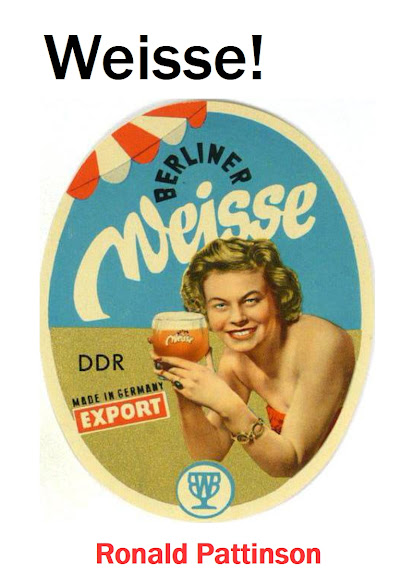
 The first is about Berliner Weisse. And is one people actually might buy.

 Buy your copy now!


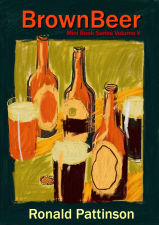
The second is a compilation of travel reports. I don't really expect any copies of it. Mostly, it's just there so I have my travel reports nicely compiled together. It is in full colour, if that tempts you.

 Buy this wonderful book!


Support independent publishing: buy this book on Lulu.


1960 DDR label colour by beer type

This is such good fun. I'm going to drag dozens of posts out of these DDR standards. Especially as I now have the documents for malt and hops, too. I'll be busy with this stuff for ages. Unless I get distracted again.

As you're probably aware, I have a really soft spot for DDR beer labels. Not just on account of nostalgia. Though getting a whiff of that lost world is part of the appeal. It's also the stripped back practicality. Just the information you really need - like the price - none of the superfluous bullshit you find on modern packaging.

And the colour coding, which makes life in the shop so much simple. Want a Hell? Just look for a yellow label. Though it wasn't just in the DDR this went on. How many Pilsners have predominantly green packaging? Carlsberg, Heineken and Grolsch spring to mind immediately.

1960 DDR label colour by beer type
Type of beer Commercial name Label's Main colour
Einfachbier Jung- und Braunbier -
Dunkel brown
Malzbier
Hell —
Schankbier Weissbier dark green
Vollbier Hell yellow
Dunkel white blue
Doppel-Caramelmalzbier blue
Malznährbier blue yellow
Köstritzer Schwarzbier blue red
Deutsches Pilsner pale green
Starkbier Weisser Bock or Bockbier Hell wine red
Dunkler Bock or Bockbier Dunkel
Deutsches Porter carmine red
Source:
1960 TGL7764 page 8.

Not sure why a couple of the weaker types have no colour specified. Or what the hell was going on with Vollbier Dunkel. I've labels in a variety of colours. But not one of them is "white blue"

Here are some example labels.


Wednesday, 13 July 2022

Let's Brew Wednesday - 1885 William Younger Table

You couldn’t accuse William Younger of having too narrow a range of products. Their range was massive: a couple of dozen beers from the Abbey brewery alone. And most of the - many – Pale Ales had their home in the Holyrood Brewery.  They covered a pretty wide spread of gravities, too. From 1031º to 1115º.

Right at the bottom of the pile was Table. Similar low-gravity beers had been brewed in London, sometimes in the form of Porter, but had died out by the 1880s. In Scotland, the style remained popular and was, surprisingly given its low strength, exported to England and beyond.

Not much to report about the grist. Three types of base malt, made from a combination of domestic and foreign barley. The latter making up 70%.

Lots of copper hops. Kent from 1884, Californian 1884, Württemberg 1884, Spalt 1884, and American 1884. Meaning that, apart from 30% of pale malt, none of the ingredients were Scottish.
 

1885 William Younger Table
pale malt 7.25 lb 100.00%
Cluster 120 min 0.50 oz
Spalt 60 min 0.25 oz
Fuggles 30 min 0.50 oz
Goldings dry hops 0.50 oz
OG 1031
FG 1009
ABV 2.91
Apparent attenuation 70.97%
IBU 21
SRM 3
Mash at 156º F
Sparge at 163º F
Boil time 120 minutes
pitching temp 61.5º F
Yeast WLP028 Edinburgh Ale


Tuesday, 12 July 2022

1960 DDR shelf life of beers

As you've probably already guessed, we're back with good old TGL 7764. The 1960 version.

I am planning to do a compare and contrast with the 1980 version. Which will be fun, as the beer styles changed quite a bit.

Now, you might be rather shocked by just how short the shelf life was of most types of beer. For the weakest, not much more than a week. Even a beer as strong as Porter was good for less than a month.

This might seem far too short a time to be practical. But, most beer was sold quite close to the brewery. And stuff like beer didn't hang around in the shops very long. I can remember well the instability of Eisenach Hell. You wouldn't want to hang around too much on your way back from the shop in case it had gone off by the time you got home.

Why were they so unstable? Because they weren't pasteurised and only rough filtered. Leave a bottle a couple of weeks and it would start to throw a sediment.

Two exceptions were Doppel-Caramel and Malznährbier. Because of the large quantity of unfermented sugars in these types, leaving them unpasteurised would have been extremely dangerous, likely leading to bottle bombs.

Way out in front in terms of longevity was Berliner Weisse. For the simple reason that it was bottle-conditioned.

1960 DDR shelf life of beers in days at 20 °C
Beer type Days Features
Einfachbier Dunkel 9 Without sediment and turbidity of biological or chemical-physical origin. Likewise, taste impairments are not permitted.
Malzbier 9
Eiriachbier Hell 9
Vollbier Hell 12
Vollbier Dunkel 12
Köstritzer Schwarzbier 15
Deutsches Pilsner 15
Weisser Bock Oder Bockbier Hell 15
Dunkler Bock Oder Bockbier Dunkel 15
Deutsches Porter 24
Doppel-Caramelmalzbier 90 Pasteurized. A deposit of yeast cells inactivated by pasteurization may be present, turbidity and impairment of taste due to the action of active microorganisms is not permitted.
Malznährbier 90
Weissbier 270 Turbidity and sediment caused by microorganisms specific to the beer type may be present. Changes in viscosity and consistency caused by microorganisms are not permitted, as are impairments of taste.
Source:
1960 TGL7764 page 5.

Just one more post from 1960 and then we'll be onto 1980.

Monday, 11 July 2022

1960 DDR beer ingredients (part two)

A little more on the ingredients in East German beers.

One massive difference with West Germany was the absence of a Reinheitsgebot in the DDR. But it should be remembered that it had never been in force very long in this part of Germany. The law was only applied to the whole of Germany in 1906. Take out the two World Wars and you're only left with around 30 years.

Which doesn't mean all sorts of wacky ingredients were allowed. As we've already seen, sugar was only allowed in one type of beer, Doppel-Caramel. The non-Reinheitsgebot compliance was mostlu manifested through the use of unmalted grain.

"The barley rate refers to the exclusive use of barley malt. When using raw grain, this should be compared with the average amount of air-dried extract. The normal values ​​for the air-dry extract are 75% malt, 80% rice and 65% barley. This results in the following application factors:

Rice 0.94 = 94% of the replaced amount of malt
Barley 1.15 = 115% of the replaced amount of malt.

Up to 25% of brewing malt can be replaced by raw grain, whereby the proportion is determined by instructions from the state planning commission. Rice or a milled product made from barley is understood as raw grain.

The composition of the barley brewing malts is left up to the manufacturer. Wheat malt must be used for Weissbier.

Water must comply with the requirements of § 2 of the regulation on the treatment of foodstuffs in the food trade of August 25th, 1956 (GBL.I, 1956, page 780). The manufacturer is free to decide how much cultured beer yeast to add according to the type of beer.

In the case of "Deutsches Porter", in addition to cultured beer yeast, Saccharomyces Brettanomyces is also permitted, for wheat beer, a type of cultured beer yeast and the bacterium Delbruckii. Biological acidification - mash or wort - with bacterium Delbruckii is permitted."
1960 TGL 7764, page 2.

Important there is the "Up to 25%". From evidence I've seen from a specific small brewery, it was usually no more than 20%. In posh styles like Pilsator, less than that. And a few beers intended for export - such as Wernesgrüner and Radeberger - were brewed all-malt.

I found the grains used slightly surprising. Well, one of them: rice. Which seems a bit exotic to me. Though, quickly polling a former DDR citizen (Dolores) revealed that rice was always available in the shops. She has no idea where it came from.

The final paragraph is dead interesting. Confirming the use of Brettanomyces in Porter and Lactobacillus delbruckii in Berlier Weisse. The latter also had to include wheat malt, which wasn't the case in West Berlin. 

Almost forgot. Souring of the "mash or wort". That sounds like like souring and fermentation souring. Very interesting that kettle souring was specifically allowed.

Sunday, 10 July 2022

1960 DDR beer ingredients

As promised, the ingredients used in those wacky DDR styles.

You'd imagined it more exciting, I'm guessing. It really does just list malt and hops. There's nothing specific at all. Just the total quantities of malt and hops.

Obviously, the stronger styles like Bock and Porter needed more malt than Hell. The hopping rate is more useful. Quite a lot more in the Porter than any of the other types.

I've calculated the hop rate per 100 kg of malt. It takes the strength of the beer out of the equation, allowing a true comparison of the hopping rates. The size of Porter's victory over Deutsches Porter is much reduced by this measurement.

1960 DDR beer ingredients per hl
Category Type kg malt per hl Hops gm per hl kg hops/100 kg malt
      min max min max
Einfachbier Jung- und Braunbier 4.5 40 60 0.89 1.33
  Dunkel 9 100 120 1.11 1.33
  Malzbier 9 40 70 0.44 0.78
  Hell 9 120 150 1.33 1.67
Schankbier Weissbier 14.5 80 100 0.55 0.69
Vollbier Hell 17 180 240 1.06 1.41
  Dunkel 17 150 210 0.88 1.24
  Doppel-Caramelmalzbier 10.5 40 80 0.38 0.76
  Malznahrbier 18 40 80 0.22 0.44
  Kostritzer Schwarzbier 19 230 250 1.21 1.32
  Deutsches Pilsner 20 250 350 1.25 1.75
Starkbier Weisser Bock or Bockbier Hell 26 180 220 0.69 0.85
  Dunkler Bock or Bockbier Dunkel 26 150 200 0.58 0.77
  Deutsches Porter 32 500 650 1.56 2.03
Source:
1960 TGL7764 page 2.

But, the fun isn't quite over. Because there are a few other ingredients. One of which is a bit of a shock.

Rather surprisingly, sugar was only allowed in one type of beer: Doppel-Caramel. Though caramel for colour was to be found in many different styles. 

1960 DDR other beer ingredients
Type sugar kg/ hl max caramel max artificial sweetener  450-times sweetness g/hl max table salt g/hl max
Junng- und Braunbier - 0.2 8 -
Einfachbier Dunkel - 0.2 - -
Malzbier - 0.2 8 -
Doppel-Caramel-malzbier 6 0.2 - -
Malznahrbier - 0.2 - -
Deutsches Porter - 0.2 - 100
Source:
1960 TGL7764 page 3.

 Quire surprised to see salt in there. But only in Porter. And artificial sweetener. Though that was allowed for certain types of beer in West Germany, too. Still is, for that matter.

Saturday, 9 July 2022

Let's Brew - 1913 Boddington PA

Sometime between 1903 and 1913, Boddington introduced a third Pale Ale, imaginatively called PA.

At just 3º stronger than AK, you have to wonder what the hell the point of it was. Having two Pale Ales of such a similar strength seems rather redundant. The only reason I can think of is if one was draught and the other bottled. A lower degree of attenuation leaves PA with the same ABV.

There’s one big difference in the recipes of AK and PA: flaked maize. It made up around 10% of AK’s grist, while it was absent in PA. Which I suppose means PA was a classier beer. Perhaps.

PA has a slightly higher hopping rate of 3.75 lbs per quarter (336 lbs) of malt compared to AK’s 3.25 lbs. Which inevitably leads to s slightly higher (calculated) IBU count. A shitload of different hops again: English from the 1909, 1911 and 1912 seasons, and Californian from 1911. The dry hops were English from 1911 and 1912, and Californian from 1911.

1913 Boddington PA
pale malt 10.00 lb 97.37%
No. 2 invert sugar 0.25 lb 2.43%
caramel 2000 SRM 0.02 lb 0.19%
Cluster 155 mins 0.50 oz
Fuggles 90 mins 0.75 oz
Goldings 30 mins 0.50 oz
Goldings dry hops 0.25 oz
Cluster dry hops 0.125 oz
OG 1045
FG 1014
ABV 4.10
Apparent attenuation 68.89%
IBU 27
SRM 8
Mash at 155º F
Sparge at 161º F
Boil time 155 minutes
pitching temp 61.5º F
Yeast Wyeast 1318 London ale III (Boddingtons)

Friday, 8 July 2022

1960 DDR Beer specifications

There was a request for the full specs of the DDR styles. So here you go.

These are the specs of the finished beers. Unfortunately, they use the annoying Brand scale for the colour. As I don't have a reliable conversion to a better-known colour scale, I've left it in Brand. It still gives a good idea of the relative colours.

It doesn't tell you everything about the beers, just their bare bones. When we look at the ingredients next time, a little more of their character will be revealed. What fun.

1960 DDR Beer specifications
Category Type OG º Plato app. Attenuation Difference between apparent output and apparent final degree attenuation % max CO2 content % min colour Brand
Einfachbier Jung- und Braunbier 2.9 to 3.1 - - - 15 to 20
  Dunkel 5.8 to 6.2 over 65 5 0.35 12 to 30
  Malzbier 5.8 to 6.2 over 55 5 0.35 12 to 30
  Hell 5.8 to 6.2 over 75 5 0.35 1.2 to 2
Schankbier Weissbier 8.7 to 9.3 75 to 80 2 1.12 2 to 3
Vollbier Hell 11.0 to 11.5 over 75 5 0.38 to 0.9
  Dunkel 11.0 to 11.5 over 68 5 0.38 12 to 30
  Doppel-Caramelmalzbier 11.7 to 12.3 - - 0.35 12 to 30
  Malznährbier 11.7 to 12.3 25 to 40 - 0.35 12 to 30
  Köstritzer Schwarzbier 11.7 to 12.3 over 70 7 0.35 over 30
  Deutsches Pilsner 12.5 to 13.0 over 73 4 0.38 to 0.8
Starkbier Weisser Bock or Bockbier Hell 15.7 to 16.3 over 68 4 0.38 1 to 2.5
  Dunkler Bock or Bockbier Dunkel 15.7 to 16.3 over 69 6 0.38 8 to 20
  Deutsches Porter 17.7 to 18.3 over 64 6 0.38 over 20
Source:
1960 TGL7764, page 4.


Thursday, 7 July 2022

A brewer writes

This is a follow up to the post a few days back on an adulteration case.  A brewer politely points out what bollocks Mr. Wanklyn was talking.

I'm still baffled as to how Wanklyn could say that he had never come across a beer with a gravity below 1060º. All I can say, is that he can't have analysed many beers. Even in London, where beers tended to be stronger, the majority of what was brewed was below 1060º.

EDITOR OF THE BUCKS HERALD.
Sir, —My attention has been directed to certain prosecutions of an extraordinary character, and, so far as I am aware, the first of the on record, which have lately been instituted by the Buckinghamshire Police Authorities against numerous publicans throughout that county for selling beer containing, as it is alleged, water added to it after and therefore, it is contended, " not being of the nature, substance, and quality of the article demanded by the purchaser." And as this is a question seriously affecting the reputation and interests of the whole trade, I venture to call public attention to the subject. The beers, in respect of which these charges have been made are, as I understand, such as are usually sold at a wholesale price of from 34 to 36 shillings per barrel, and at retail price of fourpence per quart. In two of the cases tried last week before different benches of magistrates Mr. Wanklyn, the County Analyst, on whose report these prosecutions were founded, admitted in cross-examination that, with a view to determine whether water had been added to the beer after fermentation, he had set for himself and assumed an arbitrary standard of original specific gravity, namely 1060 degrees, below which he declared it to be his opinion that no genuine beer can be brewed, and he stated that by calculations founded on that basis he came to the conclusion that the beers in question were not genuine beers. But, considering that there is no fixed or recognised standard of strength which determines the limit at which beer ceases to be genuine, and below which it is illegal to brew or sell beer for the consumption of the public (unless indeed the Excise Tables issued by the Board of Inland Revenue, which go as low as 1025, be accepted as an authority), it certainly does seem somewhat presumptuous in Mr. Wanklyn to attempt to impose upon the brewers of this country a standard of his own invention, which shall determine the particular degree of specific gravity at which beers shall cease to be genuine, and consequently shall cease to be "of the nature, substance, and quality of the article demanded by the purchaser." In one of the cases tried last week the original specific gravity of the beer in question was, according to Mr. Wanklyn, 1044.8 degrees, and he himself acknowledged that he had omitted to make the usual allowance for acetic acid and for possible errors, which would have brought these figures up to at least 1047. For my present purpose, however, I will take no account of these, or any other errors in his analysis, and will assume that the actual original specific gravity was 1044.8 as he said. Now to show the incorrectness, and I may say absurdity, of his contention, that beer of original specific of 1044.8 is not genuine beer, and that genuine beer cannot be brewed under an original specific gravity of 1060 I need only state as a matter of fact (which can be confirmed by the Excise Department of the Inland Revenue at Somerset House) that plenty of ales brewed at Burton and elsewhere for exportation, whose quality is subjected to the severest tests, are of an original specific gravity of 1,045, and frequently considerably lower than this; and all of these ales are recognized as genuine beers, and the drawback of duty allowed upon them by the Board of Inland Revenue. I may also add that the mild and bitter ales of a large brewery firm (of which I am partner) the wholesale price of which are 34s. and 36s. per barrel, and the strength and quality similar to the ales sold in Buckinghamshire and the neighbouring counties, are of original specific gravities ranging from 1043 to 1048. Of course the strength of all ales varies somewhat from time to time, according to the prices of malt and hops ; for the requirements of the public and the severity of competition entirely prohibit rise in the price of ales; and at the present time, when the prices of the best hops are from £25 to even per cwt., instead of from £5 to £10 per cwt., as in ordinary years, it is difficult to see how 34s. and 36s. ales can be brewed at profit. But there is one other point to which I am anxious to refer. It has been assumed all along by the prosecution that in the manufacture of beer the intermixture of water with it after fermentation is illegal. Now it is not the practice of the brewer to add water after fermentation ; but he is perfectly at liberty to do so if he thinks proper, and there are occasions when it may be desirable, with view to the improvement of the fermentation and the yeasfc, for the brewer to ferment his beer at higher gravity than it is required to be when finished, and afterwards to reduce it to the strength at which he sends it out to his customers. With regard to Mr. Wanklyn, I think I have clearly shown the incorrectness of his assumption, and the untrustworthiness of the standard he has created for the purposes of his analyses. He cannot but admit that, given a sample of beer of which the actual original specific gravity is unknown, it is impossible to discover by any process of analysis whether it contains water added to it before or after fermentation. So far as I can see, the only fact which Mr. Wanklyn may possibly have established by his analyses of beer taken from so many different parts of Buckinghamshire, is that the fourpenny beers usually sold to the public throughout that county are all of them pretty much of the same original specific gravity as those which he condemns on account of their not coming up to an arbitrary standard of his own invention. It is fortunate for the ends of justice that, in a case which was tried last week at Great Marlow, the intelligence of the magistrates saw through the fallacies of the method by which the analyst arrived at an erroneous conclusion, and they dismissed the case, with costs.
I am, Sir, your obedient servant,
A Member of the Committee of the Country Brewers' Society.
Bucks Herald - Saturday 09 December 1882, page 3. 

I assume the 34 shilling and 36 shilling beers referred to are Ordinary Mild and Ordinary Bitter. The gravity of 1043º to 1048º seem perfectly reasonable, as the beers were being sold in rural district.

Wednesday, 6 July 2022

Let's Brew Wednesday - 1913 Boddington AK

In a little over a decade, there have been considerable changes to Boddington AK.

For a start, 4º have been shaved off the gravity. Though a slight increase in the degree of attenuation means that the ABV isn’t all that much lower.

The recipe has become more complicated than the base malt and invert sugar of 1901. Two new elements have been added: flaked maize and caramel. Due to the vagueness of the description in the brewing record, I have no real idea what the type of sugar was used. I’ve just guessed it was something like No. 2 invert.

There’s been a big reduction in the hopping rate: down from 8 lbs per quarter (336 lbs) of malt to a mere 3.21 lbs. This is reflected in a big fall in the bitterness level, down from 43 to 23. As usual, loads of different hops were used: English from the 1909, 1910, 1911 and 1912 harvests, and Poperinge from1911. The dry hops were English from 1911 and 1912, and Californian from 1911.

1913 Boddington AK
pale malt 8.25 lb 86.66%
flaked maize 1.00 lb 10.50%
No. 2 invert sugar 0.25 lb 2.63%
caramel 2000 SRM 0.02 lb 0.21%
Strisselspalt 125 mins 0.50 oz
Fuggles 90 mins 0.50 oz
Goldings 30 mins 0.50 oz
Goldings dry hops 0.25 oz
OG 1042
FG 1011
ABV 4.10
Apparent attenuation 73.81%
IBU 23
SRM 8
Mash at 155º F
Sparge at 163º F
Boil time 125 minutes
pitching temp 61.5º F
Yeast Wyeast 1318 London ale III (Boddingtons)


Tuesday, 5 July 2022

TGL 7764

Beer style guidelines weren't invented by the BJCP. The DDR beat them by a couple of decades. With TGL 7764. Which pre-dates the BJCP by a couple of decades.

The big difference being, that breweries in the DDR had to stick to them. While breweries in the USA could do what the fuck they liked,

Why not honour these groundbreaking style definitions? What about having a festival of beers brewed according to the TGL 7764 definitions? There would be plenty of room for interpretation, as only OG, ABV, colour, rate of attenuation, etc. are fixed.

Here's a brief overview of the styles:


If anyone is interested, I can publish the full specs.