Saturday, 23 April 2022

Let's Brew - 1897 Hancock X

I’m not quite sure what had been going on at Hancock. It was odd that in 1888 they were only brewing XX. No X Ale, as well as no XXX and XXXX. But a mere 9 years later they were brewing a full set of X Ales. It’s all a little odd.

Compared to a London X Ale, the gravity is much lower: more than 10 points. Though a very high degree of attenuation means that the ABV isn’t that much lower.

It’s not just the range of Mild Ales which has changed. The recipes were quite different, too. And, against the usual trends, had become simpler rather than more complicated. This X Ale is almost, but not quite, a SMASH beer.

There was just a single type of malt, described simply as “English”. And while most 1888 recipes contained massive amounts of sugar, this X Ale is all malt. I wonder what caused their change in mind. It’s a pretty massive change in how they brewed.

Two types of hops were used, East Kent from the 1896 harvest and Kent from 1894.

1897 Hancock X
pale malt 9.25 lb 100.00%
Fuggles 90 mins 1.00 oz
Goldings 30 mins 1.00 oz
OG 1040
FG 1004
ABV 4.76
Apparent attenuation 90.00%
IBU 27
SRM 4
Mash at 155º F
Sparge at 175º F
Boil time 90 minutes
pitching temp 59º F
Yeast White Labs WLP099 Super High Gravity


Friday, 22 April 2022

Bute Dock

I was intrigued by malt entries in the Hancock brewing records which were described as what I thought was Butebock. What a strange name for a maltster.


The mystery was solved when I was sent this paragraph about the William Hancock brewery in South Wales.

"The history of the W.H. Hancock Co Ltd. brewery operations in south Wales can be traced back to 1807 when William Hancock, snr built a brewery in Wiveliscombe, Somerset. By the 1870s, Hancocks were the largest brewers in the west of England. By this period Hancocks were also beginning to enter the south Wales market using an agent to distribute casked beer, brewed in Wiveliscombe, out of warehouses in West Bute Dock, Cardiff. In 1883, Hancocks began brewing beer in Cardiff when the firm acquired the North and Low's Bute Dock Brewery. Over the next decade Hancocks bought up a total of eight breweries across south Wales. The rapid growth of the south Wales brewing operation, prompted William Hancock, jnr to set up a separate company called the William Hancock and Co. Ltd, registered in 1887, by which time it had acquired 46 public houses in Cardiff and 31 in Newport. In 1968 the company was acquired by the Bass Charington Group and became part of Welsh Brewers Ltd."
South Glamorgan archives.

Obviously, the brewery in South Wales also had maltings. And these were supplying malt to the original Hancock brewery in Somerset.

With "Wilscombe" clearly meaning Wiveliscombe, it seems that Hancock were brewing mostly from their own malt in 1888. Did they continue to do so? It's difficult to sat, as the 1897 records only record the country where the barley was grown, not who malted it.

In case you're wondering, a lot of the barley was foreign Either Chilean or "Ushak".

Thursday, 21 April 2022

Cartagena pasties

I’ve noticed that in South America that – well, the bits of it that I’ve been to –pasties are pretty popular.

Lunch places often have a heated display sitting on the counter full of these small packets of deliciousness. Yum I do love me a pasty.


At the judging in Blumenau, one day we were served mini-pasties in the coffee breaks. Two different types: one with minced beef, the other with cheese. The former was quite like a Jamaican pattie, just without the spice. Very nice it was. Perfect for dropping on top of a dozen Barley Wines.


In Cartagena, we noticed that a type of pasty was very popular for breakfast amongst the locals. Round, rather than the classic pastie shape. I was intrigued. But not enough to forgo my breakfast eggs.

Then one day, when for some reason I’d forgotten to eat lunch, I happened to be passing a little place that seemed to specialise in these pastry delights. Feeling peckish, I popped in.

With some pointing, I managed to order a pair of these parcels of perfection. And a can of beer. You wouldn’t want to eat them dry. They came with a weird looking brown spicy sauce.


What would I discover inside?


Egg. The answer is eff. And minced meat.

A nice lady came over and showed me something on her phone. She’s translated a description of what the pasties were. Some local delicacy, evidently, eaten by people living on Columbia’s Caribbean coast.

I can highly recommend them. Not the Andina beer, though. That’s a bit watery.

Wednesday, 20 April 2022

West coast trip reminder

I'll be taking my ungrateful offspring on another hugely expensive holiday to the US this summer. Please help make it not a total financial black hole.

I'll be available for all my usual beer-related activities. Selling books, talking unstoppably about Barclay Perkins, Scottish beer and the two World Wars.

This is our schedule:

Tuesday 26th July and Wednesday 27th July: Portland
Thursday 28th July to Saturday 30th July: Los Angeles
Sunday 31st July to Tuesday 2nd Aug: San Diego
Wednesday 3rd Aug to Friday 5th Aug: Vancouver 

Get in touch if you'd like me to drop by. I'm sure the kids won't mind. They're getting a free holiday, after all.

Let's Brew Wednesday - 1888 Hancock Stout

While it may have been a shock to see a Porter in Hancock’s brewing books, finding a Stout was no surprise. Everyone brewed at least one Stout in the 1880s.

The grist is very similar to the Porter, except that there’s a bit more No. 3 invert and a bit less pale malt. Seeing so much brown malt in a provincial Stout is quite unusual. Though it did disappear later, simply because they ran out of it.

Black malt isn’t listed with the other ingredients, but in the right margin. Presumably because they didn’t really count the extract from it. Or maybe added it to the copper rather than the mash tun. For many brews, they seem to have forgotten to record it.

As with the Porter, equal quantities of Kent hops from the 1886 crop and Bohemians from 1887 were used in the copper.

1888 Hancock Stout
pale malt 4.25 lb 38.36%
brown malt 1.50 lb 13.54%
black malt 0.33 lb 2.98%
No. 3 invert sugar 5.00 lb 45.13%
Fuggles 150 mins 2.50 oz
Saaz 30 mins 2.50 oz
OG 1063.5
FG 1017
ABV 6.15
Apparent attenuation 73.23%
IBU 50
SRM 40
Mash at 156º F
Sparge at 190º F
Boil time 150 minutes
pitching temp 59º F
Yeast White Labs WLP099 Super High Gravity

Tuesday, 19 April 2022

Hancock mystery

It's about half way into the article that I started getting puzzled. When the author visits the brewery cellars. 

That the brewery housed so many large vats came as quite a surprise. Not what I would have guessed at all.

"After taking a peep into a vat of gigantic dimensions, where lies a quantity of liquor undergoing fermentation, we again proceed below, and, passing once more the busy yard where stalwart men are busy, steaming and washing empty casks and marking and loading fall ones, next we come to the vaults where the beer is stored away in a perfect army of vast casks waiting to be transmitted east, west, north, and south as orders come in, the storage capabilities of the place being 10,000 barrels. Here, in various cellars, are casks truly Brobdignagian dimensions, holding beer of any age from one day to nine years old, and one. I believe, was said to be very much older. All these have their distinctive apellations; for instance, here, in one room, termed the “Coffee Pot" cellar, is the “Coffee Pot,” holding 390 barrels; the “Canister,” 330 barrels; the “Punchbowl,” 319, and five “Coffee Cups,” having each capacity 25 barrels. Near by is the “Old Hundredth.” which hums to the generous tune of 150 barrels; and in another cellar are “Peace" and “Plenty,” holding 404 and 670 barrels respectively. These were put up after the Crimean War in 1854. In a cellar formerly known as the “Volunteer" cellar are the “Captain.” 1,101; the “Lieutenant," 712; the “Ensign.” 250 barrels; and the “Little Drummer,” parched perkily alongside his superior officers, with 40 barrels inside his waist. Farther on are more of these gigantic casks, the “Bucket” taking the lead of the whole with a capacity of 1,128 barrels, or (reckoning 36 gallons to the barrel) 40,608 gallons, after which the “Pitcher," 638; the “Tub," 700; the “Banbury,” 533; the “Teapot,” 531; the “Tankard,” 525; and the “Barley-corn,” 300 barrels, take but modest back seat. Each these enormous casks stands upright its head on supports, and when it is said that each barrel of beer counts up 4cwt., it may be realised that strong supports are necessary to hold up the “Bucket,” the “Tub, or the “Captain.” All the cooperage, from the modest “pin” to the mighty “bucket,” is done the premises, and it is on record that the men who built the “Captain,” afterwards, together with their friends, to the number of 30 in all, dined inside it, and after the tables were cleared away some of the party indulged in the novelty of a dance at the bottom a beer cask. As the diameter of the bottom is about 20 feet, it may be seen that such proceeding was quite within the range of possibility. All these huge vessels are full of beer of varying age, and underneath are still other vaults holding armies of casks waiting, like prisoners, for transportation."
West Somerset Free Press - Saturday 24 May 1890, page 7.

10, 000 barrels is almost 5 months' worth of Hancock's output. Which seems an awful lot. Though it is stated that some of the beer was nine years old. Given the amount of beer they brewed, it would have taken several years to fill all those vats.

The largest batch I've seen in the brewing records was around 100 barrels. Meaning that the largest vat, holding over 1,000 barrels, would have taken at least 11 brews to fill. Or a couple of weeks, even if they brewed nothing else. It doesn't seem very practical.

The big mystery is which beer they were ageing in vats. I'll remind you of the beers Hancock brewed:

Hancock output second half of 1888
Beer Style OG Barrels %
BA Pale Ale 1060.1         313 2.53%
BB Pale Ale 1052.6         559 4.52%
GA Pale Ale 1039.3      1,406 11.38%
Porter Porter 1052.6           77 0.62%
Stout Stout 1066.3         689 5.58%
XX Mild Ale 1050.2      9,313 75.37%
Total        12,357  
Source:
Hancock brewing record held at South West Heritage Trust Somerset Archive, document number DD/HCK/5/2/1.

I can only see two candidates for vat ageing: BA and Stout. But in six months only 1,002 barrels were brewed of the two combined.


Monday, 18 April 2022

Hancock of Wiveliscombe

I've been digging around the newspaper archive in search of a price list from Hancock. The aim being to work out what the hell GA stood for and what it was sold as.

No luck so far finding a price list. But I did find quite a long article recounting a visit to the brewery. It's written by a layman which means there might well be some misunderstandings. But, as it's just two years after the brewing records I've been looking at, should reflect the state of the brewery at the time.

Hancock brewery in 1887

"THE WIVELISCOMBE BREWERY.
In company with a friend some time ago, I found myself with an hour or two to spare the pleasant little town of Wiveliscombe, and, naturally, we thought that a run over the noted brewery which Mr. Hancock’s name has made so famous would be the best method of improving the time at our disposal. Armed, therefore, with a courteous note of permission, which was most readily granted one of the members of the firm, passed down the main street, and under an archway found the office where the foreman, Mr. Stone, at once kindly placed himself at our disposal and expressed his willingness to show everything that might of interest in the busy establishment in which he was engaged. First he led us to the engine room, where a fourteen-horse-power engine was silently doing all the heavy work of the brewery. All the lifting, pumping, and general machine work of the place was being quietly performed by this one piece of machinery, which worked noiselessly and sweetly in this narrow room as if it had but little to do, instead of being the prime motor of so extensive an establishment. Passing through narrow passages, where, from recesses, gleamed out the fierce kiln fires, drying the malt above our heads, we find ourselves in the boiler-house, in which the fires are kept for generating the steam. The air of these rooms is hot enough to satisfy strangers unaccustomed to such places in very short time, and with a feeling of relief we turn our backs on this part of the premises and, re-crossing the yard, ascend some flights of steps, pass through more narrow passages, and find ourselves in the malting-houses, a series of long, low rooms, where vast stores barley are spread thickly but evenly on the floor, passing through the first stages which convert it into malt. Here, in one place, is the barley pure and simple; further on, the grain shooting, under the combined influence of dampness and warmth, into growth; and finally, it is spread out in the large kiln-rooms situated over the fires below, and where the little germinating growth soon dries up and drops off. It is then screened and the toppings sold for garden dressing and other purposes. There are four of these malt-houses, through which pass upwards of 40,000 bushels of malt per year."
West Somerset Free Press - Saturday 24 May 1890, page 7.

40,000 bushels is enough to brew around 20,000 barrels. Which is pretty close to what I calculate they were brewing each year. In the last six months of 1888 Hancock brewed 12,357 barrels, so I'm guessing the figure for a full year was around 25,000 barrels. Which would make them just about self-sufficient in malt.

I thought that was a bit odd, as I couldn't remember seeing any of their own malt in the brewing records. So I went back and had another look.  And saw malt described as "Wilscombe". Great. They couldn't even spell the name of the town they were in. I had wondered how Wiveliscombe was pronounced. I guess I have my answer now.

Let's move on to the brew house.

"Next are shown the huge coppers for boiling the water and the mash tuns, there being two of each. The boiling water, descending from the coppers, spread over the malt in the tuns by revolving sprinklers, the malt being kept stirred also by machinery. During the operation dense clouds of steam are evolved, which tickle the olfactory nerves with most savoury perfume. From the mash tuns the liquor runs out at once, and here we have the first opportunity of tasting the result of the brew before the bops are added. In the same room as these mash tuns is vast square tank, where the hops are added to the liquor. The huge bags of hops are stacked in another room below, some of them all the way from Bohemia, but the greater part hail from the picturesque hop-gardens of Hampshire.

From here through maze of lofts and rooms where the liquor is being stored while cooling and fermenting. The refrigerators for cooling are composed of stands of copper tubes, fixed one above the other lengthwise, through which cold water is constantly running. The hot liquor is pumped to the top, where it falls over the outside of these refrigerators, miniature Niagara of beer, which the time it reaches the bottom has lost much of its heat, when it passes into shallow receptacles in an open loft to still further cool, after which it goes into the fermenting vats. The firm brews beer, stout, and ale, and a full brew is thirty-two quarters. "
West Somerset Free Press - Saturday 24 May 1890, page 7.

Obviously, they weren't pouring boiling water over the malt. And it sounds like sparging was in progress rather than mashing. At least we know the mash tuns had internal rakes.

Did they really cool the wort first in a refrigerator and then in a cooler? That's the opposite way around to normal practice. Had the author just got it wrong, or did they really do that?

So they brewed Beer, Stout and Ale. What do they mean by Beer? My guess would be Pale Ale.A full brew 32 quarters? That seems about right. The largest batch in the 1888 records was just under 31 quarters. Which is a pretty good match.

Next time we descend into the cellars. Where things get dead confusing.

Sunday, 17 April 2022

Cartagena Beer (part two)

My first encounter with Club Colombia Negra was accidental. When we were in the cavernous – and wonderfully good value – Espiritu Santo

Mikey had eaten there before I arrived, though had trouble finding it again. Which isn’t as surprising as it might sound, the exterior being virtually unsigned and giving little indication of the large beerhall-like space inside.


I’m not sure why they brought us the dark version when we ordered two Club Colombias. But I’m glad they did. I was expecting something like the pale version just coloured up with sugar. The faint, but definite, flavour of roast suggested that there was dark malt of some kind in the recipe.

In some ways, it’s not a million miles away from a Dark Mild. Especially the light hopping. Good enough, at least, to switch me over to it for the remainder of our stay in Columbia.


After my first encounter with craft beer in Columbia, Mikey quickly hurries us on to our local – Restaurant Estrella. Unlike most other places, it wasn’t closed up and air-conditioned. Instead, it relied on big open windows and ceiling fans for cooling. It worked well enough. And it was popular with both locals and tourists. And – importantly for Mikey – it was cheap. Around €2.50 for breakfast and €3.50 for lunch.

The booze was decently-priced, too: €1.50 for a Club Colombia and €2.50 for a 3-year Medellin rum.

This particular day, we settled in for a long lunchtime session. 


With both rum and beer. Mikey didn’t stay on the Negra long. I was in for the long haul.

The pub was quite odd in some ways. It operated sometimes like a shop. OK, people buying water to carry out wasn’t so strange. But some of its other offerings were more unusual. Like toothpaste, soap, razor blades and batteries. Never seen those in a pub before. Oh, and marijuana paraphernalia.

All the dedicated craft beer bars were “temporarily closed”. Which meant my opportunities to drink anything other than Club Colombia were pretty limited. My next chance was on our last day.

Much of the morning we spent hanging the hotel around waiting for a Covid test. Which pissed Mikey right off. Leaving me to figure out how to spend the last of my Columbian pesetas.

Craft beer. That seemed a good use. I trundled down to the 3 Cordilleras place. And sat outside in the shade of a big umbrella.  Looking at the menu, I had just enough for a beer and a rum. As long as I drank the pale one. Which is what I got. Along with a 3-year Medellin rum.


The beer was pretty decent. The rum as excellent as always. A fitting full stop to the trip. Though I did have a few more rums in the airport lounge. 12-year Medellin, that was. Really lovely stuff.


Saturday, 16 April 2022

Let's Brew - 1888 Hancock BA

The other Pale Ale is Hancock’s portfolio looks much more normal. In terms of colour, I mean.

The reason is simple: the No. 1 invert sugar you would expect, rather than the No. 3 weirdly used in BB. It’s still a massive 40% of the grist. They certainly loved their sugar down in Somerset.

At a bit over 1060º, it’s a similar gravity to the best London Pale Ales. I suppose the Victorian equivalent of Best Bitter. Not that it would have been called that in the 1880s. Was it brewed as a Stock Ale? Possibly. It is a good bit more heavily hopped: 6.5 lbs per quarter (336 lbs) of malt compared to 5 lbs in BB.

Unlike their other beers, a single type of hops was used, Worcester from the 1887 crop. Goldings is just a guess. Which the dry-hopping, for once, isn’t. Hancock’s logs are some of the few which bothered to record it. At least the quantity. 

1888 Hancock BA
pale malt 6.50 lb 60.47%
No. 1 invert sugar 4.25 lb 39.53%
Goldings 90 mins 1.75 oz
Goldings 60 mins 1.75 oz
Goldings 30 mins 1.75 oz
Goldings dry hops 0.50 oz
OG 1061
FG 1016
ABV 5.95
Apparent attenuation 73.77%
IBU 63
SRM 9
Mash at 155º F
Sparge at 190º F
Boil time 90 minutes
pitching temp 58º F
Yeast White Labs WLP099 Super High Gravity


Friday, 15 April 2022

Vintage Beer Tasting in aid of Ukraine

Last week I had the very good fortune to attend Pete Brown's beer tasting in aid of Ukraine. A good cause and a chance to try some ancient and rare beers from his collection. 

I was lucky enough to have been gifted a ticket by James McDonnell, one of the auction winners. And very grateful I was, too. Even if it meant a frantic 24-hour trip to London. Also the first time I'd been to the UK in almost 3 years. By far the longest I've ever been out of the country.

The tasting was held in the Parcel Yard in King's Cross Station, giving me a chance to reacquaint myself with cask ESB. And British pubs.


Star of the show was Ratcliff Ale, brewed in 1869 for the son of one of the directors of Bass. A Majority Ale which was never able to fulfill its purpose, as the son died before reaching 21. That it had an intact wax seal got my hopes up.

And . . . I wasn't disappointed. OK, it was flat as a Russian tyre, but it wasn't off. Lots of lovely oxidation flavours adding deep sherry notes. Along with some leathery Brettanomyces flavours. Biggest surprise was the level of bitterness. Amazing that that should have lasted 150 years.

You'll probably be surprised to learn that this was the first time I'd drunk Hardy Ale. Not quite sure why that is. The 2003 vintage we tried was extremely good. And surprisingly chocolatey. That's something I wasn't expecting.

It's always way more fun drinking very special beers like these in company. There was some good discussions about the flavours we could pick up. Lots that I would have missed, had I been drinking alone.

A great, if somewhat tiring experience. My flight being delayed by 2 hours meant I had to go straight to the Parcel Yard from Gatwick.

I can't be arsed to transcribe all my tasting notes. You'll have to struggle with my awful handwriting. I'll admit that there are a couple of words even I can't make out.


Thursday, 14 April 2022

What was being drunk in Somerset in 1888?

At least in the pubs served by Hancocks of Wiveliscombe. Maybe they were atypical. But the short answer is: Mild Ale.

Three-quarters of their output was Mild. Way more than any other beer. Yet they only brewed the one. At a time when three or even four wasn't uncommon. While the two Pale ales could only manage 7% between them. Implying a the area around the brewery wasn't wealthy. Assuming that's where they sold their beer.

Being honest, I've no idea what GA was. The more I look at it, the more it looks like a weaker Mild Ale. Not having found a price list yet, I don't know what it was marketed as. And what does GA stand for? Golden Ale? Guinea Ale? Any suggestions?

I've found plenty of beers described as Guinea Ale in price lists. Almost always a Pale Ale costing 1s 2d per gallon. While, based on the OG, this GA would be 10d per gallon, at most.

The Porter was a surprise. Even if they only brewed it a couple of times.

Long answer: bucket-loads of Mild Ale, a few teaspoons of Pale Ale and Stout and a pint pot of something that I don't know what the hell it is.

Almost forgot. Hancock GA is full of No. 3 invert sugar. What more shouts Mild than that?

Hancock output second half of 1888
Beer Style OG Barrels %
BA Pale Ale 1060.1         313 2.53%
BB Pale Ale 1052.6         559 4.52%
GA Pale Ale 1039.3      1,406 11.38%
Porter Porter 1052.6           77 0.62%
Stout Stout 1066.3         689 5.58%
XX Mild Ale 1050.2      9,313 75.37%
Total        12,357  
Source:
Hancock brewing record held at South West Heritage Trust Somerset Archive, document number DD/HCK/5/2/1.


The figures come from the brewing records covering the period 1st June to 29th of December.. Pretty much exactly six months.

Wednesday, 13 April 2022

West Coast trip this summer

With the kids. Who are now both of legal drinking age. Which is going to make things a whole lot more fun. While being heavy on my wallet.

To try and lighten the load a little, I'll be available to give talks, throw a few hops in a brew, sign books. Anything you fancy, really.

This is our schedule:

Tuesday 26th July and Wednesday 27th July: Portland
Thursday 28th July to Saturday 30th July: Los Angeles
Sunday 31st July to Tuesday 2nd Aug: San Diego
Wednesday 3rd Aug to Friday 5th Aug: Vancouver 

Get in touch if you'd like me to drop by. I'm sure the kids won't mind. They're getting a free holiday, after all.

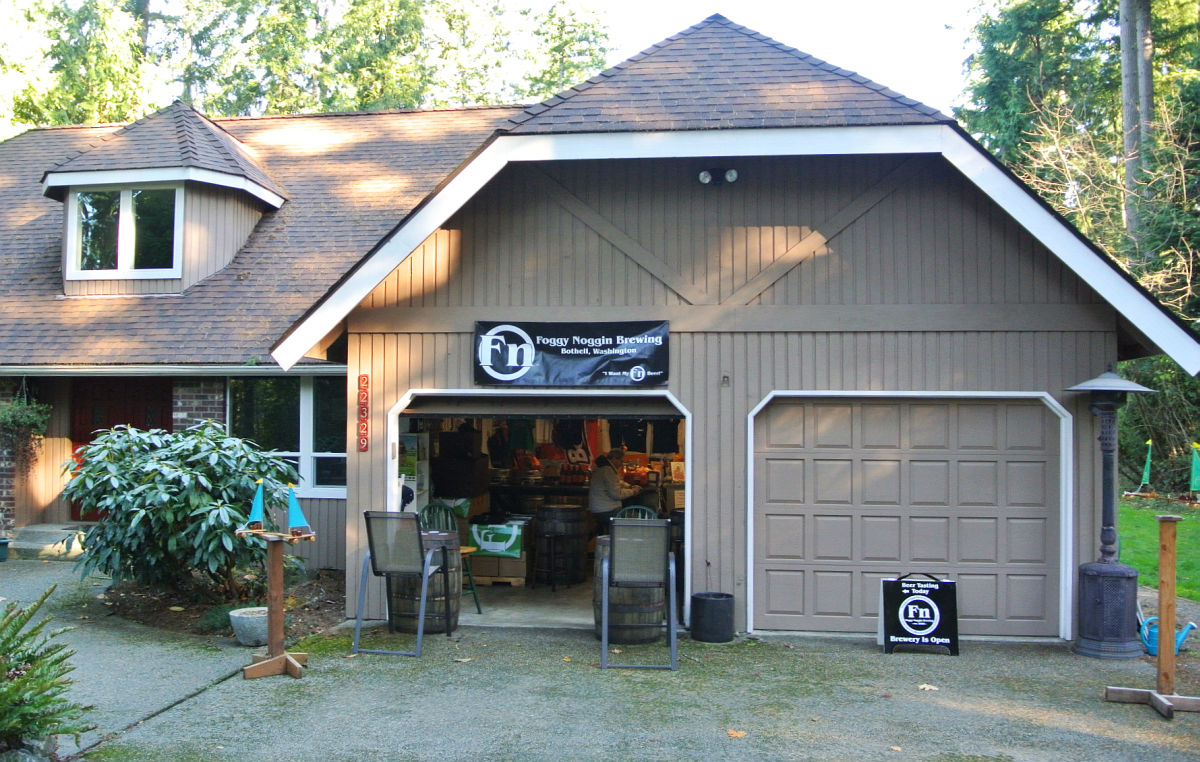
We kick off in Seattle, where on Sunday 24rd July, I'll be at Foggy Noggin. The theme is one of my obsessions.

Let's Brew Wednesday - 1888 Hancock BB

As well as brewing a shit-load of Mild, Hancock also dabbled a little with Pale Ales. Though this is a pretty odd example.

Why? Because, just like XX, it contains a very large amount of No. 3 invert sugar. Which leaves it extremely dark for a Pale Ale: about the colour of modern Dark Mild. It’s all a bit weird. It is more heavily hopped than XX, 5 lbs per quarter (336 lbs) of malt compared to 4.25 lbs. Not a huge amount more, but it is more.

The gravity is also a little higher than XX, but the two beers aren’t massively different. I just wish I could find a price for Hancock, which might make clearer exactly what their beers were marketed as.

Just two types of hops this time, half Worcester and half Kent, both from the 1887 season. Which leave it slightly more bitter than XX at 34 IBU compared to 27 IBU. Both calculated, of course.

1888 Hancock BB
pale malt 5.75 lb 62.16%
No. 3 invert sugar 3.50 lb 37.84%
Fuggles 90 mins 1.00 oz
Fuggles 60 mins 1.00 oz
Fuggles 30 mins 1.00 oz
Goldings dry hops 0.50 oz
OG 1052.5
FG 1013
ABV 5.23
Apparent attenuation 75.24%
IBU 34
SRM 18
Mash at 155º F
Sparge at 190º F
Boil time 90 minutes
pitching temp 59º F
Yeast White Labs WLP099 Super High Gravity


Tuesday, 12 April 2022

Cartagena Beer

You may have guessed from what I wrote earlier about my time in Columbia that it wasn’t a beer trip. Well, not in that sense. I wasn’t going out of my way looking for good beer.


Club Colombia was what I mostly drank. A perfectly OK Lager. If you drink it while it’s cold. As good an incentive as any to keep up the drinking pace. I was perfectly happy to drink it. Always from a bottle. I don’t think I ever saw it on draught.


Over at Beer Advocate, Club Colombia gets varied reviews. A few gushing with praise and a few others gushing with venom. And lots of mediocre scores. The negative comments I find undeserved. It’s a perfectly practical drinking beer. Which was all we needed. One that was easy to get hold of.

While having a breakfast – the one with the very loud man – I spotted a “craft beer” sign on the restaurant opposite.

“Do you fancy a quick one over the road? It is almost ten, after all.”

It didn’t take much arm twisting to get Mikey to agree. He’s as big a pisshead as I am, when on holiday.

We took seat on the balcony, which overlooked a small square. Very scenic to look down on. And we were beyond the clutches of the dreadful buskers.

They sell three 3 Cordilleras beers on draught: Blanca, Rosada and Negra. We both opted for the latter. It’s nice and dark, with a hint of roast. A pleasant enough Dark Lager, I thought. According to both RateBeer and Beer Advocate, it’s a Stout. OK. Didn’t particularly strike me as being a Stout. 


A perfectly drinkable beer, but pricey at $14,000 for 30-35 cl. I knew I had zero chance of getting Mikey to have a second one.

“Fancy moving on to the local?”

“Sure, Mikey.”

Which is what we did for a few hours. Bottles of Club Colombia Negra and shots Medellin 3 year old rum. Very nice that is. The rum, I mean.

More about that next time.


Monday, 11 April 2022

Butcher's Tears Pivo Festival

A couple of times a year, Butcher's Tears is home to a beer festival. There's the Franconian Anstich Festival, featuring gravity-served Lager. And the Pivo Festival, with Czech Lager. I really enjoy both.

Now the Berlin Beer Festival is no more, I get very few opportunities to drink good Czech Lager. Fuck all, really. Which is pretty annoying. I'd much rather get stuck into half litres of good drinking beer than piss around with thimbles of sludge.

It's also a day out for the family. Though Alexei took a bit of persuading. He kept insisting he had studying to do. Where is his sense of priorities? Obviously, drinking Czech beer takes preference. Especially as he wasn't paying for it.

I went for amber or dark beers. Dolores and the kids for the pale ones. The selection of both was pretty good. I made sure that I got some of the Fleku 13º, having missed out last year. It's still as good as ever. Though the Cernokostolecky 13º was its equal. The Vinoharadske amber 13º was another cracker.

No detailed report, as I've a nice lump of pork to roast. I will leave you with some photos. As you'll see, it got pretty damn crowded.


Sunday, 10 April 2022

Cartagena breakfasts (part two)

After a couple of days of breakfast disappointments, we decided to try another new place.

As with many restaurants we visited early doors, it was deserted. Almost. One table was occupied by a group of men. One of whom was so load, that he literally made me jump. And hurt my ears. While being right over the other side of the room. And me having my back towards him. I was so glad when they fucked off and I could eat my breakfast in peace.

But I’m getting ahead of myself. I was delighted to see fried eggs on the menu. But worried they’d come hard fried again. That would be such a downer. I tried to make clear I wanted the yolks runny when I ordered.

“Huevos fritos. Liquido, por favor.”

See how fluent I am in Spanish. Almost like a native. At least the waitress understood, as two beautifully fried eggs arrive a little later. I’m so happy. Even though they’re served with nothing other than toast.


I didn’t have a beer to wash it down for a change, instead having a coffee. Mikey, made of stronger stuff than me, stuck with Club Colombia. What a hero.

No breakfast the next day. I was feeling as sick as a dog. I didn’t leave my room all day. And ate nothing save a couple of bananas.

Luckily, it only lasted a day. I awoke the following day with quite a hunger. Time for another new breakfast location. Quite a posh looking place where the staff outnumbered customers by three to one.

Scrambled eggs with ham, I order. And a coffee. I’m such a wimp. It was already 9:30 and there I am drinking something alcohol-free. Mikey, true to tradition, stuck with Club Colombia.


After ordering, I notice that they did fried eggs. Damn. The scrambled eggs are pretty nice, with loads of really tasty ham. But I do like fried eggs for my breakfast. Maybe we needed to return here.

Which is exactly what we did. There’s something on the menu called an American breakfast. I quite fancy that. But it comes with scrambled eggs. I order it and ask if I can have fried eggs. No problemo. “Liquido, por favor.” It worked last time. Let’s see what happens here.

Finally, three-quarters of the way into my stay, I get something like the breakfast I was after. I’m so happy. My breakfast looked happy, too.


I was so pleased, I went back the next day.


Saturday, 9 April 2022

Let's Brew - 1888 Hancock Porter

Here’s a real oddity – a provincial Porter from the late 19th century. By the late 1880s, in England Porter brewing was mostly limited to London and the surrounding area. Though Stout continued to be universally brewed.

It looks remarkably similar to a London Porter of the period in terms of strength and grist. The latter is the classic London trinity of malts: pale, brown and black. Along with a massive quantity of No. 3 invert sugar, which makes up 40% of the total. That wasn’t something you’d see in London, where the sugar content would be no more than half that.

There were just two types of hops: Bohemian from the 1887 harvest and Kent from 1886. In large enough quantities to leave the beer over 40 (calculated) IBU.

1888 Hancock Porter
pale malt 4.00 lb 42.11%
brown malt 1.25 lb 13.16%
black malt 0.50 lb 5.26%
No. 3 invert sugar 3.75 lb 39.47%
Fuggles 120 mins 2.00 oz
Saaz 30 mins 2.00 oz
OG 1053
FG 1015
ABV 5.03
Apparent attenuation 71.70%
IBU 43
SRM 32
Mash at 156º F
Sparge at 190º F
Boil time 120 minutes
pitching temp 58.5º F
Yeast White Labs WLP099 Super High Gravity


Friday, 8 April 2022

Cartagena breakfasts

Breakfasts. We ate quite a lot of those. One every day in fact. Not always that early.

In Colombia, breakfast means eggs. Mostly scrambled. As I was to find out. As I began my quest for fried eggs. More of that later.

My first morning there, Mikey tried to take me to a place he’d been before. But he took a wrong turning and we ended up at some random place. In a courtyard set well back from the street. No wonder we were the only customers.

While I was waiting for my eggs with ham and cheese, I got my first taste of Club Colombia. Rather bizarrely served with a glass full of ice. Mikey had settled on Club Colombia as it was the strongest of the standard Lagers. It’s OK. Not unpleasant.

Oddly, my eggs came with chips. No vinegar, sadly. Not a bad breakfast.


The next day, we breakfasted where Mikey had wanted to take me the day before. A place with big open windows, high ceilings with fans and a breakfast menu.

Yippee! I squealed (well, not literally) when I spotted huevos fritos - fried eggs – as one of the options. You can imagine my disappointment when it arrived with the yolks fried solid. They came with a small sausage, a piece of cheese and some inedible fritters. Not a breakfast I’ve had before.


OK other than the fritters, if a little strange. Club Colombia was the perfect accompaniment, with its beeriness and alcoholiness. Along with a shot or two of Medellin 3 year old rum.

Huevos Rancheros. I spotted those on the menu of the first place. Aren’t they a sort of fancy fried eggs? I suggested we gave them a try.

The restaurant was as deserted as before. Two beers to wake us up. And two Huevos Rancheros.

What a disappointment. Not the beer. The food. More fucking scrambled eggs. With some sort of meat bits. Not very nice. It’s not served with toast, but plain white bread. Which is almost as hard as toast.
 

Not very nice at all. Worst breakfast by far.

More breakfast fun next time. Will I get proper fried eggs? Yes. I will.