Thursday, 13 June 2013

Bottled beer in the 1930's

Sydney Nevile is a particular hero of mine. In his 70 plus years in the brewing industry he not only witnessed huge changes in British brewing, he was one of the forces driving those changes. He was a member of the Central Control Board during WW I and later a director of Whitbread.

Which is why the article I'm about to quote from is of special interest: it was written by Nevile. When, writing in 1936, he talks about the situation 50 years ago, it's not based on things he'd read or heard. He was already working in the brewing industry then.

This is a point I'd never heard before:

"Half a century ago price and quantity were more dominant considerations than quality. Beer was indeed the national beverage, at any rate with the industrial classes, and many consumers displayed a capacity for consumption which would appear startling to-day. It was customary to have a cask of beer on tap in all but the poorer industrial homes; the household regarded beer as an essential food. Large business houses who employed staffs who lived on the premises, supplied them with beer as a matter of course."
Journal of the Institute of Brewing, Volume 42, Issue 6, November-December 1936, page 520.

He's saying that back in the 19th century, most consumers weren't to fussy about the beer they drank as long as it was cheap and alcoholic and there was lots of it. Draught beer at home sounds weird now. But in the days before there was much bottled beer (and when bottled beer was expensive compared to draught) it made sense. The number of advertisements for beers in cask in 19th century newspapers demonstrate how common it was. The practice did live on in working class households even beyond WW II, but by then casks were only bought in for special occasions, such as Christmas.

Let's move on to what Nevile had to say about bottled beer:

"Bottled Beers
The critical demand for brightness and uniformity of palate, coupled with the fact that beer is stored in many houses in comparatively small quantities, is probably responsible for the great growth of the demand for bottled beers. Fifty years ago bottled beer formed less than 10 per cent., possibly not more than 5 per cent, of the total production, whereas to-day many breweries find their bottled beer represents at least 30 per cent., and in some cases a greater proportion of their total production."
Journal of the Institute of Brewing, Volume 42, Issue 6, November-December 1936, page 521.

Wouldn't it be nice if we had some figures to back up that assertion of 30% or more of a brewery's output being in bottles. As look would have it, I have such figures. And not from any old brewery, from Whitbread. Where, at the time of writing this article, Nevile was a director.


Whitbread Draught and Bottled sales 1901 – 1919
total draught Bottling Burton
Year barrels % barrels % barrels % Total
1901 538,097 73.63% 188,525 25.80% 4,153 0.57% 730,775
1910 446,477 55.72% 353,534 44.12% 1,325 0.17% 801,336
1920 400,605 57.14% 298,873 42.63% 1,660 0.24% 701,138
1921 359,301 55.20% 289,869 44.53% 1,714 0.26% 650,884
1922 299,946 54.05% 253,270 45.64% 1,713 0.31% 554,929
1923 256,578 53.59% 220,855 46.13% 1,372 0.29% 478,805
1924 282,014 52.34% 255,291 47.38% 1,530 0.28% 538,835
1925 266,580 52.30% 241,643 47.41% 1,462 0.29% 509,685
1926 260,247 53.31% 226,640 46.43% 1,290 0.26% 488,177
1927 230,463 51.76% 214,752 48.24% 993 0.22% 446,208
1928 235,754 50.84% 227,549 49.07% 911 0.20% 464,214
1929 244,410 50.83% 236,384 49.17% 869 0.18% 481,663
1930 251,760 51.19% 240,069 48.81% 776 0.16% 492,605
1931 239,744 51.48% 225,941 48.52% 533 0.11% 466,218
1932 207,793 49.91% 208,558 50.09% 272 0.07% 416,623
1933 219,942 51.53% 216,910 50.82% 250 0.06% 437,102
1934 242,688 50.99% 233,287 49.01% 230 0.05% 476,205
1935 257,542 52.08% 236,957 47.92% 216 0.04% 494,715
1936 264,388 51.84% 245,666 48.16% 206 0.04% 510,260
1937 269,513 50.99% 259,015 49.01% 197 0.04% 528,725
1938 270,726 50.25% 268,014 49.75% 174 0.03% 538,914
Source:
Whitbread archive document number LMA/4453/D/02/16
Note:
Year ending July


As you can see, at Whitbread the percentage of bottled beer was much higher than the 30% Nevile quoted. Note how Whitbread produced significantly less beer after WW I. At the interwar nadir of 1932 they produced 43% less beer than in 1900.

There was a big jump in bottled beer output in the early decades of the 20th century. Poor-quality draught beer (mostly caused by the inexperience or incompetence of landlords) and improvements in bottling techniques were two of the underlying causes for the increase.

Nevile describes the old bottling techniques wonderfully:

"The advance in the technique of bottling beer has made striking progress. It might be said 50 years ago that bottling consisted of pouring beer into bottles, allowing it to mature naturally for six or eight weeks and then sending it out to the public."
Journal of the Institute of Brewing, Volume 42, Issue 6, November-December 1936, page 521.

If you remember what I've written about bottled Stock Pale Ale, you'll know that that's a simplification of the process. The beer might well have been matured for months in cask before even arriving in the bottling store.

Why did brewers move away from the old method? Public demand:

"The demand of the public for a beer free from sediment has resulted in a greatly enhanced production of light beers either artificially carbonated or conditioned naturally in bulk and then chilled and filtered before being bottled. Practically all brewers who bottle their beers have adopted one of these methods, and some of the largest brewers who previously relied on naturally matured beer have changed over to the modern process. The development of this class of trade has led to great attention and ingenuity being devoted to bottling plant, a description of which would be out of place in this portion of the review, but the net result has been that the vast majority of the bottled beer distributed either to the homes of the consumers or for consumption in restaurants and licensed houses is brilliant, free from sediment, and of striking uniformity."
Journal of the Institute of Brewing, Volume 42, Issue 6, November-December 1936, page 521.

Naturally conditioning fell rapidly out of favour after WW I, though some brewers stuck with for certain styles. For example, Bass and Worthington continued to bottle condition some of their Pale Ale. It's ironic that Nevile should talk so glowingly about chilled and filtered bottled beers. When Whitbread offered him a job they made him promise not to chill and filter their bottled beer.

This new-style bottled beer might have been free of sediment and incredibly consistent but how did it taste? Nevile makes no mention of this important attribute.

Wednesday, 12 June 2013

Brewing in Denmark in WW I (part three)

Now the end is near, and the curtain is about to fall on Danish brewing during WW I. I hope you've enjoyed the series as much as I have. You can never learn too much about WW I.

I've been promising you something about Danish beer styles and here you are. First the sad tale of a discontinued style:

"The brewing  of the stronger "Lager beer" was stopped in Feb., 1918, and export trade brought to a complete standstill, and despite the renewed freedom of the seas, freights still prevent more than a partial resumption."
Journal of the Institute of Brewing, Volume 27, Issue 1, January 1921, page 27.
What was that lost Lager beer like? According to the table we saw earlier, it had a gravity of 1052º in 1914, while Pilsner was 1044º. Here's a little more description of  the style:

"Bottled beers during recent years have been mainly of two types "Pilsener," a pale beer, and "Lager," a darker and rather stronger beer. The Lager is no longer brewed on account of the restrictions on gravity, and alcohol, and with the exception of old stocks which at the time of writing are approaching exhaustion, the only bottled beer in consumption in Denmark is of a gravity of 1038 or less. At the Carlsberg and Tuborg breweries the 1038 beers are of the Pilsener type, sparkling and palatable light beers, but not equal in point of flavour or character to their pre-war prototypes of 11° Balling or 1044º. At the smaller breweries at other places darker beers of the same maximum gravity are brewed. The old top fermentation beers peculiar to the country are being gradually displaced by these finer bottom fermentation beers, and of late the national beverage Schnapps is also being ousted by bottled Pilsener on account of its greatly enhanced price."
Journal of the Institute of Brewing, Volume 27, Issue 1, January 1921, page 27.
How dark was "rather darker"? Probably not properly dark, as there was also Munich beer at 1056º. That would have been properly dark. As in most countries where Lager took off early, the first bottom-fermenting brews were in the dark Munich style. When I first visited Copenhagen in the 1980's, both Tuborg and Carlsberg had beers sort of in the Munich style. I suspect this Lager beer was still pale, but a rather more golden shade than the Pilsner.

The author clearly views the 1038º Plisner as inferior to the stronger version. Though the drop in gravity is tiny compared to that in Britain. Mild had its gravity halved between 1914 and 1919. And never got back to its pre-war level. Whitbread's for example, that had been 1055º in 1914, was only 1042º in the 1920's. Whereas in Denmark Pilsner went back to its pre-war strength:


Danish Pilsener in the 1930's
Year Brewer Beer package Acidity OG FG colour ABV App. Atten-uation
1936 Carlsberg Pilsner bottled 0.06 1044.8 1011.1 4.38 75.22%
1939 Carlsberg Pilsenser bottled 0.04 1044.5 1009.9 9 4.50 77.75%
1934 Tuborg Pilsenser bottled 0.06 1044.7 1013.4 4.05 70.02%
1939 Tuborg Pilsenser bottled 0.04 1044.6 1011.5 8 4.30 74.22%
Source:
Whitbread Gravity book held at the London Metropolitan Archives, document number LMA/4453/D/02/001

Interesting that the smaller breweries made a dark beer at the maximum gravity of 1038º. Was that a sort of Munich Lager? According to the table we saw earlier, proper Munich beer disappeared in 1917.

Unsurprisingly, top-fermenting beers were under pressure from the fancy new, industrially-brewed Lagers. I guess he means low-gravity things like Hvidtøl and Skibsøl. The tradition never totally died out and Refsvindinge still brews a top-fermenting Hvidtøl.It's a shame the author didn't write a little more about these.

I've just noticed something that doesn't tally. The author says that a maximum gravity of 1038º was introduced in 1918, but the table of beer gravities shows Stout at 1055º in 1918 and 1056º in 1919. Bit of a mystery, that one.

The proportion of bottled to draught beer was a big difference between the British and Danish brewing industries.
"Despite all these difficulties, increased prices, and lower gravities, the trade has recently gone ahead until the breweries are entirely unable to cope with the demands. Table II shows the strides made at the Carlsberg Brewery alone, and the increases are paralleled by those at the Tuborg Brewery.

Table II.

Beer Sales (Carlsberg Brewery) in Barrels.

Bottled. Cask. Total.
1914-15 250,300 19,200 269,500
1915-16 270,100 19,200 289,800
1916-17 281,300 40,000*  321,300
1917-18 182,000 13,900 195,900
1918-19 254,800 17,600 272,400
1919-20 406,400 21,400 427,800
* Including 25,000 hectl. Pilsener at 18 Balling exported to Germany.      

It will be noticed that whereas before the war the proportion of bottled beer to cask was as 14 to 1, it is now 20 to 1, a most remarkable development."
Journal of the Institute of Brewing, Volume 27, Issue 1, January 1921, pages 27 - 28.
25,000 hl of Pilsner at 18 Balling sent to Germany? A beer of  that strength isn't a Pilsner, it's a Doppelbock with an ABV north of 7%. It seems really odd to have exported a beer that strong to Germany in the middle of the war. By that time the stuff brewed in Germany was pretty watery. In 1916, gravities were typically in the range 8-8.5º Balling**.

During the war bottled beer, already wildly popular, strengthened its hold on the market. By the end of the war it accounted for 95% of sales. I'd be failing my duty if I didn't come up with similar figures for a British brewery. And guess what? I have just the numbers:


Whitbread Draught and Bottled sales 1901 – 1919
total draught Bottling Burton
Year barrels % barrels % barrels % Total
1914 418,402 49.38% 427,455 50.45% 1,415 0.17% 847,272
1915 374,682 51.79% 347,489 48.03% 1,253 0.17% 723,424
1916 359,215 48.44% 381,397 51.43% 980 0.13% 741,592
1917 281,549 50.15% 278,976 49.69% 924 0.16% 561,449
1918 246,665 63.10% 143,902 36.81% 367 0.09% 390,934
1919 369,845 69.08% 165,000 30.82% 527 0.10% 535,372
1920 400,605 57.14% 298,873 42.63% 1,660 0.24% 701,138
Source:
Whitbread archive document number LMA/4453/D/02/16
Note:
Year ending July

I'm not sure what the Burton column refers to but, as it concerns tiny amounts of beer, I don't think we need to worry about that.

I'm truly staggered that just over half of Whitbread's sales were in bottled format in 1914. I'd have guessed a much lower percentage. But the fall in the share of bottled during the war is exactly what I'd expect. Bottled beer takes more resources and energy to produce compared to draught beer. Which makes the increase at Carlsberg even more striking.

I did intend to finish my look at Danish wartime brewing here. But there's still some stuff I haven't covered. Looks like there will be one more instalment.


** Bayerisches Brauer-Journal 1919, page 249.

Tuesday, 11 June 2013

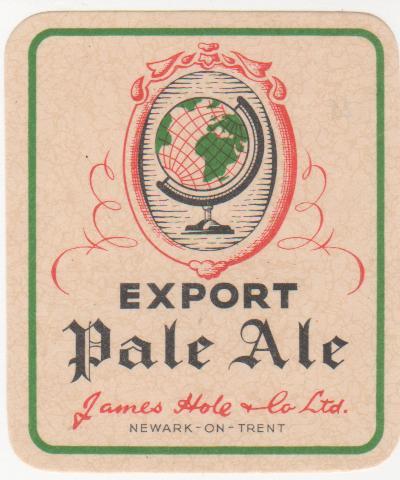
Export Pale Ale Brewing in 1903 (part four)

We've just about finished our look at brewing export Pale Ale back in the Edwardian time. We're now at the final phase of the process, bottling.

There's one practice when brewing Pale Ale which is so counter-intuitive, that it's taken several sources confirming it to totally convince me it really happened. Leaving barrels of Pale Ale in the brewery yard, exposed to the elements.

"In getting the ale ready for bottling, some exposure in cask to cold weather has no doubt a decidedly improving effect, though one must take care that it has plenty of knocking about and a good cask sickness before it is taken to the store to be set for bottling. Some brewers add a little preservative again at this stage, but I do not care to do so, as I think it has a retarding effect on the conditioning in the bottle. It is usual to get two months or so age in the open before sending to the bottling store. I like to bottle in the autumn what has been brewed in the winter, that is to say, the ale should be about three months in the open, and from three to four on the gantry in the bottling store."
Journal of the Federated Institutes of Brewing, Volume 9, Issue 2, 1903, page 151

Three months in the open and then another three of four months waiting in the bottling store. You have to add another two or three months transit time to it destination, meaning a bottled export Pale Ale would be 8 to 10 months old on arrival.

Here's the term "cask sickness" again. I think he means a secondary fermentation in the cask. "Plenty of knocking about" is also pretty counter-intuitive. You'd expect them to want to leave the casks as undisturbed as possible, Evidently not.

In the discussion after the paper had been presented, there was an explanation of why the time in the brewery yard improved the beer:

"He [Mr. Hartley] should like another point a little further explained. He understood Mr. Collier to say that he liked, in preparing beer for export bottling, to allow the casks to lie in the weather—he presumed he meant in the yard—where they were exposed to the cold of the winter. If he were right in so understanding, was the object to enable the beer to deposit those matters which were insoluble at a low temperature, and thus give less sediment in bottle? He would ask Mr. Collier if he had definitely ascertained that this was so. They all know that matters were deposited by cold, but he was not quite certain whether in a warm temperature they did not again dissolve, or a portion of them at any rate."
Journal of the Federated Institutes of Brewing, Volume 9, Issue 2, 1903, page 154.

That's a very good question. One I like to think I would have asked myself, had I been there. Was the point of leaving the beer in the yard to allow the cold to precipitate out some gunk?

"In reply to Mr. Hartley's query as to the redissolving of resins, &c, his experience was that the storage of the ale in cask at a very low temperature did certainly deposit matter which had become insoluble, and allowed the brewer to get a cleaner ale in bottle, beside which the ale in cask did not age to any extent during the low temperature."
Journal of the Federated Institutes of Brewing, Volume 9, Issue 2, 1903, pages 157 - 158.

That's a yes, then. That's also an interesting point about it being so cold that the beer didn't age.

Note how the process was seasonal. The beer was brewed in the winter, put outside while the weather was still warm, moved inside during the summer then bottled in the autumn. Remember that Truman P2 export we saw earlier in this series? That was brewed on 27th January. It could be a coincidence, but that fits right in with the schedule proposed by the author.

Now onto the bottling itself:

"When bottling, I always take great care that the water used for washing the bottles is thoroughly sweet, and I prefer to use it as hot as possible without breaking the bottles, and to put a little bisulphate in the water now and then. In selecting the bottle and cork great care must be taken. The former one has to get the right shape and colour. There are a variety of different shapes and colours on the market. An important consideration is the size of the neck. I like a small neck, as not only is there less cork exposed, but you can use a smaller cork, which is cheaper. At the same time it is the most profitable to use the best cork, if care is taken that it is big enough. It should be a size larger than the neck of the bottle before it is soaked, then you can depend upon its being large enough when it has got dry in the neck. It is necessary to give the bottles a chance to thoroughly dry before wiring and capsuling, otherwise there is a danger of the wire rusting through. Some bottlers use a galvanized wire, and some a copper wire, but I have found if care is taken on this point an ordinary wire does well enough.

Some bottlers again run the ale to flattening tanks before bottling, but I do not care for this, as I think exposure at this point is to be avoided, though no doubt if you are bottling the ale before its time it is to be considered."
Journal of the Federated Institutes of Brewing, Volume 9, Issue 2, 1903, pages 151 - 152.

You can see that they were still sealing bottles with corks. Crown corks had been invented in the USA in 1892, but it was a while before they spread to Britain. Around 1900 British brewers used either corks or internal screw stoppers, while on the Continent Grolsch-style flip-top stoppers were popular.

I can understand why you might want to avoid putting beer into a flattening tank before bottling: it would expose the beer to oxygen and risk oxidation. Presumably when a beer wasn't quite ready it would remove excess carbonation that might turn the bottles into bombs.

They were still bottling essentially by hand, as this makes clear:

"The bottling squad, consisting of a bottler, corker, and two other boys, should do a butt an hour with an ordinary machine into quarts. I, of course, do not refer to any of the marvels one sees at the Brewers' Exhibition.

The packers should straw and pack 22 to 24 four-dozen cases a day, not including nailing down."
Journal of the Federated Institutes of Brewing, Volume 9, Issue 2, 1903, page 152.

Interesting that there is no mention of women working in the bottling store. Bottling was the first area of brewing were female labour was used on any great scale. But maybe that only started later, during WW I. A butt is 108 gallons, so that's 432 quart bottles in an hour. Or one bottle every 8 seconds. Not quite the same speed as an automated bottling line.

22 to 24 4-dozen cases is 1,056 to 1,152 bottles a day, which doesn't seem a great deal. Assuming a 10-hour day, the bottling squad would fill 4,320 bottles in a day. Meaning you'd need four packers to deal with a day's bottles.

Monday, 10 June 2013

Brewing in Denmark in WW I (part two)

Welcome back my friends to the fun that never ends, come inside, come inside. We're still stuck inside WW I Denmark, with mines and submarines lurking threateningly just off shore.

Just as in Britain, the tax on beer shot up in Denmark during the war:

"In addition to these restrictions the taxes on beer have been greatly increased. Up till Nov. 10th, 1917, beers containing less than 2.25 per cent, by weight of absolute alcohol were duty free. Those with over 2.25 per cent, being taxed at Kr. 9.50 per hectolitre (equivalent to about 15s. 6d. per barrel). But now all beers are taxed, being divided into "Skatteklasse I" and "Skatteklasse II" (Taxclasses I and II), the former containing more than 2.25 percent, by weight of absolute alcohol bearing a tax of Kr. 18 per hectolitre (about 29s. 6d. per barrel) and the latter so-called temperance beers with less than 2.25 per cent, alcohol at Kr. 5.70 per hectolitre (9s. 4d. per barrel)."
Journal of the Institute of Brewing, Volume 27, Issue 1, January 1921, page 26.

Seems like a good time for some contextualisation. Let's take a look at the tax in the UK during WW I:


UK tax and average OG 1914 - 1921
Tax/Bulk Barrel Tax/Std. Barrel Average OG
1914 7s 4d 7s 9d 1052.8
1915 21s 11d 23s 1052.35
1916 21s  23s 1051.88
1917 20s 11d 24s 1048.54
1918 20s 25s 1039.81
1919 21s 10d 50s 1030.55
1920 40s 8d 70s 1039.41
1921 71s 6d 100s 1042.61
Source:
1928 Brewers' Almanack

That's creepy. The pre-war Danish tax of 15s. 6d. per barrel was exactly double the UK rate of 7s. 9d. You may have noticed that I've included both the tax per standard barrel (36 gallons with an OG of 1055º) and per bulk barrel of a beer with an average OG. You can see that the two were almost the same in 1914, when average gravity was close to 1055º but diverged as the war progressed.

Repeated tax increases in Britain left the rate considerably higher than in Denmark. Surprisingly, the largest increases came after war's end. I can understand why there was less pressing need to boost tax revenue in Denmark, which didn't need to buy all those expensive guns and shells, but it seems perverse that the tax rocketed in Britain once war expenses were done with.

Now we come to the price of beer. A direct comparison is a bit tricky, as the types, strengths and packaging of beer were so different in the two countries. But I'm going to make an attempt anyway. First the Danish numbers:
"These and greatly increased expenses in every other direction have raised the prices of "Pilsener" beer from 11 ore (about 1d.) to 26 ore (2.5d.) per bottle of 330 c.cm. and in cask from Kr. 26 to Kr. 72 per hectolitre (about 42s. 6d. to 117s. 6d. per barrel). The beers with less than 2.25 per cent alcohol show an even greater increase. The new Pilsener for instance increasing from Kr. 7.5 to 24.25 ore per bottle (about 0.75d. to 2.5d.) and from Kr. 16 to Kr. 60 per hectolitre in cask (or 26s. 3d. to 98s. 6d. per barrel)."
Journal of the Institute of Brewing, Volume 27, Issue 1, January 1921, pages 26 - 27.
1d for 33cl of Pilsner is the equivalent of about 1.7d per pint. It's stupid to compare it with the price of Pilsner in Britain, because that was an expensive niche product. It makes most sense to compare it with Britain's favourite, Mild Ale, which cost 2d per pint in 1914. But we also need to take into account the different gravities: Danish Pilsner was 1044º, Mild Ale about 1050º. Taking that into account, the Danish Pilsner was about 2d per pint. remarkably close to the British price.

Beer was price-controlled in Britain in the later war years. Which is handy, since, as it was based on gravity, I know exactly what beers of a specific strength cost in Britain. We know that in 1920 Danish Pilsner had an OG of 1038º, which puts it firmly in the 1033º to 1039º band. Which cost 6d. for draught beer, 8d. for bottled*. How much did the Danish Pilsner cost? The equivalent of about 4.3d. per pint. A good bit cheaper than the British price.

I've also done the maths for draught Pilsner, which works out to 1.77d. per pint in 1914. After taking into account the difference in gravity, it comes out to exactly 2d. per pint. Or the same as Mild Ale. And the same price as bottled beer. It's no wonder bottled beer was popular in Denmark if draught beer was no cheaper.

The 1920 price of draught Danish Pilsner is the equivalent of 4.9d. per pint. More expensive than the bottled version, but still a good bit cheaper than the 6d. you'd have paid for a pint of British beer of a similar gravity.

We're almost, but not quite done. There's still some stuff about Danish beer styles and the Dane's love of bottled beer to come.


* "The Brewers' Almanack 1928" pages 100 - 101.


Sunday, 9 June 2013

Hitler's Taste For Wines

 No, I haven't switched my theme to wine. I've just copied the title of the original newspaper article, which is about Hitler's drinking habits.

I always thought Hitler was a teetotaller. And a vegetarian. I'd always trot that one out when a vegetarian tried to tell me how much nicer they were than meat eaters. "What about Hitler, then?" was my snappy riposte.

Having read up a bit more on Hitler's dietary habits it wasn't that clear cut. He was certainly fanatically anti-smoking, that's for sure. But while apparently not having any great enthusiasm for it, he did occasionally imbibe. And his vegetarianism seems to have been a response to his bad guts rather than having an ideological basis.

"Hitler's Taste For Wines
The Japs have presented Hitler with a rare porcelain teapot, expressing the solicitous hope that " he will become addicted to the gentle habit of tea drinking in order to soothe his nerves."

As a matter of fact, Hitler always preferred Indian tea, and British brands at that, to China or anything grown in Japan. Nor is he a complete teetotaller. At the old comrade beer-cellar jamborees he used to drink one stein of lager for appearance's sake.

Now he has developed quite taste for the fine French wines, which for four years he has been able to get without paying for. Before that the only "produce of France" he favoured was, appropriately, Vichy water. "
Evening Telegraph - Wednesday 26 July 1944, page 5.

Did Hitler really drink English tea? I'm now imagining the Führerbunker stocked up with boxes of PG Tips or Twinings.

A bit of a slap in the face for Germans, Hitler preferring fancy French wine over good, honest German beer.

Saturday, 8 June 2013

UK hop production, price and imports 1800 - 1854

The response to my series of posts of hop and barley statistics has been so overwhelming that I've decided to continue it a little longer. Bascially until I run out of numbers to fascinate you with.

The first thing that should strike you is how incredibly variable the hop harvest was. The difference between consecutive years could be enormous. The years 1800 to 1806 demonstrate these annual variations well. Hops are delicate plants, susceptible to the weather, pests and disease. Slight changes in conditions could have a huge impact on the crop.

In a recent post, Martyn Cortnell mentioned the incredibly poor summer of 1816 (caused by a vlocanic explosion in Asia) that led to a disatrous hop crop. But as you can see below, it was by no means the worst harvest, even in the same decade. 1802, 1805, 1812, 1823, 1825, 1829, 1840 and 1854 were all worse.

Unsurprisingly, the price went up and down with the harvest. In years of a good harvest, the price was between £4 and £7 per cwt. In poor years it could be almost £20 a cwt. Though when a poor harvest followed a bumper one, as in 1808 and 1809, old stock from the previous year kept the price low.

In the 1850's, imports began to pick up the slack when the British harvest was poor. Doubtless the price in 1854 would have been higher, save for the huge amount of hops that were imported.

It's easy to understand why the more far-sighted brewers bought in extra stocks during the good years. Trying to plan ahead must have been a nightmare when the price could vary by 200% or 300% from one year to the next.

When the import duty on hops was removed in 1862 in must have been a great relief to brewers. They were then free to buy their hops from anywhere in the world, which is exactly what they did and imports of hops remained hight until WW I.


UK hop production, price and imports 1800 - 1854
year UK production lbs London price per cwt. £ s. d. imports lbs year UK production lbs London price cwt. £ s. d. imports lbs
1800 17,502,867 17 17 0 1828 41,286,692 5 12 0
1801 57,894,646 5 18 0 1829 9,568,981 8 8 0 4,591
1802 3,711,326 10 12 0 1830 21,131,442 12 8 0
1803 47,809,230 6 6 0 1831 41,971,222 5 18 0
1804 42,628,269 5 5 0 1832 33,364,403 8 13 0
1805 7,897,208 8 0 0 1833 37,657,340 7 4 0
1806 36,744,810 7 0 0 1834 45,531,402 6 3 0
1807 24,017,342 5 10 0 1835 56,449,732 4 15 0
1808 60,261,667 5 18 0 1836 48,079,932 5 0 0
1809 15,348,842 4 4 0 1837 42,858,781 5 1 6
1810 17,643,490 6 0 0 1838 41,173,471 5 17 0
1811 37,700,783 6 6 0 1839 49,333,588 4 10 0 2,840
1812 7,335,023 13 8 0 1840 8,182,162 13 11 0 11,984
1813 31,555,863 8 8 0 1841 35,078,187 6 6 0 3,808
1814 33,670,202 8 8 0 1842 40,746,360 4 8 10 0
1815 29,731,043 7 10 0 1843 32,023,661 6 0 9 3,136
1816 11,112,589 13 13 0 1844 33,677,623 7 3 0 29,904
1817 15,965,326 27 0 0 1845 37,922,262 6 10 0 81,312
1818 47,871,867 7 0 0 1846 50,704,025 5 0 0 367,696
1819 58,098,282 4 8 0 1847 45,134,365 3 10 0 164,752
1820 33,199,386 4 4 0 1848 44,343,985 2 15 0 43,120
1821 37,106,369 4 15 0 1849 16,650,915 7 10 0 43,118
1822 48,894,050 4 4 0 1850 48,537,669 3 10 0 725,648
1823 6,253,909 13 0 0 1851 27,042,996 6 10 0 51,744
1824 35,719,681 7 0 0 1852 51,102,494 4 5 0 34,608
1825 5,836,092 19 0 0 1853 31,751,693 11 11 0 4,742,528
1826 64,759,450 5 0 0 1854 9,877,126 20 0 0 13,330,480
1827 33,803,643 5 0 0
Sources:
"A Practical Treatise on Malting and Brewing" by William Ford, 1862, pages 288 - 290.
"Hops; their Cultivation, Commerce, and Uses in Various Countries" by P.L., Simmonds, 1877, page 129.
Note:
Production 1800-1845 caculated from hop duty paid.

Friday, 7 June 2013

Bitter month

As CAMRA hasn't come up with a Bitter Month, I've decided unilaterally that it's June. As aliteration is out of the question - whay are there no months beginning with the letter "B"? - June seems as good a month as ever.

Coincidentally, I've made a few little updates to my book on all things Pale Ale, my pithily entitled "Bitter!". If you want to know all about PA, IPA, AK and other random assemblages of letters, look no further because this is the book for you. More than 600 pages of Bitter fun, including recipes to homebrew Pale Ales from 1839 to 1965.


It sounds so tempting, I may even get myself a copy.

I've been wondering of late about that 1839 Reid IPA. Is there an older brewing record of a beer that's incontravertably an IPA?  If you know of one, get in touch.

Meanwhile . . .

Buy "Bitter!" now! Because I say June is Bitter Month.