Thursday, 20 December 2007

Grodziskie/Grätzer


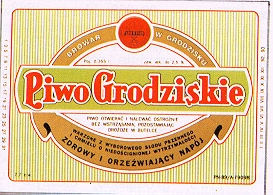
Good news from Poland: Grodziskie might be making a comeback. The last brewery producing it closed in the mid-1990's. I've had a report that it's been purchased by a local businessman who intends resuming production. The original yeast strain - preserved by the last head brewer - is available for use.

A little background
Grodziskie was the only truly ingidenous Polish beer style to survive in the second half of the 20th century. It was a top-fermented, smoked wheat beer. It was the last survivor of a style called Grätzer (derived from Grätz, the German name for Grodzisk) and was once popular across northern Germany.

This is the earliest mention I've found of the style:
"Pohlnische Biere. Pohlen liebet besonders die weißen Biere, die es auch
verschieden, und sehr vortrefflich, hat; z. E. das Gräzer und Lobsenzer,
vornehmlich aber das Waretsker Bier, welches leztere, wenn es alt geworden, an
Klarheit und Farbe dem Weine gleichet.""Polish beers. Poland especially likes
white beers, of which it has several excellent ones, for example Gräzer and
Lobsenzer, but mostly Waretsker Beer, of which the latter, when aged, resembles
wine in colour and clarity
.""Oeconomischen Encyclopädie“ of 1773

Grodziskie (or Grätzer as it was called in German) seems to have been quite common pre WW 1, as the name crops up quite a bit. I recently found this:

"Nach den vorliegenden Angaben sind beim Verkauf in Fässern von den
Brauereien abgesetzt worden: gewöhnliche obergärige Biere bis zu 12 M., bessere
Sorten in der Regel zu 12 - 18 M. (Grätzer Bier 12 M.), untergärige Schankbiere
zu 14-18 M., Lagerbier meist 17-25 M. für 1 hl
."
Zeitschrift für das gesammte Brauwesen 1894, p.31


It’s talking about the wholesale price of draught beer in the Brausteuergebiet (all of German territory at the time, except Bavaria, Baden, Württemburg, Alsace Lorraine and Luxemburg):

  • ordinary top-fermening beer up to 12 M. per hl
  • better types of top-fermenting beer 12-18 M. per hl (Grätzer Bier 12 M.)
  • bottom-fermenting Schankbier (I guess 10° Plato or less) 14-18 M. per hl
  • Lagerbier mostly 17-25 M.
What’s interesting is:

  • Grätzer is the only specific style named;
  • even the weakest bottom-fermenting beer is the same price as the best top-fermenting beer.
I think it’s safe to assume that at this time Grätzer was pretty well-known.

In 1894 the district Posen (now the Polish Poznañ) had 158 breweries of which 101 were top-fermenting, producing between them 177,038 hl in the brewing year 1892/93. The 57 bottom-fermenting breweries produced much more - 307,800 hl. Which made the proportions 37% top-fermenting, 63% bottom-fermenting. The only region producing a higher percentage of top-fermenting beer was the Kingdom of Saxony at 41%. (Over the whole Brausteuergebiet the percentage of top-fermenting beer was 23%.) (Source: Zeitschrift für das gesammte Brauwesen 1894, p.23)

In "Ksiêga Piw i Browarow Polskich" ("Book of Polish Beer and Breweries"), Tadeusz Kaczmarek, 1994 dedicates pages 266 to 274 to Grodziskie. Here’s a summary of the most interesting bits.
  • It’s thought that it was first brewed sometime in the 14th century.
  • It was related to German Weissbier, but had its own specific taste from the use of smoked wheat malt.
  • It was brewed using an infusion mash.
  • It was bottle-conditioned.
In the 1990’s 3 variations were produced:
  • Grodziskie 7.7° Plato, 2.5% ABV
  • Grodzisz 12° Plato, 3.5% ABV
  • Bernadyñskie 14° Plato, 3-5% ABV
Wednesday, 19 December 2007

Guinness Porter II

You may have noticed that my obsession isn't limited to Barclay Perkins. It extends to all large Porter breweries. Hence all the Guinness stuff.


Output of Guinness Porter peaked in 1913 at 930,449 barrels. A decade later, fewer than 400,000 barrels were brewed. (In England, Porter production had peaked 50 years or more earlier.) Sales gradually ebbed away and were under 100,000 barrels a year by 1960. Most was sold in Northern Ireland (in 1964 59,000 barrels of the 72,000 brewed) . It was finally discontinued in the early 1970's.

I haven't forgotten the figures for UK beer imports. How could I? Here's a table comparing Guinness consumption with total beer imports in the years between Irish independence and the opening of the Park Royal brewery in London in 1937.


An incredible percentage of the beer imported into Britain was Guinness. The London brewery was built in response to a tarif war between Britain and the Irish Republic in the early 1930's.

In case you overlook it, I'll repeat a comment made by Zythophile in response to my last Guinness Porter post:

"Lynch and Vaizey (Guinness's Brewery in the Irish Economy: 1759-1876) offer somew reasons for all these, as I recall - one effect of the Potato Famine was that rural Ireland did, as it recovered from the disaster, at least change from a subsistence economy to a money economy, which meant people now had the cash to buy beer - previously they'd have had to swap a pig for (a) an unfeasibly large quantity of beer that would go off before it eran out or (b) a reasonable quantity of whiskey. So beer sales went up in rural areas, and Guinness seems to have been the Dublin brewer that took advantage of this. IIRC, funnily, the rural market was largely stout rather than porter, and Dublin was the big porter market - even in the 1950s, aparently, barmen in Dublin would recognise you were a culchee if you ordered stout ...

Guinness didn't export much porter to England because they were worried it wiould be passed off as stout, or mixed with stout - Liverpool was about the only place porter went to, apparently ..."
Zythophile has also recently posted on his own blog about the Guinness family.

I find it fascinating how out of phase Ireland was with, say, London. The rapid expansion of Guinness (1850-1870) coincided with the beginning of the decline in the London Porter trade. Did Guinness deliberately choose to concentrate on a niche other brewers were turning their backs on?

Tuesday, 18 December 2007

Guinness Porter

Promises should be kept. I told you I'd post about Guinness Porter. Here it is.

I'm just covering 1840 to 1900. I haven't had the time/inclination to transcribe any more. Yet. There's another consideration: if I put too much in each post, I'll be out of material by January. Stretching like an elastic band. Expect that.


You can see the explosive growth after 1850. What surprised me:

  1. sales increased in Ireland more quickly than in Britain
  2. in Ireland sales of Porter started behind, but soon outstripped, those of Extra Stout
  3. the tiny quantities of Porter exported to Britain.
  4. the difference between what Guinness sold in Ireland (mostly Porter) and Britain (almost exclusively Stout)

That interests me, if no-one else. It's worth bearing in mind, that the London Porter breweries were still brewing far more Porter than Stout at this time. Guinness deliberately aimed at the top end of the market.

I'll post again when I've extracted some more numbers from David Hughes' book. 1922 to 1930 will attract particular attention. After Irish independence, beer imports to the United Kingdom jumped from 7,017 barrels to 1,392,576. Any guesses how much of that was Guinness?

Monday, 17 December 2007

Brettanomyces: the musical

Money talks. Beer sings.

Tetley's Mild is punk, in my mind. I spent the Summer of Hate in Leeds. The city was blessed with a pantheon of small venues and countless pubs selling the exquisite Tetley's Mild. How many people combined the two, I'm not sure. I did. And Matt. Pete sometimes. I won't mention Tim because he's become a Lagerboy.

Music and beer. As inseperable as tits and arse, Bialystok and Blum, George and Michael. If only my beer could sing.

If Mild is punk, what's brettanomyces beer? Stockhausen?

A Stockhausen musical. Now that would be fun.

Sunday, 16 December 2007

Essen

I would tell you about The Essen Kerstbierfestival. But I left my notebook on the train. Oh dear.

St. Bernardus Christmas Ale. That's all I can remember. Very nice. Very, very nice. I had six or seven of them.

Met lots of people. Hi, everyone. Nice to have seen you again.

Many thanks to Reinhard, who gave me a bottle of Narke Kaggen Stormakts Porter. I'm looking forward to that.

No, I haven't forgotten. Brettanomyces: the musical will follow. Tomorrow. Probably. It depends if I finish typing in the details of Guinness ouptut 1800-1960 into a spreadsheet. Loads and loads of numbers. Perfect for a blog post. The varying fortunes of Guinness Porter. That's a likely theme. Can't wait, can you?

Friday, 14 December 2007

Dutch v. Belgian Oud Bruin (part II)


Do you remember that I said I couldn't find any evidence for Dutch Oud Bruin from before WW II? It was a long time ago, I know. Turns out my consolation visit to the Amsterdam archive unearthed some useful facts.

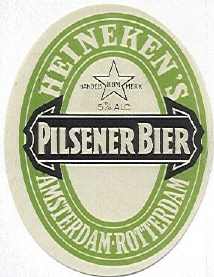
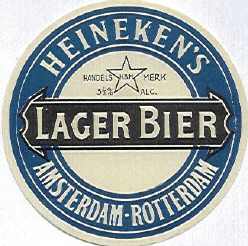
I've been going through the records of Heineken Rotterdam. So far I've done 1911 to 1950. The first time Oud Bruin appears is in 1949.


Note how the Licht (Light) and Donker (Dark) Lager brewed before the war had disappeared by 1949. At one time these weak beers had made up a considerable percentage of Heineken's output. Postwar the only lower-strength beers brewed were Oud Bruin and an 8% Balling Pils Export. At first I wondered what the hell this weak Pils was. Why were they exporting such a weak beer. Then it dawned on me: it must have been brewed for the British market.

It's interesting how little the hopping rate for Pils changed over the decades. The ABV, too. The ABV - always 4.7% - had be a bit flummoxed. Dutch labels must have been the first to include the ABV - before WW II. And the Heneiken Pils labels always state 5%. (From the records it's apparent that the tax system was already based on the ABV of the final beer in 1928.) Then a thought came to me: what deviation was allowed from the stated ABV? My guess is that they were deliberately brewing to the lowest strength that would allow them to legally put 5% on the label.


Thursday, 13 December 2007

Archeological Evidence of Long Term Beer Aging Pre-1850

Another milestone reached today: the last post from my Earl list. I'd avoided this topic until now because it required some research. I'm a lazy git. And my research time is very limited. Yesterday I did none at all. Cask-conditioned Fuller's London Porter in Wildeman saw to that.

I'll take long term as meaning more than 12 months. That is what you meant, isn't it, Alan?

The following is a quote from "A Treatise on Adulterations of Food" by Fredrick Accum, published in 1820:

"OLD, OR ENTIRE; AND NEW, OR MILD BEER.
IT is necessary to state, that every publican has two sorts of beer sent to him from the brewer; the one is called mild, which is beer sent out fresh as it is brewed; the other is called old; that is, such as is brewed on purpose for keeping, and which has been kept in store a twelve-month or eighteen months."

He's talking specifically about Porter, in case you were wondering. As Accum went round the large London Porter breweries (and took samples of beer for analysis) I think he knew what he was talking about.


This next quote is from "The London and Country Brewer" of 1736:


"A particular way of Brewing strong October Beer.
There was a Man in this Country that brewed for a Gentleman constantly after a Very precise Method, and that was, as soon as he had put over all his first Copper of
water and mash'd it some time, he would directly let the Cock run a small stream
and presently put some fresh Malt on the former, and mash on the while the Cock
was spending, which he would put again over the Malt, as often as his Pail or Hand-bowl was full, and this for an Hour or two together; then he would let it run off intirely, and put it over at once, to run off again as small as a Straw. This was for his _October_ Beer: Then he would put scalding water over the Goods at once, but not mash, and Cap them with more fresh Malt that stood an Hour undisturbed before he would draw it off for Ale; the rest was hot water put over the Goods and mash'd at twice for small Beer: And it was observed that his _October_ Beer was the most famous in the Country, but his Grains good for little, for that he had by this method wash'd out all or most of their goodness; this Man was a long while in Brewing, and once his Beer did not work in the Barrel for a Month in a very hard Frost, yet when the weather broke it recovered and fermented well, and afterwards proved very good Drink, but he seldom work'd, his Beer less than a Week in the Vat, and was never tapp'd under three Years."

It's discussing the private brewing October Beer, a strong beer meant to be aged that many reckon to be the forerunner of Barley Wine. Three years before tapping - sounds like long-term ageing to me.

At Guinness, the Export Foreign Extra Stout (FES) had a long ageing:

"FES at this time was only brewed in the 3 winter months January to March when DS and SS sales were lowest. It was due for sale in the 12 months of the following year (January-December), on average 15 months old. . . . . Due to the prolonged storage of up to 2 years in vat before sale, FES brewing had to be limited due to the available vathouse capacity and the volume brewed well ahead of sales."
"A Bottle of Guinness, Please" by David Hughes, pages 71-72.

Wednesday, 12 December 2007

Floaters: the good kind

Natural-conditioning. I've always believed that's the best way to go. The general public doesn't seem to have been quite so convinced.

The majority of British bottled beers very quickly moved away from bottle-conditioning in the first decades of the 2oth century. Look at old adverts and you can see how it was sold to the public: no bits in your beer and you can drink every last drop in the bottle. It's surprising that anyone kept bottling with yeast.

Nowadays brewers are often perceived as the bad guys, trying to dumb down their products. But that naturally-conditioned bottled beers survived at all in Britain seems to have been due to the enthusiasm of brewers for this method. Guinness brewers were unenthusiastic about the flavour of pasteurised Stout. Worthington and Bass stuck with bottle-conditioning for their flagship Pale Ales (White Shield and Red Triangle) but introduced filtered versions (Green Shield and Blue Triangle) due to public demand.

But I still don't like things floating in my beer. I always leave the yeast in the bottle, if humanly possible. Even with Hefeweizen. Remembering to ask the barstaff, especially in Germany, not to pour in the yeast is vitally important. I often forget. Perhaps it's just psychological, but lots of yeast overpowers and dulls the flavour of a beer. At least that's how it seems to me.

What is a good floater? One that isn't there.

Tuesday, 11 December 2007

Base malts now and then

Since the weekend I've been spending the few free moments I have looking through Heineken Rotterdam brewing records. Interesting stuff, once you learn what everything means. I've just about got most of it sussed.

My son Andrew has been a great help. "How can that be?" I hear you ask. Easy. he can read the handwriting much better than me. It's an odd thing, handwriting. British handwriting has changed considerably since even as recently as the 1950's. I know, because I've struggled over documents as recent as that. Dutch handwriting is the same now as in 1911. Andrew can read without any problems. I knew the kids would come in useful eventually.

Fisons and Winter. They're the base malts that come up most often in the Heineken records (1911, 1928 and 1930 I've looked at so far). Is that the name of the supplier or the type of malt? It needs more research.

Lager base malts. Nowadays it's mostly pilsner malt. Darker lagers just have a small quantity of darker malt or sinamar added. In Germany, at least. They have their Reinheitsgebot. Where the rules are less fussy, it's likely to be caramel that's added for colouring. (If you're interested, Heineken used both in its dark lagers 1911-1931.)

I've read conflicting reports of 19th century practice. In the very informative section on Thick Mash Beers in Germany and Austria"American Handy Book of Brewing , Malting and Auxiliary Trades" (Wahl & Henius, Chicago 1902, P.780-792). it says that Vienna lagers were brewed from 100% Vienna malt, Munich lagers from 100% Munich malt. That struck me as odd when I first read it. British brewers had swapped to using pale malt as the base for all beers, no matter what their colour, around 100 years earlier. Their motivation was simple: cost. Yet here were lager brewers still using the uneconomic older method. Why?

More recently I found a much earlier German text, "Lehrbuch der rationellen Praxis der landwirthschaftlichen Gewerbe" (Friedrich Julius Otto, 1838) which says something completely different, but much more logical. That all beers (including lagers) were brewed with a base of pale malt and used small amounts of dark malts for colouring.

Which do you think is correct?

Monday, 10 December 2007

Floaters: the bad kind

CAMRA brainwashing while still at impressionable age means that I'm an eager proponent of bits in beer. As long as none end up in my glass. But there are bits and bits.

My mate Lucas was round my house yesterday. He wanted to watch Middlesbrough vs Arsenal. Flash bastard that I am, I have Sport One on the cable. They show every Premiership game live. It's dead handy. Though I watch rather fewer games than I would have expected. Working fulltime makes my weekend freedom a rare and precious resource. Lucas is an Arsenal fan. He usually drinks lager. But I'm a generous chap and I forgive him both of those terrible faults.

When I say lager, I mean the pale, dull sort sold as "Pils" in the Netherlands. Now I'm a big fan of lager, but not that sort. So when it comes to offering Lucas a beer things are a bit hit and miss. Pils isn't something I regulalrly buy, especially Dutch Pils. So he has to make do with whatever I happen to have lying around the house. There's always something. I never seem to be able to reduce the size of my beer pile. It currently occupies about a third of the living room floor. Some of the less fashionable items have been there a while.

Yesterday I fished out a bottle of Alfa Edel Pils. It's one of Lucas's favourite beers. But there was a hitch. I couldn't remember buying it. Bad sign. And the crown cork was showing signs of rust. Even worse sign. We decided to give it a go anyway.

Floaters. It was full of floaters. Nasty little lumps. In a filtered beer, an incredibly bad sign. I wouldn't have drunk, so I couldn't force Lucas to. I fished out another beer from the pile. A less ancient one. Dolores was happy - the pile was two beers smaller. If this continues for the rest of the football season, as much as 15% of the pile may disappear.

Arsenal lost, by the way. Sad for Lucas, but great for me. I like Arsenal less Bavaria Pils.

Sunday, 9 December 2007

Milk Stout says it all

Question: It's long, it's brown, it's deeply satisfying. What is it Anona?

Answer: Mm. Sorry. I'll tell you when I've finished my MILK STOUT

And, like love, MILK STOUT can be enjoyed a hundred ways and then some! Try these for a start -

STOUT ON THE ROCKS - with half a brick in it
STOUT SLING - just chuck it away
STOUT SUNRISE - with pepper, corn, prunes and Senapods - gets you going in the morning
STOUT SOUR - leave it standing for 3 weeks

MILK STOUT says it all


Thought I'd share that with you. Stout Sunrise - if that isn't an extreme beer, what is? It's not mine, I hasten to add, the above text. From one of Britain's least appreciated comic ensembles. I'll be genuinely impressed if anyone knows/guesses who wrote it.

Saturday, 8 December 2007

Archive relief

Shocked, bewildered and frustrated. My feelings on seeing the door bolted at The London Metropolitan Archives on Wednesday. All archived up and nowhere to go.

What could I do? When would I see an archive again? My son Andrew reminded me that Amsterdam has an archive, too. An excellent one.

He has a vested interest. The Nazi occupation. Hunting for NSB members in the police archive. Stadsarchief Amsterdam has shedloads on Dutch Nazis. Their material on brewing is more limited.

We payed a brief visit there today. Followed by a rather longer sojourn in Wildeman. I looked at brewing details from Heineken Rotterdam and papers from the Dutch brewers' organisation. Price-fixing agreements and complaints of brewers labeling low-gravity Lagerbier as Pilsner. They wouldn't do anything like that now, would they?

Andrew took the photo. It really is very plush inside. Honestly, it makes the LMA look like a shed. My shed. Which is on the point of collapse. They have lamps over the reading desks, too. Little things. And a pub inside the building. It's worth a look inside even if you couldn't give a toss about old documents.

London II

Sekforde Arms
34 Sekforde Street,
London EC1R 0HA.
Tel: 020 7253 325

06.12.2007 11:45

Youngs Winter Warmer
This is a beer I've rarely had draught. Strange, because, as one of the last remaining Burtons, it's a beer of particular interest.

Caramel, figs and a slight roastiness. A trace of hop, too. Alright. I may have a second. After the beer hack's dinner last night, I need a pick-me-up. And a massive fry up. Where's the nearest cafe? I'm in no rush. With the archives closed, my day has become frighteningly lacking purpose. Maybe I'll buy some sausage and pork pies in Tesco's. The kids expect me to bring something back from my travels. What could be better than a bag full of meat products?

I'm just around the corner from Stonch's elegant gaff. He was good enough to let me use his spare room. I heard the door close as he left for work, poor bloke. I had another couple of hours kip.


Jerusalem Tavern
55 Britton Street,
London EC1M 5UQ.
Tel: 020 7490 4281

06.12.2007 12:30

St. Peter's Mild (3.7%)
You may notice a theme in my drinking today: old-fashioned dark ales. Mild is rarer than five-legged dogs in London. Which makes it all the more satisfying to drink one here. St. Peter's is a pleasing shade of dark brown with a tan head. It's smooth and comforting, as a Mild should be. Unchallenging, but in a positive sense. I don't want my envelope pushed today, thank you.

What a cracking pub the Jerusalem Tavern is. Intimate, social, simple and painted in exactly the same shade of green as the Amsterdam jenever bars I love so much. People seem to agree with me; it's hard to find a seat at 12:30 on a Thursday. I've just noticed a range of Plymouth gins. I feel right at home. What to try next? Mmm . . . I fancy a Stout, but maybe I'll have a Winter Ale first.

The beer selection, though all from one brewery, is nice and varied. On draught they've got Mild, Bitter, Spiced Ale, Winter Ale and two others. Bottled there are a couple of Stouts, Porter and several more. A good variation in strength - what I wish was available in English pubs but normally isn't. I'm (pleasantly) shocked at how high a proportion of the customers are buying Mild or one of the strong, dark, draught beers.

The barstaff start talking to me when they see me taking notes. They're quite pleasant. Am I really in London? And Stonch - you were spot on about the barmaid.

St. Peter's Winter Ale (6.5%)
Great to see a beer of this strength on draught. A very similar colour to the Mild. Good start. Roasty up to the point of being burnt. Bit of liquorice, some fruit, a dash of cream - sounds like a bizarrely pretentious pudding. It's rather nice. Glad I ordered it.


To finish, a question. Why don't London pubs have beermats?

Friday, 7 December 2007

London

Apologies for lack of posts since Monday. I've been in London. As this has provided some stuff to write about, my Earl list will be taking a well-earned rest.

Betsey Trotwood
56 Farringdon Road,
London EC1R 3BL
Tel: 020 7253 4285

05.12.2007, 12:05

Disaster-style situation. That's what today is. The London Metropolitan Archives are closed until January 21st. How the hell am I supposed to fill the six hours until the beer hacks' dinner starts? Let's think . . . . . art gallery? . . . Shopping on Oxford Street? . . . . British Museum? . . . I know - what about a pub?

I've just been in the dismal Wetherspoons on Farringdon Road. No more about that. At 11:35 the Betsey Trotwood didn't look very open. So I went to have a look at the site of Reid's Griffin brewery on Clerkenwell Road. It was demolished soon after Watney, Combe Delafield and Reid merged in 1899. There's not a lot left. Nothing, to be more exact, but what I assume was the brewery tap, the Griffin. It's some sort of strip joint, so I didn't go in. The rest of the site is a huge complex of Edwardian flats.

I wonder if the Betsey was a Reid's house? After the merger, the Reid's name lived on as Watney, Combe, Reid's Stout brand. All three breweries had been big in the 18th century Porter trade, though the Stag Brewery (Watney) had gone through hard times at the early 1800's.

"Since 1851, the year of the Great Exhibition, light pake beers had ousted other brewsin the popular taste. At the Wood Yard Brewery Combe, Delafield & Co, quickly adjusted their methods to meet the new demand, brewing ales similar in colour and flavour to those of Burton ale which had become the rage. At the Stag Brewery the tradition of brewing Pimlico oe pale ales had survived the kong ascendancy of porter and although - together with stout - this was still brewed, paler lighter beer represented the bulk of the barrelage. Reid & Co.at the Griffin Brewery, with their established reputation for stout, catered almost exclusively for that market."
The Red Barrel: a History of Watney Mann, by Hurford James, 1963 , pages 118-119


Why am I burbling on about this? Because I'm drinking Shepherd Neame Porter. It's not bad and makes a real change from endless pints of Bitter. Liquorice and Roast. I'm not up to a more precise description today. I'm still gutted that the London Metropolitan Archives are closed.

I wonder which will be the next nationality to staff London pubs? It used to be Aussies in the far distant days when I lived here. Now it's Poles. Maybe Cambodians will be next.

Only four and a half hours to go. I've almost finished my second pint. I can't get too carried away bewcause of the piss-up tonight. Two pound eighty a pint the Porter costs. That's around four euros. Last Saturday a half litre in the train to Cologne only cost 3.80 euros.

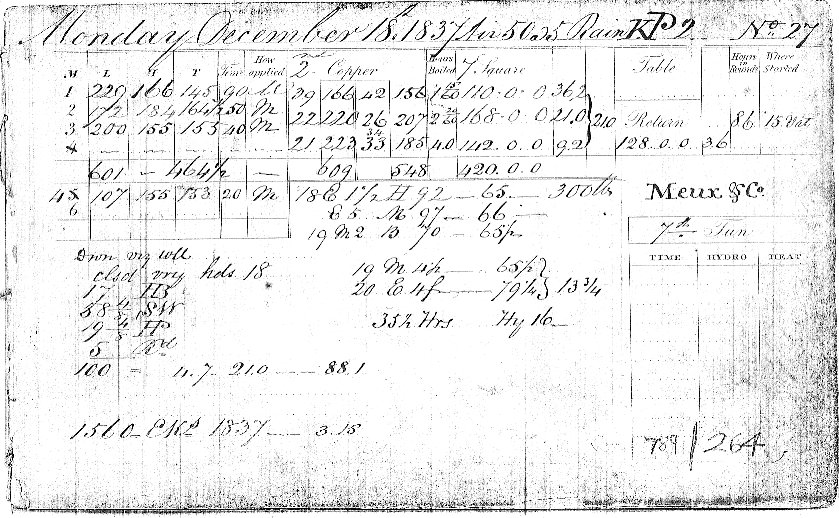
As an added bonus (what a generous bloke I am) , here's a Reid Porter log from 1837:

Monday, 3 December 2007

Fruit and vegs that should not be used in beer

Every so often you need a mental spring cleaning. Unchanging opinions aren't strength of character. They're constipation.

Looking as firmly backwards as I mostly do, it's easy to become conservative. When I first saw this title proposal, I was pretty sure how I would approach it. Cherries, raspberries, lemons - they're OK, because there's a tradition of their use in beer. Anything else - no way.

Punk changed my ideas about music overnight. The bulk of my record collection went in the bin. It shocked me that not everyone embraced it so readily. That's being 19. You want change. At some point in your life - 25, 31, 37, 19.5 - change becomes frightening and you want it to stop. "This isn't music. It's just noise."

In the mid-1990's many of my friends were a decade or so younger. They liked dance music. Not Cuban or ballroom, but the thumpy-thumpy rave sort. "This isn't music. It's just noise." That's what I said. Repeatedly. For several years.

Then I thought: hang on, isn't what the old hippies said about punk? Rather than dismissing it, I made a conscious effort to listen to dance music with an open mind. To approach as I had done punk. My instincts were right - it was just noise. Sorry. Can't resist the bad jokes. My friends weren't just brainwashed fashion junkies. Some of this dance stuff was dead good. You couldn't get me off the dance floor.

My prejudice against electronic music was just that - stupid prejudice. What does it matter how music is made? With guitars, violins, drums, synthesisers, computers, saws, frying pans. The end result. That's what's important.

What fruit and veg should be used in beer? Any - as long as it tastes good. Nothing else matters.

Sunday, 2 December 2007

A day without details

Yesterday we went to Cologne for the day. The main purpose was looking at the Christmas market. That and buying German-style food. Dolores is always keen on stocking up the freezer with German things. She is, after all, a German thing herself.

Even when on such a non beer-oriented trip with the family, I always take my notebook along. With the state of my memory, I need notes if I'm to remember the details. My trusty purple notebook was in my bag. But that's where it stayed.

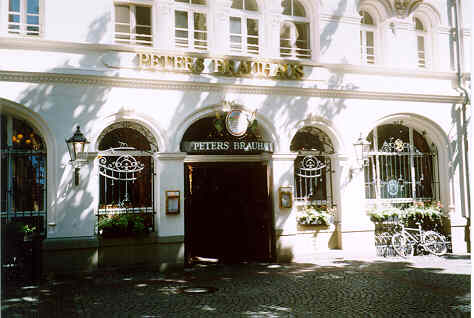
I've drunk in the beer garden of Peters Brauhaus on Alter Markt a couple of times. I'd never been inside. We tried to eat there last time we were in town, but it was closed for a private party. This time we jammily got a table, even though it was mobbed. Bloody christmas market.

I seem to remember hearing that Peters brewery had closed and the Kölsch was now brewed elsewhere. Gravity-served but pretty bland. Inoffensive. The food was good. The kids ate for less than 4 euros (that I can remember) . How civilised Germany is.

No Päffgen, unfortunately. Bierhaus en d'r Salzgass was too full. But there was a spare table to stand at outside Zum Pfaffen. "Stop whinging. You'll have plenty of chance to sit down on the train." I didn't say that. Dolores did. She beat me to it. Even though my feet and ankles were aching like hell. (It's my war wounds. I haven't told you about my time in the South American jungle, haveI?) The Pfaffen Bier was really quite nice. More character than you get from Kölsch nowadays. Hoppy and bitter (there will be no details today, remember). Good enough for me to stop worrying about the onset of arthritis. A shame I had only time for four before the kids started losing their toes.

More luck in Früh, where we found space in the no smoking room. Again, meals for the kids under four euros. The beer was disappointing. I didn't see how it was served, but fizzing in the glass isn't what I associate with gravity dispense. Slightly worse than Peters. No fag smoke was a big enough plus to offset that.

I had bockwurst for my tea from a busy stand underneath the train platforms. Why doesn't Amsterdam have proper sausage sellers? They seem obligatory in German station concourses. In Austria they're commoner than British chip shops. The same is true in the Czech Republic. Holland has frikandel, grey meat tubes of uncertain provenance. Yummy. They make bitterballen look like haute cuisine.

As vague as my memory. Note the virtual total lack not just of details but of any substance at all after the point where I'd had my 20th glass of Kölsch. Tomorrow my memory will have faded more and yesterday will truly become"a day without details".

Friday, 30 November 2007

warm piss

Piss. We all have it. In its natural, fresh state it's always warm. That's the easiest way of telling if the lager bottle you're drinking from has been weed into. Anything above room temperature, I would pass on.

Only once, many years ago, have I been confronted with a penis-refilled bottle. I know who was to blame: Matt. Luckily, I realised what had happened after just three mouthfuls. Perhaps the sick grin on his face tipped me off. It couldn't have been the smell, because, as we all know, drinking straight from the bottle kills the aroma.

A party in Leeds is where it took place. Matt and me were terrible party crashers. "Were you invited?" "No. You're really lucky we came." That was another party. Matt threw up and then covered his pool of sick with a rug. Happy days.

Warm piss or cold piss? Which is better? Room temperature and not too heavy on the bubbles, that's how I like it. So either let the Bavaria Pils warm up or Matt's piss cool down. That's my advice.

Thursday, 29 November 2007

out of the can

I rarely buy beer in cans. Europe isn't exactly overflowing with quality canned beer. It's usually only the pissiest of lager or a bland ale pretending to be nitro-dispensed keg. Neither feature much in my purchasing fantasies.

There are some good arguments for packaging beer in cans - preventing light damage, for example. But somehow a can lacks the aesthetic appeal of a bottle. And I can't get the negative associations out of my mind. I've only recently come to terms with buying bottled beer. Cans will need several more decades to gain my acceptance.

That said, I have drunk a few this year. This is what I've had out of the can.

Bavaria Piss. When I was desperate on the way back from an outing with the kids. I bought it at one of the imaginatively-named Kiosk chain of snack counters that you find in Dutch stations. Luckily it was ice cold and I was ice pissed. One of the advantages of taking the kids along is that they can guide me home when my brain takes a holiday. It teaches them self-reliance and independent thought. That's what I tell Dolores. And social services when they finally catch up with me.

Whitbread Gold Label. The beer that confused me about Barley Wine. Purchased, if I remember correctly, in Balderton's Kwik Save. I drank these (a pack of four) nice and warm. Much better than I expected, to be honest. Strong beer is essential when staying at my brother's. Yet perversely the shops within in walking distance sell almost none. The few available are crap. I expected only historical interest and inebriation from Gold Label. That it was a quarter-decent beer was a bonus.

Carlsberg Special Brew. My credibility must now be bouncing along at snake-belly level. The choice in Balderton keeps getting worse. A couple of years ago I could get Guinness FES. AT the risk of sounding like a total alky, given the choice between a piss-weak crap beer and a strong crap beer, I'll go for the latter. You would have thought that the change from oh-so-classy Kwik Save to Sainsbury's would have improved the beer selection in the closest supermarket. It didn't. Hence the Special Brew. I'm not sure I'd bother with this one again. Really, really, really, really, really, really, really, really, really, really, really, really, really, really, really, really, really, really, really, really, really, really, really, really, really, really, really, really, really, really, really, really, really, really, really, really, really, really, really, really, really, really, really, really, really, really, really, really, really, really, really, unpleasant. In comparison, Gold Label is Courage Russian Stout. But I did finish the whole four pack. Not that I derived any pleasure from it. The alternatives - sobriety or drinking double the number of crappy weak beers - were just too horrific to contemplate.

Wednesday, 28 November 2007

Real mane ismy

Anagrams aren't my bag, man. Bluey-grey, corduroy, DDR-style bags are my well . . . bags. Even I can work out the one (anagram, not Ossitüte) in the title. Just. Even though I wrote it.

How do you think this blog thing's going? Is there a point to what I'm doing? Should I continue?

Just thinking aloud. Life has been showing me its angles and their relationships. I was working up to a joke there but my vocabulary hit the shoals. "Thank Stalin", you say, "He must stop."

I'm around halfway through my "Earl list" posts. An interesting experience. (That's how you describe 5 years fighting with FARC guerillas or trying to get from Paris to London with only 8 francs. Stuff of underwear recolouring proportions.) Ratings-wise, they're a great success. They are a great success.

Non-literal interpretation, I thought. That's what they expect. Playing with the titles and twisting them to my own perverse ends has to be fun. That was the plan. How has it gone?

Big day tomorrow. . . . . . . . . 25 hours.

Let's hope one of the 27 is mine.

Dutch Bar Snacks (the "bitterballs" question)

Customer: "Do you have bitterballs?" Barman: "No idea. I've never tried sucking them."

Dutch pubs do some things very well. Not buggering up the interior with cheap, crappy renovations is one. Letting my kids in is another. And let's not forget the almost universal availability of Westmalle Tripel. (For those days when you need to reach oblivion fast.) Korenwijn. That's a good one, too. Though I had promised myself not to reveal the pleasures of jenever in case it got too popular and the price went up. (Even Bols Korenwijn is eminently drinkable. Not a patch on Janssens 1 year old Rogge, but still drinkable.)

That's not too bad a list of positives. But there's one thing Dutch pubs are (in general) crap at: food. Given their average size, I can understand why few sell hot meals. The snacks aren't great, either. Tostis (toasted sandwiches), sliced osseworst, cubes of cheese - that's about it. If you're lucky, the cheese will be decent. Many beer pubs have Trappist cheese. My son Andrew finds that a bit too stinky for his taste. He prefers jonge or belegen Dutch cheese.

Larger pubs, especially those going for the after work trade, often sell hot snacks. In Holland that means fried things. Dim sum, mini spring rolls or bitterballs. My favourite are the dim sums. Depending on my level of starvation, I will also tuck into the other two.

What are bitterballs? A sort of kroket. I know your next question: "What's a kroket?" It's a staple of Dutch snack bars. You can spot them drying out under the lights in the coin-operated hatches in Febo. Basically they're a breadcrumb tube filled with gravy. Sound yummy, don't they? (I shouldn't get too nasty. One of my guilty pleasures is a "broodje kroket" - a flattened out kroket in a spongy industrial white roll.) Bitterballs are mini, spherical krokets, about the size of a golf ball and ever so slightly less edible.

Tuesday, 27 November 2007

How To Shop For Beer In Holland

Shopping for beer is suprisingly easy in Holland. If you're happy to drink Trappist or Duvel. Which I am. Supermarkets, off-licences and specialist beer shops all play their part in providing the innebriate easy ale access.

Dutch supermarkets, while stocking far fewer brands that their UK equivalents, have a much higher porportion of drinkable stuff on their shelves. My local Dirk van den Broek (a budget chain) sells maybe 30 different beers, but these include La Trappe Dubbel, Tripel and Quadrupel, both Westmalle beers, Duvel and Grolsch Weizen. Around 1 in 4 drinkable isn't a bad ratio. Even in large, up-market British shops I struggle to find 7 beers worth supping out of the hundreds (mostly industrial lager) brands on sale.

I'm especially lucky when it comes to buying beer. (Or any other sort of alcoholic drink, for that matter.) I live just around the corner from an excellent off-licence, Ton Overmars. Whisky and wine are his specialities, but he still manages to stock around 100 beers. Including my essential staples: St Bernardus 6, 8 and 12 and Guinness Special Export. For everyday use, I need to stray no further.

For those with more exotic tastes, The Netherlands is reasonabley well-served with specialist beer shops. Amsterdam has two excellent ones: De Bierkoning and De Gekraakte Ketel. Both are in the centre and easy to find even for the doziest of tourists. Sadly, the Amsterdam branch of Bert's Bierhuis closed years ago. The one in Utrecht is still thriving, however. It's on the edge of the old city but is opposite a beer cafe, Ledig Erf. Just south of Amsterdam, De Schans brewery has a pretty decent beer shop (but sadly nowhere to drink).

Most essential is the correct bag. I recommend a bluey-grey, corduroy, DDR-style bag. It's what I always use. The extra thickness helps protect beer from shocks (or putting down too hard on the pavement) and the structure help keep bottles upright. The original wore out years ago, but my wife has made several more to replace it. One of the many advantages of marrying someone from the East.

If you're buying beer for immediate consumption, you need to pay attention at the supermarket checkout. The girls on the till have a nasty habit of laying bottles in their side and rolling them down the conveyor. Pretty much guaranteed to disturb the yeast.

In summary, supermarkets are fine if you're not too fussy, in most big towns you should find an off-licence with a better selection, for the really picky, a visit to Amsterdam or Utrecht may be needed.


De Bierkoning
Paleisstraat 125,
1012 ZL Amsterdam.
Tel. 020-625 6336
http://www.debierkoning.nl/

De Gekraakte Ketel
Raamsteeg 3,
1012VZ Amsterdam.
Tel: 020-6240745
Email: jeff@crackedkettle.com
http://www.crackedkettle.com

Wijnwinkel-Slijterij Ton Overmars
Hoofddorpplein 11,
1059CV Amsterdam.
Tel: 020-615 71 42
Fax: 020-615 01 99
Email: info@tonovermars.nl
http://www.tonovermars.nl

Speciaalzaak De Schans
De Schans 17,
1421 BA Uithoorn.
Tel.: 0297-522106
Fax: 0297-522107
Email: info@schansbier.nl
http://www.schansbier.nl/

Bert's Bierhuis
Twijnstraat 41,
3511 ZH Utrecht.
Tel. : 030 - 234 1339
Fax: 030 - 234 3166
Email: bertsbierhuis@hetnet.nl.
Homepage: http://www.bertsbierhuis.nl

Ledig Erf
Tolsteegbrug 3,
3511 ZN Utrecht.
Tel. : 030 - 231 7577
Fax: 030 - 234 2229
Homepage: http://www.ledigerf.nl


There may be some disruption to my usually excellent service this week. I'm upgrading my PC. My hard drive is pathetically small (20 gig) and almost full. Twin archive visit next week will provide way more photos than it has room for. I'll need to reinstall the operating system. (Well, Dolores will.) And you never know what problems this might cause.

Saturday, 24 November 2007

Dutch v. Belgian Oud Bruin

Dutch Oud Bruin has escaped the attention of most beer stylists. Sometimes mistaken for the Belgian beer of the same name, it's about as different as you can imagine.

Dutch Oud Bruin
Low in alcohol (2.5-3.5% ABV), bottom-fermented and sweetened with saccharine, I can understand why it doesn't feature in microbrewers' portfolios. Not that the Belgian version is much more popular, but it has the "extreme" tag that drags in a few parcel-pullers. Both are brown in colour. That's about where the similarity ends. Dutch Oud Bruin even gives a lie to half it's name by not being old.

As was the case across northern Europe, the first lagers brewed in the Netherlands were all dark. Münchners mostly, but sometimes the darker Kulmbacher style. Well into the 20th century Münchners formed a significant part of the Dutch beer market. Marginalised by the unstoppable advance of Pils, they disappeared in the late 1950's or early 1960's.

It's confession time. I haven't had a chance to analyse properly the material I have on Dutch beer. So excuse me if my tale is a little sketchy in places.

In the 1930's, Heineken brewed three dark lagers: Beiersch Bier, Münchener Bier and the seasonal Bokbier. (And possibly Tafel Bier. I don't know what colour that was.) No beer called Oud Bruin. So it seems the the Oud in the name refers neither to the age of the beer or the age of the style: both are young.

"Van Brouwerij to Bierglas" by F. Kurris, 1948, pages 20-24, lists the following Dutch beer types: Lager, Pilsener, Dortmunder, Münchner, Maastrichts Oud and Breda's Bruin. So an Oud and a Bruin, but no Oud Bruin. What is mentioned is Jong Bier - a Lager (a weakish bottom-fermenting beer of 9º to 11º Plato) that underwent secondary fermentation in the cask. To disguise the presence of yeast, it was coloured with caramel. It was also sweetened with saccharine. There was also bruin Lager, sweetened and coloured Lager without yeast.

The first mention I've seen of Oud Bruin is a Heineken label from the 1950's. It seems reasonable to assume that this was a renaming of the Lager. Some breweries - De Ridder, for example - still used the name Donker Bier for their Oud Bruin until relatively recently.

What's intriguing is that while at the full-strength level (5% ABV) the dark version, Münchner (in latter years Pils coloured with caramel), died out, at the weaker strength (3.5% ABV) pale Lagerbier has died out, but the dark version still survives. Don't ask me why this might be.

The first time I tried Dutch Oud Bruin is still fresh in my memory. It was in 1982 during my first trip to Holland with Harry and Johnny Ash. We were in Deventer. Most of the pubs didn't sell anything but Pils. I was really excited when, after asking what else they had, a barman told me that they had a bottled dark beer. My excitement evaporated after the first sip. Even for a hardened Mild drinker, it was ridiculously sweet and watery.

During my attempt to taste every beer brewed in Holland, I renewed my acquaintance with Oud Bruin. OK, they are too sweet, but I found most breweries Oud Bruins much better beers than their Pilsners. I'm not sure exactly what that means, but I'm pretty sure it isn't complimentary about the quality of Dutch Pils.


Belgian Oud Bruin
I always support the underdog. With a recent revival in the fortune's of Gueuze, Oud Bruin is one of Belgium's most threatened styles. There are very few left and most are made in tiny quantities. I'm sure that you all know this already, but I'll say it just for completeness. Belgian Oud Bruin is a standard-strength dark beer, soured during secondary fermentation in oak vats. It's probably coloured with caramel. I know that Rodenbach is.

Oudenaarde is spiritual home of Oud Bruin. There used to be four breweries in the area producing it: Clarysse, Roman, Liefmanss and Cnudde. My personal favourite was Felix from Clarysse. A bit sweet when young, it aged beautifully becoming nicely balanced after two or three years in the bottle. Though the brewery closed several years ago, the beer continues to be brewed by Verhaeghe. It isn't quite what it used to be.

Liefmans have bumped up the strength of Goudenband so much - it's now 8% ABV, that it isn't really an Oud Bruin any more. I haven't seen Roman Oudenaards for quite a few years. It wasn't that great, but it would still be sad if it had disappeared. Cnudde has never been easy to find. They only brew a handful of times a year and the beer is only available on draught. And only in half a dozen cafés in Eine.

Friday, 23 November 2007

Two of my favourite things

Julie Andrews, Julie Andrews. Bum, it doesn't work for me.

It's been a difficult week. Details bore won't you with. (Construct your own sentence from these five words.) I couldn't say that I was glad to be back in the UK this week. About the only plus point was being able to collect the box of beer that Brewdog had sent to my sister's address. Quite reasonably, they hadn't been up for sending samples to a freeloading blogger in the Netherlands. But a freeloading Dutch blogger with a UK delivery address was fine.

On more than one occasion, I've admitted to being a total tart. Ignore that. I'm honest as the day is short. No, that's not it. I'm as long as the dog is honest.

Barrel ageing. It's all the rage. Until today, I'd only had two and I hadn't cared much for either. Doubts had begun to swell my sad, little brain. Was barrell-ageing just a stupid, pointless fad? (That's a multilingual bad pun that only my scandinavian readers might get.)

In the words of the great poet Neil Diamond, "I'm a believer". I've just cracked a Brewdog Paradox Islay and it's a cracker. It combines two of my Julie Andrews things: Imperial Stout and Islay whisky. Not carcrash but gestalt. Really, dead, dead good. You won't get a precise review, because that's outside this blog's mission statement. You should try it. I seem to have a couple of different versions in my freebie box. Lucky me.

You may have got the impression that I'm a reactionary old twat instinctively opposed to anything new. That is true. Most of the time. Take my endorsement of this beer as an uncharacteristic attack of contemporaneousness. But an honest one.

Tuesday, 20 November 2007

Oettinger

I like to use Oettinger as an example for one of my pet theories: that it's possible to brew crap beer while sticking to the Reinheitsgebot.

You might claim in their defence that Oettinger's beers are cheap. Yes they are. And it's pretty easy to tell that from drinking them. Minimal lagering times (maybe they wheel the crates through a lagering cellar - it certainly doesn't taste as if they stop moving whilst in there) and cheap (in the low-quality sense) ingredients.

I haven't got a good word to say about them. They epitomise what is going wrong with German beer. Overcapacity and low prices are forcing many breweries to cut corners in order to survive. Hop extract is one of the worst culprits in debasing German beer. I have a particular aversion to it, but unfortunately can detect it all too easily. In pale hop-oriented beers like Pilsener, it's particularly offensive. If you want to see how it messes a beer up, try Oettinger Pils.

During the scramble to buy up East Germany's brewing industry, I found it apt that Oettinger got hold of the Gothaer Brauerei. Their beers were about my least favourite from the East. Somehow, Oettinger managed to make them even worse. That takes real skill and dedication.

Monday, 19 November 2007

Bubbles in my Beer

I grew up drinking cask ale. (At least in beer terms. In childhood I grew up drinking water.) Bubbles have never been that popular with me.

I don't mind the odd bit of carbonation. But rising bubbles are the sign of the devil. That's why I always try to remove as many as possible before my first sip. I've just been de-gassing some Maredsous 8. It's almost ready to drink. . . . sound of swizzle stick twirling in beer . . . No, still too gassy . . . . twirl, twirl, twirl . . . Much better. The texture of Tetley's Mild, that's what I aim for. Univac-served, of course. That whacks out almost all the dissolved CO2.

Carbonation in pub-served beer is more problematic. I don't always have a suitable de-gassing stick. I sometimes use my finger. Not the most hygienic solution. Especially after a shit-throwing session.

Some of the best beers I've ever had were barely carbonated. Several Courage Russian Stouts. A couple of Harvey's Imperial Stouts. There's another beer that stands head and elbows with those two: RIP. I probably shouldn't say this. But I'm nototriously indiscrete. I was recently at De Molen, having a chat with Menno, the brewer. He let me try a freshly-bottled version of Rasputin he's developping. Fan-blooming-tastic. Though he apologised for the lack of conditioning, I thought that it went well with the style. Beer always tastes best when served by the brewer.

"The squat is a lower body exercise used in strength training. It is also a competitive lift in powerlifting and an essential movement in the sport of weightlifting."

I understand that. I do know squat. It's the rest of my knowlege that's woefully inadequate.

Friday, 16 November 2007

Backpedalling

Left to myself, I wouldn't have written yesterday's post. Not that I don't like giving the BJCP regular kicks. I prefer doing it a different way.

It's fortunate that I didn't publish (in my pathetic internet way) more stuff earlier. The last two years have provided enough for several feasts of my own text. We all like to think of ourselves as rational. At least I hope we do. I wouldn't want to live in a world full of consciously irrational beings. Sounds like hell. Or Swindon, as it's more popularly known. Honest self-crticism is the embodiment of rationality.

You may spot which of my posts have been helped by a beer. Or one and a half. One and eleven sixteenths, top. Crap jokes didn't score that highly in my poll, I recall. Time to be pedantically literal.

Laughs aren't always easy to get. I have a couple of guaranteed ways, here in the Netherlands. This one never fails around these parts. Colleague: "Why don't you cycle to work?" Ronald: "I can't ride a bike." I then explain that no, I wasn't crippled in childhood and that my parents didn't belong to some weird anti-cycling sect.

Dutch bikes, especially junkie bikes, can be primitive. Stadsfiets, omafiets - that's what they call them. They cost - when purchased from a genuine, certified junkie - (coincidentally) exactly the same as a bag of smack. (I had worried about including any d**gs words in this family blog. Then I realised that the CBI, or whoever else might be tracking my communications, couldn't possibly pick it up. Try searching for "smack" in a not-really-allowed-state-altering context and see how much you find that's relevant.)

Primitive Dutch bikes don't have hand-operated brakes. You have to backpedal. But I don't. I can't.

Let's try less literal. I'm big enough to admit when I've been wrong. Not really. I'm big enough to fill a whole chest freezer. If filleted.

"Was", "I", "wrong". They sound best in a certain order. And it isn't when the first two words are flipped.

Crap jokes. I remember. My memory isn't what it was. You want me to spend more time in the pub with my kids. Who am I to argue with the great ..... (substitute the country of your birth) people?

Stumbling, but not quite yet prone in the gutter, I approach the conclusion of this post. I promised Alexei that I would have time for him at exactly 16:44. By the highly-inaccurate clock over my right shoulder that's the time . . . right . . . . now

Dolores is bribing the kids with money. I have another 43 seconds (they cost 10 euro cents per 12 seconds). I hope that I've been honest enough to admit that I've been wr

Thursday, 15 November 2007

Things I like about the BJCP style guidelines

I've gone for another easy one today.

There's so much good about the BJCP style guidlines, that it's difficult to know where to start. Here's a try.


  1. They start at number 1.
  2. They are innovative and forward-facing. (I got that one from "Management bullshit for idiots".)
  3. They cement the beer world in the mid-1970's - just when I started drinking.
  4. They inspire insights like "this beer is too roasty for a Porter".
  5. They don't mis-define Czech lager styles. They don't realise they exist. I promise not to tell them about them if you don't.
  6. When I'm bored at work, browsing them provides endless amusement.
  7. They are imaginative. They've invented whole families of beer styles. Think Scottish Ales.
  8. No-one in Belgium pays the slightest attention to them.
  9. They combine Belgium and France (styles 16 A to E) - something the Congress of Vienna was determined to prevent.
  10. They finish at number 28, having used all the integers from 1 upwards.


Tears of laughter prevent me listing any more. Tears, at least. Just the boring sort: tears of despair.

Wednesday, 14 November 2007

Going to America

It was 22 years ago today. (Or thereabouts. My visa is dated October 23rd 1985.)

The papers for my visa application arrived while I was in Brno. (The most important four weeks of my life were spent on a summer school learning Czech in Brno. I improved my Czech enough to be able to read Kundera, had more money than I could spend, met lifelong friends and found my wife.) J1 visa, I think. Some fiddle it was, thought up by the dodgy agency I worked through. A work experience visa it was supposed to be. We were just plain old ordinary wage slaves. I hope they don't decide to come after me. The agents, I mean. The mafia are pussycats compared to contract agencies.

October 28th 1985. I've just inspected my old passport more closely. That was the exact date I arrived in America for the first time. In Newark. How aposite.

My first beer in America - I can remember it crap - was an Amstel Light, in some soulless midtown bar. A beer that was totally immemorable yet I still recall what it was.

In the 1980's, the British were the IT job tourists. BONY bought in a gaggle of us.

I lived on Staten. In a neighbourhood as dull as dull can be. Where the buses do run, but the streets have no pavements. The looks I got, walking home with my shopping. The Recovery Room was one of my local bars. We played darts there. Me and some of my British workmates. The beer was crap. I drank bottled Heineken.

Darts. British blokes. Beer. Manhattan. In the mid-1980's this spelled "Manhattan Brewery" . Not literally. Obviously.

Our office was downtown. If I hadn't spent the last 30 years boozing every day, I could tell you the exact address. Washington Street, possibly. We could walk to the Manhattan Brewery. Which is exactly what we did. At least once a week. Playing darts was the general excuse. I was glad to have the chance to drink something handpulled.

One night, after the darts, I got to talk to the brewer. I was impressed. He was knowledgeable and enthusiastic. I wonder what happened to him?

This was my first going to America. More happened.

Sunday, 11 November 2007

Parenting a beer obsessive

I never got to share a beer with my dad down the pub. He died when I was 14. It's one of my greatest regrets. Maybe that's why I'm so keen on taking my own kids to the pub.

Mum and I shared plenty of pub time. From Montego Bay to Sydney. But I only ever saw her tipsy once - after drinking rum punch in Kingston. Tea was her drink of choice. Rum and black, on a special occasion.

Being the mother of a beer obsessive isn't easy. I should know. I dragged my poor mother around so many smoky pubs. She rarely grumbled, even though her asthma left her gasping for breath. "Ronald, don't you think you've had enough?" That was her catchphrase. "Just one more, mum, then we can go." That's what I want to say to her now: "Just one more, mum, before you go."

I didn't get that last beer with her. But I'll drink every beer now as if it were that one lost last beer with mum. This sip's for you, mum. I'll be thinking of you every time I lift a glass. And when my feet become unsteady, I'll hear your gently chiding voice: "Ronald, don't you think it's time to go?" And you'll be right, as you always were.

I don't believe in god. Or heaven. But if there's one person whe deserves heaven, it's my mum. I hope I'm wrong and she's sitting there now, smiling down at me. And saying "Ronald, ............"

Friday, 9 November 2007

Parenting tips for beer obsessives

Today is a momentous day. It's the day I start working through my list.

I'm glad I came up with the idea. It means I don't have to worry about thinking up themes or titles for a few weeks. After five months and 177 posts, all the inspirational fluid has been drained from my brain. Of course, the problem has just been displaced. I still have to think up the words to fit the title.

Let's start with an easy one: parenting tips for beer obsessives. I like to think that I have a gtreat deal of useful personal experience in this area.


  1. Catch them young. I started taking my kids to the pub before they could walk. That wasn't too bad. The trouble started when they could walk. Andrew had a habit of running off down Gravenstraat when I took him to Cafe Belgique. At first, it freaked me out. Would he disappear into the crowds? I used to chase after him down the street, until I realised that was what he wanted. Then I just used to let him run. He always came back eventually. As he became older and lazier, gave it up.

    At 9 and 11 my kids are completely used to pubs. And beer festivals. I don't have to drag them along any more - they come willingly. Sometimes they are even keener than me. "Can we go to the pub please, dad?" What more beautiful sentence is there in the English language? It makes all the initial effort seem so worthwhile.

  2. Buy them food. Food is a great way of bribing kids. It's even more effective than money. Something that takes a while to eat is best. They longer they're chomping away, the more time you get to drink undisturbed. Germany is good. The Brauhauser of Cologne and Dusseldorf always have chips and sausages. Amsterdam pubs don't offer much in the way of food, but there's always a bakery close by stuffed with doughnuts and eclairs. As are the kids after an hour or two.

  3. Talk to them. Not paying attention to your kids in the pub is just asking for trouble. That's why I usually don't meet with anyone else while they're along. When they realise that the pub is a good place to get quality dad time without him being distracted by his computer, they get much enthusiastic about pub visits.

  4. Go to the toyshop first. It gives them something to fiddle with while you sneakily order a jenever to complement your beer. Though lego is unsuitable. I know. I've been down on my hands and knees searching for an errant piece amongst the fag ends.

  5. Let them try your beer. Kids don't like the taste of beer, so they'll soon give up asking. Well, all kids except Alexei. He got a real taste for Tripel Karmeliet when he was a toddler. Though I never let him drink more than half a glass. I have a 50 euro bet with Andrew that he'll drink a whole glass of beer before his 18th birthday. We both think that we're onto a sure thing.

  6. Teach them how to play spoof. It's a great way of keeping them entertained that costs nothing and needs no special equipment. It doesn't interfere with your drinking much, either.

  7. Drink strong beer. Then you don't have to spend as long getting to the point where you don't care what they do. Or go in for two fisted drinking - strong beer plus jenever. That gets you to the don't care zone quicker than you can say "kidnapped toddler".

  8. Don't live in Britain. Trying to work out which pubs in Britain allow kids is a nightmare. The majority don't. Thankfully, I live on the Continent and can take my kids along to any pub.


As you can see, I've managed to seamlessly combine beer drinking and responsible parenting. "I'd rather drink a beer than be father of the year." That's my motto.

Thursday, 8 November 2007

More Guinness

Why two posts today? Because I forgot to publish yesterday's ("How can I be sure?"). And you can never learn too much about 19th century Guinness. At least that's what I reckon.

These are the gravities of the main Guinness products in the 1800's. The weakest - Porter - is considerably stronger than today's Extra Stout. FES, on the other hand, is pretty much unchanged since 1860.


You may have heard me dream of Guinness producing a bottle-conditioned version of Special Export, the 8% version that's sold in the Benelux. I was pained to discover that this was the first type of Guinness to be pasteurised, way back in 1930. Guinness paid for a pasteuriser to be installed in John Martin's bottling hall. Given that strong beers are still usually bottle-conditioned in Belgium, this seems slightly odd.

I would start a campaign for Guinness to make a naturally-conditioned version of FES or Special Export. Either would be wonderful in this form, I'm sure. But I doubt Diageo would be interested. They're too busy launching slightly tweaked versions of draught Guinness. It's a lack of imagination and daring typical of large brewers.

Wednesday, 7 November 2007

How can I be sure?

How can I? Be sure of what? A fair way to eliminate the surplus titles for my list. Alphabetically? By word count? By character count? Randomly?

It's going well today. I nearly have my quota of question marks. A few crap jokes and Stalin references and this will be a regulation post. (I do have my rules, you know. I've determined the exact number of characters in each post for the next three years. It's based on a complex mathematical formula. I won't bore you with the details, but it involves my shoe size, the phase of the moon and the public bar price of Tetley's Mild on the same date 25 years previously. The punctuation (number and type of) is calculated from the day number in the Babylonian calendar and the distance between earth and Io on that day. That's why my sentences are so short. The algorithm generates far too many full stops.)

All the packages from Britain I'd been waiting for arrived yesterday. The 2005 Statistical Handbook of the British Beer and Pub Association (one of my favourite books), the issues of Private Eye I reordered because someone here couldn't be arsed to deliver them the first time, "The Tetley Brewery, Leeds" and a July issue of Private Eye. The post here is very post-modernist. The last four issues of Private Eye have been dated (in order of delivery) October, July, September, July. I wonder what happened to those from August? (That's all the questions marks for today. I now either have to be assertive or to do some re-editing.)

Tomorrow. I'll start using titles from the list tomorrow. If I can think of a way of weeding out nine. Pin. That's it. I'll get the kids to stick a pin into a printed list of the titles. The ones they hit, follow William Patrick Hitler into obscurity.


. . . . .

. . . . .

. . . . .

. . . . .

Right. Andrew's pin has decided. The lucky titles are:

Brettanomyces: The Musical
Backpedalling
Floaters (The Good Kind)
Floaters (The Bad Kind)
A Day Without Details
Going to America
Alternative grains
Oettinger
out of the can
warm piss
Base malts now and then
Things I like about the BJCP style guidelines
Parenting tips for beer obsessives
Fruit and vegs that should not be used in beer
Bubbles in my Beer
Dutch Bar Snacks (the "bitterballs" question)
Dutch v. Belgian Oud Brun
How To Shop For Beer In Holland
Archeological Evidence of Long Term Beer Aging Pre-1850


These are the unhappy losers:

It Was Like That When I Found It
Debbie Does Den Haag
Average Maltsack Corn Counts, 1857-1913
Double IPA: say it one last time
Why Grimbergen blonde is a good beer
The Reinheitsgebot is a joke
Belgian Brewing Logs, pre & post WWI
Beer ads 1910-1920
Ron's Favorite Crap Jokes (continuing series)


A shame. Some of my favourites have missed out.

Just like Earl, I'll work through the list in no particular order. I wonder where I'll start. (Bum, I have to leave this incorrectly punctuated, because I'm not allowed any more question marks today.)

Tuesday, 6 November 2007

Polls

The votes are now in for the most thrilling polls since the referendum on American independence. Wait a second, they didn't actually vote on that one, did they? . . . Since Lady Di was elected princess. That's wrong, too. (My son Alexie asked me last week how he could be elected king of Europe. I told him becoming a Stalin was the best a pleb like him could hope for.) Since Hollyoaks was voted Best Chester-based Soap Opera. Dead exciting.

First down, the what you like reading in my blog. I expected "nothing" to feature more prominently. Remember, this poll was for entertainment only. These are the full results:

What do you enjoy reading in my blog?
statistics 9 (27%)
numbers 4 (12%)
beers from the logs 13 (39%)
crap jokes 6 (18%)
clumsy attacks on the bjcp 15 (45%)
reports of me pub-crawling with my kids 17 (51%)
nothing 1 (3%)
about yourself 2 (6%)

I'm disappointed so few of you like my jokes. To win you over, I'll be posting lots more. You'll grow to love them.

Mike will be delighted with the winner. He loves me taking the kids along. "If you have to." "Not again!" Don't worry Mike, the boys will be on every future trip.

I need no encouragement (and little excuse) to attack the bjcp. Mandate accepted.


How many entries should my list have? (explanation of the question)
3 3 (14%)
17 3 (14%)
19 7 (33%)
37 2 (9%)
53 6 (28%)

A late run for 19 robbed longtime leader 53 of victory just minutes before the poll closed. What a shame. I only have to use 19 of your suggestions.

These were submitted:

Brettanomyces: The Musical
It Was Like That When I Found It
Backpedalling
Floaters (The Good Kind)
Floaters (The Bad Kind)
Debbie Does Den Haag

A Day Without Details.
Average Maltsack Corn Counts, 1857-1913.
Going to America.
Double IPA: say it one last time.

Alternative grains
Why Grimbergen blonde is a good beer
Oettinger
out of the can
warm piss

Base malts now and then
The Reinheitsgebot is a joke
Things I like about the BJCP style guidelines
Parenting tips for beer obsessives
Belgian Brewing Logs, pre & post WWI

Fruit and vegs that should not be used in beer
Beer ads 1910-1920
Bubbles in my Beer

Ron's Favorite Crap Jokes (continuing series)
Dutch Bar Snacks (the "bitterballs" question)
Dutch v. Belgian Oud Brun
How To Shop For Beer In Holland
Archeological Evidence of Long Term Beer Aging Pre-1850

That's 28 in total. Nine too many. Any ideas for elimination criteria?

Monday, 5 November 2007

Denmark

The latest issue of Olentusiasten (the magazine of the Danish beer consumers' organisation Danske Olentusiasten) arrived last week. Ninety two pages of full colour. It makes most other EBCU members' organs look like Sniffin' Glue (apologies for the punk reference that only people born between 1955 and 1962 will understand). It's a sign of how quickly the beer scene has developed in Denmark.

In the late 1990´s, there was very little decent beer, with the exception of a few locally-brewed porters. Mostly your choice was limited to Carlsberg or Tuborg pils.

The turning point came in 1998 with the foundation of Danske Ølentusiaster , Denmark´s beer consumers´organisation. Their success in attracting members and educating the public is an example to campaigners everywhere. Specialist beer bars began to appear: Charlie´s, Gulliver´s, Tatoverede Enke. At first they concentrated on imported British, Belgian or German beer. Not surprising, as there was very little Danish beer worth bothering with. But with consumer demand and retail outlets established, microbreweries followed. A trickle of good beer turned into a flood.

In 2000, there were a mere 18 breweries, of which around half were controlled by Carlsberg or Royal Unibrew. In the last 7 years these have been joined by 80 new micronbreweries and brewpubs, leaving Denmark with an impressive 92 breweries (if you're wondering about my arithmetic, some breweries have closed in the intervening years) for its 5 million people. That's the equivalent of 5,500 breweries in the USA. Another 50 breweries are in the planning stage and there are 11 "breweries" who get their beer brewed elsewhere.

Here in Amsterdam, de Bierkoning has finally started stocking Scandinavian beers. I filled my bags (did I ever tell you about my special beer-carrying bags? No? Don't worry, one day when I'm desperate for material I'll tell you all about them) with Stout and Porter on Saturday. I'm drinking a Nils Oscar Imperial Stout right now. Very nice. I know, it's Swedish, not Danish. I'm saving the Olfabrikken for tomorrow.

Saturday, 3 November 2007

Guinness and roast barley

A couple of comments about yesterday's post have prompted me to investigate roast barley, patent (black) malt and roast malt.

In "Guinness's Brewery and the Irish Economy 1759-1876" by Lynch and Vaizey and it says this (talking about the early 19th century) on page 158:

"For example, roasted barley was a good substitute for roasted malt, but its use would have evaded the excise on malt."

This is from "Guinness 1886-1939" by S.R. Dennison and Oliver MacDonagh page 11 (again talking about the first half of the 19th century):

"The brewing processes changed little over the century. It is necessary to go back to 1819 to find a mildly revolutionary change in the introduction of 'Patent Brown Malt'."

"it shall not be lawful for any Brewer to have in his or her Brewery, or in any Part of the Premises connected with his or her Brewery, any raw or unmalted Corn or Grain" -- Duty on Malt (Ireland) Act, 1813 (section 10). (Thanks for this quote, beer nut)

It seems to me that:

1. Irish brewers weren't allowed to use unmalted barley in the early 1800's
2. Guinness used roast or patent malt
3. Guinness was an early adopter of patent malt - Whitbread didn't use it until several decades later

This has left me wondering exactly when Guinness started using roast barley.

Going back to "A Bottle of Guinness Please" by David Hughes I think I've found the answer. On page 74 it says that in 1972 the Guinness Park Royal brewery in London brewed extra Stout from a grist to 70-71% malted barley (I uppose it means pale malt) 9-10% roast malt and 20% flaked barley. On page 75 it gives the 1983 Park Royal grist - 60% pale malt, 30% flaked barley, 10% roast barley.

The bjcp say this of "dry" Stout: "The dryness comes from the use of roasted unmalted barley in addition to pale malt, moderate to high hop bitterness, and good attenuation." So I suppose pre-1980's Guinness wasn't true to style. I wish I'd known that at the time. Then I could have marked bottle-conditioned Guinness down.

Until yesterday I had assumed that Guinness had been using roasted barley for centuries. Once again, how wrong I was.

Zythophile has dug up even more interesting information about early Guinness grists in Bristol-fashion Guinness and the roast barley question.

Thursday, 1 November 2007

Irish Porter, London Porter

I was gutted when the Guinness archive told me that they don't let anyone look at their brewing records. How was I ever going to get evidence about Irish Porter and Stout. How did they differ from their London cousins? Was there a difference, other than mere strength, between Irish Porter and Stout?

I was beginning to accept that I might never get answers to these questions. The archivist had suggested I try looking in the two histories of the brewery ("Guinness 1886-1939" by Dennison & MacDonagh and "Guiness's Brewery in the Irish Economy 1799-1876" by Lynch and Vaizey). As it happens, I own both. And neither has details of the compostion of their beers.

Along with a no smoking section, it was the bookstall at last weekend's Bokbier Festival that interested me most. I've told you my weakness for beer books. When we buy a new bookcase there won't be piles of them on the living room floor any more. At least for a while. The stall had a couple of Dutch brewery histories that I didn't own and a big glossy volume called "A Bottle of Guinness Please" by David Hughes. It looked like a compilation of old Guinness advertising from the cover. But you never know, so I flipped through its pages. I found a few of the thing I most love - tables of numbers - so reckoned it was worth 40 euros of my money.

It was only when I had chance to peruse it more dilligently at home that I noticed what was on pazge 71. The malt bills and hoping rates for all Guinness's beers in 1883. Words cannot convey my joy. Obviously someone had looked at the brewing records.

I'm a generous type. I don't keep this sort of stuff to myself.

It was sort of what I expected. Mostly pale malt with 5% roast malt for colour. Though I hadn't foreseen the 10% amber malt. Sure enough, no brown malt at all was used. The similarity of the grists for Porter, Stout and Export Stout didn't surprise me either. Breweries liked to keep things simple in the 19th century.

Some claim that the difference between Irish Porter and London Porter was the use of roast malt. As you'll see from the tables below, this doesn't appear to be the case. Some London brewers used black malt for colouring, others also called roast malt. But they They all used brown malt. Whitbread were still using it in the 1950's.

To answer another of my questions, there's no significant difference between Guinness Porter and Stout, except that the latter was more heavily-hopped.


I want to commission beers to be professionally brewed

Don't be obvious. Approach subjects obliquely. That's what my creative writing tutor would have told me, if I hadn't left school at 13 to be become a merchant seaman.

Being semi-literate hasn't stopped me fantasising about creative writing classes. Amongst other things. (No. Not that, you dirty-minded bastard. Go wash your brain out with soap or I'll tell your mum. A 1942 Newark pub-crawl was my dream.)

More likely, perhaps, than my oversophistication, is the lack of professional brewers amongst you, my loyal readers. I like to think of us as a family - jealous, resentful, bitchy. And incapable of understanding each other.

I want to get a couple of old Whitbread beers professionally brewed. It sounds quite fun to me. And I'll be paying. So is anyone interested?

Wednesday, 31 October 2007

Bokbier Festival

Did I tell you that I got a new camera for my birthday? I needed a better one for photographing brewing logs. Until now, I've been borrowing Mikey's.

My new camera takes reasonable videos. On Saturday I let my son Andrew video the Bokbier Festival. He seems to enjoy his role as my cameraman.

I missed the Bokbier Festival last year. We were on holiday in Tunisia. (Where there was a suprisingly good German-style brewpub - Golfbräu just a couple of hundred metres from our hotel. Me and their Dunkles became well-acquainted during the course of the week.) When I'm not off on holiday, I feel obliged to go to the festival. Even though it's often been a disappointment.

What didn't I like about it:

  • loud music
  • clouds of fag smoke
  • lack of seating
  • infected beer
  • beer in just one style

Apart from that, it was perfect.

So my expectations weren't all that high last Saturday. I got there at opening time - noon. Crowds are another thing I don't like. And queueing for my beer. That's why I turn up early. First pleasant surprise: there was a no smoking room! Finally. That's one crossed off the list.

Inside the main hall it was too early for the aural assault of amplified music. But to make up for the lack of a live band, they were pumping out the sort of horrible Dutch pub music you hear on the Rembrandtsplein. Luckily it wasn't audible where we were sitting. There were still far too few chairs, but I didn't care because me and the kids had one each. That's another one sort-of crossed off.

It wasn't just me and the kids. I'd arranged to meet John Clarke (a schoolfriend of my brother, sorry, the schoolfriend of my brother) and John Hein (kind providor of photos for my pub guides). It's always handy to have a few extra pairs of eyes to watch Alexei. I don't want him chewing his glass again.

I like nothing better than reading about what someone else has been drinking. So here's what I tried at the festival:

Jopen Bock: liquorice, dates, raisins. Nice and fruity. Quite tasty. 7/10

De Molen Borefts Bok: very nice. A little roasty and a bit hoppy. 8/10

Phoenix Bok: a bit too fizzy, malty in a nutty Münchner sort of way. I thought it tasted bottom-fermented and it is. Like a traditional Dutch Bok before they were sweetened.

Mahr's Heller Bock: nice change of pace, fiercely hoppy with a biscuity malt base. Drinktastic. 9/10

Polderbok: bit bland and yeasty. It's homebrewed and it tastes like it. Not off, but not very interesting either. 3/10

Schlenkerla Urbock: heaven in a glass. 9.9999999/10

SNAB Ijsbok: like madeira cake without the flour. 8/10

SNAB Ezelenbok: a top-fermented try at a classic Dutch Bok. Tasty but unspectacular.

Molen Winterbok: rich and sweet but complex. Like sweet sherry with added sugar. 8/10

Pelgrim Bok: tastes a bit on the turn. Too cold and too fizzy. 4/10

Beck Bock: amber Bock with fruit and hops. 7/10

Not one infected beer. Most were even pretty good. I suppose that's anther crossed off. Oh yes, and the German beers were quite different in style - pale, amber, schwarz and smoked. Maybe I can even cross off one more item on my hate list.

I've saved the best until last. There was an excellent bookstall at the festival. I didn't realise quite how good until I got home and had chance to look at "A Bottle of Guinness Please" properly. Page 71. Something I've been searching for, but feared I would never find: the Guinness grists from 1883. More about that tomorrow.

Tuesday, 30 October 2007

Brew

The best ideas come after the fact. One. Word. Titles. I should have insisted on that. At least I forbade oranges.

(Small aside here. There's a prize for explaining the connection between "orange", "Marlon" and "something".)

Brew for me.

That's my dream. And drinking Warwick's Best Mild. Theoretically both are possible. But let's be realistic. Time-travel would be way too expensive.

I have a couple of Whitbread recipes I would love to taste. Do you want to brew them for me? 1,000 litres of each is what I'm after.