Tuesday, 27 January 2009
Frightening the kids
I just scared the kids stupid. I was shouting at the television. It happens more often than I would care to admit.
"No, no!!!!!!!!! That's total f****** crap!!!!!!"
Why was I shouting? Porter and Stout. No change there. It's a topic that often makes me scream. To be more specific, Oz Clarke's potted history of Porter. It was just on. You missed it? A couple of minutes of myth.
To be honest, I rarely get through a television piece about beer without shouting or swearing of any kind. The treatment of beer in mainstream media is even more annoying than beer forums. And that's saying something.
Anyone know how to get in touch with Oz Clarke. Someone needs to put him straight about Porter.
Nice cameo from Beernut, though. Looks a good laugh, the Bull & Castle.
Beer code (again)
I've been thinking about that Henry Lovibond advert. It's the sort of thing I do on the tram in the morning. Stare out of the window and think about 19th century brewhouse beer names. That's not weird, is it
These old price lists have a certain fascination. Shall I tell you what strikes me about this one?
The large number of Bitter Ales. Five in all, if you include XXXXB. That's unusual. Most breweries only produced a PA and maybe an IPA. The range of strengths is vey wide, too. The XB, at just 15 shillings for 18 gallons couldn't have been more than 1045º. That's very weak for a 19th century Pale Ale, even a Light Bitter. At the other end of the spectrum, XXXXB at 2 shillings a gallon must have been closer to 1100º I've never seen another beer that strong described as Bitter.

The Milds are pretty much what you would see everywhere. Except that they would usually start at X
It's clear that strength is being indicated by the number of X's. It's unusual to see this system applied to Pale Ales and I can't think of another example where I've seen it applied to AK. The standard method is to add more K's, i.e. AK, AKK
Talking of AK, the term "Intermediate Ale" is an interesting one. I'm not sure precisely what it nmeans. What follows is a guess. The beers are clumped together in four groups: Mild Ales, Pale Bitter Ales, Intermediate Ales, Stout and Porter. I understand what some of the se mean. Mild Ales are unaged, relatively lightly-hopped. The PAle Bitter Ales would certainly have been hoppier and probably had a little age on them. I think we all understand what Porter and Stout mean. So that leaves the Intermediate Ales. The description of AK as "Mild Bitter" implies to me that it's an unaged ("Mild") hoppy beer.
Of course, I could be talking crap again. More investigation is required.
Note:
The OG's are an educated guess based on the price, description and similar beers from other London brewers.
Monday, 26 January 2009
Rotterdam
With zero days to spare we used the last of our cheap Kruidvat train tickets on Sunday. We'd thought of going to Den Helder/Texel. Then we saw the weather forecast: rain and strong winds. Not exactly the best weather for a ferry journey, however short. After much humming and Hawing, we settled on Rotterdam as destination.
Have I mentioned that I used to live in Rotterdam? I usually keep it pretty quiet. Especially when there are Amsterdammers around. The cities have precious little in common, except for a tram system and a harbour. Rotterdam's aesthetically challenged city centre I can only take in small doses. I never tire of downtown Amsterdam.
The main purpose of the trip (aside from using up the train tickets) was to take a look at an exhibition of Roman stuff. The kids quite like that sort of thing. Me too, to be honest. The exhibition itself was fine. The same can't be said of the Kunsthal (http://www.kunsthal.nl/). What a crap building. The walls are made out of the same transluscent, corrugated plastic sheets we used to fix the roof on our shed. Very classy. The entrance of so convenient (halfway down a ramp) that they need a 3-metre long flashing arrow to show you where it is. Contemporary design at its finest.
After a couple of hours looking at statues with chipped or missing noses, it was time for refreshment. The centre Rotterdam isn't great for beer pubs. It isn't great for pubs full stop. The only brewpub is well out of the centre in Rotterdam's only historic remainder, Delfshaven. The two beer pubs are to the East of the centre and neither opens until the early evening. That cut the choice down to . . . . one. Doelencafé. The pub attached to the Doelen theatre.
Doelencafé is on one of the ugliest squares in Europe. No, I should be fair. One of the ugliest squares in the whole universe. The square is "decorated" with four giant hydraulic arms that sometimes move about. Expensive, difficult to maintain, pointless and hideous to look at. The buildings lining the square are an incoherent jumble of cinema, appartment blocks and theatre, none of which bear any relationship - in terms of architecture, size, function or materials - to each other. Though there is a pretty decent chip van usually parked in one corner.
True to form, one side of the square is currently a building site. There's something disturbing about Rotterdam's need to keep rebuilding itself. Many central plots already have two postwar developments behind them. Maybe they'll get it right eventually. But I doubt it. The city hasn't got any prettier since I lived there. Just taller.
But this is a beer blog not an architectural blog. I'd better say at least something related to my theme. The reason I'd chosen Doelen wasn't a huge beer list. It has 10 draught and about 20 bottled. But amongst the draughts are three from Pelgrim, the brewpub in Delfshaven. We entered and sat down.
Several waiters and waitresses passed our table. Then several more. Finally Dolores said "If we don't get served in 2 minutes, I'm leaving." Which must have been the magic words because a waitress immediately appeared to take our order. I picked a Pelgrim Tripel.
After taking a sip, I gave it to Dolores to try. "It tastes unusual. Not in a good way. At first it's like medicine, then like nothing." Well worth the 10-minute wait for service, then. We just had the one drink.
What's happening to me? Just one beer on a day out. I must be turning sensible.
Doelencafé
Schouwburgplein 52,
3012 CL Rotterdam.
Tel.: 010- 414 86 88
Fax. 010 - 213 26 58
informatie@doelencafé.nl
http://www.doelencafe.nl/
Have I mentioned that I used to live in Rotterdam? I usually keep it pretty quiet. Especially when there are Amsterdammers around. The cities have precious little in common, except for a tram system and a harbour. Rotterdam's aesthetically challenged city centre I can only take in small doses. I never tire of downtown Amsterdam.
The main purpose of the trip (aside from using up the train tickets) was to take a look at an exhibition of Roman stuff. The kids quite like that sort of thing. Me too, to be honest. The exhibition itself was fine. The same can't be said of the Kunsthal (http://www.kunsthal.nl/). What a crap building. The walls are made out of the same transluscent, corrugated plastic sheets we used to fix the roof on our shed. Very classy. The entrance of so convenient (halfway down a ramp) that they need a 3-metre long flashing arrow to show you where it is. Contemporary design at its finest.
After a couple of hours looking at statues with chipped or missing noses, it was time for refreshment. The centre Rotterdam isn't great for beer pubs. It isn't great for pubs full stop. The only brewpub is well out of the centre in Rotterdam's only historic remainder, Delfshaven. The two beer pubs are to the East of the centre and neither opens until the early evening. That cut the choice down to . . . . one. Doelencafé. The pub attached to the Doelen theatre.Doelencafé is on one of the ugliest squares in Europe. No, I should be fair. One of the ugliest squares in the whole universe. The square is "decorated" with four giant hydraulic arms that sometimes move about. Expensive, difficult to maintain, pointless and hideous to look at. The buildings lining the square are an incoherent jumble of cinema, appartment blocks and theatre, none of which bear any relationship - in terms of architecture, size, function or materials - to each other. Though there is a pretty decent chip van usually parked in one corner.
True to form, one side of the square is currently a building site. There's something disturbing about Rotterdam's need to keep rebuilding itself. Many central plots already have two postwar developments behind them. Maybe they'll get it right eventually. But I doubt it. The city hasn't got any prettier since I lived there. Just taller.
But this is a beer blog not an architectural blog. I'd better say at least something related to my theme. The reason I'd chosen Doelen wasn't a huge beer list. It has 10 draught and about 20 bottled. But amongst the draughts are three from Pelgrim, the brewpub in Delfshaven. We entered and sat down.Several waiters and waitresses passed our table. Then several more. Finally Dolores said "If we don't get served in 2 minutes, I'm leaving." Which must have been the magic words because a waitress immediately appeared to take our order. I picked a Pelgrim Tripel.
After taking a sip, I gave it to Dolores to try. "It tastes unusual. Not in a good way. At first it's like medicine, then like nothing." Well worth the 10-minute wait for service, then. We just had the one drink.
What's happening to me? Just one beer on a day out. I must be turning sensible.
Doelencafé
Schouwburgplein 52,
3012 CL Rotterdam.
Tel.: 010- 414 86 88
Fax. 010 - 213 26 58
informatie@doelencafé.nl
http://www.doelencafe.nl/
Northern New Jersey pub advice
Looks like I'll be in the States next week. Northern New Jersy to be precise. It's a work thing. My new employers are sending me for a week's training. Assuming that they won't be locking in my hotel room, I expect to drink the odd beer or two. So here's my question: anyone know some decent places to drink in the vicinity of Hillsdale?
Sunday, 25 January 2009
Other Barclay Perkins beers in the 1920's
As promised, here are the remaining Barclay Perkins beers. I've now covered all 5 draught styles.


I had thought that the Cannon brewery scores were pretty poor. But just to check, I've made a direct comparison between Cannon and Barclay Perkins.
As you can see, overall Barclay Perkins beers did score a little better, the average being just below 1. Then again, only two Cannon beers had negative scores, as opposed to 3 Barclay Perkins
beers. Bizarrely, the two breweries' Pale Ales scored exactly the same, 0.09. The biggest difference is between the Porters. Barclay Perkins Porter was their highest scoring beer, Cannon's Porter their lowest scoring.
Both breweries' KK Strong Ales had negative scores. The pattern so far seems to be this: atick to standard Bitter and Mild.
This is so much fun that I'm going to continue on through the other London breweries. Then I can make a league table. Then, should you find yourself in 1920's London, you'll know which brewery's pubs to avoid.


I had thought that the Cannon brewery scores were pretty poor. But just to check, I've made a direct comparison between Cannon and Barclay Perkins.
As you can see, overall Barclay Perkins beers did score a little better, the average being just below 1. Then again, only two Cannon beers had negative scores, as opposed to 3 Barclay PerkinsBoth breweries' KK Strong Ales had negative scores. The pattern so far seems to be this: atick to standard Bitter and Mild.
This is so much fun that I'm going to continue on through the other London breweries. Then I can make a league table. Then, should you find yourself in 1920's London, you'll know which brewery's pubs to avoid.
Saturday, 24 January 2009
Barclay Perkins Porter and Stout quality in the 1920's
I told you I'd get back to the Whitbread Gravity Book this weekend. Barclay Perkins Porter and Stout (as you may have guessed from the title) is today's topic.
As with the Cannon Brewery, I've scored beers based on the comments about flavour and appearance. The technique may be the same, but the results aren't.


The Porter manages a positive score - 0.22 to be precise - while the Stout gets a pathetic 1.31. Only 3 of 13 Stout samples sound like they were drinkable. Whereas only 3 of 9 Porter samples were below par.
Fascinating, eh? Tomorrow it's the turn of KK, PA and X.
Friday, 23 January 2009
KKK
When you start digging around in the past, you have to be prepared to unearth the unexpected. The surprises aren't always pleasant. Especially if you have a theory that you're particularly fond of.
I've spent years trying to decode brewhouse names. XXX, KK. Those things. After rummaging through volumes of London brewing records, some of it started to make sense. The X's, K's and S's were sorted.
You may have read the post before this. Where I explained my progress in deciphering the brewer's code. I was quite pleased with it. But it looked a bit dull without an illustration. What better than an old brewery advert full of X's? I wasn't expecting to find any K's. I'd been singularly unsuccessful in finding those so far.
I know exactly where to look for 19th century brewery adverts: old directories. Leicester University has a searchable collection of directories online. Saves me the trouble of fishing out a brewery history and scanning an advert image. I'm so smart. It didn't take me long to find one. I was fair glowing with smugness. Until I looked at it more closely.
If you looked at the comments of my last post, you'll see a discussion about K Ales. I admitted to having found few K Ales in pricelists. And never having seen a single K. And that all the K Ales I'd seen had been strong. All I can say is this: bloody Kilburn Brewery.
Their advert is a like a squadron of Fairey Swordfishes. Laughably antique, yet my theories lie at the harbour bottom, their hulls perforated by torpedoes. Here are my K's. All the ones I'd not seen: a weak K (under a shilling a gallon: that's below 1050), a KK that was also way too cheap (barely more than ordinary Mild) and described as "Pale Bitter Ale". Both the K Ales are called Bitter and there's another beer called Pale Ale. That's buggering not only my view of K Ales as, well, Ales (lightly-hopped) but also challenging the idea that Bitter and Pale Ale were essentially the same thing.
So forget everything I said in my last post. Well, not all of it. I think I got X Ales right. And S's.
You can't ignore evidence just because it's annoying. That's sort of the point of what I'm doing. Better to see today as a triumph. A day where I learned something new. I don't understand K's at all.
I've spent years trying to decode brewhouse names. XXX, KK. Those things. After rummaging through volumes of London brewing records, some of it started to make sense. The X's, K's and S's were sorted.
I know exactly where to look for 19th century brewery adverts: old directories. Leicester University has a searchable collection of directories online. Saves me the trouble of fishing out a brewery history and scanning an advert image. I'm so smart. It didn't take me long to find one. I was fair glowing with smugness. Until I looked at it more closely.
If you looked at the comments of my last post, you'll see a discussion about K Ales. I admitted to having found few K Ales in pricelists. And never having seen a single K. And that all the K Ales I'd seen had been strong. All I can say is this: bloody Kilburn Brewery.
Their advert is a like a squadron of Fairey Swordfishes. Laughably antique, yet my theories lie at the harbour bottom, their hulls perforated by torpedoes. Here are my K's. All the ones I'd not seen: a weak K (under a shilling a gallon: that's below 1050), a KK that was also way too cheap (barely more than ordinary Mild) and described as "Pale Bitter Ale". Both the K Ales are called Bitter and there's another beer called Pale Ale. That's buggering not only my view of K Ales as, well, Ales (lightly-hopped) but also challenging the idea that Bitter and Pale Ale were essentially the same thing.
So forget everything I said in my last post. Well, not all of it. I think I got X Ales right. And S's.
You can't ignore evidence just because it's annoying. That's sort of the point of what I'm doing. Better to see today as a triumph. A day where I learned something new. I don't understand K's at all.
Beer code
The codes used in the 19th century to designate different beers fascinate me. I'm talking letters and numbers. All those X's and K's. And numbers, too, like Bass's No.1 to No.6. But what the hell do they mean?
I'm pretty sure I've cracked the X's. They are the simplest method of strength indication. The most likely explanation for their origin is, as so much about beer, all to do with tax. Pre-1830, there were, for tax purposes, two classes of beer: Table Beer and Strong Beer. The former was taxed at the rate of 2s 6d per barrel, the latter at 10s.
There were strict rules about marking and keeping separate the two types of beer. One of the simplest fiddles was to mix Table and Strong Beer and sell it as Strong. Judging by Accum's analyses, in the first decades of the 19th century this practice was rife. I know for certain that barrels of Table Beer had to be marked with a "T". Barrels of Strong Beer it seems were marked with an "X". Depending on which explanation you believe, this either stood for "eXcise" or was simply the Roman numeral for 10 (the tax in shillings).
The number of X's used, give an indication of a beer's strength. In the early part of the 19th century, breweries usually produced a range of Ales, ranging from X to XXXX, though you occasionally see XXXXX. This system was mostly used to designate Mild Ales, that is Ales sold unaged. Mild did not mean weak. XXXX Ales had gravities up to 1100. X's were also use for Porter. Though a P was often stuck on the end to make it differentiate the names from those of Ales. Guinness called their Porter X, Extra Stout XX and Export Stout XXX. As X's came to be associated specifically with Ales, they were sometimes replaced by S's. Whitbread, with S, SS and SSS is a good example of the use of this naming convention.
Breweries produced a second range of Ales. Stock or Keeping Ales. These were aged before sale. In the first half of the 19th century, these were often designated XXK, XXXK or XXXXK. But, as the century progressed, the names were mostly changed to just K's. So KK, KKK and KKKK. Typically, a brewery would produce X, XX, XXX and XXXX Mild Ales and KK, KKK and KKKK Stock Ales. The equivalent K and X Ales (for example XX and KK) had the same gravity. The only difference was a slightly higher hopping rate for the Stock Ales. Though no-one seemss to have bothered ageing the weakest Ales, so you don't find K Ales.
By around 1900, breweries had reduced the number of X Ales they brewed. The London breweries usually only made one, X. The stronger Mild Ales had mostly died out. The range of Stock Ales had thinned, too. Typical for London breweries was KK and KKK. As ageing went out of fashion, these came to be known as Strong Ales rather than Stock Ales. KK, or Burton as it was usually called in London pubs, was a standard draught beer between 1900 and 1950.
Here are a few random examples from London breweries:
Griffin Brewery Ales 1839
X 1073; XX 1089; XXX 1105
KK 1089; KKK 1105
(Source: Griffin Brewery brewing records)
Griffin Brewery Stouts 1844
S 1073.4º
SS 1087.3º
SSS 1097º
(Source: Griffin Brewery brewing records)
Whitbread Stouts 1873
S 1070
SS 1077
SSS 1091
(Source: Whitbread brewing records)
Barclay Perkins Ales 1869
X 1060; XX 1080; XXX 1093;
KK 1079; KKK 1093; KKKK 1106
(Source: Barclay Perkins brewing records)
Barclay Perkins Ales 1880
X 1060; XX 1079; KKK 1090
(Source: Barclay Perkins brewing records)
Some names, need no explanation. I think most of you have an idea what PA and IPA stand for. Others, have me flummoxed. AK, for example. How I would love to know what that stands for. Or derivatives like AKA and AAK. Answers on a postcard, please.
I'm pretty sure I've cracked the X's. They are the simplest method of strength indication. The most likely explanation for their origin is, as so much about beer, all to do with tax. Pre-1830, there were, for tax purposes, two classes of beer: Table Beer and Strong Beer. The former was taxed at the rate of 2s 6d per barrel, the latter at 10s.
The number of X's used, give an indication of a beer's strength. In the early part of the 19th century, breweries usually produced a range of Ales, ranging from X to XXXX, though you occasionally see XXXXX. This system was mostly used to designate Mild Ales, that is Ales sold unaged. Mild did not mean weak. XXXX Ales had gravities up to 1100. X's were also use for Porter. Though a P was often stuck on the end to make it differentiate the names from those of Ales. Guinness called their Porter X, Extra Stout XX and Export Stout XXX. As X's came to be associated specifically with Ales, they were sometimes replaced by S's. Whitbread, with S, SS and SSS is a good example of the use of this naming convention.
Breweries produced a second range of Ales. Stock or Keeping Ales. These were aged before sale. In the first half of the 19th century, these were often designated XXK, XXXK or XXXXK. But, as the century progressed, the names were mostly changed to just K's. So KK, KKK and KKKK. Typically, a brewery would produce X, XX, XXX and XXXX Mild Ales and KK, KKK and KKKK Stock Ales. The equivalent K and X Ales (for example XX and KK) had the same gravity. The only difference was a slightly higher hopping rate for the Stock Ales. Though no-one seemss to have bothered ageing the weakest Ales, so you don't find K Ales.
By around 1900, breweries had reduced the number of X Ales they brewed. The London breweries usually only made one, X. The stronger Mild Ales had mostly died out. The range of Stock Ales had thinned, too. Typical for London breweries was KK and KKK. As ageing went out of fashion, these came to be known as Strong Ales rather than Stock Ales. KK, or Burton as it was usually called in London pubs, was a standard draught beer between 1900 and 1950.
Here are a few random examples from London breweries:
Griffin Brewery Ales 1839
X 1073; XX 1089; XXX 1105
KK 1089; KKK 1105
(Source: Griffin Brewery brewing records)
Griffin Brewery Stouts 1844
S 1073.4º
SS 1087.3º
SSS 1097º
(Source: Griffin Brewery brewing records)
Whitbread Stouts 1873
S 1070
SS 1077
SSS 1091
(Source: Whitbread brewing records)
Barclay Perkins Ales 1869
X 1060; XX 1080; XXX 1093;
KK 1079; KKK 1093; KKKK 1106
(Source: Barclay Perkins brewing records)
Barclay Perkins Ales 1880
X 1060; XX 1079; KKK 1090
(Source: Barclay Perkins brewing records)
Some names, need no explanation. I think most of you have an idea what PA and IPA stand for. Others, have me flummoxed. AK, for example. How I would love to know what that stands for. Or derivatives like AKA and AAK. Answers on a postcard, please.
Labels:
barclay perkins,
book,
Griffin Brewery,
KK,
KKK,
Mild,
SSS Stout,
Stock Ale,
Strong Ale,
Whitbread,
X,
XX,
XXX
Thursday, 22 January 2009
Breakfast
Andrew came up with a good one yesterday. We were discussing the breakfast customs of different nations. "What do the French have for
breakfast?" Quick as a flash Andrew answered "Red wine." How's that for racial stereotyping? Of course, everyone knows it's cognac, not red wine, the French have in the morning.
Sorry about the filler nature of this post. I did have a proper one in mind. Comparing the price per gravity point of Guinness and Whitbread's own beers in the interwar period. My guess is that Guinness was more expensive, as two breweries were takinfg a profit from it. Whitbread are great for comparison purposes as they sold large amounts of Guinness in their pubs but also had a Stout of their own with a very similar profile.
But we're not quite finished with the kitchen. We're looking at tiles this evening. No time for me to go through the spreadsheet. The weekend. Maybe then I'll have time. And time to extract some more dodgy Porters from the Whitbread Gravity Book. There's just so much to do.
breakfast?" Quick as a flash Andrew answered "Red wine." How's that for racial stereotyping? Of course, everyone knows it's cognac, not red wine, the French have in the morning.Sorry about the filler nature of this post. I did have a proper one in mind. Comparing the price per gravity point of Guinness and Whitbread's own beers in the interwar period. My guess is that Guinness was more expensive, as two breweries were takinfg a profit from it. Whitbread are great for comparison purposes as they sold large amounts of Guinness in their pubs but also had a Stout of their own with a very similar profile.
But we're not quite finished with the kitchen. We're looking at tiles this evening. No time for me to go through the spreadsheet. The weekend. Maybe then I'll have time. And time to extract some more dodgy Porters from the Whitbread Gravity Book. There's just so much to do.
Wednesday, 21 January 2009
New kitchen: the upside
Our house is still chaotic after the installation of a new kitchen. The chaos doesn't just affect the pots and pans. It's had an impact on my beer stuff, too.
I had to empty and move one of my bookcases. One of the ones dedicated to beer. To be honest, a couple of the shelves were a mess, piled with folders of old notes, labels, maps and god knows what else. I really should sort it all out before putting the bookcase back. But it's me we're talking about. I'll probably have some more pressing task - like watching "American Dad" with Lexie - that will distract me.
The kitchen cupboards, I had believed, were free of any beer-related items. Not quite true. The ones we couldn't really get at (long story as to why, so I won't bother trying to explain) held a surprise. Three bottles of beer that must have been there since we moved in twelve years ago. I say bottles, but they're really cork-stoppered earthenware flasks. I'd forgotten all about them.
The sell by dates are all 1991. So they weren't exactly fresh when put in the cupboard back in 1996. And the beers themselves? Hertog Jan Dubbel, Tripel and Grand Prestige. They've been in a cool, dark place. And at a steady temperature. Ideal conditions for ageing. I wonder what they taste like?
I would show you a photo of the new kitchen. But my camera is on the blink. Maybe tomorrow.
Tuesday, 20 January 2009
Who are you and what have you done with my dad?
I often take Lexie into the centre at the weekend. He likes pottering about town. Especially in toy shops. When he's finished, we usually drop by a pub so dad can have his fun, too.
Sunday we had a special reason for being in town. Feeding ourselves in the chip shop. Remember, we were kitchen-less at the weekend. When we'd finished our pie and chips, Lexie said "If I can have a treat, then you can have a beer." "Very generous of you there, son." I thought. But it didn't seem too bad a deal.
I knew what Lexie would want as a treat. A chocolate doughnut. That's what he always wants. The first part of the bargain was easily fulfilled. At a dodgy pizza window on Nieuwedijk.But where to have a beer? Being Sunday, Wildeman was closed. We were too early for Arend's Nest. I suppose we could have tried Scum. But that often has loose dogs. And they've whacked the prices up. It was too early for Belgique, too. I didn't feel like trailing all the way to Ooievaar. And I'm bored of Beiaard.
In the the end I just walked Lexie straight to the tram stop. He seemed confused. "Aren't we going to the pub?" "No." "Really?" "Yes, really?" That's when he said "Who are you and what have you done with my dad?" The only explanation he could think of for my bizarre, atypical behaviour was that the real me had been kidnapped by aliens and a fake me substituted.
Kids, eh?
Sunday we had a special reason for being in town. Feeding ourselves in the chip shop. Remember, we were kitchen-less at the weekend. When we'd finished our pie and chips, Lexie said "If I can have a treat, then you can have a beer." "Very generous of you there, son." I thought. But it didn't seem too bad a deal.I knew what Lexie would want as a treat. A chocolate doughnut. That's what he always wants. The first part of the bargain was easily fulfilled. At a dodgy pizza window on Nieuwedijk.But where to have a beer? Being Sunday, Wildeman was closed. We were too early for Arend's Nest. I suppose we could have tried Scum. But that often has loose dogs. And they've whacked the prices up. It was too early for Belgique, too. I didn't feel like trailing all the way to Ooievaar. And I'm bored of Beiaard.
In the the end I just walked Lexie straight to the tram stop. He seemed confused. "Aren't we going to the pub?" "No." "Really?" "Yes, really?" That's when he said "Who are you and what have you done with my dad?" The only explanation he could think of for my bizarre, atypical behaviour was that the real me had been kidnapped by aliens and a fake me substituted.
Kids, eh?
Brown Beer
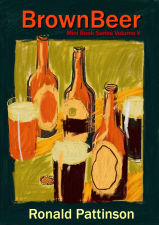
Following on from an enquiry by Oblivious, I'm wondering about whether to make "Brown Beer" available as an ebook. What do you reckon? It contains most of what I've written about Porter and Stout and runs to around 140 pages.If enough of you are interested, I might make it available. Electronically, that is. I should get the printed version done any day soon. When the dust (quite literally) has settled after the installation of our new kitchen.
Monday, 19 January 2009
London Porter in the 1930's
I wonder how much more mileage I'll be able to get from Porter? Tell me when you start getting bored. I only finished compiling
"Brown Beer" three weeks ago and I've already got another 20 pages of material to add. I blame myself for writing so bloody much.
We've moved on a decade from my last Porter post and are now looking at the 1930's. From the small number of samples analysed and the shrinking output at Whitbread and Barclay Perkins, it's clear that Porter had become a marginal product.
A surprising number of London breweries were still brewing Porter in the late 1930's. Their gravities were mostly in the mid-1030's and, at 5d a pint, they were one of the cheapest beers on sale in pubs. Blow are a few eamples of London Porter, with Guinness Porter from Ireland and Ballantine's from the USA for comparison purposes. Ballantine's had a profile closer to 19th century British versions of the style.

Where do I go from here? The 1940's, perhaps.
"Brown Beer" three weeks ago and I've already got another 20 pages of material to add. I blame myself for writing so bloody much.We've moved on a decade from my last Porter post and are now looking at the 1930's. From the small number of samples analysed and the shrinking output at Whitbread and Barclay Perkins, it's clear that Porter had become a marginal product.
A surprising number of London breweries were still brewing Porter in the late 1930's. Their gravities were mostly in the mid-1030's and, at 5d a pint, they were one of the cheapest beers on sale in pubs. Blow are a few eamples of London Porter, with Guinness Porter from Ireland and Ballantine's from the USA for comparison purposes. Ballantine's had a profile closer to 19th century British versions of the style.

Where do I go from here? The 1940's, perhaps.
Sunday, 18 January 2009
The difference between PA and IPA
It's a question that's been troubling me recently: what's the difference between IPA and PA? I suspect it may be even less clear than the difference between Porter and Stout. At least a brewery's Porter was always weaker than their Stouts.
Had you asked me two years ago, I would have said if a brewery made both an IPA and a PA that the IPA would always be the stronger of the two. But that was before I looked and Whitbread and Barclay Pekins brewing records. They both brewed IPA that was considerably weaker than their PA. Both IPA's were also exclusively bottled beers.
Burton IPA's were stronger. But were they stronger than Burton PA? Well, that's where it gets complicated. After Bass and Worthington merged in the 1920's the flagship bottled beers of both breweries were retained. Though they we3re in fact the same beer. For, Bass Red Triangle, for Worthington White Shield. Yet White Shield's label called it an IPA and Red Triangle's claimed it was Pale Ale. What was the beer? PA or IPA? Or both?
I'm starting to believe that maybe there isn't really a difference between the two. Why was IPA given its name? To let you know that it was a Pale Ale prepared for the Indian market, which is how it was originally referred to. No doubt to differentiate it from 18th-century style Pale Ale, which was a completely different beast, with few hops and really a Light Mild. As the 19th century progressed and old-style Pale Ale disappeared, there was no longer a need to warn drinkers that this was the heavily-hopped type of Pale Ale. That's the only Pale Ale there was. So the India bit mostly got dropped from names. That's my total guess theory. If I ever get a look at Burton brewing records I might get some facts to back this up.
The longer I study beer styles, the fewer different ones I find. Mild, PA, Porter, Strong Ale, Brown Ale. That's about it, really.
Saturday, 17 January 2009
Burton Unions
Just got the latest issue of the Brewery History Journal. It's one of the few beer publications I get excited about. Why might that be?
An article entitled "An evaluation of the number and distribution of Burton unions" particularly attracted my attention. Fascinating. And useful at the same time. The author, Paul Bayley, unlike populist beer writers, can be arsed to list his sources. They run to seven and a half pages.
Well done, Paul. You put the majority of beer writers to shame with your research and references. Why isn't all beer-writing of this quality?
Friday, 16 January 2009
London Porter in the 1920's
They'll start ripping out our kitchen on Saturday. Expect briefer than usual posts until the dust has settled.
Continuing with my Porter theme and my 1920's theme, here are some 1920's Porters. What an inspired choice. As you'll see, Porter rarely stretched past 1040º. Which probably didn't do its condition any favours. The combination of falling demand and falling gravities helped stick the boot in on poor, old Porter. I imagine a gang of skinheads giving a grandad a good kicking. Too vivid, my imagination at times.
Thursday, 15 January 2009
Rough pubs
I've been prompted to write this by an excellent post on the same topic by Zythophile.
The roughest pubs I've been have been mostly outside the UK. Mostly.
There was the aptly-named Whip in Leeds. With what my mate Harry called the "industrial accident" bar at the front and the Ted's bar to the rear. The Blind Beggar, when I visited in the late 1970's, was horrible in every sin
gle way, including the beer. The Whip had a decent pint of Tetley's.
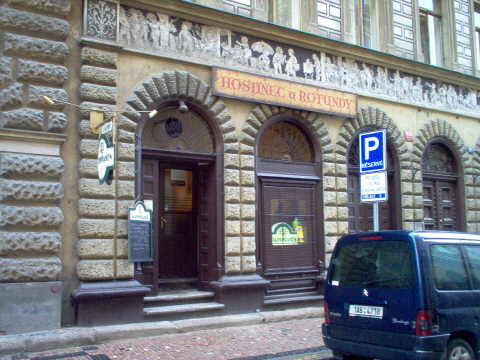
U Rotundy in Prague is a perennial favourite. I even forgive them the fag smoke. A man's pub in many of the bad senses. But where beers appear magically, without the need to speak to the barman. U Fleku could be a bit scummy in the old days. U Zpěvácků, not far away, used to be totally crazy. I once sat opposite a couple of ZZ Top lookalikes rummaging through a stolen doctor's bag.
Then there's the DDR. The place opposite my mother-in-law's where we bought a bucket of beer. My brother-in-law's local, where everyone had a tattoe above shoulder level and you had to order a shot with every pint. Or the station buffet in Leipzig. Sour Pils and drunks trying to make political speeches with wee stains on their kecks. Happy days.
Hebendanz in Forchheim merits a mention. Rough, but unthreatening. Patrons drinking litre measures before breakfast. And scowling. Talking incomprehensibly. That's another rough pub favourite. Preferably in some weird regional accent.
That reminds me of the place I stumbled across in Salzburg. While I was waiting for Augustiner to open. Where I so impressed the locals by drinking schnapps for breakfast, that they bought me a couple more. I'd thought I could understand Austrian accents until I went there.
But I reckon U Dobreho Kata (The Good Executioner) in Brno has to be the roughest of the lot. There were few nights in my month at Czech summer school when I was the soberest in the pub. In Kata, I was the sensible one. And I came home without a shirt. I gave my "DR & Quinch say nuke your parents" T-shirt to some Czech youth changing trains on his way to the Balkans.
The roughest pubs I've been have been mostly outside the UK. Mostly.
There was the aptly-named Whip in Leeds. With what my mate Harry called the "industrial accident" bar at the front and the Ted's bar to the rear. The Blind Beggar, when I visited in the late 1970's, was horrible in every sin
U Rotundy in Prague is a perennial favourite. I even forgive them the fag smoke. A man's pub in many of the bad senses. But where beers appear magically, without the need to speak to the barman. U Fleku could be a bit scummy in the old days. U Zpěvácků, not far away, used to be totally crazy. I once sat opposite a couple of ZZ Top lookalikes rummaging through a stolen doctor's bag.
Then there's the DDR. The place opposite my mother-in-law's where we bought a bucket of beer. My brother-in-law's local, where everyone had a tattoe above shoulder level and you had to order a shot with every pint. Or the station buffet in Leipzig. Sour Pils and drunks trying to make political speeches with wee stains on their kecks. Happy days.
Hebendanz in Forchheim merits a mention. Rough, but unthreatening. Patrons drinking litre measures before breakfast. And scowling. Talking incomprehensibly. That's another rough pub favourite. Preferably in some weird regional accent.
That reminds me of the place I stumbled across in Salzburg. While I was waiting for Augustiner to open. Where I so impressed the locals by drinking schnapps for breakfast, that they bought me a couple more. I'd thought I could understand Austrian accents until I went there.
But I reckon U Dobreho Kata (The Good Executioner) in Brno has to be the roughest of the lot. There were few nights in my month at Czech summer school when I was the soberest in the pub. In Kata, I was the sensible one. And I came home without a shirt. I gave my "DR & Quinch say nuke your parents" T-shirt to some Czech youth changing trains on his way to the Balkans.
Wednesday, 14 January 2009
Beer with me
Ton Overmars once more has shelves overflowing with St. Bernardus Abt. Until I get there. Then there's a just a gap.
I've a supply of Abt, is what I'm trying to say. I'm happy. Happy as a pig in the woods. But that's irrelevant. There's something else I want to talk with you about. Something serious.
Why did I illustrate my last post with a Charrington's label? I wasn't being random. For once. There was a reason. There's one of my minibooks in it for a correct reply.
More dodgy Porter
It's been a long day. I got home late and had arsing issues with doing much research. So a short post. Try to forgive me.Brewery of the day is City of London. What an odd history it had. It really was in the City of London, on Upper Thames Street. It was very old, being founded before 1431. Brewing stopped in 1922 and transferred to another brewery the company owned in Fulham. The Fulham brewer closed in 1936, but the company retained some pubs. The brewery building was destroyed in WW II, but the company remained in existence, only selling its last 20 pubs in 1968. Th e company still exists as an investment trust.
Thanks to Norman Barber's Excellent "A Century of British Brewers Plus" for the above information. It's one of the books I use most and most admire.
End of history lesson. Here are their beers from the 1920's:

Not a great number of samples, just two for Porter. But both are below par. I think I'm starting to recognise a pattern.
Soon you'll be able to write my blog for yourself. This is the bit where I warn of much more of the same in the days to follow. Here it comes . . . . . Lot's more dodgy Porters tomorrow and tomorrow and tomorrow.
Tuesday, 13 January 2009
Time machine question - Cannon Brewery
Which beer would have been your best in a Cannon Brewery pub in the early 1920's? Who hasn't asked themselves that question? Honestly. Who hasn't?
Believe me when I say that I never in my wildest dreams (and many of those were set decades in the past) did I imagine that I would ever have any evidence to point me in the right direction, should my time machine demonstrate a strange affinity for Cannon pubs. But here that evidence is. Any guesses as to which was the safest beer to drink? Have a think while I continue.
As I explained in the last post, I've graded the comments in the Whitbread Gravity Book on a scale of +3 to -3. It's not wholly scientific. OK, not scientific at all. But it's the only information we have. Let's allow it to provide us with a few hints.
Any ideas yet about the beer least likely to be sour or mawkish?
Unfortunately, the flavour comments only appear in the Whitbread Gravity Book entries from the early 1920's. But there are enough samples to get a feel for the quality of beers/breweries. What do I always promise/threaten at this point? There'll be lots more to follow.


And? Which beer is statistically safest? I know, you can't be arsed to look at all those images. Don't blame you. I'm the same. For the enthusiastically-challenged, here are the average scores of each beer:
The answer: "Drink Mild!"
Believe me when I say that I never in my wildest dreams (and many of those were set decades in the past) did I imagine that I would ever have any evidence to point me in the right direction, should my time machine demonstrate a strange affinity for Cannon pubs. But here that evidence is. Any guesses as to which was the safest beer to drink? Have a think while I continue.As I explained in the last post, I've graded the comments in the Whitbread Gravity Book on a scale of +3 to -3. It's not wholly scientific. OK, not scientific at all. But it's the only information we have. Let's allow it to provide us with a few hints.
Any ideas yet about the beer least likely to be sour or mawkish?
Unfortunately, the flavour comments only appear in the Whitbread Gravity Book entries from the early 1920's. But there are enough samples to get a feel for the quality of beers/breweries. What do I always promise/threaten at this point? There'll be lots more to follow.


And? Which beer is statistically safest? I know, you can't be arsed to look at all those images. Don't blame you. I'm the same. For the enthusiastically-challenged, here are the average scores of each beer:
| Porter | -2.25 |
| KK | -0.82 |
| Stout | 0 |
| PA | 0.09 |
| X | 0.57 |
The answer: "Drink Mild!"
Subscribe to:
Posts (Atom)