Wednesday, 14 November 2012

Let's Brew Wednesday - 1900 Amsdell Porter

Albany Ale has been so much fun I thought that an Albany Beer would be cool. So here's one - a colonial Porter from 1900.

I say Porter, but it's really a Stout. Way too strong to be a Porter. More like a Brown Stout. Ooh, what's happening to me? I'm coming over all style fascist. Never mind. Call it a porter if you like. In my mind it's a Brown Stout. Despite not containing any brown malt.

Porter grists are a topic that have long fascinated me. This one, the stack of adjuncts excepted, holds few surprises. Basically just pale and black malt. Which is pretty typical of Porter grists from just about anywhere but London after 1850. London brewers, you'll remember, stuck with brown malt to the bitter end.

The weird additions - liquorice, capsicum, grains of paradise - remind me of the Porter recipes you find in brewing manuals from the early 1800's aimed at domestic brewers (i.e. not commercial brewers). All of those things being illegal for British commercial brewers up until 1880. I have seen liquorice pop up in British Porter and Stout - Maclay's Oat Malt Stout from 1909 comes to mind - but not the others.

Amsdell liked their adjuncts. All of their beers contain a stack of grits, glucose and syrup. Yummy. It's a useful reminder that adjunct brewing isn't a recent invention of megabrewers. It's been around for a long time.

Because Craig photographed every page of the brewing log over a certain period (thanks Craig) I can see just how infrequently they brewed Porter. Just three times in 194 brews. A sure sign of a style in decline.

One point of interest is the blending that they did. 65 barrels of  the 275 barrels in the brew were "old ale on hops". I believe this was old Ale (that is Ale that had been hanging around) rather than Old Ale (Ale that had been deliberately aged). I can only assume that this was a way of getting an aged taste into the beer. As well as an economic way of using up some old stock. Labatt did something similar.

It was also vatted after primary fermentation. Something that wouldn't have happened to a London Porter at this date. In fact, the more I look at it, the more archaic this beer looks. Blending and vatting had gone out of fashion 40 years earlier in London.


I'll pass the reins to Kristen for the technical brewy stuff . . . . .


Kristen’s Version:

Notes:

All of the malts and such are very straight forward. The flaked maize was actually grits so if you’d like to cook up a batch, and chuck some shrimp in a bit for lunch, be my guest,…the flaked stuff is so much easier. The Invert No1 was actually glucose so you can replace it with pure glucose if you have it, make your own No1 or even Golden syrup, which is 50% invert, is fine. The No2 is pretty mandatory. The hops were pretty old so if you have some old ones lying around, give them a go. It’s not a beer that really focused on hops but could use a good dose of that veg tannic character. She finishes a bit fat so try and work on that b/c the beer completely changes if it dries out too much for sure. Here are your handy dandy sundry ingredients. The Grains of Paradise and hot pepper are nearly insignificant, the salt and licorice are much higher. Use them at your discretion.


g/L
Licorice
0.61
Salt
0.19
Capsicum
0.01
GOP
0.01


Tuesday, 13 November 2012

What I learned at the weekend

I was briefly in Folkestone for a shopping run last weekend. The first time in ages.

Not much had changed in Folkestone. But something had on the way. And not for the better. We usually stop at the first service station on the E17 after Antwerp. It's about half way to the chunnel. I've got into the habit of picking up a couple of cans of Gordon's Finest Gold there, which, at 10% ABV, is the perfect breakfast beer.

Sadly, they no longer seem to sell it. Or Leffe Bruin. Now it's all Pils except for a few cans of Hoegaarden and Palm. Bastards. Completing the trip beerless wasn't on, leaving me no alternative but to get two cans of Jupiler. At least they were half litres. But Jupiler's never going to warm your belly the way Gordon's does. Warm belly and fuzzied-up head. Just what I want before lunch.

We always stay at the Portland Hotel. Which handily has a pub on the ground floor. Good enough reason to have a few beers while checking in. No cask beer, but they do have bottled London Pride. That'll do me. Luggage dumped, it was time to head to Asda for pies, salt and vinegar crisps, cider, cheese, Scotch pancakes and bacon. Now there's a properly balanced meal.


On the way back, I thought I may as well check out The Chambers, a Good Beer Guide-listed basement pub. They usually have some local beers on cask. As they did on Saturday. A dark number from Gadd's. Perfect. Especially with an accompanying double Bells. Or two.

Refreshed and loaded with shopping, it was time to return to the Portland to meet Mikey. Where I had another couple of London Prides before we decided eating might be a good idea. Fortunately, not only does Folkestone have a proper chippie, there's also a licensed fish restaurant at the back. Where I had pie, chips and mushy peas and a can of Guinness.

Once I'd polished of my health-food supper, it was back on the lash. This time in Harveys, another basement pub. Not the most exciting beer selection, but the Courage Best is usually in decent nick. I knocked back a few of those while Mikey got stuck into some Strongbow. After a few pints Mikey went off to the Tesco Express for a few bits and bobs, leaving me to have a few more Courage Bests while I waited for him. And waited. It turned into quite a few Courage Bests before I realised he wasn't coming back. He's done this before, crawling off to sleep mid session.

I went back to the hotel to see if he was in the pub there. Time for a few more London Prides and a dance. Until I realised my legs weren't working that well. Must have been all the walking. Time for bed.

What did I learn? That, with enough time and a bit of determination, it's possible to get legless on watery British beer. Even for a pisshead like me.

Monday, 12 November 2012

To Make Europe more Sober

I keep telling you how much impact WW I had, even on countries not engaged in the war. This article gives a handy roundup of the restrictions placed on the sale of booze in various European countries.

Though it's worth pointing out that this was still early days. The rules got progressively tighter as the war proceeded.

"TO MAKE EUROPE MORE SOBER.
LIQUOR RESTRICTIONS IN VARIOUS COUNTRIES.

A White Paper has been issued showing the steps taken in European countries to restrict the sale of intoxicating liquors since the outbreak of war.

Austria-Hungary: Sale limited to between 9 a.m. and 5 p.m. On Sundays and holidays all liquor shops are closed.

Denmark : A more or less absolute prohibition of the sale of liquor to soldiers (and in some cases to civilians) has been issued in 16 police districts.

France; The sale of absinthe has been forbidden.

Germany : The sale of spirits has been forbidden to soldiers in the district of Berlin and province of Brandenburg. Local authorities are empowered to prohibit or restrict sale of spirits. The production of alcohol has been restricted.

Norway : The sale of spirits was forbidden until October 13. Now the sale is permitted four days a week. The police can prohibit the sale of wine or beer if the public interest makes it desirable. An extensive system of local veto was in force before war broke out.

Russia : The sale of all intoxicants is prohibited, except in first-class restaurants and hotels at meals.

Serbia: A decree was issued forbidding the proprietors of hotels and cafes to sell in any large quantity to soldiers or persons addicted to drink.

Sweden : Although the restrictions in force and the powers possessed by local authorities were deemed sufficient to meet the conditions, a Bill was passed giving extended powers to issue prohibitions " in times of distress and danger of war.

Switzerland : The sale of spirits made by the Government is suspended indefinitely. No licences are at present granted for the distillation of spirits.

No special measures have been taken in Bulgaria, Greece, Holland, Italy, Montenegro, Portugal, Rumania, and Spain."
Tamworth Herald - Saturday 10 July 1915, page 2.

A couple of points to note. First, that these rules almost all concern spirits. Presumably from fear of soldiers or essential workers getting paralytic and unable to do what they were supposed to.

Second, that these restrictions, with the exception of opening hours in Austria, look voluntary rather than forced. That is, these actions weren't necessary due to supply restrictions. Those come later. Especially with regard to brewing, which, using stuff that could be used to make bread, was likely to struggle to find raw materials in times of food shortages.

In the case of Scandinavian countries, none of whom were involved in the war, these rules smack of temperance opportunism. Using a time of crisis as an excuse to force through restrictions on alcohol. It's a typical tactic of those two-faced bastards.

This was just a taste of things to come, especially for the Central Powers.

Sunday, 11 November 2012

Grätzer launch

If you're in Amsterdam on 22nd November, you're in luck. You'll be able to hear me talking at the launch of the Grätzer I've been involved in creating.

Don't worry, my talk will only last 10 minutes or so. Then it'll be on to the serios business of drinking beer.

You can find all the details here.


Mala-fide Travellers at Kennoway

Sometimes British licensing laws seem to have been designed to be as arbitrary and annoying as possible.

Take this case:
"MALA-FIDE TRAVELLERS AT KENNOWAY.
At Cupar Sheriff Court yesterday - before Hon. Sheriff Thomson—John Brown and Alex Paton, labourers, of no fixed place of residence, were charged with having, on Sunday, at the Swan Hotel, Kennoway, occupied by David Fernie, pretended that they had come from Methil, and induced Thomas Fernie, barman, to sell to them two pints of beer, contrary to the Licensing (Scotland) Act, 1903, Section 6. Both pleaded guilty and sentence was passed of 10s, or five days each."
Dundee Courier - Tuesday 30 June 1914, page 6.

What was the great crime of these two men? Not having travelled far enough to be entitled to buy a beer in a pub. The crazy Scottish licensing rules insisted that only "bona fide travellers" could be served on a Sunday. To be a bona fide traveller you had to have travelled a minimum distance to the pub, one of several miles.

I can guess what many did (other than lie to the barman) - walk to the next town or village on Sunday morning. According to Google maps, Methil to Cupar is 11.4 miles.

What confuses me is how they were caught. Did a policeman drop by the pub or did the landlord shop them?

The bona fide traveller rule was still causing trouble almost half a century later. This is what the Lord Craigton (Minister of State, Scottish Office) had to say in a parliamentary debate in 1961:

"This "traveller" position derives from the principle, still embodied in the Common Law, that an inn must provide board and lodging to any traveller; in the past, for this provision has a very long history, alcoholic liquor was almost an essential part of board. But time has caught up with the provision. In so far as it is necessary, and I do not say it is not, for the law to provide for the supply of food and drink to travellers, nobody to-day would claim that it is essential to provide travellers with alcoholic drink at all times. And, because of the much greater ease of travel in modern times, the "traveller" provision has made a laughing stock of our licensing laws. Every Sunday, as the noble Lord, Lord Hughes will know, there issue forth from the cities and large towns of Scotland, not the footsore and weary travellers whom the drafters of the law had in mind, but the Sunday trippers in their cars and buses. Some go, I am sure, mainly for the outing, but some go solely to make use of the "traveller" provision in order to obtain strong drink because they cannot get it in their own home town. And they can seek "accommodation" at any time, and if he does not serve them, the hotelier runs the risk of losing his certificate. My Lords, when I said that there were no permitted hours on Sunday in Scotland, I was wrong. To all intents and purposes there are, for some at least, 24 permitted hours. And sometimes the hotelier must put up with and" accommodate "—according to the words of the law—these so called "travellers" from the early morning till late at night.

The resulting situation is indefensible. I draw your Lordships' attention to only two of the more undesirable features. The first of these is the existing law that makes you travel to drink and denies it to you in your own area. At a time when Parliament and the public are rightly concerned about road safety, what can be said for a law which encourages the motorist to drive to get a drink and then to drive home again? The second is the annoyance and disturbance which is caused to the inhabitants of the surrounding country by the irruption into it of the wrong sort of Sunday drinkers in their cars and buses. The peace and quiet of the Scottish Sunday is quickly shattered if the hotel in the town becomes the resort of such people."
House of Lords debate 21st November 1961, Hansard vol 235 cc806-56.
http://hansard.millbanksystems.com/lords/1961/nov/21/licensing-scotland-bill-hl

I'd have been a "such people". Sundays were bleak enough when I was young. Without a few beers down the pub at lunchtime they'd have been unbearable.

The bona fide traveller bollocks was swept away in the 1976 when Scotland's licensing laws were dragged into the 20th century and Sunday opening was allowed. It also did away with afternoon closing on weekday, an annoying practice which continued until 1988 in England.

Saturday, 10 November 2012

The Englishman's Beer

An obsession with pubs was a notable feature of temperance fascists in the 19th century. Of course, the fact working-class drinking occurred overwhelmingly in pubs was the main reason.

It was class factors that probably gave the teetotallers some degree of success in reducing the number of pubs and their opening hours. As this article explains:


"The Englishman's Beer.
The Sunday Closing Bill which was defeated in the House of Commons yesterday did not appeal to Scottish observers as a very extreme measure.

It was not Sunday Closing Bill the sense that it made the public-house week one of six days, as in Scotland. Its main proposal was to reduce the hours of opening Sundays to three throughout the provinces and four in the Metropolitan district. The hours were to be fixed by the local Justices, but were to be between noon and 10 p.m.

The professed aim of the, promoters was secure the more orderly observance of the Sabbath, an object at which one will cavil. Were the Englishman as docile as the Scot, and willing to have his liberties swept away at the bidding of any body of faddists which happened to get the ear of a political group, the way of Sunday closing would be easy.

Yesterday's vote showed that it is not easy and for yet another reason. Temperance reform is one of the purest forms of class legislation. The working man hit by it, but while it increases his disabilities and curtails his liberties, it has no such effect on those chiefly responsible for its introduction. The M.P. has his cellar, his club, or hotel; he is immune from all legislative changes. It is not surprising that his philanthropic interest in the working man should excite suspicion.

Conditions in Scotland are not the same as England, but it holds good of both countries that drinking clubs increase as public-houses diminish. The clubs have increased in England at a very rapid rate recent years, and the restriction of public-house hours is the surest way of accelerating the increase."
Dundee Courier - Saturday 09 May 1914, page 4.

The better off, who either ordered their booze directly from a wine merchant for drinking at home, or who pissed it up down their gentleman's club were affected by the rules on pubs. So what the hell did they care?

The victory of English Sunday drinkers was short-lived. Because WW I gave temperance killjoys the perfect excuse to hack away at pub opening times. DORA - the 1915 Defence of the Realm Act - eventually left pubs open just 5.5 hours a day. Sunday had the greatest restrictions, with just a couple of hours at lunchtime and another couple in the early evening. It was a situation that lasted well into my drinking life.

How I hated Sundays with the frustrating frantic sprint at lunchtime followed by a long, dark afternoon waiting for the evening to roll around. The joys of now being able to laze away a slow afternoon in the boozer. Don't let the bastards take that pleasure away from you again.

Friday, 9 November 2012

Promoting War

Support independent publishing: buy this book on Lulu. I'll be honest, you, my public, have never quite shared my enthusiasm for war. Mmm. Makes me sound like Lord Palmerston.

Let's have another try.

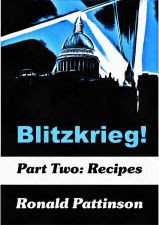
None of you bastards have bought "War!". Bastards. It's dead good. Jokes. Recipes. Tables. Food Control Orders. The lot. Buy the bloody thing or I'll come around and clip your toenails. With a chainsaw.

Perhaps that's a tad aggressive.

Third try.

You really should give this book a try. It's breaking my heart how little you appreciate it. I've put loads of work into it with all the tables and recipes and everything. Lots of you, I'm sure, would really love it. Please follow the link and take a look at the preview.

Was that too wet? No, I didn't think so, either. Struck just the right tone.

Buy "War!" now. Or I'll continue with these annoying plugs.

Gruit Grists

In my post about brewing a gruit at Beau's in Canada, I mentioned that I had a series of gruit grists for medieval Holland. Some of you asked if I could publish them. What can I say? your wish is my command.

To be honest, these aren't all Gruits. Hopbier, unsusprisingly, was hopped. Bet you never would have guessed that, eh? Koyt I'm pretty sure was always a Gruit. The others without a specific name? Who knows. They could be either hopped or not.

Here's a table with all the details. The very last entry was the basis of the Beau's beer.


Dutch Medieval Grists
Year Town beer OG (Plato) litres beer grain (kg) oats wheat barley rye hart coerens oats or rye or mesteluyn (a mix of wheat and rye)
1340 Delft Hopbier or Turfbier 18.9 3725 1274 837 437
1404 Utrecht Hopbier 13.2 3100 747 477 270
1433 Utrecht Dubbelde Hoppen 20.3 2480 915 645 270
1433 Utrecht Dubbelde Koyte 20.1 2800 1019 484 190 345
1433 Utrecht Eenwisselen Bier (Hoppe or Koyte) 15.8 2480 714 484 230
1447 Utrecht Dik Bier 18.1 2480 1018 403 270 345
1451 Utrecht Dun Bier 11.5 2480 518 403 115
1491 Utrecht Bier 19.2 2480 868 523 345
1491 Utrecht Bier 19.5 3725 915 685 230
1407 Haarlem Hopbier 20.5 1790 668 465 203
1407 Haarlem Hopbier 21 1790 685 465 183 37
1407 Haarlem Koyt 777 310 244 223
1501 Haarlem Hopbier 19.9 1850 668 465 203
1501 Haarlem Hopbier 21.2 1850 718 465 142 111
1407 Haarlem Koyt 13.7 3950 985 413 203 369
15th C Amsterdam Bier 16.6 3100 935 336 240 359
1475 Naarden Bier 18.6 2480 837 480 151 206
1484 Amerfsfoort Bier 24.4 2480 1098 630 198 270
1484 Amerfsfoort Bier 15.6 3880 1098 630 198 270
1488 Gouda Bier 15.6 3820 1085 19 sacks oats, spelt, wheat, rye or barley
1513 Gouda Bier 14.5 3950 1040 540 274 226
1497 Leiden Bier 8.5 5120 794 180 294 320
1497 Leiden Bier 8.6 4350 684 148 262 274
1500 Wijk-bij-Duurstede Bier 23.8 3725 1615 650 408 557
1515 Zutphen Eenvoudige Koyten 9.5 4970 863 348 183 332
1515 Zutphen Dubbele Koyten 18.8 3100 1058 426 244 388
Source:
De Middeleeuwse brouwerij en de gruit by G. Doorman, 1955.

Notice the crazy amount of oats in just about everything - as much as 80% in some cases. Only a couple of the Leiden beers contain none. You'll also see that none of the beers used a single type of grain. All used at least two and sometimes more. This was typical in all of the Low Countries, both what is now Belgium as well as Holland.

This has just been a short aside. I'll be back to WW I and/or Scotland next time.


Thursday, 8 November 2012

Beer Exports in Wartime

I bin doin' me some thunking. About WW I and how far its tentacles stretched. It's what happens when you read lots of old newspapers.

The Dutch newspaper archive doesn't just include ones printed in the Netherlands, it has ones from the colonies, too. In particular, what is now Indonesia. They contained plenty of beer adverts for recognisable names like Heineken and Amstel. I was surprised that they were still turning up as late as April 1916. I thought sea traffic had been pretty much disrupted by then, even for neutral countries like Holland.


De Sumatra post, 20-03-1916, page 4.

Then I found this achingly terse article::

"Beer Export Forbidden
The export of beer is forbidden."
De Tijd, 29-05-1916, page 2. (My translation.)

I have to praise the author for his economy. Though, were I being picky, the body of the article is unnecessary. The headline says it all.

In 1917 a (slightly) more detailed article* reported that, as the War Department could no longer import beer from Holland for its canteens, they were going buy it from Japan.

That's all just an aside. What got me doing that thinking was a shameless advertorial from October 1915** singing the praises of Carlsberg's beer. Admittedly, the author did admit that the brewery had sent bottles. I had that thought.

About the impact of WW I on Danish brewing. In particular, on Carlsberg, who already had a big export trade. The dangers to shipping in the North Sea and the Channel must have made exporting difficult. And were all their African and Far Eastern markets all still open to them?


* Het nieuws van den dag voor Nederlandsch-Indië, 29-05-1917, page 2.
** Het nieuws van den dag voor Nederlandsch-Indië, 16-10-1915, page 2.


Wednesday, 7 November 2012

Another boring technical post

You know the score, just ignore this and move on to the next proper post


Consumption of Beer

At the beginning of WW I there was no attempt in Britain to control the level of beer production nor to limit beer strength. The only government action was a huge increase in the beer tax in late 1914. The tax rose from 7s 9d per standard barrel (36 gallons with an OG of 1055º) to 23s.

The expectation was that this would knock back beer consumption considerably. Though the estimated amount of the fall seems to have varied somewhat. At first there was talk of a 35% reduction:

"BREWERS AND BEER TAX.
The Executive Committee of the Allied Brewery Traders' Association has passed resolution to the effect that they view with alarm the operation of the increased beer duty which, is estimated by the Chancellor of the Exchequer, will reduce consumption of beer by 35 per cent., and will create widespread unemployment."
Western Gazette - Friday 04 December 1914, page 8.

A few months later this had been magically reduced to 23%. Though that turned out to be no more accurate.

"CONSUMPTION OF BEER
Rise After a Fall Due to the War Tax
When the Chancellor of the Exchequer put his extra tax on beer to help to pay for the war he calculated that the fall in consumption on account of the increased price would be about 23 per cent. He thought, however, the brewer and the publican stood to gain rather than lose by charging an additional penny a pint, which was more than the extra tax itself warranted. The price of a pint of "four ale" - ale sold at fourpence the quart - went from twopence to threepence, and of beer from threepence to fourpence. The immediate effect was a drop in consumption close on 60 per cent. Many of the brewers forthwith reduced their production.

The latest reports from the country show a notable rise in the consumption. It varies considerably, of course, according to the nature the place and the density of the population. In rural districts it still remains low. The war has carried away many of the agricultural labourers. To those who remain it seems as if it has also carried away their beer, now that their customary "four ale" is no longer obtainable at the inn. But in manufacturing centres the attachment of the average working man to his "pint" has overcome the fit of economy which seized him when the price went up, and there is almost as much beer being consumed as ever."
Western Times - Friday 01 January 1915, page 12.

There's a reason why the increase in price didn't put off drinkers for long. The war also pushed up wages, especially in munitions producing areas. Though it's understandable that there was initially resistance to the price of beer increasing. It had been stable for around 50 years. Most beer drinkers would never have experienced a price increase before. Weird thought that, isn't it? Very different from my own experience. The price of a pint must have gone up half a dozen times in my first legal year of drinking, 1974.

I'm not sure why four ale should suddenly have disappeared in rural districts as early as 1915. London brewers only replaced their X Ale with Government Ale in 1917. Until then there was plenty of Mild around.

How much did beer output fall in 1915? 7.4%, in terms of bulk barrels, 8.2% in terms of bulk barrels. As you can see in the table below, the big fall was between 1917 and 1918. In terms of bulk barrels (which also takes into account the fall in gravity) the drop was almost 50%.


Beer output and tax raised 1914 - 1919
Total Tax £ Bulk Barrels Std. Barrels change bulk barrels change std barrels change tax raised
1914 13,622,971 37,558,767 36,057,913
1915 15,856,412 34,765,780 33,099,411 -7.44% -8.20% 16.39%
1916 33,747,269 32,110,608 30,292,977 -7.64% -8.48% 112.83%
1917 31,567,940 30,163,998 26,626,000 -6.06% -12.11% -6.46%
1918 19,108,663 19,085,043 13,816,173 -36.73% -48.11% -39.47%
1919 25,423,393 23,264,533 12,925,087 21.90% -6.45% 33.05%
Source:
1928 Brewers' Almanack


Note how the fall in beer production was so great that there was a considerable fall in the revenue raised from taxing it in 1918.

Tuesday, 6 November 2012

Scheming teetotal bastards

Bunch of lying scum. That's how I'd describe the British temperance movement in the early decades of the 20th-century. They also weren't averse to a bit of opportunism. They saw WW I as their big chance to impose prohibition on Britain. Bastards.

Did they really care that much about the war effort? Probably not. Bunch of bigots and fanatics that they were, many would doubtless have traded defeat for prohibition.


"A GREATER ENEMY THAN GERMANY AND AUSTRIA."
—The Right Hon. D. LLOYD GEORGE,

DRINK

HINDERS THE ARMY & NAVY
delays munitions and transport, causes inefficiency, slows down shipbuilding and repairs.

DECREASES SHIPPING
During twenty months of war shipping has been used for 1,400,000 tons of brewery and distilling materials;  consequently the nation is suffering in tonnage for munitions.

WASTES FOOD
During the war period two and half million tons of food have been destroyed to make beer and other intoxicants. The War Savings Committee says :—
"IF THIS FOOD HAD BEEN AVAILABLE PRICES OF BREAD AND MEAT WOULD BE LOWERED."

DIVERTS RESOURCES
Each year it takes the labour of 500,000 workers ; uses one million acres of arable land; one and half million tons of coal; railway stock and haulage which might better purpose.

SHATTERS MORAL STRENGTH
Relaxes the nation's energy. It is a temptation to women; imperils the home and child life, and is the ally of immorality and disease.

SQUANDERS MONEY
During the war period 300 million pounds have been wasted on drink, which is the measure of untold financial, social and economic evils.

PROHIBITION
Would set free men, money, energy, and consequently
SHORTEN THE WAR.

SIGN THIS MEMORIAL TO THE GOVERNMENT.

NATIONAL MEMORIAL TO THE GOVERNMENT.
We, the undersigned, being impressed with the necessity of avoiding all waste, and of utilising fully the moral and material resources of the nation, and being convinced that the present enormous consumption of intoxicating drink is the most dangerous enemy of national efficiency, health and economy, hereby urge his Majesty's government to prohibit the manufacture, import, export and common sale of intoxicating liquors during war and for six months afterwards.

Name     Address     Town or Parish

Persons over 16 years of age should sign this, cut it out and post it in a halfpenny envelope before July 25th to the Secretaries, 3 Clare Avenue, Bristol, from whom more memorials may be obtained."
Western Daily Press - Saturday 15 July 1916, page 6.
"It is a temptation to women" This is such a recurring theme. Worrying about women drinking. Particularly working class women. They kept going on about it in the 19th century. It continues today. See how often the media get all self-righteous about drunken women or display images of women collapsed in a drunken heap on the street. There's something horribly condescending about it. Continuing the Victorian idea of women being weak, helpless creatures in need of strong moral guidance (from men).

Thankfully, these idiots never got their way. Beer production was severely restricted, but wasn't prohibited. Teetotallers were, however, allowed to continue with this sort of crap right through the war. That some prominent member to government were "teetotal" must have helped.

That stuff about prohibition only lasting until 6 months after the end of the war. A downright lie. Once they had got prohibition passed, temperance campaigners would have fought tooth and nail to keep it.

Temperance groups tried the same thing in WW II and were almost immediately told to shut up, as their campaigning was bad for morale. Churchill had time for such bollocks and insisted on supplies of beer for those fighting. Good on him.

Monday, 5 November 2012

Discounted War!

Support independent publishing: buy this book on Lulu. To celebrate (if that's the rigght word) the WW I month of November, I'm offering the printed version of "War!" at a 10% discount. Yes, a full 10% off!

In it you can learn of all the fun drinkers had in WW I and WW II - output restrictions, swingeing strength cuts, outrageous price increases. I'll be packing my suitcase (full of bacon and tea) and heading to 1917 just as soon as the first affordable time machine hits the shelves.

Buy "War!" now. It's a much better momento of November than a plastic poppy.

Beer Scarcity in Austria

You can tell when things are getting bad when governments start cutting beer production. And putting up the price. Why? Because it's a great way of pissing the public off. Something governments rarely do deliberately.

The more observant among you might have noticed that I've started writing about Germany and Austria in WW I. There's a good reason for that. One that I'm not going to tell you quite yet. It is very revealing, though, to look at the war from the other side. The food and booze situation at home for the Central Powers made Britain look like the promised land, overflowing with milk and honey, Or at least bread and beer.

Of course, the German U-boat campaign against British shipping didn't really kick off until 1917. Which is when Britain began to experience grain shortages, though at never anything like the same level as Germany or Austria.
"Beer Scarcity in Austria
Berne, September 1.
Owing to the poorness of the barley harvest in Austria the production of beer will be reduced from October by fully 50 per cent. The brewers, who hitherto had old stocks of barley, have now received from the Government only 30 per cent. of the habitual quantity. This will entail a heavy loss of revenue to both the Government and the municipalities of Austria, where the taxes on beer formerly yielded 220 million kronen annually. A further rise in the price of beer is therefore announced for October. Austrian beer prices have already risen six kronen per hectolitre, Hungarian fourteen kronen, and German ten marks per hectolitre since the beginning of the war.

Owing to the limited quantity of beer allowed in Germany the beer halls are often obliged to close at 8 p.m., all their beer having been already consumed."
Western Times - Saturday 04 September 1915, page 4.
Output to be reduced 50% but only 30% of the normal amount of barley available. That means there must have been a gravity cut as well. I make that a 40% reduction in gravity. So if average gravity had been 1048º, it would have dropped to 1028º. Austrian beer had been quite strong before the war, so my guess is that average gravity was higher, probably in the low 1050's. Which would still have meant it dropping to about 1030º. The sort the depth not reached until 1918 in Britain.
"PERSONAL SACRIFICES.
Fewer Cigarettes and Weaker Beer for the Enemy.
Zurich, Monday.—The recent medical examinations of recruits have shown that the growing habit of cigarette smoking is exercising the most deleterious effect on the health of the future Bavarian soldiers. The authorities have imposed rigid restrictions with a view to preventing cigarette smoking among boys and youths.

In Austria a Ministerial decree has just been issued restricting the production of beer from December to next March inclusive to 55 per of the normal quality. This measure is taken to protect the stocks of barley in the country. Not a single transaction was reported the Buda Pest Corn Exchange on Saturday.

The grain trade in Hungary entirely a standstill. A large number flour mills are being shut down unable to obtain supplies wheat. The millers' only hope is in the Government requisitioning large stocks which are being kept back by landowners and farmers in the hope obtaining still higher prices. - Reuter."
Manchester Evening News - Tuesday 07 December 1915, page 4.
This appears to contradict the first report, allowing 55% of the normal level of beer output as opposed to 50%. Did they permit slightly more beer to be produced or was that 55% of the 50%?
"VIENNA BEER RIOTS.
RISE IN PRICE INFURIATES THE MOB.
According to a telegram from Rotterdam says an Exchange Amsterdam telegram today, it is reported that serious riots have taken place in cafes in Vienna owing to the announcement of an increase of five kroner per hectolitre of beer.

A number of cafes have been attacked by an infuriated mob, who destroyed everything inside.

The police have ordered the closing of all cafes after 8 p.m., unless under special licence. The inhabitants of Vienna are very excited about the raising of the price of beer, and trouble is expected over the whole of Austria."
Liverpool Echo - Tuesday 18 January 1916, page 8.
I can't condone smashing up pubs, but drinkers must have been pretty upset to go on the rampage like that. There were angry reactions in Britain to beer price rises, too, but they don't seem to have ever spilled over into violence.